On this page
Training a Greater Swiss Mountain Dog (GSMD) is one of the most important steps in raising a confident, obedient, and well-mannered companion. These large and powerful dogs are known for their loyalty, intelligence, affectionate nature, and strong connection with their families. However, their size, strength, and independent personality mean that proper training from an early age is essential.
Many owners search for how to train a Greater Swiss Mountain Dog because Swissies can be both eager to please and stubborn at the same time. They are smart enough to learn commands quickly, but they may test boundaries if training is inconsistent. Using positive reinforcement, patience, and daily practice will help your Swissy become a reliable family dog.
This complete Greater Swiss Mountain Dog training guide covers everything you need to know, including puppy training, obedience commands, leash manners, socialization, behavior correction, and common GSMD training challenges.
Greater Swiss Mountain Dog Training Overview
Before starting training, it is important to understand the unique traits of the Greater Swiss Mountain Dog. Originally bred as working dogs in the Swiss Alps, Swissies were used for pulling carts, guarding farms, and helping farmers with daily tasks. Their working background makes them strong, alert, and dependable, but it also means they need structure and mental stimulation.
A successful GSMD training program should focus on building trust, teaching boundaries, and rewarding good behavior. Harsh training methods are not recommended because Swissies respond much better to encouragement and consistency.
| Greater Swiss Mountain Dog Trait | How It Affects Training | Training Tip |
|---|---|---|
| Large size and strength | Requires early leash and obedience training | Start teaching leash manners during puppyhood |
| Intelligent and quick learner | Can learn commands easily | Use short and engaging training sessions |
| Independent personality | May ignore commands when distracted | Use rewards and consistent expectations |
| Protective instincts | May bark at unfamiliar people or situations | Begin socialization early |
| Family-oriented nature | Loves spending time with owners | Include training in daily family activities |
Understanding Your Greater Swiss Mountain Dog Before Training
Successful Greater Swiss Mountain Dog obedience training starts with understanding your dog’s personality. Swissies are naturally affectionate and enjoy being involved with their owners. They are not a breed that thrives when left alone for long periods without interaction or mental stimulation.
Although they are gentle and friendly, Greater Swiss Mountain Dogs can develop unwanted behaviors if they do not receive proper guidance. Common issues include:
- Pulling on the leash because of their strength and excitement
- Jumping on people due to their large size
- Excessive barking from protective instincts
- Ignoring commands when distracted
- Chewing or destructive behavior caused by boredom
The key to preventing these problems is starting training early and creating a consistent routine. A well-trained Swissy is usually calm, confident, and easier to manage in different environments.
Greater Swiss Mountain Dog Training by Age
The best training approach depends on your dog’s age. A GSMD puppy learns differently from an adolescent or adult Swissy. Understanding each life stage helps you set realistic goals and avoid frustration.
| Age Range | Typical Behavior | Main Training Goals |
|---|---|---|
| 8–16 Weeks Puppy | Curious, playful, easily distracted | Potty training, crate training, name recognition, basic commands |
| 4–12 Months Adolescent | Tests boundaries and becomes more independent | Leash training, recall, impulse control, socialization |
| 1+ Year Adult | More confident but may have stubborn habits | Advanced obedience, manners, and behavior improvement |
How to Start Training a Greater Swiss Mountain Dog Puppy
Starting early is one of the most effective ways to raise a well-behaved Swissy. Puppy training should focus on building confidence, teaching basic rules, and creating positive experiences.
1. Teach Your Puppy Their Name
The first step in Greater Swiss Mountain Dog puppy training is teaching your puppy to respond to their name. Say their name in a happy voice and reward them when they look at you. This creates attention and makes future training much easier.
2. Begin Basic Obedience Commands
Start with simple commands such as:
- Sit
- Stay
- Come
- Down
- Leave it
Keep sessions short, usually 5–10 minutes, because young Swissies can lose focus quickly. Several short sessions throughout the day are more effective than one long training session.
3. Introduce Crate Training
Crate training can help with house training, preventing destructive habits, and creating a safe resting area. A crate should always be introduced as a positive space, never as punishment.
4. Start Early Socialization
Socialization is a critical part of raising a confident Greater Swiss Mountain Dog. Carefully introduce your puppy to:
- Different people
- Other friendly dogs
- New sounds
- Car rides
- Different environments
Early positive experiences help reduce fear, anxiety, and unwanted protective behaviors as your Swissy grows older.
Best Training Methods for a Greater Swiss Mountain Dog
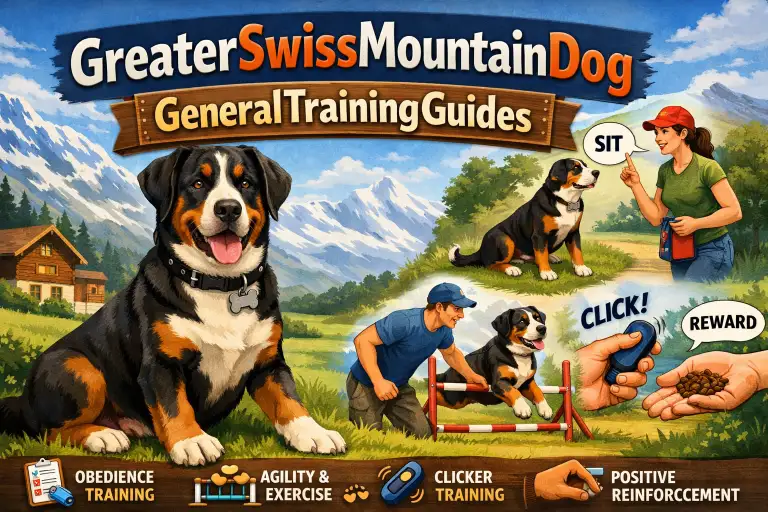
The most effective Greater Swiss Mountain Dog training method is positive reinforcement. Swissies respond well when they understand that good behavior leads to rewards.
| Training Method | Why It Works |
|---|---|
| Treat rewards | Encourages your dog to repeat desired behaviors |
| Praise and affection | Builds trust and strengthens your bond |
| Short training sessions | Keeps your Swissy focused and interested |
| Consistency | Helps your dog understand expectations |
| Mental stimulation | Prevents boredom and unwanted behaviors |
Remember that patience is essential when training a Greater Swiss Mountain Dog. These dogs mature slowly compared to smaller breeds, and consistent guidance will produce the best results.
Step-by-Step Greater Swiss Mountain Dog Training Program
A successful Greater Swiss Mountain Dog training program should follow a clear progression. Start with basic obedience, then move toward leash control, recall, advanced commands, and real-world manners. Because Swissies are large and powerful dogs, teaching good habits early will make daily life much easier.
The goal of training is not only to teach commands but also to build confidence, improve communication, and create a strong bond between you and your dog.
1. Teach Basic Obedience Commands
Basic obedience is the foundation of every well-trained Greater Swiss Mountain Dog. Commands such as sit, stay, come, down, and leave it help your dog understand expectations and behave safely in different situations.
| Command | Training Method | Expected Progress |
|---|---|---|
| Sit | Use a treat to guide your dog’s movement and reward when they sit | Usually learned within a few days with regular practice |
| Stay | Start with short distances and slowly increase time | Improves with daily repetition |
| Come | Call your dog happily and reward immediately when they return | Requires ongoing practice |
| Leave It | Teach your dog to ignore unwanted objects or distractions | Helps prevent dangerous behaviors |
2. Leash Training a Greater Swiss Mountain Dog
Because Greater Swiss Mountain Dogs can weigh over 100 pounds, leash training is one of the most important skills you can teach. A strong dog that pulls constantly can become difficult to control during walks.
To teach proper leash manners:
- Reward your dog when they walk beside you.
- Stop walking when your Swissy pulls.
- Continue only when the leash becomes loose.
- Practice in quiet areas before adding distractions.
Daily leash training helps your Swissy learn that calm walking gets rewarded. Avoid allowing pulling during puppyhood because it can become a difficult habit later.
3. Improve Recall Training (Teaching Your Swissy to Come)
A reliable recall command can keep your Greater Swiss Mountain Dog safe. Swissies are naturally curious and may become distracted by people, animals, or new environments.
For better recall:
- Begin training indoors or in a fenced area.
- Use high-value treats or favorite toys.
- Never punish your dog for coming back.
- Practice recall several times every day.
Remember that recall training takes time. Even a well-trained Swissy should not be allowed off-leash in unsafe areas.
4. Socialization Training for a Greater Swiss Mountain Dog
Proper socialization helps your Swissy become confident around strangers, children, animals, and unfamiliar situations. Since Greater Swiss Mountain Dogs have protective instincts, early exposure is extremely important.
| Socialization Area | Training Goal |
|---|---|
| People | Teach calm greetings and reduce fear |
| Dogs | Encourage polite interactions |
| Sounds | Build confidence around noises like traffic and appliances |
| Places | Help your dog adapt to new environments |
Common Greater Swiss Mountain Dog Behavior Problems and Solutions
Even with good training, some Swissies develop unwanted behaviors. Understanding the reason behind the behavior makes correction much easier.
| Behavior Problem | Possible Cause | Solution |
|---|---|---|
| Pulling on leash | Excitement or lack of training | Practice loose leash walking and reward calm behavior |
| Excessive barking | Protective instincts or boredom | Teach quiet commands and provide mental stimulation |
| Jumping on people | Excitement and attention seeking | Reward four paws on the floor |
| Chewing furniture | Boredom, teething, or lack of exercise | Provide toys and redirect the behavior |
| Ignoring commands | Distractions or inconsistent training | Use short sessions with better rewards |
| Separation anxiety | Strong attachment to family | Practice gradual alone-time training |
Exercise and Mental Stimulation for Training Success
Training a Greater Swiss Mountain Dog is easier when your dog receives enough physical exercise and mental stimulation. A bored Swissy may develop destructive behaviors or become difficult to manage.
Good activities include:
- Daily walks
- Obedience practice
- Puzzle toys
- Scent games
- Basic agility exercises
- Interactive play with family members
Remember that young Swissies should not receive excessive high-impact exercise because their bones and joints are still developing.
When to Hire a Professional Dog Trainer
Most Greater Swiss Mountain Dog training issues can be improved with consistency and patience. However, professional help may be needed for serious behavior concerns.
| Problem | When to Seek Help |
|---|---|
| Aggression | Growling, snapping, biting, or unsafe behavior |
| Severe anxiety | Extreme fear, panic, or destructive behavior |
| Persistent obedience problems | Commands are ignored despite consistent training |
| Resource guarding | Protecting food, toys, or personal space aggressively |
A professional trainer can create a customized plan based on your dog’s personality, age, and behavior history. This is especially helpful with giant breeds because small problems can become harder to manage as the dog grows.
Frequently Asked Questions About Greater Swiss Mountain Dog Training
How easy is it to train a Greater Swiss Mountain Dog?
Greater Swiss Mountain Dogs are intelligent and willing to learn, but they can also be independent. They are usually easy to train when owners use positive reinforcement, consistency, and patience.
What is the best age to start training a Greater Swiss Mountain Dog puppy?
You can begin basic training as soon as your Swissy puppy comes home, usually around 8 weeks old. Early training should focus on socialization, potty training, crate training, and basic commands.
Are Greater Swiss Mountain Dogs stubborn?
Yes, some Swissies can show a stubborn streak. This does not mean they cannot be trained. They respond best to rewards, clear rules, and short enjoyable training sessions.
How long does it take to train a Greater Swiss Mountain Dog?
The timeline depends on your dog’s age, personality, and consistency of training. Basic commands may take weeks, while advanced obedience requires months of regular practice.
Can a Greater Swiss Mountain Dog be trained as a family dog?
Yes. With proper obedience training and socialization, Greater Swiss Mountain Dogs make excellent family companions. They are affectionate, loyal, and usually gentle with children when raised properly.
How do I stop my Greater Swiss Mountain Dog from pulling on the leash?
Use consistent leash training by stopping whenever your dog pulls and rewarding calm walking. Practice daily and avoid allowing pulling behavior during walks.
Do Greater Swiss Mountain Dogs need professional training?
Professional training is not always necessary, but it can be helpful for first-time owners or dogs with serious behavior issues. A trainer can provide guidance and improve communication between you and your Swissy.
Final Thoughts on Training a Greater Swiss Mountain Dog
Training a Greater Swiss Mountain Dog requires patience, consistency, and understanding of the breed’s unique personality. These intelligent and loyal dogs thrive when they receive clear guidance, positive reinforcement, and plenty of interaction with their families.
Whether you are training a GSMD puppy or an adult Swissy, focus on obedience, socialization, exercise, and building trust. With the right approach, your Greater Swiss Mountain Dog can become a confident, respectful, and loving companion for many years.

Ata Ur Rehman is the founder of Pet Age in Human Years Calculator, an educational platform that provides age conversion charts and lifespan guides for dogs, cats, birds, and other companion animals. His work focuses on helping pet owners understand how animal ages translate into human years using commonly accepted age conversion formulas and published lifespan averages.
The website compiles breed and species lifespan data from kennel clubs, breed organizations, and general animal lifespan studies to present simple and easy-to-understand guides for pet owners worldwide.
This website was created to centralize animal age conversion charts into one easy reference platform for pet owners.
This article is for general education. For symptoms, medication, diet changes, or health concerns, use a qualified veterinarian who can assess your individual pet.