On this page
Understanding your Greater Swiss Mountain Dog’s age is important for providing the right nutrition, exercise, training, and health care throughout their life. Like other giant dog breeds, the Greater Swiss Mountain Dog (GSMD or Swissy) ages differently compared to smaller dogs. Their bodies grow rapidly during puppyhood, but their aging process slows as they reach adulthood.
A common question many GSMD owners ask is: “How old is my Greater Swiss Mountain Dog in human years?” The traditional rule that one dog year equals seven human years is not accurate, especially for giant breeds. A more realistic comparison shows that a 1-year-old Greater Swiss Mountain Dog is roughly equivalent to a 15-year-old human because giant breeds mature quickly during their first year.
Knowing your dog’s life stage helps you understand changes in behavior, energy levels, body condition, and health needs. Whether you have a young Swissy puppy, an active adult, or a senior Greater Swiss Mountain Dog, proper care can help support a longer and healthier life.
Greater Swiss Mountain Dog Life Stages Explained
The life of a Greater Swiss Mountain Dog can be divided into three main stages: puppy, adult, and senior. Each stage has different physical changes and care requirements.
- Puppy Stage (0–1 Year): This is the fastest growth period. GSMD puppies experience rapid bone development, teething, social learning, and early training. Proper nutrition and controlled exercise are essential during this stage.
- Adult Stage (1–6 Years): Adult Swissies reach their full size, strength, and personality. This stage usually represents peak health, but maintaining a healthy weight and regular activity is important for joint protection.
- Senior Stage (6+ Years): Greater Swiss Mountain Dogs are considered senior dogs earlier than many smaller breeds. Owners may notice slower movement, joint stiffness, reduced stamina, and a greater need for preventive veterinary care.
Greater Swiss Mountain Dog Age Overview Chart
| Life Stage | Age Range | Main Characteristics |
|---|---|---|
| Puppy | 0–1 Year | Rapid growth, teething, high energy, socialization, early training |
| Adult | 1–6 Years | Full physical development, strong muscles, stable behavior |
| Senior | 6+ Years | Slower metabolism, joint changes, reduced activity, aging signs |
Understanding these stages allows owners to prepare for important changes in their GSMD’s health and behavior. Adjusting food, exercise routines, and veterinary care based on age can make a significant difference in quality of life.
The Science Behind Greater Swiss Mountain Dog Aging
Dogs do not age at a steady rate like humans. The popular idea that one dog year equals seven human years is outdated and does not consider breed size, genetics, or growth patterns.
Scientific research shows that dogs age much faster during their early years and then the aging process slows down. A 2019 study examining dog DNA found that canine aging follows a logarithmic pattern, meaning the first few years of a dog’s life represent a much larger amount of biological aging compared to later years.
For a giant breed like the Greater Swiss Mountain Dog, size plays a major role in aging. Large and giant dogs generally have shorter lifespans compared to smaller breeds because their bodies experience faster growth and greater stress on joints, muscles, and internal systems.
Factors That Affect Greater Swiss Mountain Dog Lifespan
| Factor | How It Affects Aging | Care Recommendation |
|---|---|---|
| Body Size | Giant breeds typically age faster than small dogs | Maintain healthy weight and protect joints |
| Genetics | Inherited health conditions can affect lifespan | Choose responsible breeders and know family health history |
| Nutrition | Balanced food supports healthy growth and aging | Feed high-quality large-breed dog food |
| Exercise | Keeps muscles strong and supports mobility | Provide regular but age-appropriate activity |
| Veterinary Care | Early detection improves health outcomes | Schedule regular wellness examinations |
Many factors influence how long a Greater Swiss Mountain Dog lives, including genetics, diet, activity level, weight management, and preventive healthcare. With proper care, owners can help their Swissy maintain a comfortable and active lifestyle through every stage of life.
Greater Swiss Mountain Dog Age Calculator: Convert GSMD Years to Human Years
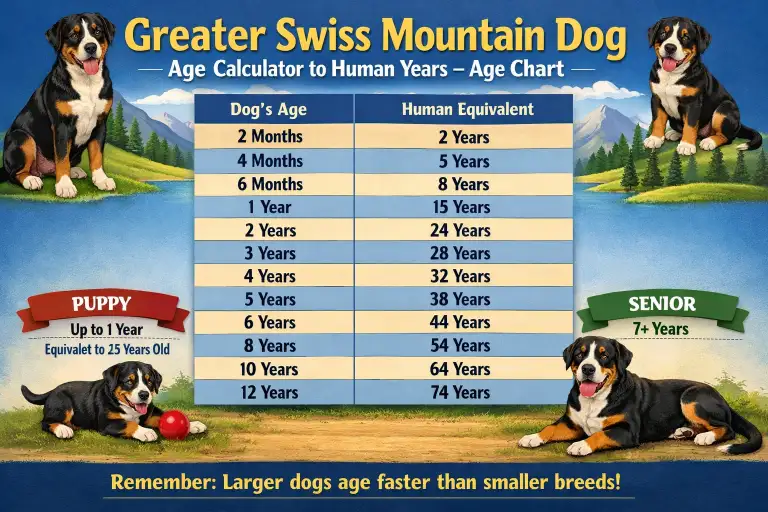
Many owners search for a Greater Swiss Mountain Dog age calculator because they want to understand their dog’s true age compared to humans. Since GSMDs are a giant breed, their first years count much faster than later years.
The following chart provides an approximate comparison of Greater Swiss Mountain Dog years to human years:
| GSMD Age | Human Age Equivalent | Life Stage |
|---|---|---|
| 1 Year | 15 Human Years | Teenage stage, rapid growth |
| 2 Years | 24 Human Years | Young adult |
| 3 Years | 29 Human Years | Adult maturity |
| 4 Years | 34 Human Years | Strong adult stage |
| 5 Years | 39 Human Years | Mature adult |
| 6 Years | 44 Human Years | Beginning senior transition |
| 7 Years | 49 Human Years | Early senior years |
| 8 Years | 54 Human Years | Senior stage |
| 9 Years | 59 Human Years | Older senior |
For example, a 5-year-old Greater Swiss Mountain Dog is approximately similar to a 39-year-old human, while a 1-year-old GSMD puppy is comparable to a 15-year-old teenager.
This age comparison helps owners understand why a young Swissy may still have high energy while an older dog may need adjustments in diet, exercise, and health monitoring.
Greater Swiss Mountain Dog Life Stages and Care Guide
The Greater Swiss Mountain Dog life cycle includes three important stages: puppy, adult, and senior. Each stage brings different physical changes, behavior patterns, and health requirements. Understanding these stages allows owners to provide better care and support their Swissy throughout their entire life.
Greater Swiss Mountain Dog Puppy Stage (0–1 Year)
The puppy stage is the most important period for a Greater Swiss Mountain Dog because they experience extremely rapid growth. GSMD puppies can gain a significant amount of weight in their first year, making proper nutrition and controlled exercise essential.
During this stage, owners should focus on:
- Large-breed puppy nutrition: Feed a balanced diet designed for giant breed puppies to support healthy bone development.
- Early training: Begin basic obedience training, leash training, and house training.
- Socialization: Introduce your puppy to different people, animals, sounds, and environments.
- Safe exercise: Avoid excessive jumping or high-impact activities that may stress developing joints.
A well-raised GSMD puppy is more likely to become a confident, healthy, and well-behaved adult dog.
Greater Swiss Mountain Dog Adult Stage (1–6 Years)
During adulthood, a Greater Swiss Mountain Dog reaches full physical maturity. This is usually the period when Swissies are strongest, most active, and have stable personalities.
Adult GSMD care should focus on maintaining long-term health through:
- Healthy weight management: Extra weight can increase stress on hips, elbows, and joints.
- Regular exercise: Daily walks, outdoor activities, and mental stimulation help maintain fitness.
- Balanced adult diet: Provide quality food with proper protein, nutrients, and calories.
- Routine veterinary visits: Regular checkups help detect health concerns early.
Although adult Swissies are energetic dogs, they should not be over-exercised because giant breeds are more vulnerable to joint problems.
Greater Swiss Mountain Dog Senior Stage (6+ Years)
Greater Swiss Mountain Dogs are considered senior dogs earlier than many smaller breeds. Around six years of age, owners may begin noticing gradual changes in energy, movement, and recovery time.
Common signs of aging in senior GSMDs include:
- Slower walking pace
- Joint stiffness after resting
- Reduced interest in intense activities
- Longer recovery after exercise
- Changes in weight or appetite
- More time spent sleeping
Senior Swissies benefit from gentle exercise, joint support, senior nutrition, and more frequent veterinary examinations. Early attention to age-related changes can help improve comfort and quality of life.
How to Help Your Greater Swiss Mountain Dog Age Healthy
Providing lifelong care is one of the best ways to support your Greater Swiss Mountain Dog lifespan. While genetics influence longevity, daily habits have a major impact on your dog’s overall health.
Tips for Supporting a Longer GSMD Lifespan
- Maintain a healthy weight: Keeping your Swissy lean reduces pressure on joints and improves mobility.
- Provide proper nutrition: Choose food appropriate for your dog’s age, size, and activity level.
- Support joint health: Large breeds benefit from joint-friendly care, including comfortable bedding and veterinarian-approved supplements when needed.
- Exercise consistently: Regular moderate activity keeps muscles strong and prevents stiffness.
- Schedule preventive veterinary care: Routine exams, dental care, and health screenings help identify problems early.
- Keep their mind active: Training sessions, puzzle toys, and enrichment activities support mental health at every age.
A combination of good genetics, proper care, healthy nutrition, and regular veterinary attention can help your Greater Swiss Mountain Dog enjoy a happier and more comfortable life.
Frequently Asked Questions About Greater Swiss Mountain Dog Age
How old is a 1-year-old Greater Swiss Mountain Dog in human years?
A 1-year-old Greater Swiss Mountain Dog is approximately equal to a 15-year-old human. Giant breeds mature quickly during their first year, which is why their early aging process is much faster than humans.
How do you calculate Greater Swiss Mountain Dog age in human years?
Greater Swiss Mountain Dog age should not be calculated using the old seven-year rule. Giant breeds age rapidly during puppyhood and slower during adulthood. A more accurate method considers breed size, genetics, and developmental stages.
What is the average lifespan of a Greater Swiss Mountain Dog?
The average Greater Swiss Mountain Dog lifespan is around 8 to 11 years. Some Swissies may live longer with excellent genetics, proper nutrition, healthy weight management, and regular veterinary care.
At what age is a Greater Swiss Mountain Dog considered a senior?
Most Greater Swiss Mountain Dogs are considered senior around 6 years old. Because they are a giant breed, they may show aging signs earlier than smaller dogs.
What are the first signs of aging in a GSMD?
Common aging signs in a Greater Swiss Mountain Dog include slower movement, joint stiffness, reduced endurance, weight changes, and needing more rest after activity.
Do Greater Swiss Mountain Dogs age faster than smaller dogs?
Yes. Giant breeds like the Greater Swiss Mountain Dog generally age faster than smaller breeds. Their rapid growth rate and larger body size contribute to a shorter lifespan compared with many smaller dogs.
How can I help my senior Greater Swiss Mountain Dog stay comfortable?
You can support a senior GSMD by providing a healthy diet, gentle exercise, joint-friendly bedding, regular veterinary checkups, and mental stimulation. Adjusting care based on age helps maintain comfort and mobility.
Is the dog years to human years chart accurate for GSMD dogs?
No chart is perfectly exact because every dog ages differently. However, a breed-specific age chart gives a much better estimate than the traditional “one dog year equals seven human years” method.
Final Thoughts on Greater Swiss Mountain Dog Aging
Understanding your Greater Swiss Mountain Dog’s age in human years helps you make better decisions about food, exercise, training, and healthcare. From the fast-growing puppy stage to the slower senior years, each life phase requires different attention.
By recognizing aging changes early and providing proper care throughout every stage, owners can help their Swissy enjoy a healthier, happier, and more comfortable life.

Ata Ur Rehman is the founder of Pet Age in Human Years Calculator, an educational platform that provides age conversion charts and lifespan guides for dogs, cats, birds, and other companion animals. His work focuses on helping pet owners understand how animal ages translate into human years using commonly accepted age conversion formulas and published lifespan averages.
The website compiles breed and species lifespan data from kennel clubs, breed organizations, and general animal lifespan studies to present simple and easy-to-understand guides for pet owners worldwide.
This website was created to centralize animal age conversion charts into one easy reference platform for pet owners.
This article is for general education. For symptoms, medication, diet changes, or health concerns, use a qualified veterinarian who can assess your individual pet.