On this page
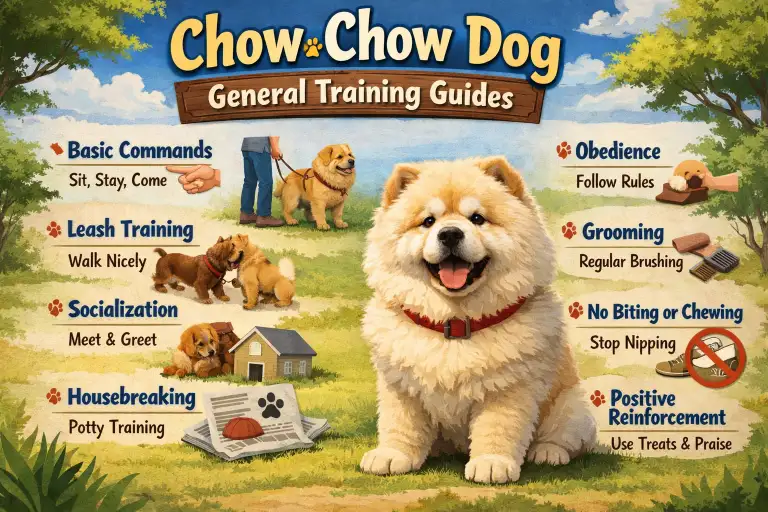
Learning how to train a Chow Chow is essential for raising a confident, obedient, and well-socialized companion. This complete Chow Chow training guide covers obedience training, socialization tips, leash manners, and behavior management techniques designed specifically for this independent breed.
Chow Chows thrive when they have consistent routines, positive reinforcement, and clear boundaries. Early puppy training helps prevent stubborn behavior, excessive guarding instincts, and social anxiety around strangers or other dogs. By working with your Chow Chow’s natural temperament rather than against it, training becomes easier and more rewarding.
Chow Chow Breed Characteristics at a Glance
| Trait | Description | Best Training Approach |
|---|---|---|
| Temperament | Independent, loyal, reserved | Use patience and positive reinforcement training |
| Energy Level | Moderate | Schedule short daily training sessions |
| Socialization Needs | Can be selective with strangers and dogs | Begin socialization early with controlled exposure |
| Trainability | Intelligent but stubborn | Keep commands simple and reward success quickly |
Understanding these Chow Chow personality traits helps owners create a training program that matches the breed’s unique characteristics.
Why Chow Chow Training Is Important
Training a Chow Chow is not simply about teaching commands such as sit or stay. Proper dog training keeps your pet safe, improves behavior, and strengthens your bond.
Because Chow Chows are naturally independent and protective, a lack of training may result in:
- Ignoring commands
- Resource guarding behavior
- Leash pulling
- Fearfulness around strangers
- Aggression caused by poor socialization
Using positive reinforcement dog training methods such as treats, praise, toys, and play sessions encourages cooperation and prevents fear-based reactions.
| Problem Without Training | Potential Issue | Training Benefit |
|---|---|---|
| Stubbornness | Ignoring commands | Improved obedience and responsiveness |
| Guarding instincts | Growling over food or toys | Safer interactions with family and visitors |
| Aloof behavior | Avoiding new people or dogs | Greater confidence and social skills |
| Poor socialization | Fear or aggression | Calm behavior in new environments |
Early obedience training for Chow Chow puppies can prevent future behavioral problems and create a well-mannered adult dog.
Understanding Chow Chow Behavior and Body Language
Successful Chow Chow training starts with understanding canine body language. Chow Chows communicate their emotions through posture, facial expressions, and movement.
This breed is naturally protective of its family and territory, making early socialization extremely important.
| Behavior | Meaning | Recommended Response |
|---|---|---|
| Tail stiff and raised | Alertness or guarding behavior | Remain calm and avoid sudden movements |
| Ears pinned back | Fear or discomfort | Create space and use rewards for reassurance |
| Lip licking or yawning | Stress or anxiety | Pause training and allow relaxation |
| Turning head away | Avoidance behavior | Redirect attention with treats or toys |
| Relaxed body posture | Comfort and confidence | Continue training or socialization |
Recognizing these signals allows owners to adjust training sessions and prevent unnecessary stress or aggression.
Step-by-Step Chow Chow Obedience Training Plan
The best way to train a Chow Chow puppy is through short, consistent, and reward-based sessions. Since this breed can lose interest quickly, multiple short sessions are more effective than one long session.
Focus on three areas:
- Basic obedience commands
- Leash walking skills
- Socialization training
Daily Chow Chow Training Schedule
| Command or Skill | Session Length | Frequency | Reward Type |
|---|---|---|---|
| Sit | 5-10 minutes | 2-3 times daily | Treats and praise |
| Come (Recall) | 5 minutes | Twice daily | High-value treats |
| Loose Leash Walking | 10 minutes | 1-2 times daily | Clicker or treats |
| Socialization Exercises | 10-15 minutes | Daily | Positive experiences and rewards |
How to Correct Common Chow Chow Behavior Problems
| Behavior Problem | Training Method | Expected Progress |
|---|---|---|
| Ignoring commands | Use shorter sessions and valuable rewards | Responds consistently after several repetitions |
| Fear of strangers | Gradual exposure paired with treats | Calm interactions within a few weeks |
| Resource guarding | Practice trading toys for rewards | Releases items without growling |
| Leash pulling | Use stop-and-go leash training | Walks calmly beside owner |
Behavior shaping and desensitization techniques are highly effective for independent breeds such as the Chow Chow.
How to Socialize a Chow Chow Puppy
Socialization is one of the most important aspects of Chow Chow puppy training. Introducing your puppy to different people, animals, sounds, and environments helps reduce fear and territorial behavior later in life.
Expose your Chow Chow gradually to:
- Children and adults of different ages
- Friendly vaccinated dogs
- Busy streets and parks
- Car rides and public places
- Household noises and visitors
Always pair new experiences with treats and praise to create positive associations.
Common Chow Chow Training Challenges
Even experienced dog owners may encounter training difficulties with this breed. The key is consistency and patience.
| Problem | Likely Cause | Solution |
|---|---|---|
| Ignoring commands | Low motivation or stubbornness | Use better rewards and shorter sessions |
| Resource guarding | Protective instincts | Teach trade games and reward sharing |
| Leash pulling | Excitement during walks | Reward loose leash behavior |
| Avoidance or aloofness | Insufficient socialization | Increase positive social experiences |
| Aggression or fear biting | Anxiety or fear | Seek professional behavioral support immediately |
When to Hire a Professional Dog Trainer
If your Chow Chow displays serious aggression, fear-based biting, or extreme anxiety, consult a certified professional dog trainer or veterinary behaviorist as soon as possible.
Professional intervention can prevent dangerous situations and create a customized training plan tailored to your dog’s needs.
Final Thoughts on Training a Chow Chow
Training a Chow Chow requires patience, consistency, and an understanding of the breed’s independent personality. By using positive reinforcement techniques, early socialization, and structured obedience exercises, you can raise a calm, confident, and loyal companion.
The earlier you begin Chow Chow puppy training, the easier it becomes to develop good habits that last a lifetime.

Ata Ur Rehman is the founder of Pet Age in Human Years Calculator, an educational platform that provides age conversion charts and lifespan guides for dogs, cats, birds, and other companion animals. His work focuses on helping pet owners understand how animal ages translate into human years using commonly accepted age conversion formulas and published lifespan averages.
The website compiles breed and species lifespan data from kennel clubs, breed organizations, and general animal lifespan studies to present simple and easy-to-understand guides for pet owners worldwide.
This website was created to centralize animal age conversion charts into one easy reference platform for pet owners.
This article is for general education. For symptoms, medication, diet changes, or health concerns, use a qualified veterinarian who can assess your individual pet.