On this page
Standard Poodle grooming is not cosmetic or optional care. It is a core part of keeping this intelligent breed healthy, comfortable, and active throughout life. Unlike heavy shedding breeds, Standard Poodles have a continuously growing curly coat that traps loose hair, moisture, debris, and natural skin oils close to the skin.
Without regular grooming, the coat quickly becomes matted and tangled, creating conditions that can lead to pain, skin infections, restricted movement, and behavioral stress. Proper Standard Poodle grooming supports healthy skin, improves comfort, and helps owners detect health issues early.
Regular brushing and bathing help maintain skin health, reduce yeast and bacterial growth, and prevent painful matting that pulls on the skin. Grooming sessions also allow owners to identify hot spots, allergies, parasites, ear infections, lumps, and changes in skin condition before they become serious problems.
Mats commonly develop behind the ears, under the legs, around the collar, and near joints where movement creates friction. As these mats tighten, they can restrict movement and cause chronic discomfort.
Because Standard Poodle coats retain moisture easily, inadequate drying after baths, swimming, or rainy walks can encourage yeast growth and unpleasant odors. A structured grooming routine keeps the coat clean, dry, and manageable.
Understanding the Standard Poodle Coat and Grooming Needs
The Standard Poodle coat is unique among dog breeds. Their dense curls grow continuously and behave more like human hair than traditional dog fur. Although Standard Poodles are considered low-shedding dogs, they are not low-maintenance dogs.
Loose hair becomes trapped inside the curls instead of falling naturally. Without regular brushing, trapped hair combines with moisture and debris to form mats close to the skin.
Because the coat never stops growing, Standard Poodles require regular brushing, bathing, drying, and trimming throughout their lives.
| Coat Feature | What It Means | Grooming Impact |
|---|---|---|
| Curly dense coat | Hair grows continuously | Requires regular brushing |
| Low shedding | Loose hair remains trapped | Dead hair must be removed manually |
| Moisture retention | Water stays close to the skin | Complete drying is essential |
| Friction areas mat easily | Hair tangles quickly | Extra attention during brushing is needed |
| Sensitive skin | Problems remain hidden beneath the coat | Routine skin checks are important |
How to Groom a Standard Poodle at Home
Learning how to groom a Standard Poodle at home helps prevent matting and reduces the need for corrective grooming appointments.
The most important rule is to brush before bathing. Bathing a matted coat tightens tangles and makes them more difficult to remove.
Essential Standard Poodle Grooming Tools
| Tool | Purpose | Recommended Frequency |
|---|---|---|
| Slicker brush | Removes loose hair and tangles | 3 to 5 times weekly |
| Metal comb | Checks for hidden mats | After every brushing session |
| Dog shampoo | Cleans dirt and oils | Every 3 to 6 weeks |
| Dog conditioner | Softens curls and reduces tangles | Every bath |
| Pet dryer | Dries the coat completely | After every bath |
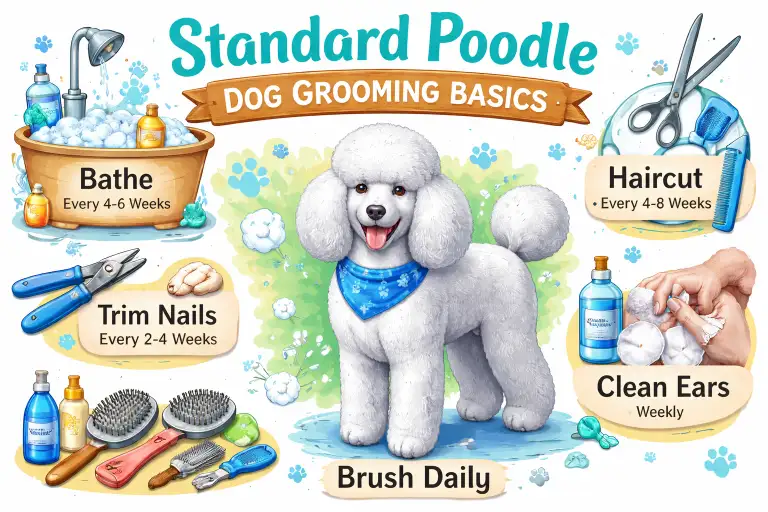
| Nail trimmer or grinder | Maintains healthy nail length | Every 2 to 4 weeks |
Brushing a Standard Poodle Properly
Brushing is the foundation of Standard Poodle coat care. Surface brushing is not enough because mats often develop underneath the top layer of curls.
Brush in small sections and ensure the brush reaches the skin. Always follow brushing with a metal comb to detect hidden tangles.
Pay special attention to:
- Behind the ears
- Under the front legs
- Around the collar area
- Near the tail
- Around joints and legs
Bathing and Drying a Standard Poodle
Most Standard Poodles benefit from bathing every three to six weeks depending on coat length and activity level.
Always use dog-specific grooming products because human shampoos can disrupt the skin barrier and cause irritation.
Drying is equally important. Allowing the coat to air dry increases the risk of matting, trapped moisture, and skin infections.
| Grooming Task | Frequency | Risk if Skipped |
|---|---|---|
| Brushing | 3 to 5 times weekly | Matting and tangles |
| Bathing | Every 3 to 6 weeks | Odor and dirt buildup |
| Drying | After every bath | Yeast growth and skin issues |
| Professional trimming | Every 6 to 8 weeks | Coat becomes difficult to manage |
Standard Poodle Nail, Ear, and Skin Care
Complete Standard Poodle grooming includes more than coat maintenance. Nail trimming, ear cleaning, and skin checks are essential parts of preventive care.
Long nails can alter posture and movement, eventually contributing to joint discomfort. Nails should generally be trimmed every two to four weeks.
Because Standard Poodles have floppy ears with limited airflow, regular ear checks help reduce the risk of ear infections.
| Area | Warning Signs | Possible Cause |
|---|---|---|
| Nails | Limping or licking paws | Overgrown nails |
| Ears | Odor or head shaking | Ear infection or yeast |
| Skin | Redness or itching | Allergies or irritation |
| Coat | Greasy feel or odor | Poor drying or infection |
| Hair loss | Thin patches | Skin disease or stress |
Standard Poodle Grooming Schedule
| Task | Recommended Frequency |
|---|---|
| Brushing | 3 to 5 times per week |
| Bathing | Every 3 to 6 weeks |
| Nail trimming | Every 2 to 4 weeks |
| Ear checks | Weekly |
| Professional grooming | Every 6 to 8 weeks |
Common Standard Poodle Grooming Mistakes
| Mistake | Problem | Better Approach |
|---|---|---|
| Skipping brushing sessions | Mats develop close to the skin | Brush consistently every week |
| Bathing before brushing | Mats become tighter when wet | Brush thoroughly before bathing |
| Air drying the coat | Moisture becomes trapped | Use a pet dryer after bathing |
| Waiting too long between grooms | Severe matting may require shaving | Maintain regular grooming appointments |
| Using human shampoo | Skin irritation can occur | Use dog-specific grooming products |
Final Thoughts on Standard Poodle Grooming
Standard Poodle grooming is an essential part of responsible ownership. Regular brushing, bathing, drying, nail care, ear cleaning, and professional grooming appointments help prevent painful matting while supporting lifelong health and comfort.
Dogs that are introduced to grooming early and groomed consistently tend to remain calmer and more cooperative during grooming sessions throughout adulthood.

Ata Ur Rehman is the founder of Pet Age in Human Years Calculator, an educational platform that provides age conversion charts and lifespan guides for dogs, cats, birds, and other companion animals. His work focuses on helping pet owners understand how animal ages translate into human years using commonly accepted age conversion formulas and published lifespan averages.
The website compiles breed and species lifespan data from kennel clubs, breed organizations, and general animal lifespan studies to present simple and easy-to-understand guides for pet owners worldwide.
This website was created to centralize animal age conversion charts into one easy reference platform for pet owners.
This article is for general education. For symptoms, medication, diet changes, or health concerns, use a qualified veterinarian who can assess your individual pet.