On this page
Meta Title: Standard Schnauzer Nutrition Guide: Best Food & Feeding Chart
Meta Description: Learn what to feed a Standard Schnauzer, how much food they need daily, calorie requirements, best diet choices, feeding schedule, and nutrition tips for lifelong health.
Standard Schnauzer Nutrition: Complete Feeding Guide
Providing the right nutrition for a Standard Schnauzer is one of the most important parts of keeping this intelligent, athletic breed healthy throughout life. A properly balanced diet supports lean muscle development, healthy weight management, strong digestion, skin health, coat quality, and overall longevity.
Standard Schnauzers are medium-sized working dogs with moderate-to-high energy levels. They need enough calories to maintain their active lifestyle, but their portions must be carefully controlled because excess food can quickly lead to weight gain.
Unlike smaller breeds with faster metabolisms or giant breeds with unique growth concerns, the Standard Schnauzer requires a balanced approach: high-quality nutrients, controlled calories, consistent feeding routines, and adjustments based on age and activity level.
Many Standard Schnauzers can also experience food sensitivities, digestive issues, skin irritation, or weight fluctuations. Choosing the right food ingredients and maintaining consistency are often more important than constantly changing diets.
What Should a Standard Schnauzer Eat?
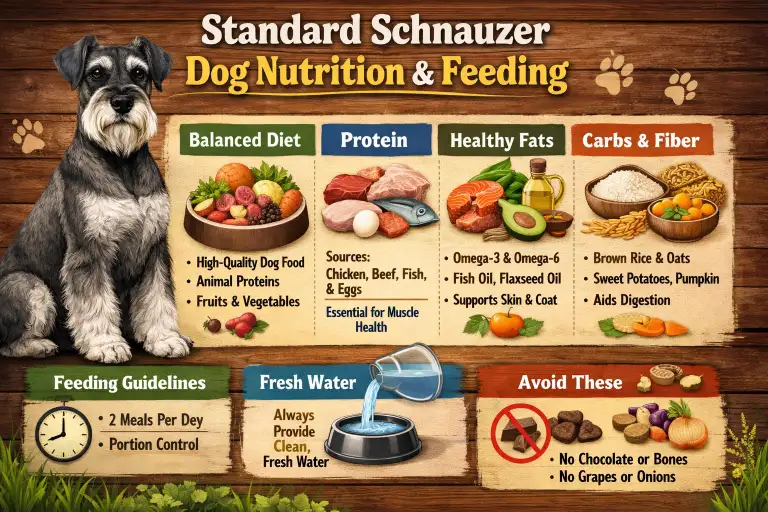
The best food for a Standard Schnauzer is a complete and balanced dog diet that provides the correct amounts of protein, fat, carbohydrates, vitamins, minerals, and essential fatty acids.
Most healthy Standard Schnauzers do well on high-quality commercial dog food that meets established nutritional standards such as:
- AAFCO (Association of American Feed Control Officials)
- FEDIAF (European Pet Food Industry Federation)
- NRC (National Research Council)
A balanced diet should be selected based on your dog’s:
- Age (puppy, adult, or senior)
- Weight
- Activity level
- Body condition
- Digestive sensitivity
- Health requirements
Standard Schnauzer Nutritional Requirements
| Nutrient | Recommended Range | Why It Matters |
|---|---|---|
| Protein | Approximately 22–28% for adults | Supports muscle maintenance, strength, and healthy body condition |
| Fat | Approximately 10–16% | Provides energy and supports skin and coat health |
| Fiber | Approximately 3–6% | Helps digestion and improves stool quality |
| Calcium & Phosphorus | Balanced ratio | Supports bones and healthy development |
| Omega-3 & Omega-6 Fatty Acids | Diet dependent | Supports healthy skin, coat shine, and inflammation control |
| Vitamins & Minerals | Complete and balanced levels | Supports immunity, metabolism, and organ function |
Important: A higher protein percentage does not automatically mean better nutrition. The quality, digestibility, and amino acid balance of the protein source matter more than simply choosing the highest number on a label.
How Proper Nutrition Affects Standard Schnauzer Health
| Health Area | How Nutrition Helps |
|---|---|
| Energy and stamina | Proper calories and healthy fats provide fuel for active lifestyles |
| Muscle maintenance | High-quality protein helps preserve lean muscle |
| Digestive health | Balanced fiber supports regular stools and gut health |
| Skin and coat | Essential fatty acids help maintain healthy skin and coat condition |
| Weight control | Correct portions prevent obesity and unnecessary strain on joints |
| Long-term wellness | Balanced vitamins and minerals support overall health |
Breed-Specific Nutrition Considerations for Standard Schnauzers
Although Standard Schnauzers are generally healthy and hardy dogs, owners should understand several breed-specific feeding factors.
- Weight gain can happen gradually: Standard Schnauzers may gain extra weight after neutering, reduced exercise, or excessive treats.
- Food sensitivity is possible: Repeated itching, loose stool, ear problems, or digestive upset may indicate intolerance to certain ingredients.
- Consistency is important: Frequent food changes can cause stomach problems and make digestion less stable.
- Supplements are usually unnecessary: A complete balanced diet normally provides all required nutrients unless a veterinarian recommends additional support.
Common Standard Schnauzer Diet Myths
| Myth | Reality |
|---|---|
| Grain-free food is always healthier | There is no proven breed-specific advantage unless a dog has a diagnosed dietary issue. |
| More protein always means more energy | Energy depends mainly on calories and fat levels, not protein alone. |
| Homemade food is automatically better | Home diets must be professionally balanced to avoid nutritional deficiencies. |
| Changing food often improves nutrition | Frequent changes may cause digestive problems without providing extra benefits. |
The foundation of a healthy Standard Schnauzer diet is simple: choose a high-quality balanced food, measure portions carefully, monitor body condition, and adjust feeding based on your dog’s needs.
Frequently Asked Questions About Standard Schnauzer Nutrition
What is the best food for a Standard Schnauzer?
The best food for a Standard Schnauzer is a complete and balanced diet that provides high-quality protein, healthy fats, digestible carbohydrates, essential fatty acids, vitamins, and minerals. Most healthy Standard Schnauzers do well on premium dry kibble, fresh food, or carefully formulated diets that meet AAFCO or FEDIAF nutritional standards.
How much should a Standard Schnauzer eat per day?
The amount of food a Standard Schnauzer needs depends on their weight, age, activity level, metabolism, and body condition. Most adult Standard Schnauzers require approximately 700–1,400 calories per day, depending on size and exercise level. Always adjust portions based on your dog’s body shape rather than relying only on the feeding label.
How many times a day should I feed my Standard Schnauzer?
Adult Standard Schnauzers usually do best with two meals per day, one in the morning and one in the evening. Puppies may need three to four meals daily to support growth, while senior dogs often benefit from smaller meals divided throughout the day.
What protein is best for a Standard Schnauzer?
High-quality animal proteins such as chicken, turkey, beef, fish, lamb, and eggs are good options for most Standard Schnauzers. The best protein source depends on your dog’s digestion, allergies, and personal tolerance.
Can Standard Schnauzers eat grain-free food?
Grain-free food is not automatically healthier for Standard Schnauzers. Unless your dog has a confirmed grain sensitivity, a balanced diet containing safe carbohydrate sources may be perfectly appropriate. Always choose food based on nutritional quality rather than marketing claims.
Are Standard Schnauzers prone to food allergies?
Some Standard Schnauzers can develop food sensitivities that may appear as itching, recurring ear problems, digestive upset, or loose stools. If you suspect a food allergy, consult your veterinarian before making major diet changes.
Can I feed my Standard Schnauzer homemade food?
Yes, homemade diets can work, but they must be properly formulated to provide all essential nutrients. Many homemade recipes found online lack important vitamins, minerals, calcium, or balanced protein levels. A veterinary nutritionist can help create a safe homemade diet.
How do I know if my Standard Schnauzer is overweight?
A healthy Standard Schnauzer should have a visible waist and ribs that can be felt easily without excessive fat covering them. If you cannot feel the ribs or the waist disappears, your dog may be overweight and portion adjustments may be needed.
What treats are safe for Standard Schnauzers?
Healthy treat options include small pieces of cooked chicken, carrots, green beans, plain pumpkin, and low-calorie commercial dog treats. Treats should make up less than 10% of your dog’s daily calories to prevent weight gain.
Can Standard Schnauzers eat human food?
Some human foods are safe in small amounts, including plain cooked meat, rice, carrots, and pumpkin. However, foods such as chocolate, grapes, raisins, onions, garlic, alcohol, caffeine, and xylitol are dangerous and should never be given to dogs.
Why is my Standard Schnauzer always hungry?
A Standard Schnauzer that seems hungry all the time may not actually need more food. Begging can be caused by habit, treats, boredom, or insufficient meal structure. Check body condition before increasing portions.
Should I give my Standard Schnauzer supplements?
Most healthy Standard Schnauzers do not need supplements when eating a complete and balanced diet. Supplements should only be added when there is a specific health reason or veterinary recommendation.
How do I change my Standard Schnauzer’s food safely?
Switch foods gradually over about 7 days. Start with approximately 75% old food and 25% new food, then slowly increase the new food while reducing the old food. A slow transition helps prevent diarrhea and digestive upset.
What foods should Standard Schnauzers avoid?
Standard Schnauzers should never eat toxic foods including:
- Chocolate
- Grapes and raisins
- Onions and garlic
- Xylitol-containing products
- Alcohol
- Caffeine
- Macadamia nuts
When should I talk to a veterinarian about my Standard Schnauzer’s diet?
You should consult a veterinarian if your Standard Schnauzer experiences unexplained weight loss, ongoing diarrhea, constant itching, repeated vomiting, refusal to eat, sudden weight gain, or signs of food intolerance.
Final Thoughts on Feeding a Standard Schnauzer
A healthy Standard Schnauzer diet is not about finding the most expensive food or following the latest trend. The best approach is choosing a balanced, high-quality diet, feeding appropriate portions, limiting unnecessary treats, and adjusting nutrition as your dog ages.
By focusing on proper calories, quality ingredients, digestive health, and regular weight monitoring, you can help your Standard Schnauzer maintain strong muscles, a healthy coat, steady energy, and a long, active life.

Ata Ur Rehman is the founder of Pet Age in Human Years Calculator, an educational platform that provides age conversion charts and lifespan guides for dogs, cats, birds, and other companion animals. His work focuses on helping pet owners understand how animal ages translate into human years using commonly accepted age conversion formulas and published lifespan averages.
The website compiles breed and species lifespan data from kennel clubs, breed organizations, and general animal lifespan studies to present simple and easy-to-understand guides for pet owners worldwide.
This website was created to centralize animal age conversion charts into one easy reference platform for pet owners.
This article is for general education. For symptoms, medication, diet changes, or health concerns, use a qualified veterinarian who can assess your individual pet.