On this page
Training a Soft Coated Wheaten Terrier can be incredibly rewarding, but this energetic and intelligent breed often requires a different approach than many other dogs. While Wheatens are affectionate, playful, and eager to be involved in family life, they are also excitable, easily distracted, and sometimes selective about when they choose to listen.
This complete Soft Coated Wheaten Terrier training guide helps owners understand breed-specific behavior, set realistic expectations, and build reliable obedience using modern, reward-based methods.
Who Is This Wheaten Terrier Training Guide For?
- New owners raising a Soft Coated Wheaten Terrier puppy
- Families struggling with adolescent Wheaten Terrier behavior
- Owners of rescue or adult Wheatens with little previous training
- Anyone wondering why their friendly Wheaten “doesn’t listen”
- Owners looking for positive reinforcement training methods
Contrary to popular belief, Soft Coated Wheaten Terriers are rarely stubborn. Most training problems happen because the dog is overstimulated, confused by inconsistent rules, or overwhelmed by excitement.
Because this breed is highly social, emotionally sensitive, and energetic, generic dog training advice often fails to address their specific needs.
Why Training Your Soft Coated Wheaten Terrier Is So Important
Training is about much more than teaching commands like sit or stay. Proper obedience training helps shape how your Wheaten reacts to people, visitors, distractions, and daily life situations.
Without training, common Wheaten Terrier behavior problems include:
- Jumping on visitors and children
- Pulling excessively during walks
- Ignoring recall commands outdoors
- Overexcitement around guests
- Mouthy or rough play behavior
- Difficulty settling indoors
These behaviors are usually caused by excitement rather than aggression or dominance.
Benefits of Early Wheaten Terrier Training
- Improves impulse control
- Creates safe off-leash habits
- Reduces leash pulling
- Prevents jumping problems
- Builds confidence in new environments
- Strengthens the bond between dog and owner
| Behavior Problem | Why It Happens | Risk if Ignored | Training Solution |
|---|---|---|---|
| Jumping on people | Friendly excitement | Knocked-over guests and children | Reward calm greetings |
| Ignoring commands | Overstimulation | Unsafe outdoor behavior | Build focus gradually |
| Leash pulling | High energy levels | Stressful walks | Loose-leash training |
| Indoor hyperactivity | Lack of routine | Household chaos | Structured exercise schedule |
| Mouthy play | Puppy habits | Accidental bites and rough play | Redirect to toys |
Understanding Soft Coated Wheaten Terrier Temperament
Successful Soft Coated Wheaten Terrier obedience training starts with understanding how this breed thinks and responds to the world.
Most Wheatens are:
- Extremely social and people-focused
- Highly energetic during puppy and adolescent stages
- Very intelligent but easily distracted
- Sensitive to tone of voice and corrections
- Quick learners when motivated correctly
Many owners mistake excitement for disobedience. In reality, Wheaten Terriers often become so stimulated by visitors, dogs, or new environments that they struggle to process commands they already know.
This breed responds best to positive reinforcement training rather than punishment-based methods.
| Breed Trait | Common Behavior | Training Challenge | Best Solution |
|---|---|---|---|
| High energy | Jumping and spinning | Poor focus | Short sessions |
| Strong social drive | Over-greeting visitors | Excitement control | Teach calm greetings |
| Sensitivity | Shutting down when corrected | Confidence loss | Reward-based training |
| Intelligence | Fast learning | Boredom | Variety and games |
| Independence | Selective listening | Motivation issues | High-value rewards |
Best Soft Coated Wheaten Terrier Training Methods
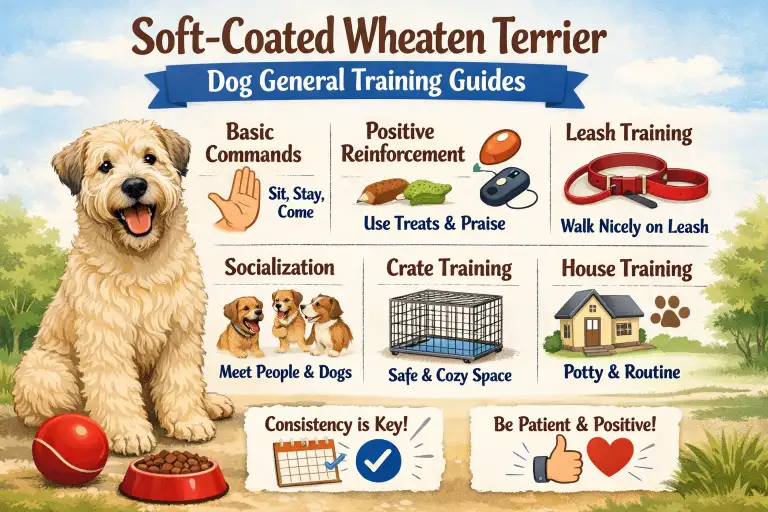
The best training approach for a Wheaten Terrier combines consistency, structure, and positive reinforcement.
Follow These Core Training Rules
- Train before excitement becomes too high.
- Keep sessions short and enjoyable.
- Reward good behavior immediately.
- Practice every day.
- End sessions on a success.
Focus first on essential obedience skills:
- Sit
- Stay
- Come when called
- Loose leash walking
- Leave it
- Calm greetings
- Settle on a mat
Recommended Training Schedule by Age
| Age | Session Length | Sessions Daily | Training Priority |
|---|---|---|---|
| 8-16 weeks | 3-5 minutes | 3-4 | Name recognition, socialization, potty training |
| 4-8 months | 5-8 minutes | 2-3 | Recall, leash walking, impulse control |
| 8-18 months | 8-10 minutes | 2 | Focus around distractions |
| Adult | 10-15 minutes | 1-2 | Advanced obedience and manners |
Best Rewards for Wheaten Terrier Training
| Reward | Best Use | Limitations |
|---|---|---|
| Small treats | Teaching new commands | Monitor calories |
| Verbal praise | Reinforcing calm behavior | Less effective outdoors |
| Toys | Motivating active dogs | Can increase excitement |
| Play sessions | Building engagement | Keep brief |
| Life rewards | Advanced obedience | Requires basic skills first |
Common Soft Coated Wheaten Terrier Behavior Problems
How to Stop a Wheaten Terrier From Jumping
Jumping is one of the most common Wheaten Terrier problems because the breed naturally expresses excitement physically.
Ignore jumping completely and reward calm behavior immediately when all four paws are on the floor.
Why Does My Wheaten Terrier Ignore Commands?
If your Wheaten listens perfectly at home but ignores commands outside, distractions are likely overwhelming your dog’s ability to focus.
Reduce distractions and gradually increase difficulty over time.
How to Stop Wheaten Terrier Leash Pulling
Loose leash walking should begin early. Never allow pulling to get your dog closer to what they want.
When the leash becomes tight, stop moving immediately and reward the dog for returning attention to you.
| Problem | Cause | Common Mistake | Better Solution |
|---|---|---|---|
| Jumping | Attention seeking | Rewarding excitement | Reward calm greetings |
| Ignoring commands | Distractions | Repeating cues | Reduce difficulty |
| Leash pulling | Excitement | Allowing pulling to work | Stop-and-go walking |
| Indoor hyperactivity | Lack of structure | Too much stimulation | Build calm routines |
| Mouthing | Puppy play | Using hands as toys | Redirect to chew toys |
When Should You Hire a Professional Dog Trainer?
Most Wheaten Terriers can be trained successfully at home, but professional support can speed progress significantly.
Consider Professional Help If:
- Training progress has stopped for several weeks.
- Your dog appears fearful or anxious.
- Leash reactivity is developing.
- Jumping and excitement continue worsening.
- You feel overwhelmed or frustrated.
| Issue | Recommended Professional | Reason |
|---|---|---|
| Basic obedience | Certified dog trainer | Improves manners and reliability |
| Leash pulling | Trainer | Builds walking skills |
| Fear and anxiety | Behavior consultant | Addresses emotional issues |
| Aggression concerns | Veterinary behaviorist | Medical and behavioral support |
| Owner frustration | Private coaching | Improves communication and consistency |
Frequently Asked Questions About Soft Coated Wheaten Terrier Training
Are Soft Coated Wheaten Terriers easy to train?
Yes, but they require consistency, patience, and positive reinforcement. Their intelligence helps them learn quickly, but excitement can interfere with focus.
At what age should Wheaten Terrier training begin?
Training should begin as soon as your puppy comes home, usually around 8 weeks of age.
Do Wheaten Terriers calm down with age?
Most Soft Coated Wheaten Terriers begin calming noticeably between two and four years of age, although regular exercise and mental stimulation remain essential throughout life.
What is the biggest training challenge with Wheaten Terriers?
Managing excitement and impulse control is typically more difficult than teaching commands themselves.
Final Thoughts
Training a Soft Coated Wheaten Terrier is less about control and more about communication. When owners understand the breed’s energy, sensitivity, and social nature, obedience becomes easier and more enjoyable.
With patience, consistency, and reward-based training, most Wheaten Terriers become well-mannered, confident, and reliable family companions.

Ata Ur Rehman is the founder of Pet Age in Human Years Calculator, an educational platform that provides age conversion charts and lifespan guides for dogs, cats, birds, and other companion animals. His work focuses on helping pet owners understand how animal ages translate into human years using commonly accepted age conversion formulas and published lifespan averages.
The website compiles breed and species lifespan data from kennel clubs, breed organizations, and general animal lifespan studies to present simple and easy-to-understand guides for pet owners worldwide.
This website was created to centralize animal age conversion charts into one easy reference platform for pet owners.
This article is for general education. For symptoms, medication, diet changes, or health concerns, use a qualified veterinarian who can assess your individual pet.