On this page
The right diet can have a major impact on the long-term health of a Soft Coated Wheaten Terrier. While this breed is known for its affectionate personality, playful energy, and beautiful silky coat, it is also known for having a more sensitive digestive system than many other medium-sized dogs.
Because of this, choosing the best food for a Soft Coated Wheaten Terrier requires more than simply buying a high-quality dog food brand. Wheatens have a higher risk of food intolerances, chronic digestive issues, inflammatory bowel disease, and the breed-specific condition known as Protein-Losing Enteropathy (PLE). A poorly matched diet can contribute to digestive upset, poor nutrient absorption, skin problems, and reduced quality of life.
Nutrition also plays a critical role in maintaining the breed’s signature soft, silky Wheaten coat. Deficiencies in protein quality, essential fatty acids, vitamins, and minerals often appear as dull fur, flaky skin, excessive shedding, or increased matting long before more obvious health problems develop.
For active and energetic Wheatens, diet also influences behavior, stamina, and body condition. Balanced calorie intake, quality protein, and digestible ingredients help support stable energy levels while reducing the risk of obesity and digestive upset.
This complete Soft Coated Wheaten Terrier feeding guide explains:
- How much to feed a Soft Coated Wheaten Terrier
- The best foods for sensitive Wheaten stomachs
- Recommended protein, fat, and carbohydrate levels
- Feeding schedules by age and activity level
- Common food allergies and digestive problems
- Special diets for Wheatens with PLE or food sensitivities
Core Nutritional Requirements for a Soft Coated Wheaten Terrier
A healthy Soft Coated Wheaten Terrier requires a balanced, highly digestible diet that supports digestive health, coat condition, muscle maintenance, and immune function.
Protein Requirements
Protein is one of the most important nutrients for Wheaten Terriers, but this breed benefits more from high-quality protein sources than simply high protein percentages.
The best protein sources for Wheatens include:
- Chicken
- Turkey
- Lamb
- Salmon
- White fish
- Eggs
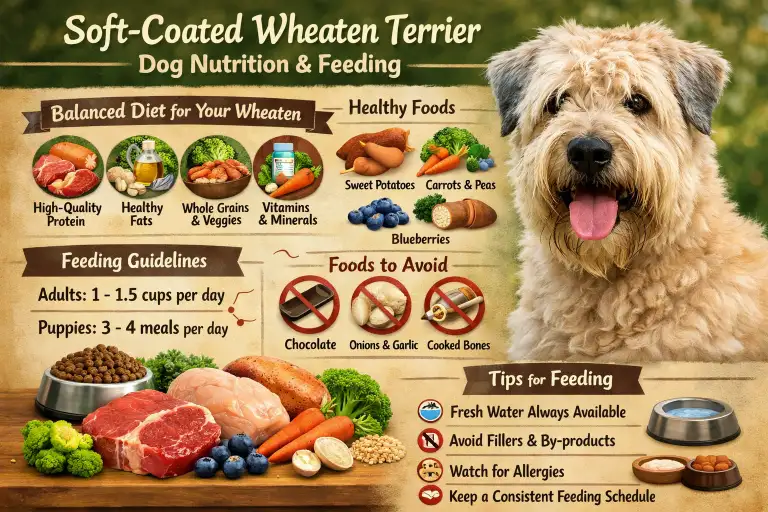
Most healthy adult Wheatens perform best with dietary protein levels between 22% and 30% on a dry matter basis.
Fat Requirements
Healthy fats provide concentrated energy and support skin health, immune function, and coat quality. Omega-3 fatty acids are particularly beneficial for Wheatens because they help reduce inflammation and support digestive health.
Most Soft Coated Wheaten Terriers do well with fat levels between 10% and 16%, although dogs suffering from PLE or chronic digestive disease may require lower-fat veterinary diets.
Carbohydrates and Digestibility
Contrary to popular belief, carbohydrates are not harmful for Wheaten Terriers when digestible ingredients are used. Easily digested carbohydrates can actually improve stool quality and provide stable energy.
Common well-tolerated carbohydrate sources include:
- Rice
- Oats
- Sweet potatoes
- Pumpkin
- Barley
Recommended Macronutrient Ratios for Wheaten Terriers
| Nutrient | Recommended Range | Primary Benefit |
|---|---|---|
| Protein | 22% – 30% | Muscle maintenance and coat health |
| Fat | 10% – 16% | Energy and skin support |
| Carbohydrates | Moderate and digestible | Digestive support and energy |
How Much Should a Soft Coated Wheaten Terrier Eat?
The ideal feeding amount depends on age, body weight, activity level, and reproductive status.
| Body Weight | Low Activity | Moderate Activity | High Activity |
|---|---|---|---|
| 30 lbs (14 kg) | 650-750 kcal | 800-900 kcal | 950-1,050 kcal |
| 35 lbs (16 kg) | 700-800 kcal | 850-950 kcal | 1,000-1,100 kcal |
| 40 lbs (18 kg) | 750-850 kcal | 900-1,000 kcal | 1,050-1,200 kcal |
Soft Coated Wheaten Terrier Feeding Schedule
| Life Stage | Meals Per Day |
|---|---|
| Puppy (8 weeks to 6 months) | 3 meals daily |
| Adult (1 to 7 years) | 2 meals daily |
| Senior (7+ years) | 2 smaller meals daily |
Best Food for a Soft Coated Wheaten Terrier
Many owners ask, “What is the best food for a Soft Coated Wheaten Terrier?” The answer depends on your dog’s age, activity level, digestive health, and individual sensitivities. The ideal diet for a Wheaten Terrier is not always the most expensive option—it is a food that provides balanced nutrition, high-quality ingredients, and consistent digestive results.
Because Soft Coated Wheaten Terriers can have sensitive digestive systems, most dogs do best with foods that contain:
- Named animal protein sources
- Moderate fat levels
- Easily digestible carbohydrates
- Omega-3 fatty acids for skin and coat health
- Complete vitamin and mineral balance
- AAFCO or FEDIAF nutritional approval
What Ingredients Should Wheaten Terrier Food Include?
A high-quality Soft Coated Wheaten Terrier diet should focus on nutrient quality rather than marketing claims. Look for dog foods where the first ingredients provide real animal nutrition.
| Ingredient | Why It Benefits Wheatens |
|---|---|
| Chicken, Turkey, Lamb, Fish | Provides complete amino acids for muscles and coat health |
| Fish Oil | Supports skin, coat, and inflammation control |
| Rice, Oats, Sweet Potato | Provides gentle, digestible energy |
| Fiber Sources | Supports healthy digestion and stool quality |
| Vitamin E and Zinc | Helps maintain healthy skin and silky coat |
Dry Food vs Wet Food vs Fresh Diets for Wheaten Terriers
There is no single perfect food type for every Soft Coated Wheaten Terrier. Different feeding options have advantages and disadvantages, especially for dogs with sensitive digestion.
| Food Type | Advantages | Potential Concerns |
|---|---|---|
| Dry Kibble | Convenient, affordable, easy portion control | Some formulas may be difficult for sensitive dogs to digest |
| Canned Food | Higher moisture and increased palatability | Can be richer and more expensive |
| Fresh Food | High-quality ingredients and less processing | Must be properly balanced for complete nutrition |
| Freeze-Dried Food | Convenient with minimal processing | Higher cost and often requires hydration |
| Raw Diet | Popular among some owners | Higher bacterial and nutritional imbalance risks |
| Homemade Diet | Complete control over ingredients | Requires professional formulation |
For most healthy Wheatens, a complete commercial dog food that meets recognized nutritional standards is the safest and simplest option. Dogs with digestive disorders should have diet changes discussed with a veterinarian.
Grain-Free vs Grain-Inclusive Diets for Soft Coated Wheaten Terriers
Many owners search for the best grain-free food for Wheaten Terriers, but grain-free diets are not automatically healthier. Some Wheatens may react to specific ingredients, but the problem is often the protein source or overall formulation rather than grains themselves.
| Diet Type | Benefits | Possible Issues |
|---|---|---|
| Grain-Inclusive Diet | Often provides balanced nutrition and digestible carbohydrates | Some dogs may have specific ingredient sensitivities |
| Grain-Free Diet | May help dogs with certain diagnosed sensitivities | Not needed for most dogs and may be poorly balanced |
The best approach is to choose a diet based on your individual Wheaten’s health, stool quality, coat condition, and veterinary recommendations—not trends.
Soft Coated Wheaten Terrier Food Allergies and Sensitive Stomach Problems
Soft Coated Wheaten Terriers are known for having a higher risk of digestive sensitivity compared with many other breeds. Owners commonly report problems such as:
- Chronic soft stools
- Gas and digestive discomfort
- Vomiting
- Food intolerance
- Itchy skin
- Recurring ear infections
- Poor coat quality
When a Wheaten develops digestive problems, the solution is usually not simply feeding more expensive food. The first step is identifying which ingredients the dog tolerates best.
Common Signs Your Wheaten Terrier’s Food May Not Be Working
| Problem | Possible Cause | Helpful Dietary Change |
|---|---|---|
| Loose stool | Food intolerance or poor digestibility | Try a simpler diet with fewer ingredients |
| Itchy skin | Possible food sensitivity | Consider limited ingredient diets |
| Dull coat | Low-quality fats or nutrient imbalance | Improve omega fatty acid intake |
| Weight gain | Too many calories or treats | Adjust portions and feeding routine |
| Low energy | Poor nutrition balance | Review protein and calorie levels |
Protein-Losing Enteropathy (PLE) and Diet Management in Wheaten Terriers
Protein-Losing Enteropathy (PLE) is one of the most important health conditions Wheaten Terrier owners should understand. This condition causes excessive loss of protein through the intestinal tract and can lead to serious health problems.
Possible signs of PLE include:
- Chronic diarrhea
- Weight loss
- Loss of muscle
- Swelling caused by low protein levels
- Reduced energy
Wheatens diagnosed with PLE require veterinary management. Their diet often needs careful adjustment to improve digestion and nutrient absorption.
| Diet Focus | Purpose |
|---|---|
| Highly digestible ingredients | Improves nutrient absorption |
| Controlled fat levels | Reduces digestive stress |
| Balanced protein | Supports muscles and recovery |
| Veterinary monitoring | Prevents nutritional deficiencies |
Frequently Asked Questions About Soft Coated Wheaten Terrier Nutrition
What is the best food for a Soft Coated Wheaten Terrier?
The best food for a Soft Coated Wheaten Terrier is a complete and balanced diet made with high-quality protein, digestible carbohydrates, healthy fats, and essential nutrients. Because Wheatens can have sensitive stomachs, many owners find that foods with limited ingredients, named animal proteins, and good digestive support work best.
How much should a Soft Coated Wheaten Terrier eat per day?
Most adult Soft Coated Wheaten Terriers need approximately 650 to 1,200 calories per day, depending on body weight, age, activity level, and metabolism. Active Wheatens may require more calories, while senior or less active dogs may need fewer. Always adjust portions based on body condition and weight changes.
How many times a day should I feed my Wheaten Terrier?
Adult Soft Coated Wheaten Terriers usually do best with two meals per day. Puppies under six months generally need three meals daily, while senior Wheatens may benefit from two smaller meals to support digestion and maintain stable energy.
Do Soft Coated Wheaten Terriers have sensitive stomachs?
Yes. Soft Coated Wheaten Terriers are known to have a higher risk of digestive sensitivity compared with many other breeds. Some Wheatens experience food intolerance, chronic soft stools, inflammatory bowel problems, or protein-losing enteropathy (PLE), making diet selection especially important.
Are grain-free diets good for Soft Coated Wheaten Terriers?
Grain-free food is not automatically better for a Soft Coated Wheaten Terrier. Some dogs may need a grain-free diet because of specific dietary sensitivities, but many Wheatens tolerate high-quality grain-inclusive foods very well. The best diet is the one that supports healthy digestion, weight, and overall condition.
What protein is best for a Wheaten Terrier with a sensitive stomach?
Soft Coated Wheaten Terriers with sensitive digestion often respond well to simple protein sources such as lamb, turkey, fish, or other limited-ingredient formulas. If your dog has ongoing digestive problems, a veterinarian may recommend an elimination diet to identify specific triggers.
Can Soft Coated Wheaten Terriers eat homemade food?
Yes, Soft Coated Wheaten Terriers can eat homemade diets, but they must be properly balanced. Homemade meals that lack essential vitamins, minerals, calcium, or fatty acids can create nutritional deficiencies over time. A veterinarian or canine nutrition specialist should help formulate long-term homemade diets.
What foods should Soft Coated Wheaten Terriers avoid?
Wheatens should avoid toxic foods such as chocolate, grapes, raisins, onions, garlic, alcohol, and products containing xylitol. Owners should also avoid frequent table scraps and sudden food changes because they can contribute to digestive upset.
Do Soft Coated Wheaten Terriers need supplements?
Most healthy Wheatens do not need supplements if they are eating a complete and balanced dog food. Supplements such as omega-3 fatty acids may be helpful for some dogs with skin, coat, or inflammation concerns, but they should be used based on individual needs rather than added automatically.
Why does my Wheaten Terrier have loose stool after eating?
Loose stool in a Soft Coated Wheaten Terrier may be caused by food intolerance, sudden diet changes, poor ingredient quality, stress, parasites, or digestive disease. If loose stools continue, especially with weight loss or vomiting, veterinary evaluation is recommended.
How can I improve my Soft Coated Wheaten Terrier’s coat through diet?
A healthy Wheaten coat depends on balanced nutrition. High-quality protein, omega-3 fatty acids, zinc, vitamin E, and proper hydration all support healthy skin and the breed’s famous soft, silky coat.
What treats are safe for Soft Coated Wheaten Terriers?
Healthy treats for Wheatens include single-ingredient treats, small pieces of cooked lean meat, carrots, pumpkin, and veterinarian-approved dental chews. Treats should make up no more than 10% of daily calories to prevent weight gain and digestive problems.
Can Soft Coated Wheaten Terriers eat human food?
Some human foods are safe in moderation, including plain cooked chicken, carrots, rice, pumpkin, and apples without seeds. However, many common foods are dangerous for dogs, so human food should only be given carefully and in small amounts.
What is the best diet for a Wheaten Terrier with PLE?
A Soft Coated Wheaten Terrier with protein-losing enteropathy (PLE) usually requires a veterinarian-supervised diet. These diets often focus on highly digestible ingredients, controlled fat levels, and carefully balanced nutrients to support absorption and maintain health.

Ata Ur Rehman is the founder of Pet Age in Human Years Calculator, an educational platform that provides age conversion charts and lifespan guides for dogs, cats, birds, and other companion animals. His work focuses on helping pet owners understand how animal ages translate into human years using commonly accepted age conversion formulas and published lifespan averages.
The website compiles breed and species lifespan data from kennel clubs, breed organizations, and general animal lifespan studies to present simple and easy-to-understand guides for pet owners worldwide.
This website was created to centralize animal age conversion charts into one easy reference platform for pet owners.
This article is for general education. For symptoms, medication, diet changes, or health concerns, use a qualified veterinarian who can assess your individual pet.