On this page
Belgian Malinois training is unlike training most other dog breeds. Originally developed as a working herding dog, the Belgian Malinois is known for exceptional intelligence, intense drive, athleticism, and a strong desire to work alongside its handler. These qualities make the breed highly trainable, but they also make mistakes in training more noticeable and potentially more problematic.
A Belgian Malinois that receives proper training can become an incredibly obedient, focused, and reliable companion. Without structure and consistent guidance, however, the same dog may develop destructive behaviors, excessive barking, nipping, reactivity, or difficulty settling indoors.
Whether you are raising a Belgian Malinois puppy or working with an adult dog, understanding how this breed learns is essential. The goal is not simply to teach commands but to develop impulse control, focus, confidence, and a strong working relationship between dog and owner.
This guide covers Belgian Malinois puppy training, obedience training, socialization, exercise requirements, common behavior problems, and proven methods for building a well-balanced dog.
Why Belgian Malinois Training Is Different
Many first-time owners underestimate how much training a Belgian Malinois requires. Unlike many companion breeds, Malinois were bred to work for long periods while remaining alert and responsive to commands.
This means they do not simply need exercise. They need mental challenges, structure, and regular training sessions to remain balanced.
| Belgian Malinois | Typical Pet Dog |
|---|---|
| Extremely high drive | Moderate energy |
| Requires daily mental work | Primarily needs exercise |
| Learns behaviors very quickly | Learns at a slower pace |
| Thrives on structure | Handles downtime more easily |
| Can develop behavior issues rapidly | Problems often develop gradually |
Training should begin as early as possible. Every interaction teaches a Belgian Malinois something, whether intentional or not. Good habits and bad habits are both learned quickly.
Understanding Belgian Malinois Behavior and Learning Style
One of the biggest misconceptions about Belgian Malinois training is that problem behaviors are caused by dominance or stubbornness. In reality, most unwanted behaviors result from unmet mental and physical needs.
Because this breed is highly driven, behaviors such as jumping, barking, pacing, chasing, or nipping often occur when a dog becomes overstimulated, frustrated, or bored.
| Behavior | Common Cause | What Owners Often Assume |
|---|---|---|
| Nipping hands or clothing | Over-arousal | Aggression |
| Ignoring commands outdoors | Distractions exceed training level | Stubbornness |
| Constant pacing | Mental frustration | Need for more running |
| Excessive barking | Lack of engagement | Disobedience |
| Fixation on moving objects | High prey drive | Aggression |
Understanding the cause behind the behavior allows owners to address the problem effectively rather than simply reacting to the symptom.
Belgian Malinois Training by Age
Training goals change significantly as a Belgian Malinois grows. Puppies need socialization and confidence-building, while adolescents require impulse control and consistency.
| Age | Training Focus |
|---|---|
| 8–12 Weeks | Socialization, name recognition, crate training |
| 3–4 Months | Basic commands, leash introduction, bite inhibition |
| 4–6 Months | Recall training, impulse control, confidence building |
| 6–12 Months | Advanced obedience, distractions, structured exercise |
| 12+ Months | Reliability, advanced skills, maintenance training |
Each stage builds upon the previous one. Skipping foundational skills often creates challenges later.
Belgian Malinois Puppy Training Schedule
Puppyhood is the most important training period for any Belgian Malinois. Experiences during the first few months can influence behavior for years.
8–12 Weeks
At this age, focus on:
- Name recognition
- Positive socialization
- Crate training
- Potty training
- Gentle handling exercises
- Building confidence around people and environments
Training sessions should last only a few minutes at a time.
3–4 Months
Once a puppy begins adjusting to home life, start introducing:
- Sit
- Down
- Stay
- Come
- Loose leash walking
- Toy engagement
- Reward marker training
Consistency is more important than duration.
4–6 Months
During this stage, many Belgian Malinois begin testing boundaries and displaying increased energy.
Training priorities include:
- Recall under distractions
- Impulse control exercises
- Structured play
- Calm behavior around visitors
- Focus exercises
This is often the stage where owners begin noticing behavioral challenges if foundational training has been inconsistent.
Basic Obedience Training for Belgian Malinois
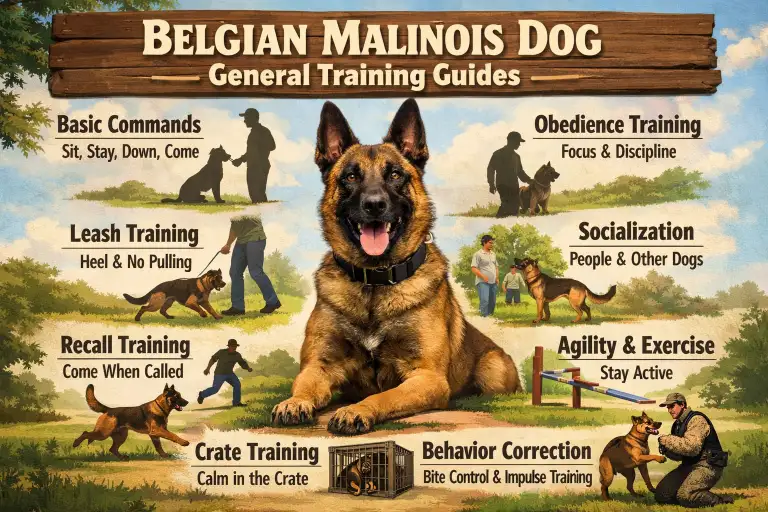
Every Belgian Malinois should master a core set of obedience commands before advancing to more complex work.
| Command | Purpose |
|---|---|
| Sit | Foundation for impulse control |
| Down | Encourages calm behavior |
| Stay | Builds patience |
| Come | Essential safety skill |
| Heel | Improves walking control |
| Leave It | Prevents unwanted interactions |
| Place | Creates a reliable relaxation spot |
Training sessions should remain short and productive. Multiple five-minute sessions throughout the day are generally more effective than one long session.
How to Teach Recall Training
Recall is one of the most important skills for a Belgian Malinois.
- Start indoors with no distractions.
- Say your dog’s name followed by the recall command.
- Reward immediately when the dog reaches you.
- Gradually increase distance.
- Add distractions slowly.
- Never punish a dog for returning.
| Training Stage | Environment |
|---|---|
| Beginner | Living room |
| Intermediate | Backyard |
| Advanced | Quiet park |
| Expert | High-distraction public areas |
A reliable recall can prevent accidents and improve overall control.
Exercise and Mental Stimulation Requirements
Many owners focus exclusively on physical exercise. While exercise is important, mental stimulation is equally critical.
| Activity | Recommended Time |
|---|---|
| Structured walks | 30–60 minutes |
| Obedience training | 10–20 minutes |
| Mental games | 10–15 minutes |
| Interactive play | 15–30 minutes |
| Problem-solving activities | Daily |
Good mental stimulation activities include:
- Food puzzles
- Scent games
- Hide-and-seek
- Obedience drills
- Trick training
- Structured tug games
A tired mind often creates a calmer dog than a tired body alone.
Socialization Training for Belgian Malinois
Socialization does not mean allowing every person or dog to interact with your puppy.
Effective socialization means exposing your dog to:
- Different surfaces
- New environments
- Sounds
- Vehicles
- People of various ages
- Other animals
- Veterinary handling
The goal is confidence, not excitement.
| Positive Socialization Examples |
|---|
| Watching people from a distance |
| Walking through new environments |
| Visiting pet-friendly locations |
| Exposure to household sounds |
| Calm interactions with stable dogs |
Proper socialization reduces the likelihood of fear-based behaviors later in life.
Common Belgian Malinois Training Problems
| Problem | Common Mistake | Better Approach |
|---|---|---|
| Nipping | Yelling | Redirect and reward calm behavior |
| Leash pulling | Strong corrections | Teach engagement first |
| Excessive barking | Punishment | Address underlying cause |
| Poor recall | Repeating commands | Increase training value |
| Overexcitement | Constant stimulation | Teach calm behaviors |
Early intervention produces the best results.
When to Work With a Professional Trainer
Professional help should be considered if your Belgian Malinois shows:
- Aggressive behavior
- Fear-based biting
- Severe reactivity
- Resource guarding
- Extreme anxiety
- Dangerous chasing behavior
Working with a qualified trainer early often prevents minor issues from becoming long-term behavioral problems.
Belgian Malinois Training FAQ
Are Belgian Malinois difficult to train?
Belgian Malinois are highly trainable but require more consistency, structure, and engagement than many other breeds.
At what age should Belgian Malinois training start?
Training should begin as soon as a puppy arrives home, typically around 8 weeks of age.
How much exercise does a Belgian Malinois need?
Most adult Belgian Malinois require at least 60–120 minutes of combined physical and mental activity daily.
Can Belgian Malinois be family dogs?
Yes. With proper training, socialization, and exercise, Belgian Malinois can be loyal family companions.
What is the biggest mistake owners make?
Many owners focus only on physical exercise while neglecting mental stimulation and structured training.
How long does it take to train a Belgian Malinois?
Basic obedience can be established within a few months, but training should continue throughout the dog’s life.
Are Belgian Malinois good for first-time dog owners?
Generally, this breed is better suited for experienced owners willing to dedicate significant time to training and management.
Final Thoughts
Belgian Malinois training requires commitment, consistency, and a clear understanding of the breed’s unique needs. These dogs are exceptionally intelligent and capable, but their energy and drive must be directed productively. By focusing on obedience, socialization, impulse control, and mental stimulation from an early age, owners can develop a confident, reliable companion that thrives both at home and in active environments. The most successful Belgian Malinois owners are not those who train the hardest, but those who train consistently and thoughtfully every day.

Ata Ur Rehman is the founder of Pet Age in Human Years Calculator, an educational platform that provides age conversion charts and lifespan guides for dogs, cats, birds, and other companion animals. His work focuses on helping pet owners understand how animal ages translate into human years using commonly accepted age conversion formulas and published lifespan averages.
The website compiles breed and species lifespan data from kennel clubs, breed organizations, and general animal lifespan studies to present simple and easy-to-understand guides for pet owners worldwide.
This website was created to centralize animal age conversion charts into one easy reference platform for pet owners.
This article is for general education. For symptoms, medication, diet changes, or health concerns, use a qualified veterinarian who can assess your individual pet.