On this page
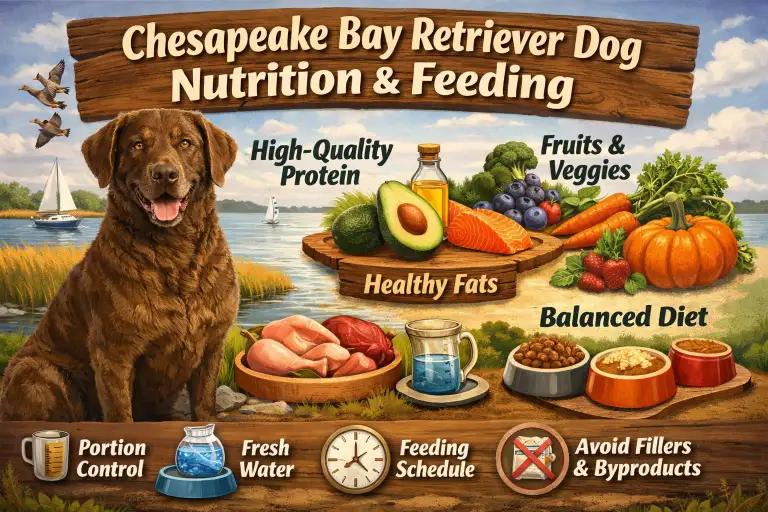
Chesapeake Bay Retrievers are powerful sporting dogs known for their strength, endurance, intelligence, and love of water. Originally bred to retrieve waterfowl in harsh conditions, they require balanced nutrition to maintain muscle, support joint health, and provide steady energy throughout the day.
Whether your Chesapeake Bay Retriever is a working dog, hunting companion, or family pet, proper feeding plays a major role in maintaining a healthy weight, supporting long-term health, and maximizing lifespan.
This guide explains how much to feed a Chesapeake Bay Retriever, the best types of food, calorie requirements, feeding schedules, puppy nutrition, senior diets, and common feeding mistakes owners should avoid.
Why Proper Nutrition Matters for Chesapeake Bay Retrievers
Good nutrition helps a Chesapeake Bay Retriever:
- Build and maintain lean muscle
- Support healthy joints and bones
- Maintain a healthy body weight
- Promote skin and coat health
- Improve digestion
- Support immune function
- Provide steady energy for daily activity
Because Chesapeake Bay Retrievers are naturally active and athletic, poor nutrition can quickly lead to obesity, joint stress, reduced stamina, and other health problems.
Core Nutritional Needs of a Chesapeake Bay Retriever
Chesapeake Bay Retrievers generally perform best on high-quality diets designed for active medium-to-large breed dogs.
Key Nutrition Priorities
| Nutrient | Why It Matters |
|---|---|
| Protein | Supports muscle growth, repair, and maintenance |
| Fat | Provides energy and supports coat health |
| Fiber | Supports digestion and stool quality |
| Omega-3 Fatty Acids | Helps reduce inflammation and supports joints |
| Calcium & Phosphorus | Essential for bone development and maintenance |
| Vitamins & Minerals | Support immune system and overall health |
Recommended Nutritional Focus
| Life Stage | Protein | Fat |
|---|---|---|
| Puppy | Moderate to High | Moderate |
| Adult | Moderate to High | Moderate |
| Working Adult | High | Moderate to High |
| Senior | Moderate | Lower to Moderate |
A quality food with animal-based protein sources is generally preferred for this breed.
How Much Should a Chesapeake Bay Retriever Eat?
The amount of food a Chesapeake Bay Retriever needs depends on:
- Weight
- Age
- Activity level
- Metabolism
- Health condition
- Whether the dog is neutered or intact
Daily Calorie Requirements
| Weight | Low Activity | Moderate Activity | High Activity |
|---|---|---|---|
| 55 lbs | 1,200 kcal | 1,450 kcal | 1,800 kcal |
| 65 lbs | 1,350 kcal | 1,650 kcal | 2,050 kcal |
| 75 lbs | 1,500 kcal | 1,850 kcal | 2,300 kcal |
These are general estimates and should be adjusted based on body condition and activity level.
Chesapeake Bay Retriever Feeding Chart
The following feeding chart provides a general starting point when feeding a quality dry dog food.
| Weight | Approximate Daily Food |
|---|---|
| 55 lbs | 2.5 to 3.5 cups |
| 65 lbs | 3 to 4 cups |
| 75 lbs | 3.5 to 4.5 cups |
| 85 lbs | 4 to 5 cups |
Actual amounts vary depending on calorie density and food quality.
Feeding Schedule by Life Stage
Chesapeake Bay Retriever Puppy Feeding Schedule
Puppies grow quickly and require carefully controlled nutrition to support healthy development.
| Age | Meals Per Day |
|---|---|
| 8–12 Weeks | 4 Meals |
| 3–6 Months | 3 Meals |
| 6–12 Months | 2–3 Meals |
| 12+ Months | 2 Meals |
Rapid growth should be avoided because it may increase stress on developing joints.
Adult Chesapeake Bay Retriever Feeding Schedule
Most healthy adults do well with:
- 2 meals per day
- Consistent feeding times
- Controlled portions
- Limited treats
Dividing food into two meals may also help reduce the risk of digestive discomfort.
Senior Chesapeake Bay Retriever Feeding Schedule
Senior dogs often benefit from:
- Slightly lower calorie intake
- Joint-support ingredients
- Easier-to-digest foods
- Weight management monitoring
Most senior dogs continue doing well with two meals daily.
Best Types of Food for Chesapeake Bay Retrievers
There is no single perfect diet, but several feeding approaches can work successfully.
| Food Type | Benefits | Considerations |
|---|---|---|
| Dry Kibble | Convenient and affordable | Quality varies greatly |
| Wet Food | Highly palatable | Higher cost |
| Fresh Food | Excellent digestibility | Requires refrigeration |
| Raw Diet | High protein | Must be nutritionally balanced |
| Freeze-Dried Food | Convenient raw alternative | More expensive |
The most important factor is feeding a complete and balanced diet appropriate for your dog’s life stage.
Grain-Free vs Grain-Inclusive Diets
Most Chesapeake Bay Retrievers thrive on grain-inclusive diets.
Grain-free diets are not necessary unless recommended by a veterinarian or required because of a diagnosed food sensitivity.
Whole grains can provide:
- Energy
- Fiber
- Vitamins
- Minerals
Food selection should focus on ingredient quality and nutritional balance rather than grain content alone.
Best Foods for Chesapeake Bay Retriever Puppies
Puppies should receive foods formulated specifically for large-breed growth.
Look for foods that provide:
- Controlled calcium levels
- Balanced phosphorus
- High-quality protein
- DHA for brain development
- Appropriate calorie density
Large-breed puppy formulas help support slower, healthier growth.
Weight Management for Chesapeake Bay Retrievers
Obesity is one of the most common nutrition-related problems in this breed.
Signs Your Dog May Be Overweight
- Ribs difficult to feel
- No visible waist
- Reduced stamina
- Increased panting
- Difficulty moving comfortably
Healthy Body Condition
A healthy Chesapeake Bay Retriever should:
- Have a visible waist from above
- Have a noticeable abdominal tuck
- Allow ribs to be felt easily beneath a thin layer of fat
Regular weight checks help prevent obesity-related health problems.
Safe and Unsafe Human Foods
| Safe in Small Amounts | Never Feed |
|---|---|
| Plain Chicken | Chocolate |
| Cooked Eggs | Grapes |
| Plain Rice | Raisins |
| Carrots | Onions |
| Plain Yogurt | Xylitol |
| Pumpkin | Cooked Bones |
Treats should generally make up less than 10% of daily calories.
Common Feeding Problems and Solutions
| Problem | Possible Cause | Potential Solution |
|---|---|---|
| Weight Gain | Excess calories | Reduce portions |
| Loose Stool | Sudden food change | Gradual transition |
| Itchy Skin | Food sensitivity | Elimination diet trial |
| Low Energy | Poor nutrition | Higher-quality food |
| Excessive Hunger | Overactive feeding habits | Structured meal schedule |
How to Switch Foods Safely
When changing food:
- Begin with 75% old food and 25% new food.
- Gradually increase the new food over 7–10 days.
- Monitor stool quality.
- Monitor appetite and energy levels.
- Slow the transition if digestive upset occurs.
Gradual changes help reduce digestive problems.
Frequently Asked Questions
How much food should a Chesapeake Bay Retriever eat per day?
Most adult Chesapeake Bay Retrievers eat between 2.5 and 5 cups of food daily depending on weight, activity level, and calorie density.
What is the best diet for a Chesapeake Bay Retriever?
A balanced diet containing high-quality animal protein, healthy fats, vitamins, minerals, and appropriate calories is generally ideal.
Are Chesapeake Bay Retrievers prone to obesity?
Yes. Chesapeake Bay Retrievers can gain weight easily if calorie intake exceeds activity levels.
Should Chesapeake Bay Retrievers eat grain-free food?
Most do not require grain-free diets unless recommended by a veterinarian due to specific sensitivities.
How often should I feed my Chesapeake Bay Retriever?
Most adults should be fed twice daily, while puppies require three to four meals per day depending on age.
What foods should Chesapeake Bay Retrievers avoid?
Chocolate, grapes, raisins, onions, xylitol, alcohol, and cooked bones should never be fed.
Final Thoughts
A Chesapeake Bay Retriever’s nutrition plan should be based on age, activity level, body condition, and overall health. Proper feeding helps maintain muscle, support healthy joints, control weight, and provide the energy this hardworking breed requires.
Focus on feeding high-quality food, monitoring body condition regularly, and adjusting portions when activity levels change. With proper nutrition and portion control, Chesapeake Bay Retrievers can remain healthy, active, and strong throughout every stage of life.

Ata Ur Rehman is the founder of Pet Age in Human Years Calculator, an educational platform that provides age conversion charts and lifespan guides for dogs, cats, birds, and other companion animals. His work focuses on helping pet owners understand how animal ages translate into human years using commonly accepted age conversion formulas and published lifespan averages.
The website compiles breed and species lifespan data from kennel clubs, breed organizations, and general animal lifespan studies to present simple and easy-to-understand guides for pet owners worldwide.
This website was created to centralize animal age conversion charts into one easy reference platform for pet owners.
This article is for general education. For symptoms, medication, diet changes, or health concerns, use a qualified veterinarian who can assess your individual pet.