On this page
The Alaskan Klee Kai is a small, energetic spitz-type dog with a dense double coat that looks similar to a miniature husky. Their soft undercoat and harsher outer guard coat help protect them from cold weather, but this coat also needs regular maintenance to stay clean, healthy, and comfortable.
Alaskan Klee Kai grooming is mainly about managing the double coat, reducing loose hair, preventing mats, and keeping the skin healthy. This breed does not need complicated trimming, but it does need consistent brushing, careful bathing, nail care, ear checks, and seasonal shedding control.
This guide explains how to groom an Alaskan Klee Kai at home, which grooming tools are useful, how often to brush and bathe your dog, and how to manage Alaskan Klee Kai shedding during seasonal coat changes. Whether you have a puppy, adult, or senior Klee Kai, the goal is to keep grooming simple, safe, and stress-free.
Alaskan Klee Kai Coat Care, Shedding, and Grooming Tools
Alaskan Klee Kai dogs have a double coat. The soft undercoat helps with insulation, while the outer guard coat helps protect the skin. Because of this coat type, regular Alaskan Klee Kai coat care is important, especially during spring and fall when the undercoat sheds more heavily.
The best grooming approach is to remove loose undercoat without damaging the protective topcoat. Avoid shaving the coat unless your veterinarian recommends it for a medical reason. Shaving a double-coated dog can affect natural insulation, expose the skin, and make coat regrowth uneven.
Use tools that are designed for double-coated breeds. The goal is not to cut the coat short, but to brush out loose hair, check for tangles, and keep the coat clean and breathable.
Best Grooming Tools for Alaskan Klee Kai
| Tool | Purpose | Best Use | Notes |
|---|---|---|---|
| Slicker Brush | Removes loose hair and small tangles | Topcoat and light mats | Use gentle pressure to avoid scratching the skin |
| Undercoat Rake | Removes loose undercoat | Heavy shedding and seasonal coat blowout | Best for spring and fall shedding periods |
| Deshedding Tool | Helps reduce loose undercoat | Shedding control | Use carefully and avoid overuse on the same area |
| Metal Comb | Checks for hidden tangles | Behind ears, underarms, tail, collar area | Useful after brushing to confirm the coat is tangle-free |
| Grooming Gloves | Removes surface hair while petting | Sensitive or nervous dogs | Good for short, low-stress grooming sessions |
| Dog-Safe Shampoo | Cleans the coat without drying the skin | Bathing | Choose a gentle, pH-balanced dog shampoo |
| Nail Clippers or Grinder | Keeps nails short and safe | Paw care | Trim slowly and avoid cutting the quick |
| Dog Ear Cleaner | Removes light wax and dirt | Ear care | Never push anything deep into the ear canal |
For most Klee Kai owners, a slicker brush, undercoat rake, metal comb, dog-safe shampoo, nail tool, and ear cleaner are enough for regular home grooming. Professional grooming may still be useful for severe mats, difficult nail trims, or dogs that become anxious during handling.
Daily and Weekly Alaskan Klee Kai Grooming Routine
A simple routine is the easiest way to keep your Alaskan Klee Kai’s coat healthy. Most dogs do not need daily full grooming all year, but they do need consistent brushing and closer attention during shedding season.
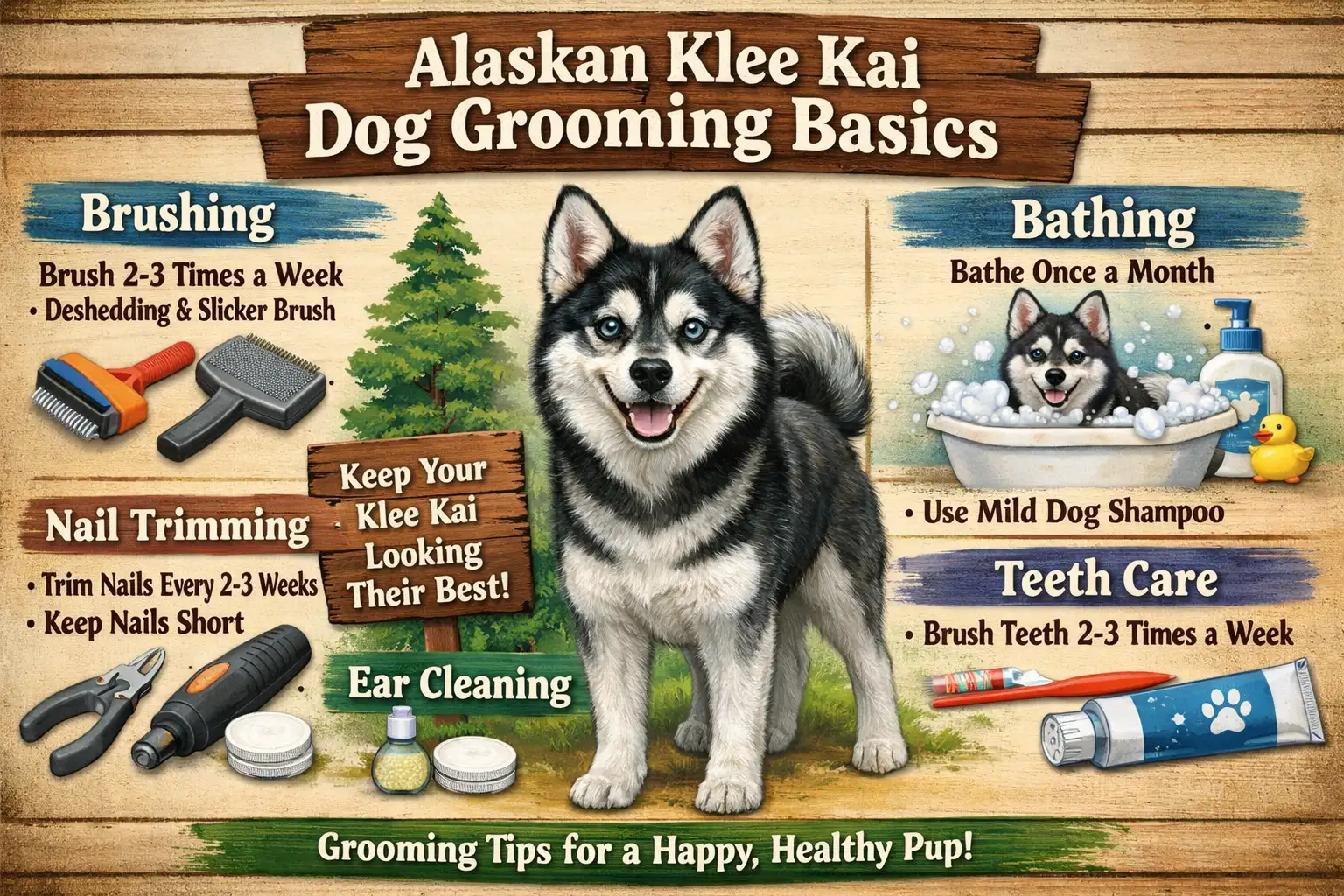
Brushing: Brush your Klee Kai 2–3 times per week during normal months. During spring and fall shedding season, daily brushing is better because the undercoat releases more heavily. Focus on areas that tangle easily, including behind the ears, under the legs, around the collar, the tail, and the rear feathering.
Bathing: Bathe your Alaskan Klee Kai about every 6–8 weeks, or sooner if the coat becomes dirty or smelly. Use lukewarm water and a dog-safe shampoo. Rinse very well because leftover shampoo can irritate the skin. Avoid over-bathing because it can dry the coat and remove natural oils.
Dematting: Small tangles can usually be loosened with a slicker brush and finished with a metal comb. Do not pull hard on mats, because that can hurt the skin and make your dog resist grooming. If a mat is tight, close to the skin, or painful, use a professional groomer instead of cutting it out at home.
Deshedding: To deshed an Alaskan Klee Kai, brush in layers and work with the direction of coat growth. Start with a slicker brush, use an undercoat rake for loose undercoat, then finish with a comb to check for remaining tangles. During heavy shedding, short daily sessions are better than one harsh grooming session.
Alaskan Klee Kai Grooming Schedule
| Task | Normal Months | Shedding Season | Notes |
|---|---|---|---|
| Brushing | 2–3 times per week | Daily | Focus on undercoat, ears, underarms, tail, and collar area |
| Bathing | Every 6–8 weeks | Every 6–8 weeks or as needed | Use dog-safe shampoo and rinse thoroughly |
| Deshedding | As needed | Several short sessions per week | Use an undercoat rake carefully; do not scrape the skin |
| Dematting | As needed | As needed | Check hidden friction areas after brushing |
| Nail Trimming | Every 3–4 weeks | Every 3–4 weeks | Trim small amounts at a time to avoid the quick |
| Ear Cleaning | Every 2–4 weeks | Every 2–4 weeks | Clean only the visible area; watch for odor or redness |
| Teeth Brushing | 2–3 times per week | 2–3 times per week | Use dog-safe toothpaste only |
This routine helps reduce loose hair around the house, keeps the coat tangle-free, and makes grooming easier over time. It also helps your Klee Kai become more comfortable with brushing, bathing, nail trimming, and handling.
Extra Care and Common Grooming Challenges
Klee Kai grooming is not only about brushing the coat. Nails, ears, teeth, paws, and skin also need regular checks. These smaller grooming tasks can prevent discomfort and help you notice problems early.
Nail Care: Trim nails every 3–4 weeks, depending on how quickly they grow and how much your dog walks on hard surfaces. Long nails can affect posture and make movement uncomfortable. If you are unsure where the quick is, trim small amounts at a time or use a grinder.
Ear Cleaning: Check ears every 2–4 weeks for wax, dirt, redness, odor, or irritation. Use a dog-safe ear cleaner and cotton pad for the visible ear area. Never insert cotton swabs deep into the ear canal.
Dental Hygiene: Brush your dog’s teeth 2–3 times per week with dog-safe toothpaste. Regular dental care helps reduce plaque, tartar, and bad breath. Dental chews can support the routine, but they should not fully replace brushing.
Skin and Coat Health: While grooming, check for redness, dandruff, bald patches, sores, hot spots, fleas, ticks, or unusual odor. These signs may point to irritation, allergies, parasites, or infection. If symptoms continue, contact a veterinarian.
Common Alaskan Klee Kai Grooming Mistakes
- Shaving the double coat without medical need
- Bathing too often and drying out the skin
- Using human shampoo instead of dog-safe shampoo
- Pulling hard on mats instead of loosening them gently
- Using a deshedding tool too aggressively
- Ignoring hidden matting areas behind the ears, underarms, tail, and collar
Alaskan Klee Kai Health and Grooming Warning Signs
| Area | What to Check | Warning Signs | What to Do |
|---|---|---|---|
| Nails | Length, cracks, sharp edges | Overgrown, curling, bleeding, limping | Trim carefully or ask a groomer/vet for help |
| Ears | Wax, odor, redness, scratching | Strong smell, dark wax, swelling, head shaking | Clean gently; see a vet if infection is suspected |
| Teeth | Plaque, tartar, gums, breath | Yellow buildup, bleeding gums, strong odor | Brush regularly and schedule a vet dental check if needed |
| Skin | Dryness, redness, flakes, sores | Hot spots, bald patches, dandruff, irritation | Brush gently and contact a vet if symptoms persist |
| Coat | Shedding, mats, tangles, uneven coat | Heavy mats, painful tangles, sudden coat loss | Use proper tools; get professional help for severe mats |
Alaskan Klee Kai Grooming by Life Stage and Season
Not every Alaskan Klee Kai needs the exact same grooming routine. Puppies, adults, and seniors have different coat and handling needs. Seasonal changes also affect how often you should brush and deshed your dog.
Puppies: Alaskan Klee Kai puppies usually need short, gentle grooming sessions so they can learn that brushing, paw handling, ear checks, and baths are normal. Use calm praise and avoid forcing long sessions.
Adults: Adult Klee Kai usually have the fullest coat and need the most consistent brushing. They may shed heavily during seasonal coat blowouts, so extra brushing is needed during those periods.
Seniors: Senior dogs may have more sensitive skin, less patience for long sessions, or difficulty standing for grooming. Keep sessions shorter, use softer tools, and check the skin carefully for lumps, irritation, or sore areas.
Seasonal Grooming: In spring and fall, the undercoat sheds more heavily. During these periods, daily brushing helps control loose hair and prevents packed undercoat. In summer, keep the coat clean and brushed but do not shave it. In winter, check for tangles and keep the coat dry and comfortable.
Home vs Professional Grooming: Most brushing, bathing, ear cleaning, and basic nail care can be done at home. A professional groomer is useful for severe mats, difficult nails, anxious dogs, or owners who are not comfortable handling grooming tools.
Alaskan Klee Kai Grooming by Life Stage
| Life Stage | Coat Characteristics | Recommended Tools | Grooming Frequency | Notes |
|---|---|---|---|---|
| Puppy | Soft, developing coat | Soft slicker brush, comb, grooming gloves | 2–3 short sessions per week | Focus on building comfort with handling |
| Adult | Full double coat | Slicker brush, undercoat rake, metal comb | 2–3 times per week; daily during shedding | Focus on undercoat, ears, underarms, tail, and collar area |
| Senior | May have thinner coat or sensitive skin | Soft brush, comb, gentle shampoo | About 2 times per week or as tolerated | Use gentle handling and shorter grooming sessions |
Alaskan Klee Kai Grooming FAQs
How do you groom an Alaskan Klee Kai?
To groom an Alaskan Klee Kai, brush the coat 2–3 times per week, use an undercoat rake during shedding season, bathe every 6–8 weeks or as needed, trim nails every 3–4 weeks, check the ears, and brush the teeth regularly. Focus on removing loose undercoat without shaving or damaging the protective topcoat.
How often should I bathe an Alaskan Klee Kai?
Most Alaskan Klee Kai dogs should be bathed every 6–8 weeks, or sooner if they become dirty or smelly. Bathing too often can dry the skin, so regular brushing is usually more important than frequent baths.
Do Klee Kais shed a lot?
Yes, Alaskan Klee Kai dogs can shed heavily, especially during spring and fall seasonal coat blowouts. Daily brushing during shedding season helps remove loose undercoat and reduces hair around the home.
How do you deshed an Alaskan Klee Kai at home?
To deshed an Alaskan Klee Kai at home, start with a slicker brush to loosen surface hair, use an undercoat rake to remove loose undercoat, then finish with a metal comb to check for tangles. Keep sessions short and gentle, especially during heavy shedding.
Can you shave an Alaskan Klee Kai?
No, you should not shave an Alaskan Klee Kai unless a veterinarian recommends it for a medical reason. Their double coat helps protect the skin and regulate comfort. Brushing and deshedding are better options for coat management.
What is the best brush for an Alaskan Klee Kai?
A slicker brush and metal comb are useful for regular grooming, while an undercoat rake is helpful during shedding season. Grooming gloves can also help nervous dogs get used to brushing.
How do I remove mats from an Alaskan Klee Kai?
Small mats can be loosened gently with a slicker brush and comb. Do not pull hard or cut close to the skin. If the mat is tight, painful, or close to the skin, ask a professional groomer for help.

Ata Ur Rehman is the founder of Pet Age in Human Years Calculator, an educational platform that provides age conversion charts and lifespan guides for dogs, cats, birds, and other companion animals. His work focuses on helping pet owners understand how animal ages translate into human years using commonly accepted age conversion formulas and published lifespan averages.
The website compiles breed and species lifespan data from kennel clubs, breed organizations, and general animal lifespan studies to present simple and easy-to-understand guides for pet owners worldwide.
This website was created to centralize animal age conversion charts into one easy reference platform for pet owners.
This article is for general education. For symptoms, medication, diet changes, or health concerns, use a qualified veterinarian who can assess your individual pet.