On this page
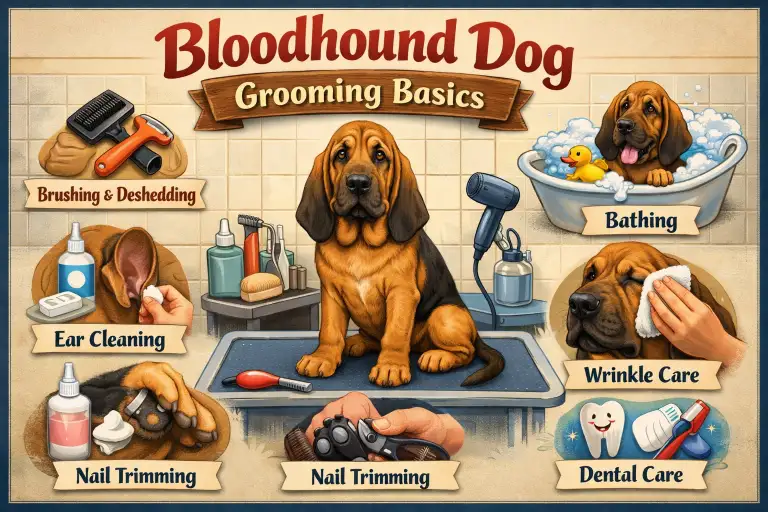
Bloodhound grooming is about much more than appearance. A consistent grooming routine helps keep your dog comfortable, supports healthy skin and ears, reduces shedding, and lowers the risk of common health issues associated with the breed. Although Bloodhounds have a short coat that appears easy to maintain, their loose skin, deep wrinkles, long ears, and naturally oily coat create grooming needs that many owners underestimate.
Regular Bloodhound grooming helps control odor, remove loose hair, reduce dirt and bacteria buildup, and identify potential skin or ear problems before they become serious. Dogs that receive routine grooming often experience fewer skin infections, fewer ear issues, and better overall comfort than those groomed only occasionally.
Bloodhounds are particularly prone to problems in areas where moisture can become trapped. Skin folds can collect dirt and bacteria, ears can retain heat and moisture, and excessive oil buildup may contribute to the breed’s well-known hound odor. A proper grooming routine addresses all of these concerns while helping your Bloodhound stay healthy and comfortable throughout the year.
Why Grooming Is Especially Important for Bloodhounds
| Grooming Area | Why It Matters |
|---|---|
| Coat Care | Controls shedding, distributes natural oils, and keeps the coat healthy |
| Skin Folds | Helps prevent irritation, infections, and moisture buildup |
| Ear Care | Reduces the risk of ear infections caused by poor airflow |
| Nail Care | Supports healthy movement and prevents discomfort |
| Skin Checks | Helps identify allergies, hot spots, and skin issues early |
| Odor Management | Reduces oil, drool, and bacteria-related odors |
Many Bloodhound grooming problems are caused by inconsistent maintenance rather than a lack of bathing. Skipping ear cleaning, ignoring skin folds, or neglecting brushing allows moisture, oils, and bacteria to accumulate. Over time, this can lead to recurring odor, skin irritation, and chronic ear problems.
The good news is that Bloodhound grooming does not need to be complicated. A simple, consistent routine can dramatically improve coat condition, skin health, and overall comfort while reducing the likelihood of expensive veterinary treatments.
Understanding the Bloodhound Coat, Skin, and Ears
To groom a Bloodhound properly, it is important to understand the breed’s unique physical characteristics. While Bloodhounds are often considered relatively low-maintenance compared to long-haired breeds, their coat, skin, and ears require specialized care.
Bloodhound Coat Characteristics
Bloodhounds have a short, dense double coat that sheds throughout the year. Seasonal shedding periods typically occur during spring and fall, when owners may notice significantly more loose hair around the home.
Regular brushing helps remove dead hair, improve circulation, distribute natural oils, and keep the coat looking healthy. Although the coat is short, shedding can be substantial without a consistent grooming routine.
Bloodhound Skin and Wrinkle Care
One of the most distinctive features of the Bloodhound is its loose skin. Deep folds around the face, neck, and lips can easily trap moisture, food particles, drool, and dirt.
Without routine cleaning and drying, these areas can become breeding grounds for bacteria and yeast. This may result in redness, unpleasant odors, irritation, or skin fold infections. Checking skin folds several times per week is one of the most important parts of Bloodhound grooming.
Bloodhound Ear Care
Bloodhounds are known for their long, floppy ears. While these ears help the breed track scents, they also limit airflow inside the ear canal.
Warmth and moisture can become trapped, creating an environment where bacteria and yeast thrive. Regular ear cleaning helps reduce the risk of infections and allows owners to spot early warning signs such as odor, redness, discharge, or excessive scratching.
How Bloodhound Features Affect Grooming Needs
| Bloodhound Feature | Description | Grooming Impact |
|---|---|---|
| Coat | Short, dense double coat | Requires routine brushing to control shedding |
| Skin Folds | Loose and wrinkled skin | Needs regular cleaning and drying |
| Ears | Long, floppy ears | Requires frequent ear checks and cleaning |
| Natural Oils | Higher oil production than many breeds | Can contribute to odor if unmanaged |
Because of these characteristics, Bloodhounds are not a breed that can simply be bathed occasionally and forgotten. Consistent grooming helps prevent common problems and keeps the dog comfortable, healthy, and easier to manage throughout life.
Bloodhound Grooming Routine at Home (Step-by-Step)
A consistent Bloodhound grooming routine helps control shedding, reduce odor, and prevent many of the skin and ear problems commonly seen in the breed. The best approach is to perform small grooming tasks regularly rather than waiting until issues develop.
Step 1: Brush the Coat Regularly
Bloodhounds should be brushed two to three times per week. Although their coat is short, they shed throughout the year and can leave a surprising amount of hair around the home.
Brushing removes loose fur, distributes natural skin oils, improves coat condition, and helps reduce the oily buildup that can contribute to odor. A rubber curry brush or grooming mitt works especially well because it removes dead hair without irritating the skin.
During seasonal shedding periods, daily brushing may be beneficial.
Step 2: Bathe When Needed
Most Bloodhounds only need a bath every six to eight weeks. Bathing too frequently can strip the coat of its natural oils and may lead to dry, irritated skin.
Use a gentle dog shampoo designed for sensitive skin or odor control. Pay special attention to the neck, chest, skin folds, and areas where drool tends to collect.
If your Bloodhound enjoys outdoor activities, additional baths may occasionally be necessary after muddy walks or particularly dirty adventures.
Step 3: Dry Thoroughly After Bathing
Drying is just as important as bathing. Moisture trapped in wrinkles, skin folds, and ears can contribute to bacterial and yeast growth.
After bathing:
- Towel dry the entire body.
- Gently dry facial folds and neck wrinkles.
- Check the ears for trapped moisture.
- Use a low-heat dryer if needed.
Never leave folds damp after grooming.
Step 4: Clean High-Moisture Areas Between Baths
Bloodhounds often collect drool, food residue, and dirt around the mouth, neck, and facial folds.
Between baths, use dog-safe grooming wipes or a damp cloth to clean these areas. This simple habit helps reduce odor and prevents buildup that may lead to irritation.
Recommended Bloodhound Grooming Schedule
| Grooming Task | Recommended Frequency | Purpose |
|---|---|---|
| Brushing | 2–3 times per week | Removes loose hair and controls shedding |
| Bathing | Every 6–8 weeks | Removes dirt, oils, and odor |
| Wipe-Downs | As needed | Keeps folds and drool-prone areas clean |
| Skin Fold Checks | Several times weekly | Helps prevent irritation and infection |
| Ear Checks | Weekly | Detects problems early |
Best Grooming Tools for Bloodhounds
Using the right tools makes Bloodhound grooming easier and more effective.
| Grooming Tool | Why It Helps |
|---|---|
| Rubber Curry Brush | Removes loose hair and distributes natural oils |
| Grooming Mitt | Gentle option for regular maintenance |
| Dog Shampoo | Cleans the coat without damaging skin |
| Grooming Wipes | Useful for folds, drool, and quick cleanups |
| Towels | Helps remove excess moisture after baths |
| Low-Heat Dryer | Assists with drying folds and thick skin areas |
| Ear Cleaner | Supports healthy ear hygiene |
Bloodhound Shedding and Odor Management
Many owners ask whether Bloodhounds shed a lot or have a strong smell. The answer is yes—both shedding and odor are normal breed traits, but they can be managed with proper grooming.
Bloodhounds are moderate to heavy shedders throughout the year, with increased shedding during seasonal coat changes. Regular brushing removes loose fur before it spreads throughout the house.
The breed’s characteristic hound odor is usually caused by a combination of natural skin oils, drool, moisture, and bacteria buildup. Maintaining a regular brushing schedule, cleaning skin folds, and keeping ears dry can significantly reduce odor without excessive bathing.
If odor suddenly becomes much stronger than normal, it may indicate a skin infection, ear infection, or another health issue that should be investigated.
Common Causes of Bloodhound Odor
| Cause | Why It Happens |
|---|---|
| Natural Skin Oils | Bloodhounds produce more coat oils than many breeds |
| Skin Fold Moisture | Trapped moisture encourages bacteria growth |
| Ear Problems | Infections can create strong odors |
| Drool Buildup | Saliva collects around folds and lips |
| Poor Grooming Routine | Dirt and oils accumulate over time |
A consistent grooming routine is the most effective way to control both shedding and odor while keeping your Bloodhound healthy and comfortable.
To understand your dog's current life stage, use the Bloodhound Dog Age Calculator.
For more detail on diet and coat-supporting nutrition, see our Bloodhound nutrition and feeding guide.
Frequently Asked Questions About Bloodhound Grooming
How often should a Bloodhound be groomed?
Most Bloodhounds benefit from brushing two to three times per week, ear cleaning once per week, wrinkle cleaning several times weekly, and bathing every six to eight weeks. Following a consistent routine helps control shedding, reduce odor, and prevent skin and ear problems.
Do Bloodhounds shed a lot?
Yes. Bloodhounds are moderate to heavy shedders throughout the year, with increased shedding during seasonal coat changes. Regular brushing removes loose hair and helps keep shedding under control.
Do Bloodhounds need professional grooming?
Most Bloodhound grooming can be done at home. However, some owners choose professional grooming every two to four months for deep cleaning, nail trimming, ear care, or extra help during heavy shedding periods.
How often should Bloodhound ears be cleaned?
Bloodhound ears should generally be checked weekly and cleaned as needed. Their long, floppy ears trap moisture and reduce airflow, making them more prone to ear infections than many other breeds.
Why do Bloodhounds have a strong odor?
Bloodhounds naturally produce more skin oils than many breeds. Combined with drool, skin folds, and ear moisture, this can create the characteristic hound smell. Regular grooming, wrinkle cleaning, and ear care help minimize odor.
How do you clean a Bloodhound’s skin folds?
Use a soft cloth or dog-safe wipe to gently clean between the folds. After cleaning, dry the area thoroughly. Moisture left inside skin folds can lead to irritation, yeast growth, and infections.
What is the best brush for a Bloodhound?
A rubber curry brush or grooming mitt is usually the best choice. These tools remove loose hair effectively while helping distribute natural skin oils across the coat.
When should I contact a veterinarian?
Seek veterinary advice if you notice persistent scratching, strong ear odor, dark ear discharge, red or infected skin folds, excessive hair loss, open sores, or sudden changes in skin condition.

Ata Ur Rehman is the founder of Pet Age in Human Years Calculator, an educational platform that provides age conversion charts and lifespan guides for dogs, cats, birds, and other companion animals. His work focuses on helping pet owners understand how animal ages translate into human years using commonly accepted age conversion formulas and published lifespan averages.
The website compiles breed and species lifespan data from kennel clubs, breed organizations, and general animal lifespan studies to present simple and easy-to-understand guides for pet owners worldwide.
This website was created to centralize animal age conversion charts into one easy reference platform for pet owners.
This article is for general education. For symptoms, medication, diet changes, or health concerns, use a qualified veterinarian who can assess your individual pet.