On this page
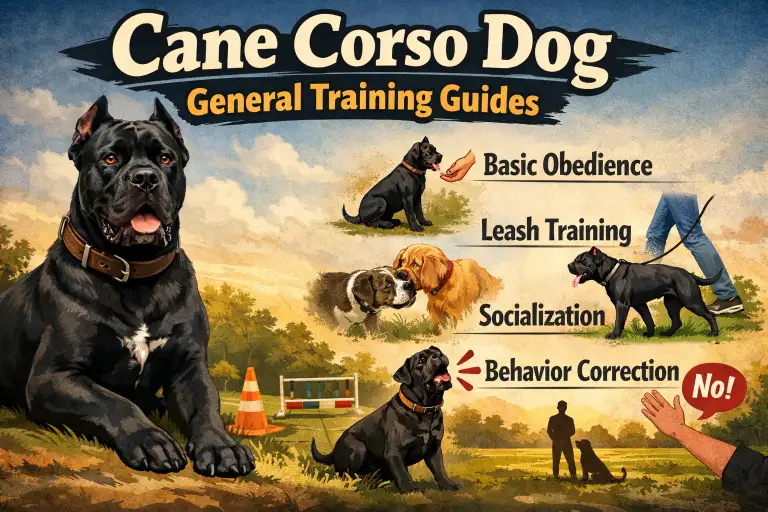
Training a Cane Corso is one of the most important responsibilities of owning this powerful Italian mastiff. Known for their intelligence, loyalty, and natural protective instincts, Cane Corsos can become exceptional family companions when they receive proper guidance from an early age. Without consistent training and socialization, however, their strength and guarding instincts can become difficult to manage.
Whether you’ve just welcomed an eight-week-old Cane Corso puppy or adopted an older dog, learning how to train a Cane Corso correctly will help build a trusting relationship while preventing common behavioral problems. The goal isn’t simply teaching commands—it’s developing a calm, confident dog that responds reliably in everyday situations.
Unlike some breeds that are eager to please everyone, Cane Corsos are independent thinkers. They quickly recognize inconsistency, uncertainty, and poor leadership. They respond best to patient, reward-based training that emphasizes structure, routine, and clear communication rather than punishment or intimidation.
This complete Cane Corso training guide explains everything you need to know, including puppy training, obedience, leash manners, crate training, socialization, behavior management, training timelines, common mistakes, and answers to the most frequently asked questions.
Why Cane Corso Training Is So Important
Cane Corsos were originally bred in Italy as working dogs responsible for guarding farms, livestock, and families. These jobs required intelligence, confidence, courage, and the ability to make independent decisions.
Today, those same traits remain part of the breed.
While these characteristics make Cane Corsos excellent companions and guardians, they also mean that early training is essential. A fully grown Cane Corso can weigh more than 100 pounds (45 kg). Teaching good manners while they’re small is much easier than correcting unwanted behaviors after they reach full size.
Proper training provides several benefits:
- Builds trust between owner and dog
- Prevents unwanted guarding behavior
- Improves obedience and reliability
- Makes public outings safer
- Reduces anxiety and fear-based reactions
- Strengthens confidence
- Encourages good social behavior around people and other animals
Dogs that receive consistent training are generally calmer, more predictable, and easier to manage throughout their lives.
Untrained vs Properly Trained Cane Corso
| Area | Untrained Cane Corso | Properly Trained Cane Corso |
|---|---|---|
| Walking | Pulls excessively | Walks calmly on leash |
| Visitors | Overreacts or guards | Remains controlled |
| Commands | Ignores owner | Responds consistently |
| Public Places | Difficult to handle | Relaxed and confident |
| Other Dogs | May become reactive | Social and manageable |
| Daily Life | Stressful | Enjoyable and predictable |
Understanding the Cane Corso Personality
Before beginning any training program, it’s important to understand how this breed thinks.
Cane Corsos are:
- Extremely intelligent
- Highly observant
- Naturally protective
- Loyal to their family
- Reserved with strangers
- Emotionally sensitive
- Physically powerful
Because of these qualities, they learn very quickly—both good habits and bad ones.
If an owner accidentally rewards jumping, barking, or pulling, the dog learns that these behaviors work. Likewise, consistent rewards for calm behavior create lasting positive habits.
One of the biggest misconceptions is that Cane Corsos require harsh discipline. Modern canine behavior research shows the opposite. Positive reinforcement combined with consistent boundaries produces better long-term results while preserving trust between owner and dog.
Best Age to Start Cane Corso Training
Training should begin the day your puppy arrives home.
Even eight-week-old puppies can begin learning:
- Their name
- House rules
- Crate comfort
- Potty routine
- Basic commands
- Handling exercises
- Social experiences
Formal obedience becomes more structured after 12 weeks, but learning never stops.
Cane Corso Training Timeline
| Age | Training Goals |
|---|---|
| 8–12 Weeks | Name recognition, potty training, crate training, socialization |
| 3–4 Months | Sit, Down, Stay, Recall, leash introduction |
| 4–6 Months | Loose leash walking, impulse control, polite greetings |
| 6–12 Months | Advanced obedience, distractions, confidence building |
| 12–24 Months | Reliability, public manners, advanced skills |
Remember that Cane Corsos mature mentally much later than many breeds. Many continue developing emotionally until two or even three years of age.
Essential Equipment for Training a Cane Corso
Having the right equipment makes training safer and more effective.
Recommended items include:
- Flat buckle collar
- Adjustable harness
- Six-foot training leash
- Long training line
- High-value training treats
- Clicker (optional)
- Interactive toys
- Puzzle feeders
- Crate sized appropriately for adulthood with divider
- Treat pouch
Avoid using equipment that relies on pain or intimidation, such as prong collars or shock collars, unless recommended and supervised by a qualified professional for a specific behavioral case.
How to Train a Cane Corso Puppy
The first several months shape your puppy’s future personality.
Focus on building confidence rather than strict obedience.
Step 1: Teach Name Recognition
Say your puppy’s name once.
When they look toward you:
- Mark the behavior with “Yes!”
- Immediately reward with a treat.
Repeat several times daily.
Soon, your puppy learns that hearing their name means paying attention.
Step 2: Potty Training
Consistency is everything.
Take your puppy outside:
- After waking
- After eating
- After drinking
- After playing
- Before bedtime
- Every 2–3 hours initially
Reward immediately after successful elimination outdoors.
Never punish accidents indoors.
Step 3: Crate Training
A crate should become your dog’s safe sleeping area—not a punishment.
Start by:
- Feeding meals inside
- Tossing treats into the crate
- Leaving the door open initially
- Gradually increasing time inside
- Creating positive associations
Proper crate training also speeds up house training while reducing destructive behaviors.
Step 4: Early Socialization
Socialization is one of the most important parts of Cane Corso training.
Expose your puppy gradually to:
- Men
- Women
- Children
- Elderly people
- Dogs of different sizes
- Veterinary clinics
- Groomers
- Busy streets
- Parks
- Car rides
- Household noises
- Different floor surfaces
- Umbrellas
- Wheelchairs
- Bicycles
Every new experience should remain calm, positive, and controlled.
Quality matters more than quantity.
Basic Obedience Commands Every Cane Corso Should Learn
Teaching reliable obedience creates a strong communication system between you and your dog.
Prioritize these commands:
| Command | Purpose |
|---|---|
| Sit | Calm behavior |
| Down | Relaxation |
| Stay | Safety |
| Come | Reliable recall |
| Leave It | Prevent dangerous behavior |
| Drop It | Release objects safely |
| Heel | Controlled walking |
| Place | Calm settling on a designated spot |
| Wait | Builds impulse control |
| Look | Focus on owner |
Practice in quiet environments before adding distractions.
Short sessions lasting five to ten minutes produce better learning than long repetitive drills.
Frequently Asked Questions
Is a Cane Corso easy to train?
Yes, Cane Corsos are highly intelligent and learn quickly, but they require consistent, confident, and patient training. They respond best to positive reinforcement, clear boundaries, and regular practice. Without proper guidance, they may develop stubborn or protective behaviors that are harder to manage.
At what age should you start training a Cane Corso?
Training should begin as soon as your Cane Corso puppy comes home, usually between 8 and 10 weeks of age. Early training should focus on socialization, potty training, crate training, name recognition, and basic commands. Starting early helps establish good habits before the dog becomes larger and stronger.
How long does it take to train a Cane Corso?
Basic obedience typically takes 3 to 6 months with consistent daily training. However, training is an ongoing process, and most Cane Corsos continue maturing mentally until they are 2 to 3 years old. Regular practice throughout adulthood is essential for maintaining reliable behavior.
Are Cane Corsos difficult for first-time dog owners?
Cane Corsos are generally not recommended for first-time owners because of their size, intelligence, and protective instincts. They need an experienced owner who can provide structure, leadership, and consistent training. Dedicated beginners willing to invest in professional guidance may also succeed.
What is the best training method for a Cane Corso?
Positive reinforcement is considered the most effective training method. Reward desired behaviors with treats, praise, toys, or play while remaining calm and consistent. Avoid harsh punishment, as it can damage trust and increase fear or defensive behaviors.
How much exercise does a Cane Corso need for successful training?
Adult Cane Corsos typically need 60 to 90 minutes of daily exercise combined with mental stimulation. Walks, obedience sessions, puzzle toys, scent games, and structured play help prevent boredom and improve focus during training.
Can a Cane Corso be trained to be friendly with strangers?
Yes. Early and ongoing socialization teaches a Cane Corso to remain calm and confident around unfamiliar people. The goal is not to make the dog overly friendly but to help it distinguish between normal situations and genuine threats.
Should I crate train my Cane Corso?
Yes. Crate training provides a safe place for your dog, supports house training, reduces destructive behaviors, and helps manage anxiety. Introduce the crate gradually using positive experiences so your Cane Corso views it as a comfortable resting space.
Why is my Cane Corso stubborn during training?
What appears to be stubbornness is often independence, inconsistency, or insufficient motivation. Cane Corsos are intelligent thinkers who respond best when training is engaging, rewarding, and consistent. Keeping sessions short and enjoyable usually improves results.
How do I stop my Cane Corso from pulling on the leash?
Teach loose-leash walking from an early age by rewarding your dog whenever it walks beside you without pulling. Stop moving when the leash becomes tight and continue only when your Cane Corso returns to your side. Consistent practice produces the best results.
Can Cane Corsos live with other dogs?
Yes, many Cane Corsos live successfully with other dogs when properly socialized from puppyhood. Controlled introductions, supervised interactions, and continued obedience training are important, especially with dogs of the same sex.
How do I prevent aggressive behavior in a Cane Corso?
Early socialization, obedience training, routine exercise, mental enrichment, and positive experiences are the best ways to reduce the risk of aggression. If your Cane Corso shows persistent growling, snapping, or reactive behavior, seek help from a qualified professional trainer or veterinary behaviorist.
Should I train my Cane Corso for protection work?
Protection training should only be performed by experienced professionals after your Cane Corso has mastered advanced obedience and demonstrates stable temperament. Most family pets do not require formal protection training because the breed already possesses natural guarding instincts.
How often should I train my Cane Corso?
Aim for two or three short training sessions each day lasting 5 to 15 minutes. Incorporate obedience into everyday routines such as walks, meal times, greetings, and play to reinforce good behavior consistently.
What are the most important commands every Cane Corso should know?
Every Cane Corso should reliably respond to Sit, Down, Stay, Come, Heel, Leave It, Drop It, Wait, Place, and Look. These commands improve safety, communication, and overall control in both home and public environments.
Can an adult Cane Corso still be trained?
Absolutely. Adult Cane Corsos are capable of learning new behaviors and commands at any age. Although changing established habits may require more patience, consistency and positive reinforcement can produce excellent long-term results.
What are the biggest training mistakes owners make?
Common mistakes include delaying training, inconsistent rules, inadequate socialization, relying on punishment, skipping mental stimulation, allowing leash pulling, rewarding unwanted behaviors, and expecting results too quickly.
When should I hire a professional dog trainer?
Consider working with a qualified trainer if your Cane Corso displays persistent aggression, fear, severe leash reactivity, resource guarding, or if you feel unable to safely manage your dog’s behavior. Early professional guidance often prevents small issues from becoming serious problems.

Ata Ur Rehman is the founder of Pet Age in Human Years Calculator, an educational platform that provides age conversion charts and lifespan guides for dogs, cats, birds, and other companion animals. His work focuses on helping pet owners understand how animal ages translate into human years using commonly accepted age conversion formulas and published lifespan averages.
The website compiles breed and species lifespan data from kennel clubs, breed organizations, and general animal lifespan studies to present simple and easy-to-understand guides for pet owners worldwide.
This website was created to centralize animal age conversion charts into one easy reference platform for pet owners.
This article is for general education. For symptoms, medication, diet changes, or health concerns, use a qualified veterinarian who can assess your individual pet.