On this page
The Chesapeake Bay Retriever has a unique double coat that was developed to help the breed work in cold water, rough weather, and challenging hunting conditions. The coat consists of a short, dense outer layer and a thick insulating undercoat. Together, these layers help repel water, retain body heat, and protect the dog from harsh outdoor environments.
Unlike many other retriever breeds, the Chesapeake Bay Retriever’s coat contains natural oils that create a slightly oily texture. These oils are an important part of the coat’s waterproof qualities and should not be removed through excessive bathing.
Because of this special coat:
- Water rolls off easily
- Dirt often falls away once dry
- Natural oils protect the skin and coat
- Over-bathing can lead to dry skin and irritation
- Proper brushing helps distribute protective oils
Many owners assume that a short coat means low maintenance. However, Chesapeake Bay Retriever coat care requires regular attention to maintain coat health and manage shedding effectively.
Chesapeake Bay Retrievers shed throughout the year and experience heavier seasonal shedding during spring and fall. During these periods, the undercoat loosens and sheds more heavily, requiring more frequent brushing to remove dead hair and reduce loose fur around the home.
One of the most common grooming mistakes is shaving a Chesapeake Bay Retriever. Shaving can damage the coat’s natural insulation and waterproof properties while interfering with normal coat regrowth.
Coat Facts at a Glance
| Feature | What It Means |
|---|---|
| Double coat | Requires regular brushing, not shaving |
| Waterproof texture | Protects against moisture and harsh weather |
| Natural oils | Helps maintain coat health and water resistance |
| Seasonal shedding | Extra brushing needed during coat changes |
| Dense undercoat | Traps loose hair close to the skin |
Proper grooming focuses on preserving the coat’s natural function rather than removing its protective qualities.
Core Grooming Routine at Home for a Chesapeake Bay Retriever
A consistent grooming routine helps keep a Chesapeake Bay Retriever’s coat healthy while controlling shedding and preventing skin problems. Most owners can successfully maintain the breed’s coat at home using a few basic tools and a regular schedule.
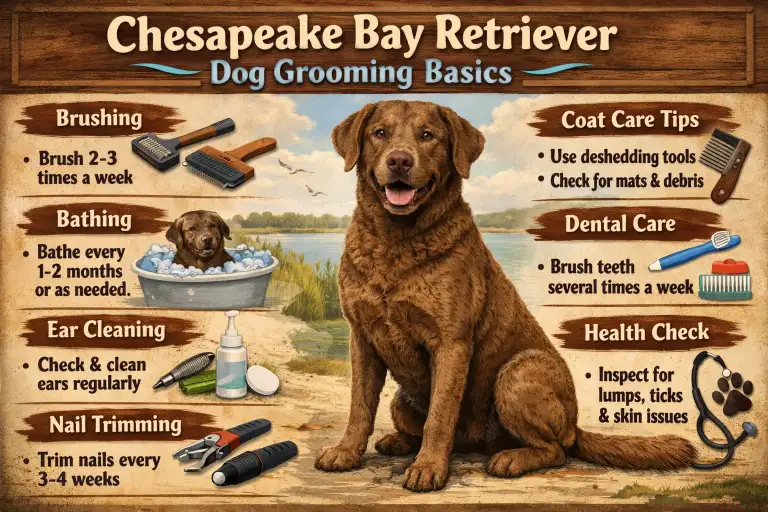
Brushing should be performed one to two times per week under normal conditions. During spring and fall shedding seasons, brushing every few days helps remove loose undercoat hair and reduces excessive shedding around the house.
Regular brushing provides several benefits:
- Removes loose hair before it falls around the home
- Distributes natural oils throughout the coat
- Supports healthy skin
- Prevents excessive buildup of dead hair
- Helps identify skin issues early
Recommended Grooming Tools
| Tool | Purpose |
|---|---|
| Rubber curry brush | Removes loose hair and stimulates the skin |
| Slicker brush | Helps during heavy seasonal shedding |
| Undercoat rake | Removes loose undercoat safely |
| Mild dog shampoo | Cleans without stripping natural oils |
| Towels | Helps absorb excess moisture after bathing |
Bathing Guidelines
Chesapeake Bay Retrievers generally require bathing every 6–8 weeks or when they become unusually dirty. Frequent bathing can strip the coat of essential oils and reduce its natural water-resistant properties.
When bathing your Chesapeake Bay Retriever:
- Use lukewarm water
- Thoroughly wet the coat
- Apply a gentle dog-specific shampoo
- Massage shampoo into the coat carefully
- Rinse completely
- Towel dry before allowing the coat to air dry
Avoid using human shampoo, as it can disrupt the dog’s skin pH balance and contribute to dryness, irritation, and itching.
Brushing and Bathing Schedule
| Grooming Task | Recommended Frequency |
|---|---|
| Brushing | 1–2 times per week |
| Shedding season brushing | Every 2–3 days |
| Bathing | Every 6–8 weeks |
| Coat inspection | Weekly |
Extra Care: Nails, Ears, Teeth, and Skin Health
While coat maintenance is important, complete Chesapeake Bay Retriever grooming also includes nail care, ear cleaning, dental hygiene, and skin monitoring.
Because Chesapeake Bay Retrievers love swimming and water activities, their ears require special attention. Moisture trapped inside the ears can create conditions that increase the risk of infection.
Nails should generally be trimmed every 3–4 weeks. Long nails can affect movement, posture, and joint comfort over time.
Dental care should be part of the weekly grooming routine. Brushing a dog’s teeth several times each week helps reduce plaque buildup and supports long-term oral health.
Extra Care Checklist
| Area | Recommended Frequency |
|---|---|
| Nails | Every 3–4 weeks |
| Ears | Weekly and after swimming |
| Teeth | 2–3 times per week |
| Skin inspection | During each brushing session |
Signs of Potential Skin Problems
Watch for:
- Persistent scratching
- Red or irritated skin
- Unpleasant odor
- Hot spots
- Greasy patches
- Flaky skin
- Excessive hair loss
If these symptoms continue despite proper grooming, veterinary evaluation is recommended.
Special Situations, Safety, and Professional Grooming
Puppies should begin grooming early to build positive experiences and encourage cooperation throughout adulthood. Short grooming sessions with praise and rewards help create lifelong grooming habits.
Senior Chesapeake Bay Retrievers may require softer brushes, additional patience, and shorter grooming sessions due to reduced mobility or sensitive skin.
Managing Seasonal Shedding
Many owners ask, “Do Chesapeake Bay Retrievers shed a lot?”
The answer is yes—especially during spring and fall coat changes. While the breed sheds year-round, seasonal coat blow periods create noticeably heavier shedding.
During shedding season:
- Increase brushing frequency
- Use an undercoat rake when needed
- Bathe only when necessary
- Remove loose hair before it mats against the skin
- Check the skin regularly for irritation
Common Grooming Mistakes
| Mistake | Why It Causes Problems |
|---|---|
| Bathing too often | Removes protective oils |
| Shaving the coat | Damages insulation and protection |
| Skipping ear care | Increases infection risk |
| Using harsh shampoos | Irritates skin and coat |
| Ignoring shedding season | Leads to excess loose hair buildup |
When Professional Grooming Can Help
Professional groomers may be beneficial when:
- Heavy shedding becomes difficult to manage
- The dog dislikes handling
- Skin conditions keep recurring
- Owners need help maintaining the coat properly
When selecting a groomer, choose someone familiar with working retriever breeds and double-coated dogs.
Chesapeake Bay Retriever Grooming Schedule
| Task | Frequency |
|---|---|
| Brushing | 1–2 times weekly |
| Shedding season brushing | Every 2–3 days |
| Bathing | Every 6–8 weeks |
| Nail trimming | Every 3–4 weeks |
| Ear cleaning | Weekly |
| Teeth brushing | Several times weekly |
| Skin inspection | During grooming sessions |
Frequently Asked Questions
Do Chesapeake Bay Retrievers shed a lot?
Yes. Chesapeake Bay Retrievers shed year-round and experience heavier shedding during spring and fall when seasonal coat changes occur.
How often should a Chesapeake Bay Retriever be groomed?
Most Chesapeake Bay Retrievers benefit from brushing one to two times per week, with more frequent grooming during seasonal shedding periods.
Can you shave a Chesapeake Bay Retriever?
No. Shaving can damage the coat’s natural insulation, waterproof qualities, and ability to regulate temperature properly.
How often should a Chesapeake Bay Retriever be bathed?
Bathing every 6–8 weeks is usually sufficient unless the dog becomes unusually dirty or develops a skin condition that requires special care.
What is the best brush for a Chesapeake Bay Retriever?
A rubber curry brush, slicker brush, and undercoat rake are commonly used to manage shedding and maintain coat health.
Do Chesapeake Bay Retrievers smell naturally?
No. A strong odor is often caused by oil buildup, skin irritation, ear problems, or insufficient coat maintenance rather than the breed itself.
Final Thoughts
Proper Chesapeake Bay Retriever grooming focuses on maintaining the breed’s natural waterproof double coat rather than aggressively cleaning or altering it. Regular brushing, sensible bathing, ear care, nail trimming, and dental hygiene help keep the coat healthy while reducing shedding and preventing common grooming-related issues.
With a consistent grooming routine and attention to seasonal shedding, most owners can successfully manage Chesapeake Bay Retriever coat care at home while keeping their dog comfortable, healthy, and looking its best.

Ata Ur Rehman is the founder of Pet Age in Human Years Calculator, an educational platform that provides age conversion charts and lifespan guides for dogs, cats, birds, and other companion animals. His work focuses on helping pet owners understand how animal ages translate into human years using commonly accepted age conversion formulas and published lifespan averages.
The website compiles breed and species lifespan data from kennel clubs, breed organizations, and general animal lifespan studies to present simple and easy-to-understand guides for pet owners worldwide.
This website was created to centralize animal age conversion charts into one easy reference platform for pet owners.
This article is for general education. For symptoms, medication, diet changes, or health concerns, use a qualified veterinarian who can assess your individual pet.