On this page
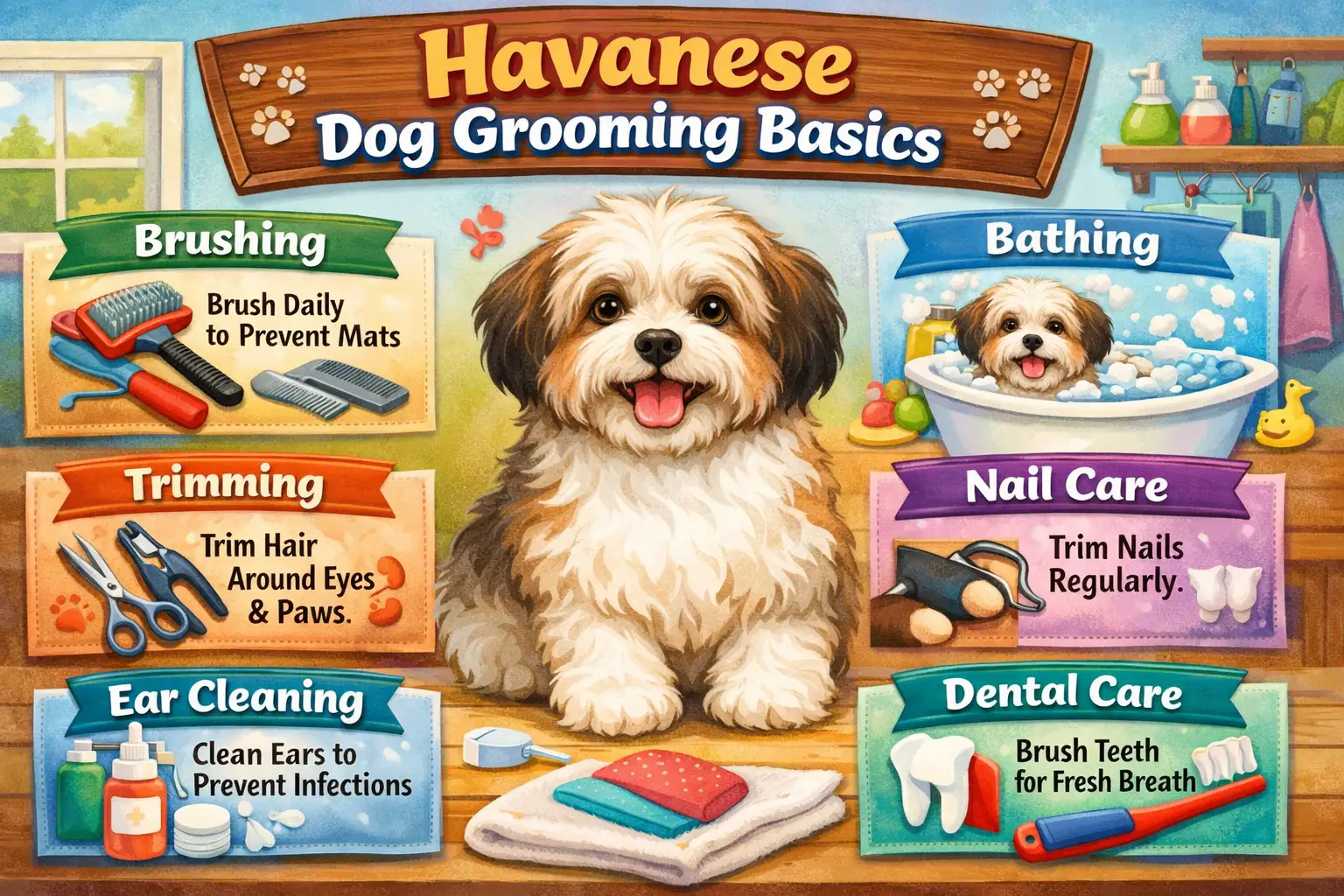
Havanese dogs are known for their long, silky coats, but that beautiful appearance comes with regular grooming responsibilities. One of the most common questions owners ask is about Havanese dog grooming frequency. In most cases, a Havanese should be brushed every 1-3 days, bathed every 3-4 weeks, and professionally trimmed every 6-8 weeks to keep the coat healthy and free from mats.
Understanding the correct grooming schedule is important because the Havanese coat grows continuously and can develop tangles quickly if neglected. Consistent grooming not only keeps your dog looking its best but also supports skin health, comfort, hygiene, and early detection of potential health issues.
This Havanese dog grooming guide covers everything you need to know, including grooming frequency, coat maintenance, brushing routines, bathing schedules, essential grooming tools, and age-specific care for puppies, adults, and senior dogs. Whether you’re a first-time owner or have years of experience with the breed, following a structured grooming routine can make coat care much easier.
How to Groom a Havanese at Home
A simple at-home Havanese grooming routine starts with gentle coat care and regular checks rather than waiting until tangles become difficult to manage. Work slowly, especially around the legs, ears, tail, and other areas where friction can encourage knots.
- Brush and comb the coat: Work in small sections and separate tangles carefully instead of pulling through them.
- Check for mats: Pay extra attention to areas behind the ears, under the legs, around the collar area, and where the coat rubs against itself.
- Bathe when needed: Use a dog-appropriate shampoo and rinse the coat thoroughly so residue does not remain on the skin or hair.
- Dry and comb again: Dry the coat carefully, then comb through it to make sure hidden tangles have not tightened during bathing.
- Check nails, ears, eyes, and skin: Include these areas in the routine so small grooming problems are noticed early.
The best schedule depends on coat length, activity, age, and how quickly your individual Havanese develops tangles. The frequency table below provides a practical starting point.
Characteristics of the Havanese Coat
The Havanese has a distinctive single-layer coat that is soft, lightweight, and continuously growing. Unlike many double-coated breeds, Havanese dogs have little seasonal shedding, but their coat requires more frequent maintenance because loose hairs remain trapped within the coat instead of falling away naturally.
Most Havanese coats fall into one of the following textures:
- Silky Coat: Straight, soft hair that requires regular brushing to prevent knots and tangles.
- Wavy Coat: Slightly textured hair that may be more prone to matting and often benefits from more frequent brushing.
The coat’s texture, length, and overall condition directly affect Havanese dog grooming requirements. Dogs with longer coats or active outdoor lifestyles often require more frequent brushing and coat maintenance than those kept in shorter puppy cuts.
Grooming Adult Havanese Dogs
Adult Havanese dogs typically have a fully developed coat that requires consistent maintenance. For most adults, the ideal Havanese dog grooming frequency includes brushing every 2-3 days, bathing every 3-4 weeks, and trimming every 6-8 weeks. Dogs with longer coats or active outdoor lifestyles may require more frequent brushing.
- Regular Brushing: Brush every 2-3 days to prevent tangles and remove debris trapped in the coat.
- Routine Trimming: Schedule trims every 6-8 weeks to maintain a manageable coat length.
- Mat Checks: Inspect behind the ears, under the legs, around the collar, and near the tail where mats commonly develop.
- Coat Inspection: Use grooming sessions to check for skin irritation, parasites, or unusual lumps.
Grooming Senior Havanese Dogs
As Havanese dogs enter their senior years, grooming remains important for comfort and overall health. Older dogs may become less tolerant of long grooming sessions, so shorter and gentler sessions are often more effective.
- Gentle Brushing: Use light pressure and take breaks if your dog becomes uncomfortable.
- Monitor Skin and Coat Changes: Aging can cause the coat to become thinner, drier, or more brittle.
- Adjust Bathing Frequency: Many senior dogs benefit from bathing every 4-6 weeks using moisturizing products designed for sensitive skin.
- Watch for Health Issues: Grooming sessions provide an opportunity to identify skin irritation, growths, or mobility issues that may require veterinary attention.
Havanese Grooming Frequency by Age
The grooming schedule below provides a quick reference for puppies, adults, and senior Havanese dogs.
| Life Stage | Brushing Frequency | Bathing Frequency | Trimming Frequency |
|---|---|---|---|
| Puppy | Daily or every other day | Every 3-4 weeks | Every 6-8 weeks |
| Adult | Every 2-3 days | Every 3-4 weeks | Every 6-8 weeks |
| Senior | Every 2-3 days | Every 4-6 weeks | Every 6-8 weeks or as needed |
This age-based schedule helps owners adjust grooming routines as their Havanese grows from puppyhood through the senior years.
Common Havanese Grooming Mistakes to Avoid
Even experienced owners can make grooming mistakes that affect coat quality and skin health. Avoiding the following issues will help keep your Havanese comfortable and reduce the risk of matting or irritation.
- Bathing Too Frequently
Bathing more often than necessary can remove natural oils and contribute to dry skin. Most Havanese only need bathing every 3-4 weeks. - Skipping Regular Brushing
Missing brushing sessions is one of the most common causes of mats and tangles. Consistent brushing is the foundation of a healthy Havanese coat. - Ignoring Small Tangles
Small knots can quickly become painful mats if left untreated. Address tangles as soon as they appear. - Using Improper Grooming Tools
Quality brushes and combs designed for long-coated breeds provide better results and reduce discomfort. - Neglecting Nail and Ear Care
Coat care is only one part of grooming. Nails and ears should be checked regularly to prevent discomfort and infection. - Waiting Too Long Between Trims
Allowing the coat to become excessively long can increase matting and make daily maintenance more difficult.
Frequently Asked Questions About Havanese Grooming
| Question | Answer |
|---|---|
| How often should a Havanese be groomed? | Most Havanese require brushing every 2-3 days, bathing every 3-4 weeks, and trimming every 6-8 weeks. |
| How often should I brush my Havanese? | For most adults, brushing every 2-3 days is sufficient, although longer coats may benefit from daily brushing. |
| How often should a Havanese puppy be groomed? | Havanese puppies should be brushed daily or every other day to help them become comfortable with grooming and prevent early tangles. |
| Do Havanese dogs need professional grooming? | Many owners choose professional grooming every 6-8 weeks, especially for full coat maintenance and trimming. |
| Are Havanese high-maintenance dogs? | Compared with many breeds, Havanese require more coat maintenance because their hair grows continuously and can mat if neglected. |
| How can I prevent mats in a Havanese coat? | Regular brushing, prompt removal of small tangles, and routine trims are the best ways to prevent mats from forming. |
More Havanese Resources
Use these related Havanese resources for topics that are covered in more detail on their dedicated pages:
- Havanese Dog Age Calculator
- Havanese Dog Breed Guide
- Havanese Training Guide
- Havanese Age Chart
- Havanese Nutrition and Feeding Guide
- Havanese Cost of Ownership Guide

Ata Ur Rehman is the founder of Pet Age in Human Years Calculator, an educational platform that provides age conversion charts and lifespan guides for dogs, cats, birds, and other companion animals. His work focuses on helping pet owners understand how animal ages translate into human years using commonly accepted age conversion formulas and published lifespan averages.
The website compiles breed and species lifespan data from kennel clubs, breed organizations, and general animal lifespan studies to present simple and easy-to-understand guides for pet owners worldwide.
This website was created to centralize animal age conversion charts into one easy reference platform for pet owners.
This article is for general education. For symptoms, medication, diet changes, or health concerns, use a qualified veterinarian who can assess your individual pet.