On this page
Finding the right Havanese feeding chart can make a big difference in your dog’s health, energy levels, and long-term well-being. Because Havanese dogs are a small companion breed with relatively fast metabolisms, they need carefully balanced nutrition and appropriate portion sizes at every life stage. Feeding too little can affect growth and energy, while overfeeding can quickly lead to excess weight gain.
In this Havanese nutrition and feeding guide, you’ll learn how much food a Havanese should eat per day, recommended feeding schedules, calorie requirements, portion control strategies, and the best food options for puppies, adults, and senior dogs.
Since nutritional needs change throughout a dog’s life, feeding recommendations should be adjusted as your Havanese grows older. Understanding your dog’s age, activity level, and body condition helps ensure they receive the right amount of nutrition while maintaining a healthy weight.
Understanding Havanese Nutritional Needs
Havanese dogs may be small, but they require high-quality nutrition to support healthy muscles, coat condition, digestion, immune function, and daily energy needs. Their nutritional requirements vary depending on age, weight, activity level, and overall health status.
Macronutrients for Havanese Dogs
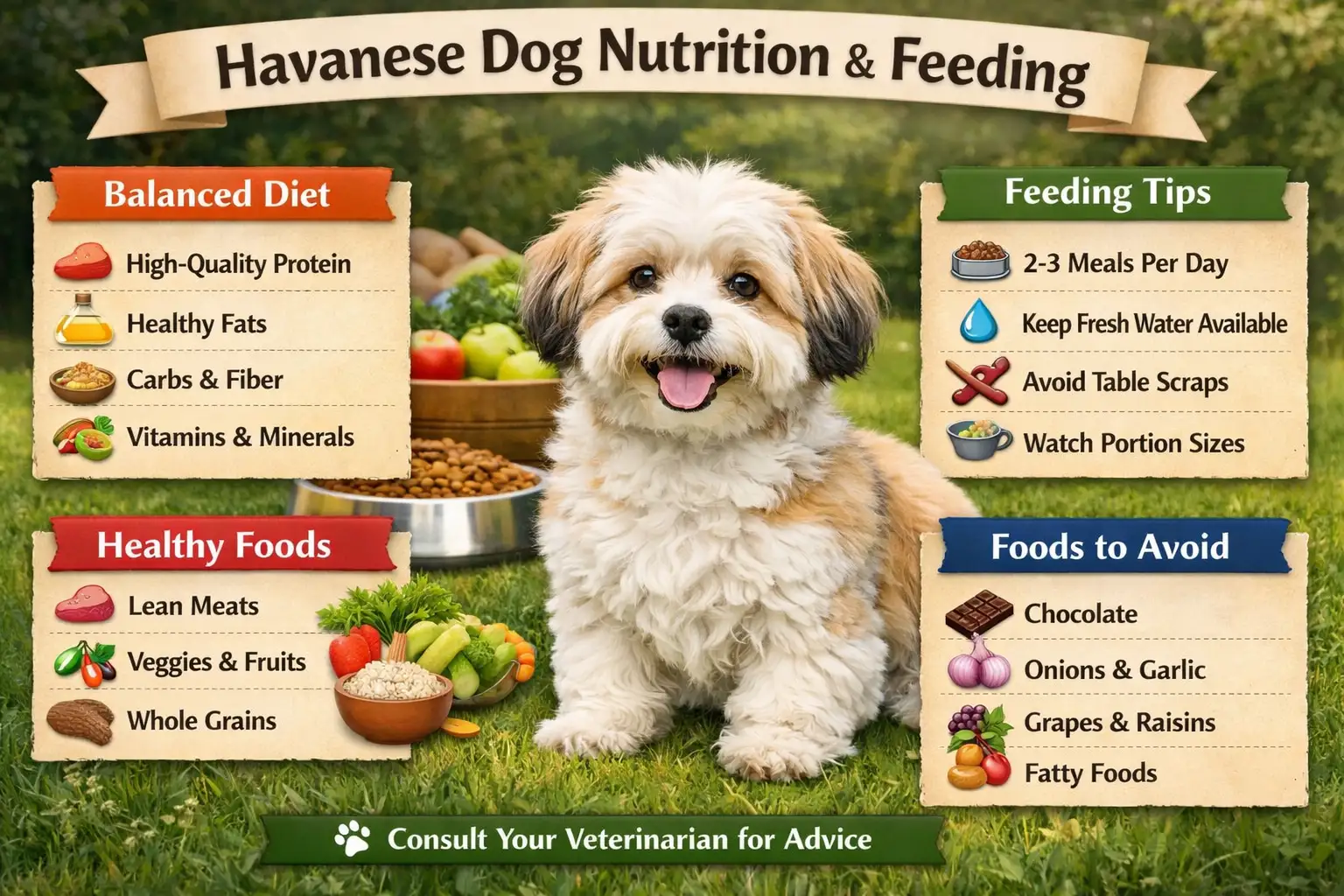
A balanced Havanese diet should contain protein, healthy fats, and digestible carbohydrates. Each plays an important role in maintaining overall health.
- Protein: Supports muscle maintenance, tissue repair, immune health, and healthy growth. Quality animal-based proteins such as chicken, turkey, fish, and beef are ideal.
- Healthy Fats: Provide concentrated energy and help maintain healthy skin and a soft, silky Havanese coat. Omega-3 and Omega-6 fatty acids are especially beneficial.
- Carbohydrates: Supply additional energy and dietary fiber to support digestion and gut health.
| Life Stage | Protein | Fat | Carbohydrates |
|---|---|---|---|
| Puppy | 25-30% | 8-15% | 30-45% |
| Adult | 20-25% | 8-15% | 30-40% |
| Senior | 18-22% | 6-12% | 25-35% |
Havanese Feeding Chart by Age and Weight
The following Havanese feeding chart provides a general starting point for daily food intake. Actual feeding requirements vary based on metabolism, activity level, food quality, and health conditions.
| Weight | Puppy (per day) | Adult (per day) | Senior (per day) |
|---|---|---|---|
| 5 lbs | 3/4-1 cup | 1/2-3/4 cup | 1/2 cup |
| 10 lbs | 1-1¼ cups | 3/4-1 cup | 2/3-3/4 cup |
| 15 lbs | 1¼-1½ cups | 1-1¼ cups | 3/4-1 cup |
Micronutrients for Havanese
Micronutrients help support bone development, immune function, coat quality, and overall wellness.
- Calcium and phosphorus for strong bones and teeth.
- Vitamins A, D, and E for immune support, vision, and skin health.
- Omega-3 fatty acids for coat quality, brain function, and inflammation support.
How to Read Dog Food Labels
When choosing food for a Havanese, look for named animal proteins as the first ingredient. Avoid foods that rely heavily on fillers, artificial colors, or excessive by-products. The guaranteed analysis section can help you compare protein, fat, fiber, and moisture levels between products.
How Much and How Often to Feed Your Havanese
One of the most common questions owners ask is: How much food should a Havanese eat per day? The answer depends on your dog’s age, weight, activity level, and body condition. Most adult Havanese require approximately ½ to 1¼ cups of high-quality food daily, divided into two meals.
Estimated Daily Calorie Requirements
| Weight | Puppy | Adult | Senior |
|---|---|---|---|
| 5 lbs | 250 kcal | 220 kcal | 200 kcal |
| 10 lbs | 450 kcal | 380 kcal | 320 kcal |
| 15 lbs | 650 kcal | 550 kcal | 460 kcal |
Havanese Feeding Schedule
| Life Stage | Meals Per Day | Recommended Schedule |
|---|---|---|
| 8-12 Weeks | 4 meals | Morning, Midday, Afternoon, Evening |
| 3-6 Months | 3 meals | Morning, Afternoon, Evening |
| Adult | 2 meals | Morning and Evening |
| Senior | 2-3 smaller meals | Spread throughout the day |
Portion Control and Weight Management
Monitor your Havanese regularly using body condition scoring. You should be able to feel the ribs without excessive fat covering, and your dog should have a visible waist when viewed from above. Adjust food portions gradually if weight gain or loss occurs.
Best Dog Food for Havanese: Types and Considerations
The best food for Havanese dogs depends on age, activity level, health conditions, and personal preference. Most Havanese thrive on high-quality small-breed formulas that provide balanced protein, healthy fats, and digestible ingredients.
Safe Foods and Treats for Havanese Dogs
In addition to a complete and balanced dog food, Havanese dogs can enjoy certain human foods as occasional treats. Healthy treats can provide variety while supporting training and enrichment. Treats should make up no more than 10% of your dog’s daily calorie intake.
- Carrots – Low-calorie and rich in fiber.
- Apples (without seeds) – A source of vitamins and antioxidants.
- Plain cooked chicken – Lean protein that most Havanese enjoy.
- Plain rice – Helpful for occasional digestive upset.
- Blueberries – Small antioxidant-rich treats.
- Green beans – Low-calorie snack option.
Foods Havanese Dogs Should Avoid
Some foods can be dangerous or toxic to Havanese dogs and should never be fed.
- Chocolate
- Grapes and raisins
- Onions and garlic
- Xylitol-sweetened products
- Alcohol
- Cooked bones
- Macadamia nuts
- Excessively fatty foods
Treat Guidelines
Treats are useful for training and positive reinforcement, but overfeeding can quickly contribute to weight gain in a small breed like the Havanese. Choose low-calorie options whenever possible and reduce meal portions slightly if treats are given frequently.
Common Havanese Feeding Problems and Solutions
Some Havanese dogs can be selective eaters or develop feeding-related challenges. Understanding these issues early can help maintain a healthy weight and prevent nutritional deficiencies.
Managing Picky Eating
- Maintain a consistent feeding schedule rather than leaving food available all day.
- Limit treats between meals to encourage appetite at feeding time.
- Introduce food changes gradually over 7-10 days.
- Rotate approved flavors if your Havanese becomes bored with one recipe.
Havanese Weight Management
Because Havanese dogs are small, even minor weight gain can place additional stress on their joints and overall health. Regularly monitor body condition and adjust food portions when activity levels change.
- Measure meals accurately.
- Avoid excessive treats.
- Provide daily walks and play sessions.
- Reassess calorie intake as your dog ages.
Senior Havanese often require fewer calories than younger adults due to reduced activity levels and metabolic changes.
Food Allergies and Sensitive Stomachs
Some Havanese may develop food sensitivities that affect digestion, skin, or coat quality. Signs can include itching, digestive upset, ear irritation, or excessive licking.
- Food allergies: Limited-ingredient diets may help identify trigger ingredients.
- Sensitive digestion: Easily digestible proteins such as turkey, lamb, or fish may be beneficial.
- Weight concerns: Calorie-controlled diets can help maintain a healthy body condition.
Frequently Asked Questions About Feeding a Havanese
How much food should a Havanese eat per day?
Most adult Havanese eat approximately ½ to 1¼ cups of high-quality dog food daily, divided into two meals. Individual needs vary based on weight, age, activity level, and metabolism.
How often should a Havanese be fed?
Adult Havanese are typically fed twice daily, while puppies may require three to four meals each day during growth.
Can Havanese dogs eat human food?
Yes, certain human foods such as carrots, blueberries, apples without seeds, plain rice, and cooked chicken can be offered in moderation as treats.
What is the best diet for a Havanese?
The best Havanese diet is one that contains high-quality protein, healthy fats, digestible carbohydrates, and essential vitamins and minerals appropriate for the dog’s age and activity level.
Why is my Havanese always hungry?
Persistent hunger may result from growth, increased activity, excessive treats, feeding schedule issues, or certain medical conditions. If excessive hunger continues, consult your veterinarian.
Monitoring Nutrition Throughout Your Havanese’s Life
Nutrition requirements change as a Havanese progresses from puppyhood to adulthood and eventually to the senior years. Feeding amounts, calorie requirements, and meal frequency should be reviewed regularly to match your dog’s life stage.
Monitoring weight, body condition, energy levels, and coat quality can help you determine whether dietary adjustments are needed. Small changes made early are often the most effective way to support long-term health and maintain an ideal body condition.
Final Thoughts
A healthy Havanese diet starts with proper portion control, a consistent feeding schedule, and high-quality nutrition tailored to your dog’s age and lifestyle. By following a structured Havanese feeding chart, monitoring weight regularly, and making age-appropriate adjustments, you can help your dog maintain excellent health, energy levels, and coat condition throughout every stage of life.
More Havanese Resources
Use these related Havanese resources for topics that are covered in more detail on their dedicated pages:
- Havanese Dog Age Calculator
- Havanese Dog Breed Guide
- Havanese Training Guide
- Havanese Age Chart
- Havanese Grooming Guide
- Havanese Cost of Ownership Guide

Ata Ur Rehman is the founder of Pet Age in Human Years Calculator, an educational platform that provides age conversion charts and lifespan guides for dogs, cats, birds, and other companion animals. His work focuses on helping pet owners understand how animal ages translate into human years using commonly accepted age conversion formulas and published lifespan averages.
The website compiles breed and species lifespan data from kennel clubs, breed organizations, and general animal lifespan studies to present simple and easy-to-understand guides for pet owners worldwide.
This website was created to centralize animal age conversion charts into one easy reference platform for pet owners.
This article is for general education. For symptoms, medication, diet changes, or health concerns, use a qualified veterinarian who can assess your individual pet.