On this page
Pekingese training requires patience, consistency, and an understanding of the breed’s unique personality. Unlike highly trainable working breeds, Pekingese were developed as companion dogs and tend to think independently. This does not make them difficult to train – it simply means they learn best through trust, routine, and positive reinforcement.
Many owners ask, “Are Pekingese easy to train?” The answer is that they can be trained successfully, but they often require a different approach than more eager-to-please breeds. When training a Pekingese, calm guidance, short sessions, and meaningful rewards are usually far more effective than repetition or force.
If you are wondering how to train a Pekingese, the key is to work with the breed’s natural temperament rather than against it. Pekingese are intelligent, observant, and loyal to their families, but they may ignore commands that feel repetitive, confusing, or unnecessary. Understanding this mindset helps prevent frustration and creates a stronger training foundation.
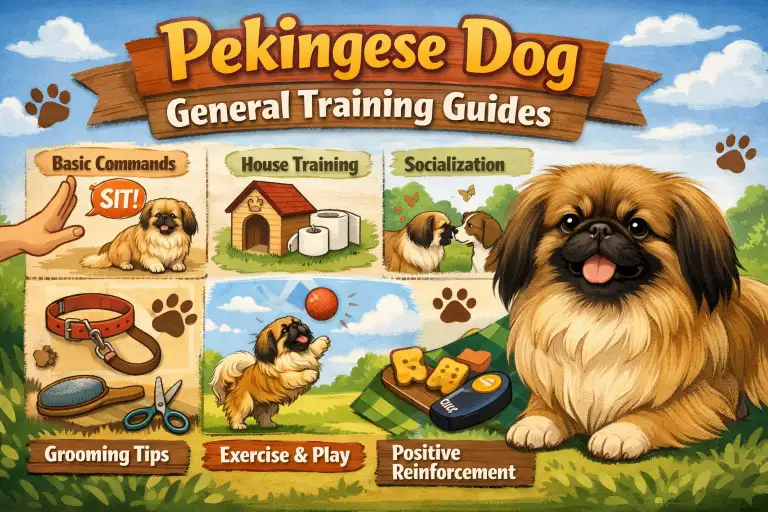
This guide covers the most important aspects of Pekingese training, including obedience, behavior, socialization, daily routines, and common challenges faced by both puppies and adult dogs. Whether you are raising a young puppy or working with an older rescue, the same principles apply: build trust, stay consistent, and keep training sessions positive.
This guide is designed for:
- First-time Pekingese owners
- Owners transitioning from larger or more trainable breeds
- Families raising a Pekingese puppy
- Owners working with adult or rescued Pekingese
- Anyone looking to improve obedience and behavior at home
You’ll learn how to:
- Build focus and cooperation without pressure
- Use effective positive reinforcement techniques
- Improve obedience and everyday manners
- Avoid common Pekingese training mistakes
- Develop habits that last throughout adulthood
Pekingese puppy training often progresses quickly during the early months, although puppies have shorter attention spans and need frequent repetition. Adult Pekingese may take longer to learn new behaviors but often retain lessons well once trust and consistency have been established.
Most importantly, this guide treats Pekingese as capable, intelligent dogs rather than lap-only companions. Proper training improves safety, strengthens the bond between dog and owner, reduces behavior problems, and helps your Pekingese confidently navigate everyday life at home and in public.
Common Pekingese Training Problems and Solutions
Even with a good training plan, most owners encounter challenges along the way. Many common Pekingese behavior problems are linked to the breed’s independent personality, sensitivity, and strong attachment to family members rather than a lack of intelligence.
The good news is that most issues improve when training methods are adjusted to fit the breed. Consistency, patience, and realistic expectations often solve problems that owners mistakenly view as stubbornness.
The most common training challenges involve potty training, leash walking, barking, grooming cooperation, and separation-related behaviors.
Pekingese potty training is often one of the biggest hurdles for new owners. Because of their small size and preference for comfort, some Pekingese dislike going outside in rain, cold weather, or unfamiliar environments. Accidents are usually caused by inconsistent schedules rather than deliberate disobedience.
Leash training can also take time. Some Pekingese stop walking, sit down, or refuse to move when they feel uncertain, tired, or overwhelmed. Gentle encouragement and short training sessions are usually more effective than pulling or forcing movement.
Excessive barking may develop when a dog becomes bored, anxious, under-socialized, or overly attached to one family member. Likewise, clingy behavior can gradually develop into separation anxiety if a dog never learns how to relax independently.
Common Problems, Causes, and Solutions
| Problem | Likely Cause | What Helps | What to Avoid |
|---|---|---|---|
| Potty accidents | Inconsistent routine | Fixed potty schedule | Punishing accidents |
| Refusing to walk | Fear, confusion, fatigue | Short leash sessions | Pulling the leash |
| Excessive barking | Anxiety or boredom | Mental stimulation | Yelling |
| Growling during grooming | Handling sensitivity | Gradual desensitization | Physical restraint |
| Clingy behavior | Over-dependence | Independence training | Constant attention |
| Separation anxiety | Strong attachment | Alone-time practice | Sudden long absences |
One of the biggest mistakes owners make is trying to progress too quickly. Long training sessions, extended walks, and introducing too many new experiences at once can overwhelm a Pekingese and reduce cooperation.
Another mistake is excusing poor behavior because the dog is small. Skipping obedience work, carrying the dog everywhere, or allowing unwanted habits to continue often creates larger behavior issues later.
Simple adjustments that often improve results:
- Follow a predictable daily routine
- Keep training sessions short and positive
- Reward desired behavior immediately
- Provide gentle socialization opportunities
- Practice independence regularly
- Stay patient and consistent
If a problem continues despite several weeks of consistent effort, it may be time to seek additional guidance.
When to Get Professional Help for Pekingese Training
Most training challenges improve with patience and structure, but some situations require professional support. Seeking help early often prevents minor concerns from developing into long-term behavior problems.
You should consider professional assistance if your Pekingese shows ongoing fear, anxiety, aggression, or behavior that does not improve despite consistent training.
Small dogs sometimes receive less attention for behavior concerns because their size makes problems appear less serious. However, warning signs should never be ignored.
Signs That Professional Help May Be Needed
| Behavior | Why It Matters | Recommended Action |
|---|---|---|
| Biting or snapping | Fear, stress, or pain | Trainer and veterinary evaluation |
| Handling aggression | Strong fear response | Behavior modification plan |
| Sudden behavior changes | Possible health concern | Veterinary examination |
| Severe separation anxiety | Emotional distress | Behavior specialist |
| No training progress | Training mismatch | Professional assessment |
Health issues can also affect behavior. Breathing difficulties, pain, mobility problems, and vision changes may influence how a Pekingese responds during training. For this reason, medical causes should always be ruled out when behavior changes suddenly.
General guidelines:
- Minor training issues should begin improving within a few weeks
- Persistent fear or anxiety should be addressed early
- Aggression should never be ignored
- Professional guidance is often easier than fixing long-term habits later
When selecting a trainer, look for someone experienced with toy breeds who uses positive reinforcement methods and avoids fear-based training techniques.
Early intervention helps prevent long-term behavior issues and supports a confident, well-adjusted Pekingese.
Frequently Asked Questions About Pekingese Training
Are Pekingese easy to train?
Pekingese can be trained successfully, but they are generally more independent than many other breeds. They respond best to patience, consistency, and positive reinforcement rather than force or repetitive drills.
How do you start training a Pekingese puppy?
Pekingese puppy training should begin with name recognition, potty training, socialization, and basic commands such as sit and come. Short training sessions and frequent rewards help puppies stay engaged.
What is the best age to start Pekingese training?
Most puppies can begin basic training and socialization as early as 8 weeks of age. Early training helps build confidence and prevents unwanted habits from developing.
Why is my Pekingese ignoring commands?
Pekingese are known for their independent personalities. Ignoring commands is often caused by low motivation, distractions, inconsistent training, or unclear communication rather than a lack of intelligence.
How long does it take to train a Pekingese?
Basic obedience skills can often be established within a few weeks of consistent practice. More advanced behaviors and reliability usually require several months of ongoing training.
Are Pekingese good at obedience training?
Pekingese obedience training is most successful when training sessions are short, positive, and reward-based. While they may not perform like working breeds, they can learn reliable household manners and essential commands.
Is potty training a Pekingese difficult?
Pekingese potty training can take longer than some breeds because they are sensitive to weather changes and routine disruptions. Consistent schedules and positive reinforcement usually produce the best results.
What are the most common Pekingese behavior problems?
Common Pekingese behavior problems include excessive barking, separation anxiety, leash resistance, handling sensitivity, and stubborn behavior. Most can be improved through consistent training and proper socialization.
More Pekingese Resources
Use these related Pekingese resources for topics that are covered in more detail on their dedicated pages:
- Pekingese Dog Age Calculator
- Pekingese Dog Breed Guide
- Pekingese Age Chart
- Pekingese Grooming Guide
- Pekingese Nutrition and Feeding Guide
- Pekingese Cost of Ownership Guide

Ata Ur Rehman is the founder of Pet Age in Human Years Calculator, an educational platform that provides age conversion charts and lifespan guides for dogs, cats, birds, and other companion animals. His work focuses on helping pet owners understand how animal ages translate into human years using commonly accepted age conversion formulas and published lifespan averages.
The website compiles breed and species lifespan data from kennel clubs, breed organizations, and general animal lifespan studies to present simple and easy-to-understand guides for pet owners worldwide.
This website was created to centralize animal age conversion charts into one easy reference platform for pet owners.
This article is for general education. For symptoms, medication, diet changes, or health concerns, use a qualified veterinarian who can assess your individual pet.