On this page
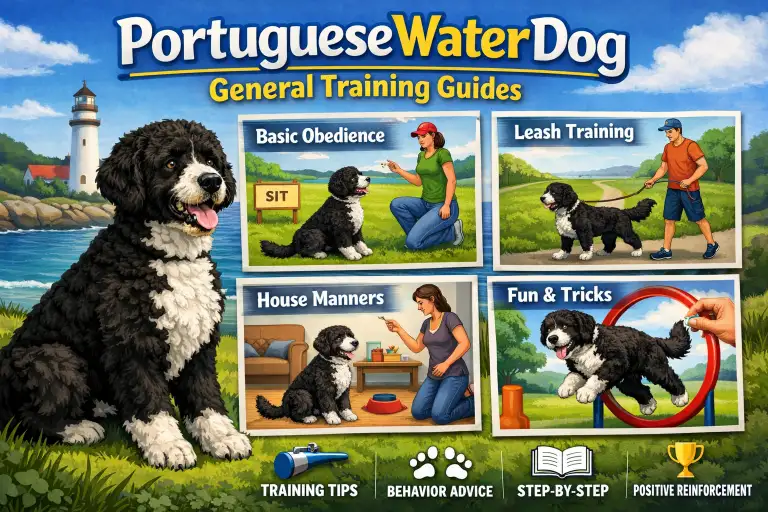
Training a Portuguese Water Dog requires more than teaching basic commands. This intelligent, energetic, and hardworking breed thrives when its natural instincts, problem-solving ability, and strong bond with people are guided through structured training.
Portuguese Water Dogs are widely considered one of the most trainable dog breeds, but their intelligence can become a challenge if not properly managed. Behaviors such as jumping, selective listening, excessive barking, and destructive chewing are often signs of boredom, inconsistent rules, or insufficient mental stimulation rather than stubbornness.
A well-trained Portuguese Water Dog becomes a confident family companion, reliable off-leash partner, and enjoyable dog to live with both indoors and outdoors.
Why Training Your Portuguese Water Dog Is Essential
Training is not optional for this active working breed. Originally developed to assist fishermen with retrieving equipment, delivering messages, and working around boats, Portuguese Water Dogs are naturally energetic and independent thinkers.
Without proper structure, their energy often turns into unwanted behaviors such as:
- Jumping on guests and family members
- Excessive barking for attention
- Ignoring commands outdoors
- Pulling on the leash during walks
- Chewing or destructive behavior due to boredom
Consistent obedience training helps your dog:
- Remain calm inside the home
- Respond to commands even when distracted
- Develop reliable recall around water and wildlife
- Improve impulse control in busy environments
- Understand household rules and expectations
| With Proper Training | Without Proper Training |
|---|---|
| Reliable obedience in public | Ignores commands when distracted |
| Calm and settled indoors | Restless behavior and excessive barking |
| Safe around children and other dogs | Poor impulse control |
| Good recall near water | Runs off toward distractions |
| Mentally stimulated and satisfied | Bored, destructive, and mischievous |
Training also improves safety. A Portuguese Water Dog with a strong recall command and good impulse control is far less likely to run into traffic, chase wildlife, or ignore commands near lakes and beaches.
Understanding the Portuguese Water Dog Temperament and Learning Style
The Portuguese Water Dog is highly intelligent, sensitive, and eager to work with its owner. These qualities make the breed exceptionally trainable when positive reinforcement methods are used consistently.
Unlike some breeds that tolerate repetitive drills, Portuguese Water Dogs prefer short, engaging training sessions that challenge them mentally.
Important breed traits that affect training include:
- High intelligence – learns commands quickly but becomes bored with repetition.
- High energy levels – requires both physical exercise and mental stimulation.
- Strong attachment to family – responds best to praise and positive interaction.
- Sensitive personality – harsh corrections can damage confidence.
- Natural love of water – recall training should begin early.
| Breed Trait | Training Impact |
|---|---|
| Very intelligent | Learns quickly but dislikes repetitive drills |
| High energy | Needs mental challenges alongside exercise |
| People-oriented | Responds well to praise and rewards |
| Sensitive temperament | Requires calm, positive handling |
| Strong water instincts | Recall training is especially important |
Understanding your dog’s personality allows you to train more effectively and avoid unnecessary frustration.
How to Train a Portuguese Water Dog Step by Step
The best Portuguese Water Dog training methods rely on consistency, positive reinforcement, and short daily sessions.
Keep training sessions simple and enjoyable while rewarding desired behavior immediately.
Basic Training Rules
- Train daily, even if only for 5 to 10 minutes.
- Use rewards immediately after correct behavior.
- Keep sessions short and engaging.
- End every session with success.
- Gradually increase distractions as your dog improves.
| Age | Main Training Priorities |
|---|---|
| 8–16 Weeks | Name recognition, potty training, handling, socialization |
| 4–12 Months | Leash training, recall, impulse control, basic obedience |
| Adult Dogs | Advanced obedience and reliability under distractions |
| Training Element | Recommendation |
|---|---|
| Session Length | 5–10 minutes |
| Sessions Per Day | 2–4 short sessions |
| Best Training Location | Quiet areas first, then gradually add distractions |
| Rewards | Treats, toys, praise, and games |
| Session Ending | Always finish with success and praise |
Common Portuguese Water Dog Training Problems and Solutions
Even highly intelligent dogs develop unwanted habits if their physical and mental needs are not met.
| Training Problem | Cause | Solution |
|---|---|---|
| Jumping on people | Excitement and poor impulse control | Reward sitting before greetings |
| Ignoring commands outdoors | Distractions are more rewarding | Practice commands gradually in new locations |
| Excessive barking | Boredom or attention-seeking behavior | Increase exercise and reward quiet behavior |
| Pulling on the leash | High energy and excitement | Use stop-and-go leash training methods |
| Poor recall near water | Strong instinct to swim and explore | Practice recall in low-distraction environments first |
One of the biggest training mistakes owners make is repeating commands multiple times. Dogs quickly learn that the first command is optional if the owner always repeats it.
Clear communication and consistency create reliable obedience over time.
Daily Training Schedule for Portuguese Water Dogs
This breed performs best when training becomes part of everyday life rather than an occasional activity.
| Time of Day | Training Focus |
|---|---|
| Morning | Short obedience session |
| Walks | Loose leash walking and recall practice |
| Afternoon | Puzzle toys and mental stimulation |
| Evening | Calm settling exercises and relaxation |
Best Training Tools for Portuguese Water Dogs
- High-value training treats
- Comfortable harness or flat collar
- Standard 6-foot training leash
- Long line for recall practice
- Puzzle feeders and enrichment toys
- Quiet distraction-free training area
| Helpful Training Habits | What to Avoid |
|---|---|
| Consistent rules | Changing commands regularly |
| Short sessions | Long repetitive drills |
| Positive reinforcement | Harsh punishment or yelling |
| Daily practice | Training only when problems appear |
| Calm leadership | Frustration and inconsistency |
Frequently Asked Questions About Portuguese Water Dog Training
Are Portuguese Water Dogs easy to train?
Yes. Portuguese Water Dogs are highly intelligent and eager to work with their owners, making them one of the easier breeds to train when positive reinforcement methods are used.
At what age should you start training a Portuguese Water Dog puppy?
Training should begin as soon as your puppy arrives home, usually around 8 weeks of age. Early socialization and basic obedience create lifelong good habits.
How much exercise does a Portuguese Water Dog need for successful training?
Most adult Portuguese Water Dogs need at least 60 to 90 minutes of daily exercise along with mental stimulation to remain focused and well-behaved.
Why does my Portuguese Water Dog ignore commands outside?
Outdoor environments are highly stimulating. Gradual exposure to distractions combined with high-value rewards improves reliability.
Do Portuguese Water Dogs respond well to punishment?
No. This breed is sensitive and typically responds much better to positive reinforcement, rewards, and clear communication than harsh corrections.
Final Thoughts
Training a Portuguese Water Dog is about building communication, trust, and structure. With consistent routines, positive reinforcement, and adequate physical and mental exercise, this intelligent working breed develops into a confident, reliable, and enjoyable companion for years to come.

Ata Ur Rehman is the founder of Pet Age in Human Years Calculator, an educational platform that provides age conversion charts and lifespan guides for dogs, cats, birds, and other companion animals. His work focuses on helping pet owners understand how animal ages translate into human years using commonly accepted age conversion formulas and published lifespan averages.
The website compiles breed and species lifespan data from kennel clubs, breed organizations, and general animal lifespan studies to present simple and easy-to-understand guides for pet owners worldwide.
This website was created to centralize animal age conversion charts into one easy reference platform for pet owners.
This article is for general education. For symptoms, medication, diet changes, or health concerns, use a qualified veterinarian who can assess your individual pet.