On this page
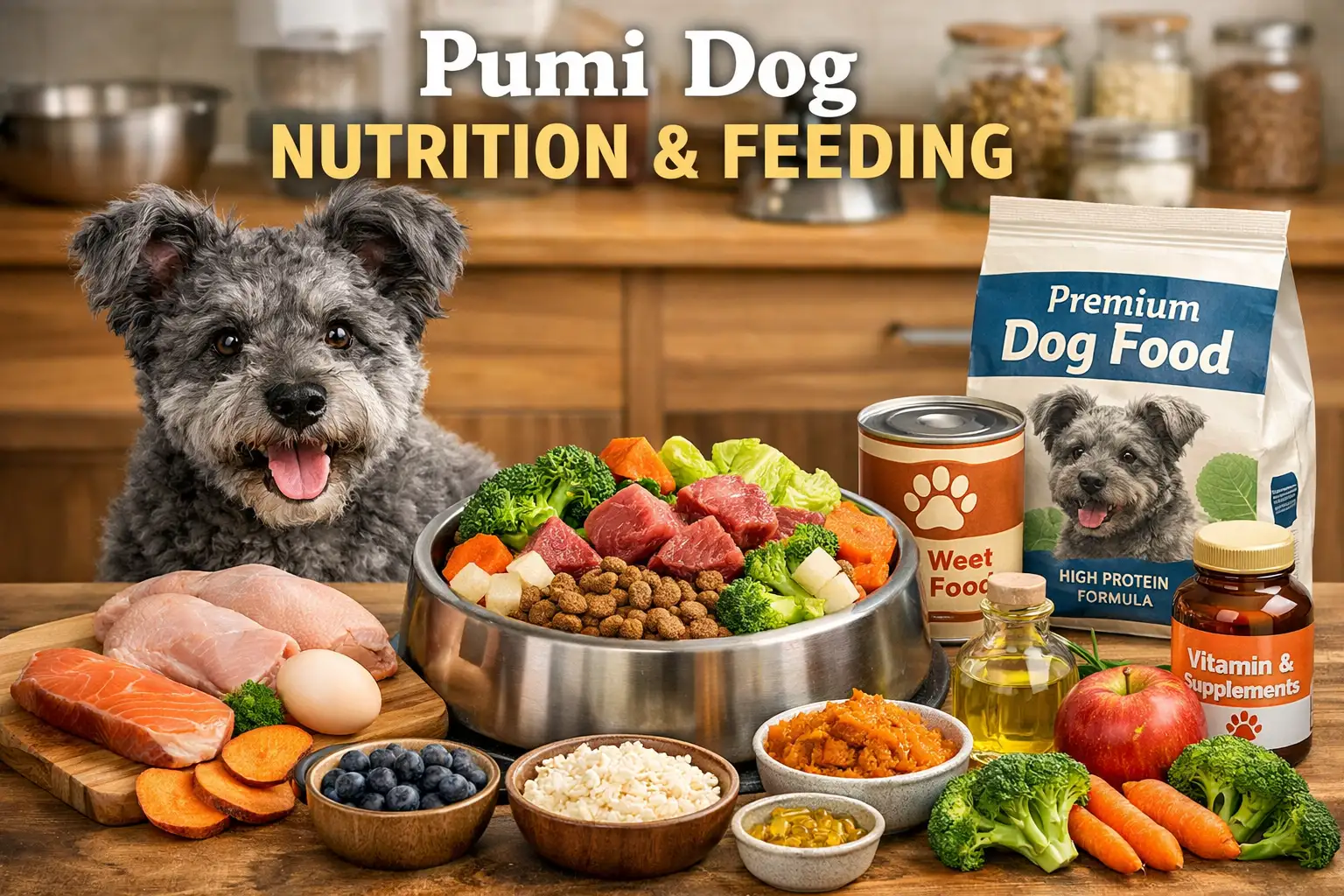
Feeding a Pumi dog correctly is not just about filling a bowl twice a day. Proper Pumi dog nutrition means giving this high-energy, intelligent herding breed the right balance of protein, fat, calories, fiber, and meal timing for long-term health, stamina, coat quality, and mental sharpness.
Pumis were bred to work. They are alert, athletic, quick-thinking dogs with higher activity needs than many companion breeds of similar size. When nutrition is off, even slightly, it can show up as digestive upset, poor coat condition, stubborn weight gain, low stamina, excess hunger, or inconsistent energy during training and exercise.
This Pumi dog feeding guide explains what to feed a Pumi, how much food a Pumi dog may need, which diet types work best, and which common feeding mistakes to avoid. Use it as a practical starting point, then adjust based on your dog’s age, weight, activity level, body condition, and health needs.
This guide is designed to help Pumi owners answer practical feeding questions, such as:
- What is the best dog food for a Pumi?
- How much should a Pumi dog eat per day?
- How often should a Pumi puppy, adult, or senior eat?
- Should a Pumi eat kibble, fresh food, raw food, or homemade meals?
- How do diet choices affect coat, digestion, weight, and energy?
Proper Pumi nutrition directly supports:
- Daily energy for training, agility, play, and mental work
- Lean muscle maintenance without unwanted weight gain
- Healthy digestion and consistent stool quality
- Skin and curly coat condition
- Joint, immune, and metabolic health over time
- Better focus and steadier behavior during activity
Not every Pumi needs the same feeding plan. A sport or agility Pumi may need more calories and fat than a moderately active family Pumi. Puppies, seniors, neutered dogs, overweight dogs, and working adults all need different portion adjustments.
The goal is not to follow food trends. The goal is to build a balanced, realistic feeding routine that keeps your Pumi lean, energetic, focused, and healthy.
Best Dog Food for Pumi Dogs
The best dog food for a Pumi is not decided by brand name alone. It should be complete, balanced, digestible, and matched to your dog’s activity level. Because Pumis are active, compact herding dogs, their food should support lean muscle, steady energy, healthy digestion, and coat condition without causing unnecessary weight gain.
A good Pumi dog food should provide:
- Named animal protein, such as chicken, turkey, lamb, beef, egg, or fish
- Moderate fat for energy without excessive calories
- Digestible carbohydrates from rice, oats, barley, potatoes, or similar sources
- Fiber for stool quality and gut health
- Omega fatty acids for skin, coat, and joint support
- Complete and balanced nutrition for your dog’s life stage
Ideal nutrient ranges for most healthy adult Pumi dogs
The ranges below are general starting points. Active, working, underweight, overweight, puppy, senior, or medically sensitive Pumis may need different targets.
| Nutrient | Suggested Range | Why It Matters for Pumis | Warning Signs |
|---|---|---|---|
| Protein | 22-28% dry matter | Supports lean muscle, stamina, and recovery | Low-quality or unnamed protein sources |
| Fat | 12-18% | Provides fuel for active dogs | Too much fat for low-activity or overweight dogs |
| Fiber | 3-6% | Supports digestion and stool quality | Too much fiber causing gas or loose stool |
| Omega fats | Balanced omega-3 and omega-6 | Supports skin, coat, joints, and inflammation balance | No listed omega sources |
| Calories | Based on weight and activity | Prevents underfeeding or weight gain | Feeding only by the bag label |
How to Read a Dog Food Label for a Pumi
When comparing foods, do not rely only on marketing words like “premium,” “natural,” or “holistic.” Focus on the ingredient list, guaranteed analysis, calorie content, and whether the food is complete and balanced for your dog’s life stage.
Look for:
- A named animal protein near the top of the ingredient list
- Moderate fat, especially for less active or neutered Pumis
- Digestible grains or carbohydrate sources unless your dog has a confirmed sensitivity
- Clear calorie information per cup, can, or serving
- Life-stage suitability for puppy, adult, or senior dogs
Avoid relying on:
- Foods with unclear protein sources
- Very high-calorie formulas for low-activity dogs
- Frequent diet changes without a clear reason
- Human food replacing a complete dog diet
- “Grain-free” claims unless there is a real dietary need
Grain-Free vs Grain-Inclusive Food for Pumis
Most Pumi dogs can do well on a grain-inclusive diet. Rice, oats, barley, and similar grains can provide useful energy and may support digestion when used properly. Grain-free food is not automatically healthier and is not necessary unless your dog has a confirmed issue with specific ingredients.
For many Pumis, the better question is not “grain-free or grain-inclusive?” but “Does this food keep my dog lean, energetic, comfortable, and consistent?”
Signs the food is working well include:
- Firm, regular stool
- Healthy body weight
- Good energy without restlessness
- Normal appetite
- Healthy skin and curly coat
- No repeated vomiting, gas, or loose stool
How Much to Feed a Pumi Dog
How much to feed a Pumi dog depends on weight, age, activity level, metabolism, neuter status, and body condition. Many Pumis are overfed because they are active, smart, and food-motivated. Others are underfed during training, agility, or working seasons.
The goal is steady energy, a lean body shape, good digestion, and enough fuel for daily movement without excess weight gain.
Pumi feeding chart by weight and activity level
Use this chart as a starting estimate. Adjust portions every 2-3 weeks based on your Pumi’s body condition, weight trend, stool quality, and energy.
| Pumi Weight | Low Activity | Moderate Activity | High Activity / Sport |
|---|---|---|---|
| 20 lbs / 9 kg | 550-650 calories/day | 650-750 calories/day | 750-900 calories/day |
| 25 lbs / 11 kg | 650-750 calories/day | 750-850 calories/day | 850-1,000 calories/day |
| 30 lbs / 14 kg | 750-850 calories/day | 850-1,000 calories/day | 1,000-1,150 calories/day |
These numbers are estimates, not fixed rules. A calm indoor Pumi may need less. A young, intact, highly active, or sport Pumi may need more.
How Often Should You Feed a Pumi?
Most Pumis do best with measured meals instead of free-feeding. Splitting food into two or more meals helps support steadier energy, better appetite control, and easier digestion.
| Life Stage | Meals Per Day | Feeding Notes |
|---|---|---|
| Pumi puppy under 6 months | 3-4 meals | Supports growth, blood sugar stability, and steady energy |
| Pumi puppy 6-12 months | 2-3 meals | Gradually transition toward an adult schedule |
| Adult Pumi | 2 meals | Best routine for most healthy adults |
| Senior Pumi | 2 smaller meals | Supports digestion and weight control |
| Sport or working Pumi | 2-3 meals | May need extra calories around active periods |
Avoid feeding one large meal per day. It can increase hunger, begging, energy swings, and digestive discomfort.
Adjusting Food Based on Body Condition
The best feeding plan is based on how your Pumi looks and feels, not only on the food bag. Check your dog’s waist, ribs, energy, and weight trend regularly.
| Situation | What to Look For | What to Do |
|---|---|---|
| Healthy body condition | Visible waist from above; ribs easy to feel but not sharply visible | Maintain current food amount and activity routine |
| Pumi gaining weight | Waist disappearing; ribs harder to feel; extra padding around chest or hips | Reduce treats first, then reduce daily food by about 10% |
| Pumi seems too thin | Ribs, spine, or hips too visible; low stamina; poor muscle condition | Increase food gradually and review health or activity changes |
| Pumi always hungry | Begging, food searching, stealing food, or restless after meals | Review calories, fiber, meal timing, treats, and exercise level |
| Pumi has low energy | Tires quickly, poor focus, or slower recovery after exercise | Check calories, food quality, hydration, and possible health issues |
Types of Diets for Pumi Dogs
There is no single perfect Pumi dog diet. The best option depends on your dog’s digestion, activity level, age, health needs, and your ability to feed consistently. Kibble, wet food, fresh cooked food, raw food, and homemade diets can all be discussed, but each has different benefits and risks.
Common diet options for Pumi dogs
| Diet Type | Pros for Pumi Dogs | Cons or Risks | Best For |
|---|---|---|---|
| Dry food / kibble | Convenient, affordable, easy to measure, often complete and balanced | Quality and calories vary widely | Most family Pumis |
| Wet / canned food | Palatable and higher in moisture | Can be calorie-dense and more expensive | Picky eaters or dogs needing more moisture |
| Fresh cooked food | Highly palatable and often easy to digest | Higher cost and storage needs | Pumis with sensitive digestion or picky appetite |
| Raw diet | Appealing to some owners and dogs | Risk of bacteria, bone injury, and nutrient imbalance | Experienced owners with professional guidance |
| Freeze-dried food | Convenient and useful for travel or training | Expensive and may be calorie-dense | Meal toppers, travel, or training rewards |
| Homemade diet | Full ingredient control | Easy to create nutrient gaps without formulation | Only with professional diet planning |
Kibble for Pumi Dogs
Good-quality kibble works well for many Pumis because it is easy to measure, store, and use during training. Choose a formula with clear protein sources, moderate fat, digestible ingredients, and calorie information that fits your dog’s activity level.
Kibble may not be ideal if your Pumi has repeated digestive upset, poor appetite, or specific medical needs. In those cases, review the ingredient list, feeding amount, and transition method before changing foods too quickly.
Fresh Cooked Food for Pumi Dogs
Fresh or gently cooked food can be useful for Pumis with picky appetite, sensitive digestion, or owners who prefer higher-moisture meals. However, the food must be complete and balanced. Meat and vegetables alone are not enough for long-term nutrition.
Raw Diets for Pumi Dogs
Some owners consider raw feeding, but it requires careful handling and proper formulation. The biggest risks are bacteria exposure, bone injuries, and nutrient imbalance. Raw feeding is not ideal for beginners without professional guidance.
Homemade Food for Pumi Dogs
Homemade food gives you more ingredient control, but it is also easy to make the diet incomplete. Common gaps include calcium, iodine, zinc, copper, vitamin D, vitamin E, and essential fatty acids.
If you choose homemade feeding, use a professionally formulated recipe instead of guessing portions of meat, rice, and vegetables.
Safe and Unsafe Human Foods for Pumi Dogs
Small amounts of safe human foods can be used as toppers or training rewards, but they should not replace a balanced dog diet.
| Safe in Small Amounts | Unsafe or Toxic |
|---|---|
| Plain cooked chicken | Chocolate |
| Cooked eggs | Grapes and raisins |
| Carrots | Onions and garlic |
| Plain rice | Xylitol |
| Plain pumpkin | Alcohol |
| Blueberries | Macadamia nuts |
Common Pumi Feeding Problems and Mistakes
Even with good food, feeding problems can happen. Pumis are smart, active, and sensitive, so small diet issues can show up quickly in their stool, appetite, coat, weight, or behavior.
Common feeding problems and what to do
| Problem | Possible Reason | What You Can Try | When to Get Help |
|---|---|---|---|
| Loose stool | Food changed too quickly, rich food, too many treats | Slow the transition, simplify treats, review fat level | If it lasts more than 3-4 days or includes blood |
| Won’t eat food | Too many treats, boredom, stress, sudden food change | Use set meal times, reduce extras, avoid constant switching | If appetite loss is sudden or lasts more than a day |
| Always hungry | Underfeeding, high activity, too few meals, low satiety | Review calories, split meals, check treat use and fiber | If weight drops or hunger is extreme |
| Weight gain | Too many calories, low activity, too many training treats | Reduce treats first, then lower food by about 10% | If weight continues increasing despite changes |
| Gas or bloating | Poor digestion, fast eating, rich diet, sudden food change | Try a slower transition, smaller meals, or a slow feeder | If there is pain, swelling, retching, or distress |
| Dull coat | Low-quality diet, poor fat balance, skin issue | Review protein quality and omega fat sources | If itching, hair loss, or skin irritation appears |
Common Feeding Mistakes to Avoid
- Feeding only by the bag label without checking body condition
- Giving too many training treats without reducing meal calories
- Free-feeding all day instead of using measured meals
- Changing foods too often
- Choosing food based only on marketing claims
- Ignoring weight gain because the dog is “active”
- Using human leftovers as a regular part of the diet
- Feeding a raw or homemade diet without proper formulation
Special Diet Needs for Pumi Dogs
Some Pumis need extra care with food because of age, activity level, digestion, weight, or health conditions. The right approach is usually steady adjustment, not sudden restriction or constant food changes.
- Sensitive stomach Pumis: May do better with simple recipes, slow food transitions, and consistent meal timing.
- Overweight Pumis: Need calorie control, measured meals, and fewer treats, not starvation.
- Sport or working Pumis: May need more calories during active seasons and better recovery nutrition.
- Senior Pumis: May need easier-to-digest protein, controlled calories, and smaller meals.
- Pumi puppies: Need growth-appropriate food and more frequent meals.
- Pumis with suspected allergies: May need a controlled diet plan instead of random ingredient switching.
How to Switch Pumi Dog Food Safely
Switch food slowly over 7-10 days unless your vet gives different instructions. Fast changes are one of the most common reasons for loose stool, vomiting, gas, or food refusal.
| Days | Old Food | New Food |
|---|---|---|
| Days 1-2 | 75% | 25% |
| Days 3-4 | 50% | 50% |
| Days 5-6 | 25% | 75% |
| Day 7 onward | 0% | 100% |
During the switch, watch stool quality, appetite, itching, gas, vomiting, energy, and behavior. If symptoms appear, slow the transition or return to the previous stable amount before trying again.
Real-Life Pumi Feeding Tips
- For training days: Use part of your Pumi’s daily food allowance as rewards.
- For fast eaters: Use a slow feeder, puzzle bowl, or food-dispensing toy.
- For multiple dogs: Feed separately to prevent stealing and competition.
- For travel: Bring familiar food to avoid stomach upset.
- For picky eaters: Use set meal times instead of leaving food down all day.
- For weight control: Measure food with a cup or scale instead of guessing.
- For active Pumis: Review calories during agility, hiking, or sport seasons.
When to Get Professional Help
Talk to a veterinarian or qualified dog nutrition professional if your Pumi has repeated digestive problems, sudden appetite loss, unexplained weight gain or loss, chronic skin issues, long-term illness, or if you plan to feed a raw or homemade diet.
Professional guidance is especially important for puppies, seniors, pregnant dogs, dogs with medical conditions, and Pumis with ongoing stomach or skin problems.
Final Thoughts on Pumi Dog Nutrition
Good Pumi dog nutrition is built on balance, routine, portion control, and observation. When your Pumi eats the right food in the right amount, it usually shows through better energy, focus, digestion, coat quality, and long-term health.
Pumi Dog Nutrition and Feeding FAQs
What is the best food for a Pumi dog?
The best food for a Pumi dog is a complete and balanced diet with named animal protein, moderate fat, digestible carbohydrates, fiber, and omega fatty acids. Active Pumis usually need food that supports lean muscle, steady energy, digestion, and coat health without causing weight gain.
How much should I feed a Pumi dog per day?
Most adult Pumi dogs need a measured daily amount based on weight, activity level, body condition, and calorie density of the food. A 20-30 lb Pumi may need roughly 550-1,150 calories per day depending on whether they are low activity, moderately active, or highly active. Adjust portions based on body condition and weight trend.
How often should a Pumi eat?
Most adult Pumis do best with two measured meals per day. Puppies usually need three to four meals when young, while seniors may do better with two smaller meals. Sport or working Pumis may need meal timing adjusted around activity.
Can Pumi dogs eat grain-free food?
Some Pumis can eat grain-free food, but it is not automatically better. Many Pumis do well on grain-inclusive food with rice, oats, barley, or similar ingredients. Choose food based on digestion, energy, weight, stool quality, and your dog’s actual needs, not marketing claims.
Is raw food good for Pumi dogs?
Raw food is not ideal for beginners because it can carry risks such as bacteria exposure, bone injury, and nutrient imbalance. If you want to feed raw, use professional guidance and make sure the diet is properly formulated for your Pumi’s age, weight, and health status.
Why is my Pumi always hungry?
A Pumi may seem hungry because of underfeeding, high activity, too few meals, low-fiber food, too many high-value treats, or food-seeking behavior. Review daily calories, treats, meal timing, activity level, and body condition before increasing food.
What foods should Pumi dogs avoid?
Pumi dogs should avoid toxic foods such as chocolate, grapes, raisins, onions, garlic, xylitol, alcohol, and macadamia nuts. Human leftovers should not become a regular part of the diet because they can unbalance nutrition and add unnecessary calories.
More Pumi Resources
Use these related Pumi resources for topics that are covered in more detail on their dedicated pages:
- Pumi Dog Breed Guide
- Pumi Dog Age Calculator
- Pumi Training Guide
- Pumi Dog Age Chart
- Pumi Grooming Guide
- Pumi Cost of Ownership Guide

Ata Ur Rehman is the founder of Pet Age in Human Years Calculator, an educational platform that provides age conversion charts and lifespan guides for dogs, cats, birds, and other companion animals. His work focuses on helping pet owners understand how animal ages translate into human years using commonly accepted age conversion formulas and published lifespan averages.
The website compiles breed and species lifespan data from kennel clubs, breed organizations, and general animal lifespan studies to present simple and easy-to-understand guides for pet owners worldwide.
This website was created to centralize animal age conversion charts into one easy reference platform for pet owners.
This article is for general education. For symptoms, medication, diet changes, or health concerns, use a qualified veterinarian who can assess your individual pet.