On this page
Training a Pumi dog is not about forcing obedience. It is about channeling intelligence, energy, and herding instinct into clear daily routines. Pumis are smart, fast-thinking dogs that enjoy having a job to do. When trained correctly, they can become focused, responsive, and deeply connected to their owners. When training is inconsistent, they may become noisy, restless, distracted, or difficult to manage.
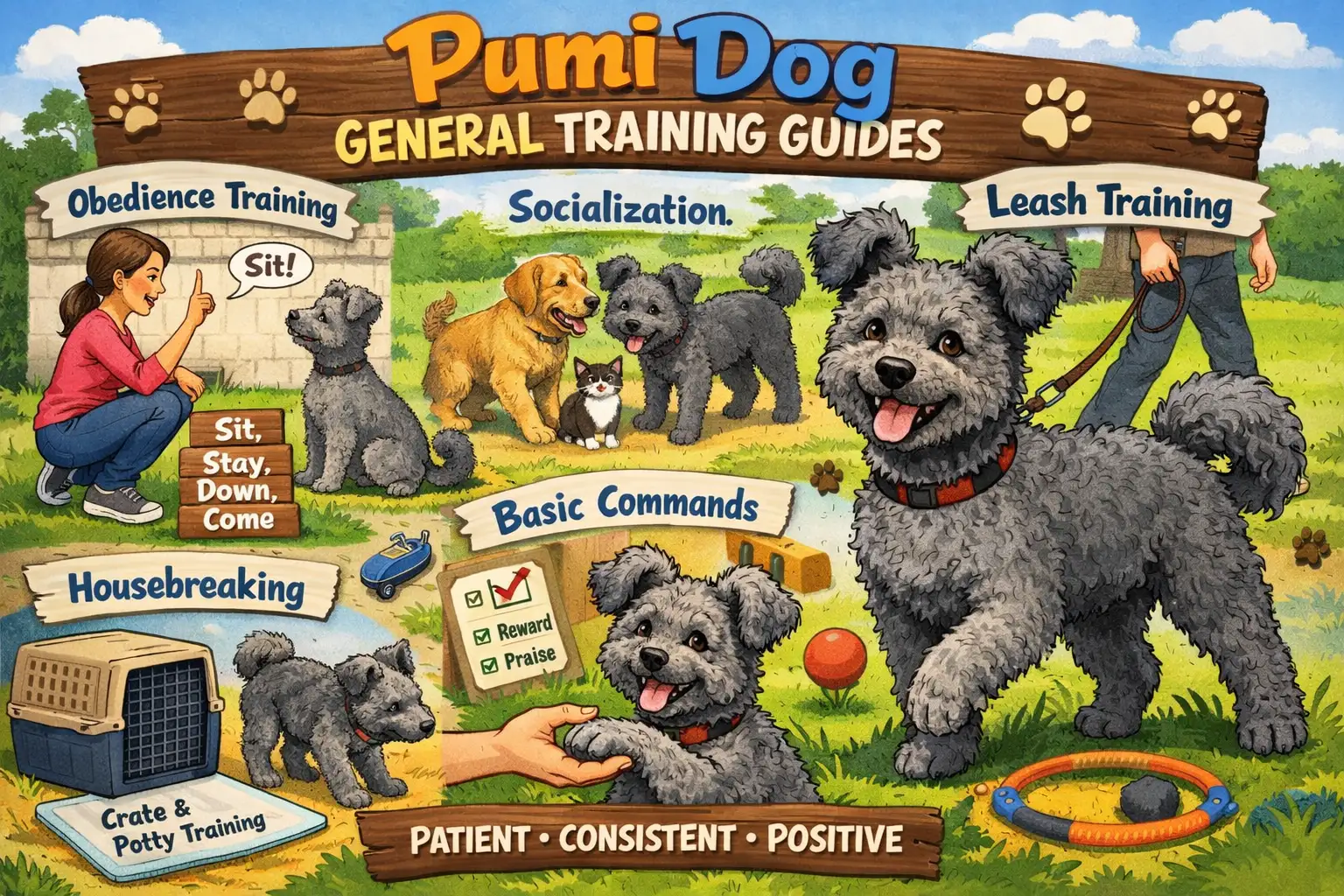
This Pumi dog training guide gives you a practical, breed-specific approach for puppies and adult dogs. It is designed for owners who want to teach basic obedience, reduce barking, improve leash manners, build recall, and create a calmer dog at home. Instead of giving generic dog training advice, this guide explains how Pumis think, what motivates them, and how to train them in a way that fits their working-dog personality.
You do not need harsh corrections, advanced tools, or long training sessions. A Pumi learns best with short lessons, clear timing, rewards, structure, and mental work. The goal is to help your dog understand what you want, stay engaged, and use their natural energy in a controlled way.
Training tip: A Pumi’s training needs can change with age. Puppies need socialization and basics, adults need focus and control, and senior dogs may need gentler routines. To adjust training by life stage, use the Pumi Dog Age Calculator before building your routine.
Understanding the Pumi Dog’s Temperament and Learning Style
Before you train a Pumi, you need to understand how this breed thinks and learns. Pumis are not slow or stubborn dogs. Most training problems happen because owners use the wrong style for this intelligent, sensitive, and energetic breed.
Pumis were developed as active herding dogs. They watch movement, react quickly, and make decisions on their own. These traits make them highly trainable, but they also mean they can become bored, vocal, or overexcited when they do not have enough structure.
Here are the main Pumi traits that affect training:
| Pumi Trait | What You May See at Home | What It Means for Training |
|---|---|---|
| Very intelligent | Learns commands quickly | Needs short, engaging sessions |
| High energy | Restless, overexcited, or demanding | Needs daily physical and mental work |
| Herding instinct | Chasing, circling, nipping, or alerting | Needs impulse control and redirection |
| Very vocal | Barking at sounds, people, dogs, or movement | Needs early bark control and calm routines |
| Sensitive nature | May shut down if corrected harshly | Needs calm, reward-based training |
Pumis learn best when training feels like a game, task, or job. They respond well to food rewards, toys, praise, movement, and marker words like “yes.” Timing matters. If you reward too late, your Pumi may not understand which behavior earned the reward.
Consistency is especially important with this breed. Pumis notice patterns quickly. If jumping, barking, or pulling works once, they may repeat it. Clear rules, repeated daily, are more effective than long training sessions once in a while.
Step-by-Step Training Approach for Pumi Dogs
Pumi dogs learn best when training is clear, short, and repeated often. Long, strict sessions usually do not work well. Think of training as small lessons spread throughout the day instead of one long session.
Start with these basic rules:
- Train when your Pumi is calm, not overexcited
- Keep sessions short and focused
- Reward the correct behavior immediately
- Use the same words and rules every day
- Stop before your dog becomes bored or frustrated
Daily training routine for Pumi dogs
Use this simple structure to avoid overtraining while still giving your Pumi enough mental work:
| Training Part | Pumi Puppies | Adult Pumis |
|---|---|---|
| Session length | 3-5 minutes | 5-10 minutes |
| Sessions per day | 3-5 short sessions | 2-3 focused sessions |
| Main focus | Name response, socialization, potty routine, basic commands | Focus, leash control, recall, impulse control, calm behavior |
| Best rewards | Food, praise, toys, gentle play | Food, toys, praise, movement, short games |
Short sessions help your Pumi stay interested and prevent frustration. For this breed, a few focused minutes done correctly are usually more effective than a long session filled with repeated commands.
Training methods that work best for Pumi dogs
| Training Method | Why It Works for Pumis |
|---|---|
| Positive rewards | Keeps learning fast, clear, and low-stress |
| Marker words such as “yes” | Helps the dog understand the exact correct behavior |
| Food or toy rewards | Matches the breed’s high motivation and drive |
| Mental games | Reduces boredom, barking, and restlessness |
| Calm repetition | Builds reliable habits without pressure |
Always reward right when your Pumi does the correct behavior. Even a few seconds late can confuse them, especially when they are excited or distracted.
How to Train a Pumi Dog by Age
A Pumi’s training needs change as the dog grows. A puppy needs socialization and simple structure. An adult Pumi needs focus, control, and consistent expectations. A senior Pumi may still enjoy training, but sessions should be gentler and adjusted to energy level.
| Pumi Life Stage | Main Training Goal | Best Training Focus |
|---|---|---|
| Pumi puppy | Build confidence and basic manners | Name response, potty training, crate comfort, socialization, gentle handling |
| Young adult Pumi | Control energy and excitement | Leash manners, recall, impulse control, calm greetings, barking control |
| Adult Pumi | Maintain reliable behavior | Focus around distractions, advanced commands, structured exercise, problem-solving games |
| Senior Pumi | Keep the mind active without overdoing it | Short refreshers, gentle enrichment, calm routines, low-impact games |
If you are unsure which life stage your dog is in, check your dog’s age first with the Pumi Dog Age Calculator. This helps you choose a training plan that matches your Pumi’s maturity, energy level, and daily needs.
Pumi Puppy Training Basics
Pumi puppy training should start with confidence, routine, and calm exposure to the world. Because this breed is alert and reactive to movement, early training should teach the puppy that new people, sounds, places, and animals are normal.
Focus on these puppy training basics first:
- Name response: Say your puppy’s name once, reward eye contact, and keep it positive.
- Potty routine: Take your puppy out after sleeping, eating, playing, and training.
- Crate comfort: Make the crate calm and rewarding, not a punishment.
- Handling: Gently touch ears, paws, collar, and coat so grooming and vet visits are easier later.
- Socialization: Introduce new sights and sounds slowly, without overwhelming your puppy.
- Calm greetings: Reward four paws on the floor before jumping becomes a habit.
Do not rush advanced commands too early. A confident Pumi puppy with good routines will usually learn obedience faster as they mature.
Common Pumi Training Problems and Practical Solutions
Even well-trained Pumis can show problem behaviors. This does not mean your dog is bad or untrainable. Most issues happen because the Pumi is bored, confused, under-stimulated, or overexcited.
Here are the most common Pumi training problems and how to fix them:
| Problem | Why It Happens | What You Can Do |
|---|---|---|
| Excessive barking | Alert instinct, boredom, or excitement | Teach “quiet,” reward calm behavior, add mental games |
| Pulling on leash | Too much excitement or forward drive | Use stop-and-go walking and reward focus beside you |
| Not coming when called | Outdoor distractions are more rewarding | Practice indoors first, then use a long leash outside |
| Jumping on people | Seeking attention or excitement | Ignore jumping and reward calm greetings |
| Nipping or chasing | Herding instinct and movement sensitivity | Redirect to toys, teach “leave it,” reward calm watching |
| Acting stubborn | Sessions are too long, unclear, or repetitive | Shorten sessions and reward faster |
How to Stop a Pumi from Barking Too Much
Pumis are naturally vocal, so the goal is not to remove barking completely. The goal is to teach your dog when barking is useful and when to settle. Barking often becomes worse when a Pumi is bored, under-exercised, overstimulated, or rewarded with attention.
Use this simple barking control plan:
- Find the trigger: Notice whether your Pumi barks at people, sounds, dogs, windows, movement, or boredom.
- Teach a quiet cue: Wait for a pause in barking, say “quiet,” then reward the silence.
- Reward calm watching: If your Pumi sees a trigger and stays quiet, reward before barking starts.
- Block rehearsal: Use curtains, distance, or management if your dog practices barking at the same trigger every day.
- Add mental work: Puzzle toys, scent games, obedience drills, and short training sessions reduce boredom barking.
Do not shout over barking. Many Pumis interpret loud human reactions as more excitement. Calm timing and prevention work better than punishment.
Pumi Leash Training and Walking Manners
Leash training is important because Pumis are quick, alert, and easily interested in movement. Pulling usually happens when the dog learns that pulling moves them forward. Your job is to teach that walking near you is what makes the walk continue.
Use this leash training method:
- Start in a quiet area before training near dogs, traffic, or busy places.
- Reward your Pumi for looking at you and walking beside you.
- Stop moving when the leash becomes tight.
- Continue walking when your dog returns attention to you.
- Change direction often so your Pumi learns to follow your movement.
- Keep early walks short and successful instead of long and chaotic.
For active Pumis, leash manners improve faster when the dog also gets mental work at home. A tired body with an overstimulated mind can still pull, bark, and react outside.
Pumi Recall Training: Teaching Your Dog to Come When Called
Recall training is essential for a fast, energetic herding dog like the Pumi. Because this breed notices movement quickly, outdoor distractions can easily compete with your voice. Build recall slowly and never punish your dog after they come to you.
Follow this recall training progression:
- Start indoors: Say your recall cue once, then reward when your Pumi comes to you.
- Use high-value rewards: Choose treats or toys your dog does not get all the time.
- Add distance slowly: Practice from room to room before going outside.
- Use a long leash outdoors: Give freedom while keeping safety and control.
- Reward every success: Coming when called should always feel valuable.
- Avoid cue repetition: Repeating the word teaches your dog that the first cue does not matter.
A strong recall takes time. Practice when your Pumi is likely to succeed, then gradually increase distractions.
Obedience and Impulse Control for Pumis
Because Pumis are quick and reactive, impulse control is just as important as obedience commands. Your dog should learn not only what to do, but also how to pause, think, and wait before acting.
Useful impulse-control exercises include:
- Sit before doors open: Teaches patience before exciting moments.
- Wait before meals: Builds self-control around food.
- Leave it: Helps with chasing, grabbing, and reacting to movement.
- Settle on a mat: Teaches calm behavior indoors.
- Focus cue: Helps your dog return attention to you around distractions.
Impulse control should be practiced daily in small moments. Ask for calm behavior before meals, walks, play, doors, and greetings. These real-life repetitions make training stronger than isolated command practice.
Important Things to Remember During Pumi Training
- Most problems improve with better timing and consistency.
- Repeating commands without rewards slows learning.
- Physical exercise alone is not enough for Pumis.
- Mental work reduces many behavior issues naturally.
- Training should be adjusted to your dog’s age, energy level, and confidence.
- Calm routines work better than harsh corrections.
If your Pumi seems worse on busy days, that is normal. Stress, noise, visitors, lack of sleep, or too much stimulation can affect behavior. On these days, keep training short and simple.
Fixing problems early is much easier than waiting. Small daily changes lead to big results over time.
When to Seek Professional Training or Behavioral Help
Most Pumi training problems can be improved at home with time, patience, and the right method. But some behaviors need extra help, and asking for support is the smart choice, not a failure.
You should consider professional help if you notice any of these signs:
| Behavior | What It Means | What to Do |
|---|---|---|
| Fear that does not improve | Your dog feels unsafe or stressed | Contact a certified dog trainer |
| Aggression toward people or dogs | There may be a safety risk | Work with a qualified behavior professional |
| Extreme anxiety | Your dog may be in constant stress or panic | Speak with a veterinarian or veterinary behaviorist |
| No progress after 6-8 weeks | The current training plan may not fit your dog | Get expert guidance and adjust the plan |
A professional dog trainer can help with obedience problems, barking, leash issues, focus, and impulse control. A veterinary behaviorist may be needed when fear, aggression, anxiety, or possible medical issues are affecting behavior.
Getting help early can stop small problems from becoming serious ones. The goal is always a calm, confident, and safe Pumi that fits well into your home and lifestyle.
Pumi Dog Training FAQs
How do you train a Pumi dog?
Train a Pumi dog with short, reward-based sessions that include obedience, focus, impulse control, socialization, and mental games. Pumis learn quickly, but they need consistency and clear timing. Reward the behavior you want immediately and keep sessions short enough that your dog stays engaged.
Are Pumis easy to train?
Pumis are usually easy to train when the owner uses structure, rewards, and consistency. They are intelligent and fast learners, but their energy, barking, and herding instincts can become difficult if training is unclear or inconsistent.
How do I train a Pumi puppy?
Start Pumi puppy training with name response, potty routine, crate comfort, gentle handling, calm greetings, and socialization. Keep sessions short, positive, and simple. Avoid overwhelming the puppy with long lessons or too many commands at once.
How do I stop a Pumi from barking?
To reduce Pumi barking, identify the trigger, reward quiet moments, teach a calm “quiet” cue, prevent repeated barking practice, and add daily mental enrichment. Do not shout at barking, because this can increase excitement.
How much exercise does a Pumi need for better training?
A Pumi usually trains better when daily exercise is combined with mental work. Walks, play, scent games, obedience drills, and puzzle activities help reduce boredom and make training sessions more focused.
Related Pumi Guides
More Pumi Resources
Use these related Pumi resources for topics that are covered in more detail on their dedicated pages:

Ata Ur Rehman is the founder of Pet Age in Human Years Calculator, an educational platform that provides age conversion charts and lifespan guides for dogs, cats, birds, and other companion animals. His work focuses on helping pet owners understand how animal ages translate into human years using commonly accepted age conversion formulas and published lifespan averages.
The website compiles breed and species lifespan data from kennel clubs, breed organizations, and general animal lifespan studies to present simple and easy-to-understand guides for pet owners worldwide.
This website was created to centralize animal age conversion charts into one easy reference platform for pet owners.
This article is for general education. For symptoms, medication, diet changes, or health concerns, use a qualified veterinarian who can assess your individual pet.