On this page
The Pyrenean Mastiff dog is one of the largest and most impressive livestock guardian breeds in the world. Originating in the Spanish Pyrenees mountains, this gentle giant was developed to protect sheep and other livestock from wolves, bears, and thieves while remaining calm and trustworthy around people. Today, the breed is admired for its enormous size, loyal personality, and natural protective instincts.
Despite their intimidating appearance, Pyrenean Mastiffs are known for being affectionate family companions that form strong bonds with their owners. They are patient with children, generally tolerant of other animals, and prefer peaceful environments where they can quietly watch over their home and family.
This breed is best suited to experienced owners with plenty of space, ideally in rural or suburban environments where a giant guardian dog can thrive. While they are relatively calm indoors, their size, independence, and guarding instincts require proper training, early socialization, and responsible ownership.
| Breed Overview | Details |
|---|---|
| Origin | Spain |
| Breed Group | Livestock Guardian Dog |
| Height | Males: 77-88 cm, Females: 72-80 cm |
| Weight | Males: 60-90 kg, Females: 50-70 kg |
| Lifespan | 10-12 years |
| Energy Level | Moderate |
| Shedding | Moderate to Heavy |
| Grooming Needs | Moderate |
| Trainability | Moderate |
| Good With Children | Yes |
| Good With Other Pets | Usually |
| Apartment Friendly | No |
| First-Time Owner Friendly | No |
History and Origin
The Pyrenean Mastiff originated in the Aragon region of northeastern Spain, where it worked alongside shepherds in the Pyrenees Mountains for hundreds of years. Its primary role was protecting flocks of sheep during seasonal migrations known as transhumance, where livestock traveled long distances between grazing areas.
Unlike herding breeds that move animals from place to place, the Pyrenean Mastiff stayed with the flock and acted as a deterrent against predators. Their large size alone was often enough to discourage wolves and bears from approaching livestock.
During the twentieth century, declining wolf populations and changes in farming practices caused the breed’s numbers to fall dramatically. Fortunately, dedicated Spanish breeders preserved the Pyrenean Mastiff, and today the breed has regained popularity among livestock owners and giant breed enthusiasts around the world.
Although still considered rare outside Spain, the Pyrenean Mastiff is increasingly recognized for its exceptional temperament and dependable guardian instincts.
Temperament and Personality
The Pyrenean Mastiff is often described as a gentle giant. They are calm, patient, and remarkably stable dogs that rarely show unnecessary aggression. Their protective nature comes from confidence rather than fear, which makes them reliable guardians and trustworthy companions.
With their family, Pyrenean Mastiffs are affectionate and devoted. They enjoy spending time near their owners and are happiest when included in everyday family life. Many owners describe them as quiet shadows that prefer to watch over their household rather than constantly seek attention.
Around strangers, the breed tends to be reserved but not hostile. A Pyrenean Mastiff will usually observe unfamiliar visitors carefully before deciding whether they pose a threat. This natural caution makes early socialization extremely important during puppyhood.
Their livestock guardian background also means they are independent thinkers. Unlike breeds bred to follow constant commands, Pyrenean Mastiffs were expected to make decisions on their own while protecting animals in remote mountain areas. This independence can sometimes be mistaken for stubbornness during training.
| Situation | Typical Behavior | Notes |
|---|---|---|
| Family Members | Loyal and affectionate | Forms strong bonds with owners |
| Children | Gentle and patient | Supervision recommended because of size |
| Strangers | Reserved and watchful | Early socialization is essential |
| Other Dogs | Usually tolerant | Same-sex dominance can occur |
| Cats and Small Pets | Usually compatible | Best when raised together |
| Guarding Ability | Excellent | Strong natural instincts |
| Barking Level | Moderate | Primarily alert barking |
Pyrenean Mastiffs are generally quiet dogs that only bark when they believe something requires attention. Unlike many guardian breeds, they are not unnecessarily reactive and prefer to assess situations calmly before responding.
Because of their large size and protective instincts, early exposure to different people, animals, sounds, and environments helps develop a confident and well-balanced adult dog.
Size, Appearance, Grooming and Exercise Needs
The Pyrenean Mastiff is a true giant breed with an imposing yet elegant appearance. Adult males typically stand between 77 and 88 cm at the shoulder and weigh between 60 and 90 kg, while females usually reach 72 to 80 cm and weigh 50 to 70 kg.
Their body is powerful, muscular, and well-balanced, built for endurance rather than speed. The breed has a broad head, expressive eyes, and a calm expression that reflects its gentle temperament. Their thick double coat protected them from harsh mountain winters and remains one of their defining features today.
The coat is predominantly white with clearly defined patches of color, often fawn, gray, brindle, or black, usually accompanied by a darker facial mask.
| Physical Trait | Details |
|---|---|
| Height | Male: 77-88 cm, Female: 72-80 cm |
| Weight | Male: 60-90 kg, Female: 50-70 kg |
| Build | Giant, muscular, balanced |
| Coat Type | Thick double coat |
| Common Colors | White with colored patches and mask |
| Shedding Level | Moderate to heavy |
| Climate Tolerance | Excellent in cold climates, poor in extreme heat |
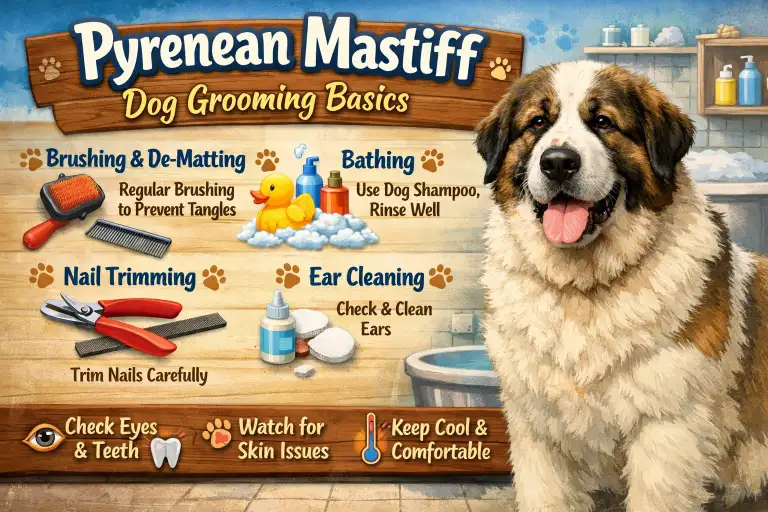
Despite their large size, grooming requirements are manageable. Brushing once or twice per week removes loose hair and helps prevent matting. During seasonal shedding periods, daily brushing may be necessary.
Regular maintenance should include nail trimming, ear cleaning, dental care, and occasional bathing.
Exercise requirements are moderate for a giant breed. Most adult Pyrenean Mastiffs are satisfied with daily walks and access to a secure yard where they can patrol and observe their surroundings.
| Exercise Requirement | Recommendation |
|---|---|
| Daily Walks | 30-60 minutes |
| Mental Stimulation | Moderate |
| Off-Leash Exercise | Only in secure areas |
| Suitable Activities | Walking, hiking, guarding property |
| Unsuitable Activities | Long-distance running, agility sports |
Training and Owner Suitability
The Pyrenean Mastiff is intelligent but highly independent. Unlike obedience-focused breeds such as Border Collies or German Shepherds, these dogs were bred to make decisions without human guidance.
Training therefore requires patience, consistency, and positive reinforcement.
Harsh corrections often damage trust and reduce motivation. Short, rewarding sessions work far better than repetitive drilling.
Early socialization is one of the most important parts of raising a Pyrenean Mastiff puppy. Exposure to people, animals, vehicles, visitors, and different environments helps prevent excessive suspicion or territorial behavior later in life.
| Owner Type | Suitability | Notes |
|---|---|---|
| First-Time Owners | Not Recommended | Experience with large breeds preferred |
| Families with Children | Suitable | Supervision recommended |
| Seniors | Conditional | Depends on physical ability |
| Apartment Living | Not Suitable | Requires significant space |
| Multi-Pet Homes | Usually Suitable | Early introductions help |
| Rural Homes | Excellent | Ideal environment |
Health and Lifespan
The Pyrenean Mastiff is generally a healthy breed but, like most giant dogs, it is susceptible to several inherited and size-related health conditions.
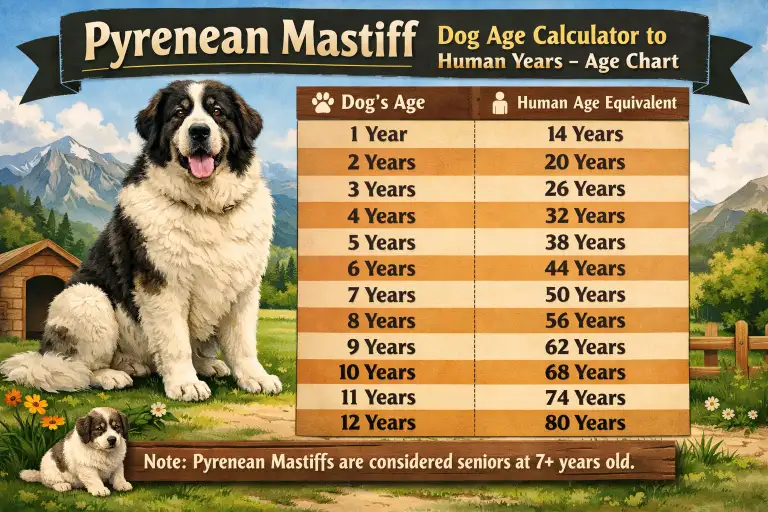
The average lifespan ranges from 10 to 12 years, which is relatively good for a dog of this size.
Potential health concerns include:
- Hip dysplasia
- Elbow dysplasia
- Gastric dilatation-volvulus (bloat)
- Entropion
- Osteoarthritis
- Cardiac disease
Responsible breeders should perform health testing to reduce the risk of inherited conditions.
| Health Category | Details |
|---|---|
| Average Lifespan | 10-12 years |
| Hip Dysplasia | Common concern |
| Elbow Dysplasia | Moderate risk |
| Bloat Risk | High |
| Eye Conditions | Possible |
| Recommended Screening | Hips, elbows, heart, eyes |
Cost of Ownership
Owning a Pyrenean Mastiff is a significant financial commitment due to the breed’s enormous size.
| Expense Category | Estimated Cost |
|---|---|
| Puppy Purchase Price | $1,500-$3,500 |
| Annual Food Costs | $800-$1,500 |
| Veterinary Care | $400-$1,000 |
| Insurance | $500-$1,200 |
| Grooming Supplies | $100-$300 |
| Total Annual Cost | $1,800-$3,500+ |
Food costs alone can exceed those of several medium-sized dogs combined, and emergency veterinary treatment for giant breeds is often considerably more expensive.
Pyrenean Mastiff vs Similar Breeds
| Breed | Weight | Temperament | Best For |
|---|---|---|---|
| Pyrenean Mastiff | 60-90 kg | Calm and protective | Experienced families |
| Great Pyrenees | 54-64 kg | Gentle and alert | Families with land |
| Spanish Mastiff | 55-90 kg | Independent and protective | Farms and ranches |
| Anatolian Shepherd | 50-65 kg | Highly independent | Experienced rural owners |
The Pyrenean Mastiff is generally considered softer and more family-oriented than the Anatolian Shepherd while being less intense than some other livestock guardian breeds.
Frequently Asked Questions
Are Pyrenean Mastiffs aggressive?
No. Well-socialized Pyrenean Mastiffs are typically calm and gentle dogs. They are protective rather than aggressive and rarely show unnecessary hostility.
Are Pyrenean Mastiffs good family dogs?
Yes. They are affectionate, patient, and loyal companions that often do very well with children when properly supervised.
How big does a Pyrenean Mastiff get?
Adult males usually weigh between 60 and 90 kg and stand 77 to 88 cm tall. Females are slightly smaller.
Do Pyrenean Mastiffs bark a lot?
They bark primarily to alert their owners to unusual activity. Excessive barking is uncommon when their needs are met.
Are Pyrenean Mastiffs easy to train?
Training can be challenging because of their independent nature. Consistency and positive reinforcement are essential.
Can a Pyrenean Mastiff live in an apartment?
Generally no. Their size and need for space make apartments unsuitable for most individuals.
How much exercise does a Pyrenean Mastiff need?
Most adults require between 30 and 60 minutes of exercise each day along with access to a secure outdoor area.
Are Pyrenean Mastiffs good with other pets?
Yes, particularly if raised together from a young age. Early socialization significantly improves compatibility.
Do Pyrenean Mastiffs shed heavily?
They shed moderately throughout the year and heavily during seasonal coat changes.
What is the lifespan of a Pyrenean Mastiff?
The average lifespan is between 10 and 12 years.
Final Thoughts
The Pyrenean Mastiff combines the size and strength of a traditional livestock guardian with the temperament of a gentle family companion. For experienced owners with enough space and a calm environment, few breeds offer the same combination of loyalty, patience, and protective instinct.
They are not the right choice for every household, particularly first-time owners or people living in small homes, but for those who can meet their needs, the Pyrenean Mastiff is an exceptionally rewarding breed to own.
With proper training, socialization, and responsible care, these majestic dogs become devoted protectors and loving members of the family for many years.

Ata Ur Rehman is the founder of Pet Age in Human Years Calculator, an educational platform that provides age conversion charts and lifespan guides for dogs, cats, birds, and other companion animals. His work focuses on helping pet owners understand how animal ages translate into human years using commonly accepted age conversion formulas and published lifespan averages.
The website compiles breed and species lifespan data from kennel clubs, breed organizations, and general animal lifespan studies to present simple and easy-to-understand guides for pet owners worldwide.
This website was created to centralize animal age conversion charts into one easy reference platform for pet owners.
This article is for general education. For symptoms, medication, diet changes, or health concerns, use a qualified veterinarian who can assess your individual pet.