On this page
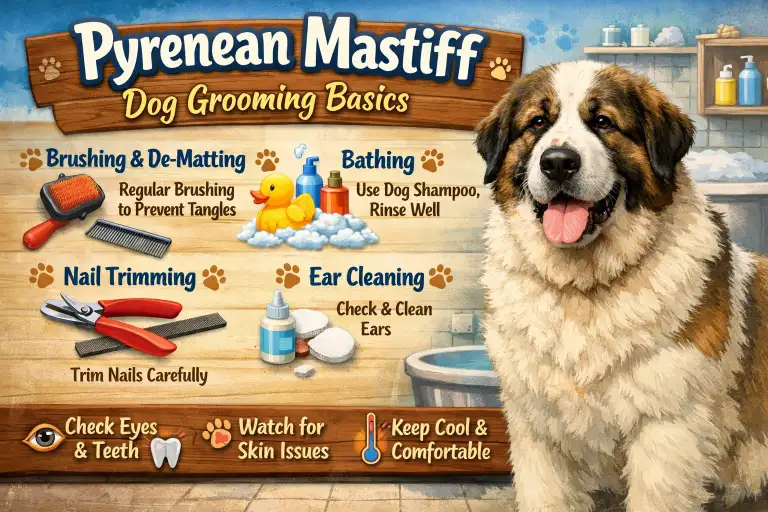
Grooming a Pyrenean Mastiff is much more than keeping this giant breed looking beautiful. Regular grooming is essential for maintaining healthy skin, preventing painful mats, reducing shedding, and keeping your dog comfortable throughout the year. Because Pyrenean Mastiffs have a thick double coat designed to protect them from harsh mountain weather, they require a consistent grooming routine that includes brushing, bathing, nail care, and ear cleaning.
A proper grooming routine also gives owners an opportunity to check for skin problems, parasites, injuries, and other health concerns before they become serious. Spending time grooming your dog can strengthen your bond and help your Pyrenean Mastiff become more comfortable with handling and routine care.
Why Grooming Matters for Pyrenean Mastiffs
| Grooming Aspect | Benefits | Problems if Ignored |
|---|---|---|
| Brushing | Prevents mats and removes loose fur | Tangles, painful mats, skin irritation |
| Bathing | Removes dirt, debris, and odors | Dirty coat, skin infections |
| Nail Care | Supports healthy movement and posture | Joint strain, cracked nails |
| Ear Cleaning | Reduces moisture and wax buildup | Ear infections and irritation |
| Skin Checks | Detects problems early | Hot spots, parasites, allergies |
Understanding the Pyrenean Mastiff Double Coat
The Pyrenean Mastiff has a dense double coat consisting of two separate layers that work together to protect the dog from both cold and warm weather.
The outer coat, also called the guard coat, is long, coarse, and water-resistant. It helps repel dirt, moisture, and debris while protecting the skin from environmental damage.
Beneath the outer coat is a thick, soft undercoat that acts as insulation. This undercoat keeps the dog warm during cold weather and helps regulate body temperature during warmer months.
Because of this unique coat structure, grooming requirements for a Pyrenean Mastiff are different from many other breeds.
| Coat Layer | Function | Grooming Recommendation |
|---|---|---|
| Guard Coat | Protects from weather, dirt, and moisture | Brush gently to avoid damage |
| Undercoat | Provides insulation and sheds seasonally | Use an undercoat rake regularly |
Do Pyrenean Mastiffs Shed a Lot?
Yes. Pyrenean Mastiffs are heavy shedders.
They shed moderately throughout the year and experience heavy seasonal shedding, often called a “coat blow,” once or twice annually. During these periods, large amounts of undercoat are released, requiring more frequent brushing to prevent mats and excessive hair accumulation around the home.
The heaviest shedding usually occurs during:
- Spring
- Early summer
- Fall
During seasonal shedding, brushing may need to increase to daily sessions.
Common Areas Where Mats Develop
Certain parts of the coat are more likely to become tangled and matted.
| Area | Matting Risk | Grooming Tip |
|---|---|---|
| Behind the ears | High | Brush daily and separate the hair gently |
| Under the front legs | High | Check after walks and weekly brushing |
| Collar area | Medium | Remove collar periodically when brushing |
| Rear legs | Medium | Comb thoroughly during shedding season |
| Tail feathering | Medium | Use a comb to prevent tangles |
Never Shave a Pyrenean Mastiff
Many owners believe shaving a double-coated breed will keep the dog cooler in summer. This is a common mistake.
The double coat actually helps regulate body temperature by insulating against both cold and heat. Shaving can damage the coat permanently, causing uneven regrowth and reducing its ability to protect the skin.
Instead of shaving, focus on:
- Frequent brushing
- Removing loose undercoat
- Proper bathing
- Keeping the coat free of mats
Signs Your Pyrenean Mastiff Needs Grooming
Your dog may need immediate grooming if you notice:
- Excessive shedding
- Tangles or mats
- Strong odor
- Dull or greasy coat
- Excessive scratching
- Dirt trapped in the fur
- Red or irritated skin
- Hair clumps falling out
Regular grooming helps keep your Pyrenean Mastiff healthy, comfortable, and looking its best while preventing many common skin and coat problems before they become serious.
How to Groom a Pyrenean Mastiff at Home
Grooming a Pyrenean Mastiff at home becomes much easier when you follow a consistent routine and use the proper tools. Because this breed has a dense double coat, brushing is the most important grooming task and should never be skipped for long periods.
Start by brushing the outer coat using a slicker brush to remove dirt and loose hair. Follow this with an undercoat rake to reach the dense undercoat where shedding occurs most heavily. Finish with a comb to check for hidden tangles and mats.
Always brush in sections rather than brushing only the surface of the coat. This process, often called line brushing, allows you to reach the undercoat and prevent mat formation close to the skin.
| Grooming Tool | Purpose | Recommended Use |
|---|---|---|
| Slicker Brush | Removes loose hair and small tangles | 3-5 times per week |
| Undercoat Rake | Removes dead undercoat during shedding season | 2-3 times per week |
| Metal Comb | Finds hidden mats and tangles | After brushing sessions |
| Pin Brush | Smooths the outer coat | Finishing brush |
| Dog Shampoo | Cleans skin and coat | Every 6-8 weeks |
| High Velocity Dryer | Removes loose coat after baths | During heavy shedding |
Brushing Frequency
Pyrenean Mastiffs require regular brushing throughout the year, but grooming frequency increases significantly during seasonal coat blows.
| Grooming Task | Normal Season | Heavy Shedding Season |
|---|---|---|
| Brushing | 3-5 times weekly | Daily |
| Undercoat Removal | Weekly | Every 2-3 days |
| Comb Check | Weekly | Weekly |
| Full Grooming Session | Every 2 weeks | Weekly |
Bathing a Pyrenean Mastiff
Bathing should be done every six to eight weeks unless your dog becomes unusually dirty or develops a skin condition requiring more frequent cleaning.
Always use a dog-specific shampoo designed for sensitive skin or double-coated breeds. Human shampoos can strip natural oils and cause irritation.
After bathing, the coat must be dried completely. Moisture trapped within the undercoat can create an environment for bacterial growth, fungal infections, and hot spots.
A high-velocity dryer is often the most effective option for giant double-coated breeds because it removes water and loose undercoat at the same time.
Nail Care
Long nails can affect posture, movement, and joint health, especially in giant breeds such as the Pyrenean Mastiff.
Nails should generally be checked every two weeks and trimmed every four to six weeks depending on activity level and natural wear.
If you hear nails clicking loudly on hard floors, they are probably too long.
| Nail Condition | Recommendation |
|---|---|
| Nails touching the ground while standing | Trim immediately |
| Clicking sounds while walking | Schedule trimming |
| Cracked or split nails | Veterinary examination recommended |
| Bleeding after trimming | Apply styptic powder and monitor |
Ear Cleaning and Skin Care
Pyrenean Mastiffs have drop ears that can trap moisture and debris. Weekly ear inspections help reduce the risk of infections.
Signs of ear problems include:
- Redness
- Unpleasant odor
- Head shaking
- Excessive scratching
- Dark discharge
Skin should also be checked during every brushing session.
Watch for:
- Red patches
- Hair loss
- Scabs
- Bumps
- Parasites
- Hot spots
Early detection often prevents minor issues from becoming major veterinary problems.
Professional Grooming
Many owners successfully groom their Pyrenean Mastiff at home, but professional groomers can be extremely helpful during seasonal shedding periods.
Professional grooming may include:
- Undercoat blowouts
- Severe mat removal
- Sanitary trimming
- Nail grinding
- Ear cleaning
- Coat maintenance
Large double-coated breeds often benefit from professional grooming two to four times per year.
Seasonal Grooming Schedule
| Season | Grooming Focus |
|---|---|
| Spring | Heavy undercoat removal during coat blow |
| Summer | Frequent brushing and skin checks |
| Fall | Second seasonal shedding period management |
| Winter | Maintenance brushing and paw care |
Common Grooming Mistakes
Avoid these common mistakes when grooming a Pyrenean Mastiff:
- Shaving the double coat.
- Bathing too frequently.
- Skipping undercoat maintenance.
- Ignoring small mats until they become severe.
- Using human shampoo.
- Allowing moisture to remain trapped in the undercoat.
- Forgetting regular nail trimming.
Frequently Asked Questions
How often should you groom a Pyrenean Mastiff?
Most Pyrenean Mastiffs require brushing three to five times per week and bathing every six to eight weeks. During seasonal shedding periods, daily brushing is often necessary.
Do Pyrenean Mastiffs shed a lot?
Yes. Pyrenean Mastiffs are heavy shedders and experience significant seasonal shedding once or twice each year.
Can you shave a Pyrenean Mastiff?
No. Shaving can damage the double coat and interfere with the breed’s natural temperature regulation.
What is the best brush for a Pyrenean Mastiff?
A slicker brush combined with an undercoat rake provides the best results for maintaining both coat layers.
How long does grooming a Pyrenean Mastiff take?
A standard brushing session usually takes 20 to 40 minutes, while a complete grooming session including bathing and drying can take two to three hours.
How much does professional grooming cost for a Pyrenean Mastiff?
Professional grooming costs vary by location but typically range from $100 to $250 per session because of the breed’s size and coat density.
Are Pyrenean Mastiffs good for allergy sufferers?
No. Their heavy shedding and dense undercoat make them unsuitable for most people with dog allergies.
Final Thoughts
A consistent grooming routine keeps a Pyrenean Mastiff healthy, comfortable, and free from painful mats and skin problems. Regular brushing, proper bathing, nail care, and ear cleaning all contribute to your dog’s overall well-being and quality of life. By understanding the needs of this giant double-coated breed and maintaining a schedule throughout the year, owners can manage shedding effectively and keep their Pyrenean Mastiff looking and feeling its best.

Ata Ur Rehman is the founder of Pet Age in Human Years Calculator, an educational platform that provides age conversion charts and lifespan guides for dogs, cats, birds, and other companion animals. His work focuses on helping pet owners understand how animal ages translate into human years using commonly accepted age conversion formulas and published lifespan averages.
The website compiles breed and species lifespan data from kennel clubs, breed organizations, and general animal lifespan studies to present simple and easy-to-understand guides for pet owners worldwide.
This website was created to centralize animal age conversion charts into one easy reference platform for pet owners.
This article is for general education. For symptoms, medication, diet changes, or health concerns, use a qualified veterinarian who can assess your individual pet.