On this page
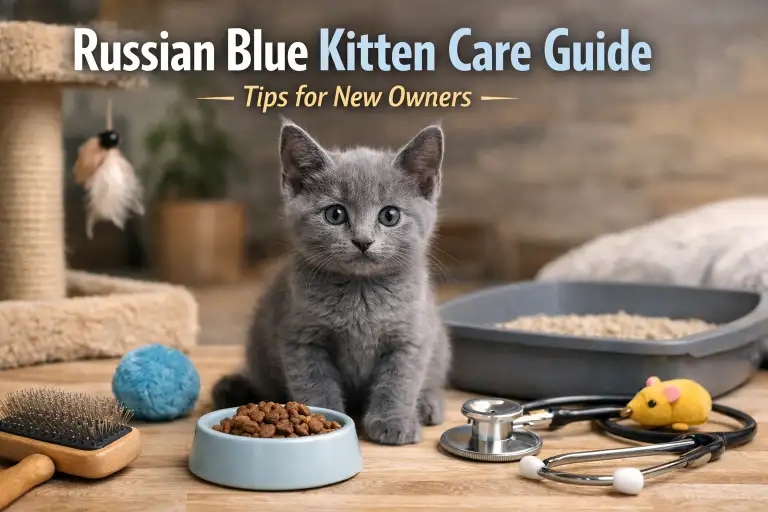
Caring for a Russian Blue cat is a rewarding experience, but it comes with some unique challenges. This guide is for both new and current owners who want to understand the best ways to keep their Russian Blue healthy, happy, and calm.
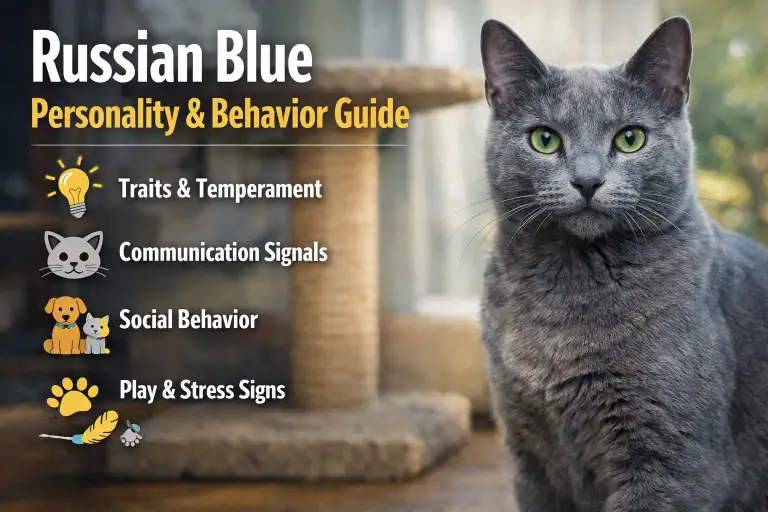
Russian Blues are known for their quiet, sensitive, and intelligent nature. They thrive in homes with routine, predictability, and gentle interaction, so understanding their needs is essential. Unlike some more outgoing breeds, Russian Blues may be shy with strangers or change, but they form strong, lasting bonds with their family.
In this guide, you will learn how to:
- Maintain a consistent daily care routine
- Groom and manage their plush silver-blue coat
- Provide proper exercise and mental stimulation
- Recognize stress signs and avoid common mistakes
- Adjust care for kittens, adults, and seniors
By following these practical tips, you’ll be able to create a calm and nurturing environment that suits a Russian Blue’s personality and keeps them thriving for years.
Daily Care Routine for a Russian Blue Cat
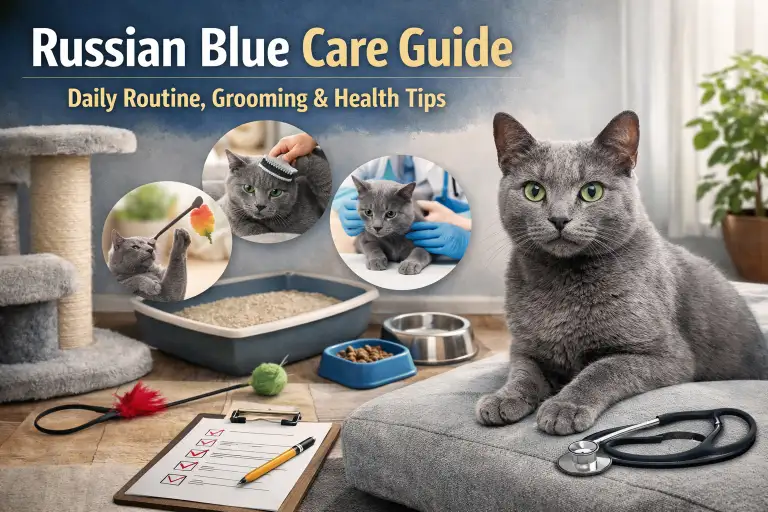
Taking care of a Russian Blue every day is simpler than it seems once you know their needs. These cats thrive on routine, so doing a few tasks consistently keeps them healthy and happy.
Daily Care Checklist
| Care Task | How Often | Time Needed | Why It Matters |
|---|---|---|---|
| Feeding | 2–3 times a day | 5 minutes | Maintains healthy weight and energy |
| Fresh water | Daily | 2 minutes | Keeps your cat hydrated |
| Litter box cleaning | Daily | 5 minutes | Prevents odors and keeps your cat comfortable |
| Interaction & bonding | Daily | 10–20 minutes | Strengthens trust and emotional connection |
| Mental stimulation | Daily | 10–15 minutes | Prevents boredom and reduces stress |
| Observe behavior | Daily | 5 minutes | Early warning for health or stress issues |
Tips for daily care:
- Feed measured portions at the same times each day to avoid weight gain.
- Provide fresh water in a clean bowl and check it multiple times a day.
- Spend quiet time playing or gently interacting; Russian Blues prefer calm engagement.
- Watch for changes in appetite, energy, or litter box habits—these can indicate health issues.
This daily routine builds trust and keeps your Russian Blue healthy, calm, and mentally engaged.
Grooming, Exercise, and Indoor Care Needs
Grooming & Activity Overview
Russian Blue cats are low-maintenance compared to some other breeds, but they still need regular grooming, exercise, and a calm indoor environment to stay healthy and happy.
| Care Type | Frequency | Difficulty | Notes for Russian Blues |
|---|---|---|---|
| Brushing | 1–2 times per week | Easy | Helps reduce shedding and keeps coat shiny |
| Bathing | Rarely | Moderate | Only when necessary; their coat is naturally clean |
| Nail trimming | Every 2–3 weeks | Easy | Prevents scratching damage and discomfort |
| Ear & eye check | Weekly | Easy | Look for dirt or infection |
| Play & exercise | Daily | Moderate | Short bursts of play keep them active and prevent boredom |
| Mental enrichment | Daily | Easy | Puzzle toys or interactive games stimulate intelligence |
Tips for indoor care and exercise:
- Provide vertical spaces like cat trees or shelves; Russian Blues love to observe quietly from above.
- Use wand toys, balls, or puzzle feeders for short play sessions. They enjoy mental challenges more than constant running.
- Keep their environment calm and predictable; loud noises or sudden changes can stress them.
- Most Russian Blues are best kept as indoor cats for safety and routine consistency.
A regular grooming and exercise routine keeps your Russian Blue coat healthy, prevents boredom, and helps maintain a calm, stress-free lifestyle.
Common Care Mistakes, Stress Signs, and Safety Tips
Even calm and easygoing cats like Russian Blues can develop stress or health problems if their care is inconsistent. Knowing what to avoid and what warning signs to watch for helps keep them healthy and happy.
Stress & Warning Signs
| Sign | Possible Cause | What Owners Should Do |
|---|---|---|
| Hiding or avoiding people | Stress or fear | Give space, keep the environment calm, offer gentle interaction |
| Loss of appetite | Illness or stress | Monitor closely; consult a vet if it continues |
| Over-grooming | Anxiety or skin irritation | Check skin for irritation; provide enrichment and calm environment |
| Weight gain | Overfeeding or inactivity | Adjust portions, increase playtime |
| Aggression or swatting | Overstimulation or frustration | Stop handling, give quiet time, use gentle play methods |
| Litter box avoidance | Stress or medical issue | Ensure clean boxes; check for urinary or digestive problems |
Common mistakes to avoid:
- Changing routines suddenly; Russian Blues need consistency.
- Overstimulating or forcing interaction; they prefer calm engagement.
- Ignoring subtle signs of stress like tail flicking, soft growls, or hiding.
- Allowing too much free feeding; portion control prevents weight gain.
- Exposing them to loud or chaotic environments frequently.
By understanding these common mistakes and warning signs, you can prevent stress, maintain good health, and ensure your Russian Blue feels secure in your home.
Special Care Situations and Health Monitoring
Caring for a Russian Blue changes as they grow and depending on your home setup. Knowing the right approach for kittens, adults, seniors, and multi-cat households helps keep them healthy and happy. Regular health checks also prevent small problems from becoming serious.
Care by Life Stage
| Life Stage | Key Care Focus | Owner Tips |
|---|---|---|
| Kitten | Socialization, litter training, gentle handling | Play gently, introduce to new people slowly, start brushing early |
| Adult | Routine, exercise, mental enrichment | Maintain daily feeding schedule, interactive play, monitor weight |
| Senior | Comfort, mobility, health monitoring | Provide soft bedding, easier access to litter and food, regular vet visits |
| Multi-cat homes | Territory, stress reduction, compatibility | Introduce new cats slowly, provide multiple litter boxes and resting areas |
Health monitoring tips:
- Check weight and appetite regularly. Russian Blues can gain weight if activity is low.
- Watch for dental issues, skin problems, or changes in grooming habits.
- Schedule regular vet visits for vaccinations, parasite control, and preventive care.
- Observe behavior for subtle stress signals; early intervention keeps them calm and healthy.
By adjusting care to their age, health, and household environment, your Russian Blue can thrive from kittenhood through senior years.
“For more expert information on Russian Blue cats and official care guidelines, you can visit the Cat Fanciers’ Association (CFA) page here.”

Ata Ur Rehman is the founder of Pet Age in Human Years Calculator, an educational platform that provides age conversion charts and lifespan guides for dogs, cats, birds, and other companion animals. His work focuses on helping pet owners understand how animal ages translate into human years using commonly accepted age conversion formulas and published lifespan averages.
The website compiles breed and species lifespan data from kennel clubs, breed organizations, and general animal lifespan studies to present simple and easy-to-understand guides for pet owners worldwide.
This website was created to centralize animal age conversion charts into one easy reference platform for pet owners.
This article is for general education. For symptoms, medication, diet changes, or health concerns, use a qualified veterinarian who can assess your individual pet.