On this page
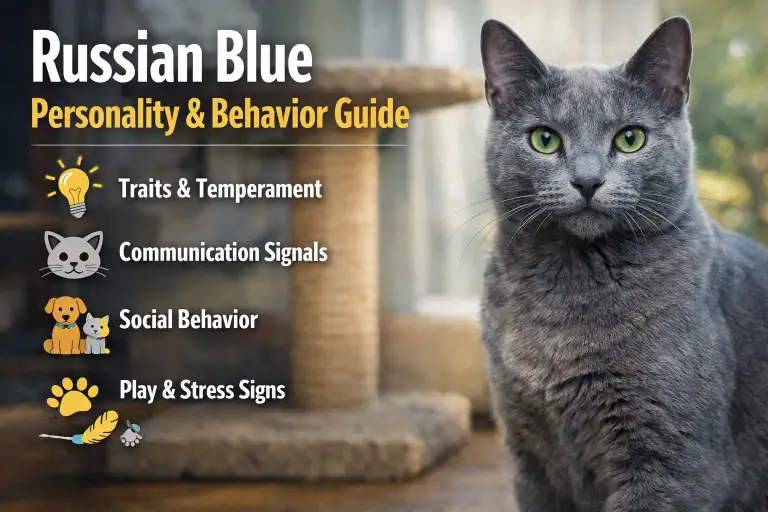
The Russian Blue cat has a quiet way of winning people over. At first glance, it’s easy to focus on the plush silver-blue coat and striking green eyes, but living with a Russian Blue quickly reveals that this breed’s real appeal lies in its temperament. Calm, observant, and deeply loyal, Russian Blues tend to form strong emotional bonds with their people while avoiding the chaos and constant attention some other breeds thrive on.
This is not a cat that demands affection from everyone who walks through the door. Instead, Russian Blues often choose their person and stick close in subtle ways—following from room to room, settling nearby rather than on your lap, and communicating through soft eye contact rather than loud meows. Many owners describe them as “emotionally intelligent” cats that seem to read the mood of a household and adjust their behavior accordingly.
Russian Blues are also creatures of routine. They notice changes in feeding schedules, furniture placement, and even daily habits, and they’re at their best in homes that offer predictability and calm. This sensitivity makes them wonderful companions for quieter households, apartment dwellers, and people who appreciate a cat that is affectionate without being overwhelming.
That said, the Russian Blue is often misunderstood. Their reserved nature is sometimes mistaken for aloofness, and their independence can be misread as a lack of affection. In reality, these cats form deep, lasting bonds and tend to stay devoted to their families for life—just on their own terms.
This guide takes a realistic, experience-based look at what it’s truly like to live with a Russian Blue cat. From temperament and activity needs to health, costs, and everyday behavior, it’s designed to help you decide whether this elegant, thoughtful breed fits your home and lifestyle.
Size and Weight Ranges
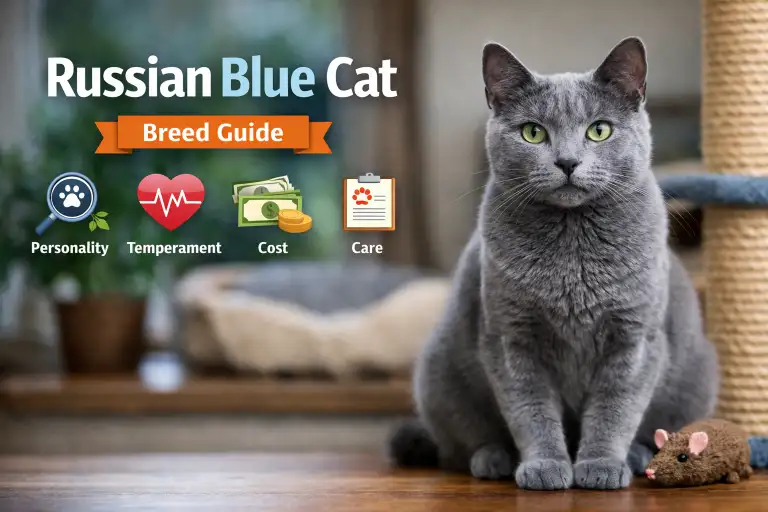
The Russian Blue is a medium-sized cat with a slim but muscular body. Its look is elegant and graceful, making it easy to spot among other cats. One of the most striking features is its short, dense coat, which is a soft blue-gray color with a silvery shine. Their bright green eyes stand out beautifully against this coat and give the breed a thoughtful, alert expression.
Russian Blues are not very big. On average:
| Gender | Weight | Body Length | Age of Full Growth |
|---|---|---|---|
| Male | 8–12 lbs (3.5–5.5 kg) | 18–20 in (45–50 cm) | 2 years |
| Female | 7–10 lbs (3–4.5 kg) | 16–18 in (40–45 cm) | 2 years |
Russian Blues have a slender, muscular body with long legs and a graceful neck. They are strong for their size but never look bulky. Their body is slightly longer than it is tall, giving them a poised, agile appearance.
Coat Type and Colors
Their double-layered coat keeps them warm in cold climates. The undercoat is soft and thick, while the outer coat is fine and short. The classic blue-gray color has silver tips, making the coat shimmer in the light. Russian Blues have very low shedding compared to other short-haired breeds.
| Coat Feature | Description |
|---|---|
| Length | Short |
| Density | Thick double coat |
| Texture | Soft and fine |
| Shedding | Low |
| Color | Blue-gray with silver tips |
Distinctive Breed Features
Russian Blues are known for their wedge-shaped heads, large pointed ears, and almond-shaped green eyes. Their facial expression often looks like a gentle “smile.” These features, along with their graceful body, make them one of the most elegant cat breeds in the world.
Russian Blue cats are known for being gentle, calm, and smart. They are usually quiet and prefer a peaceful home. These cats are very loyal to their family and often form a strong bond with one person, but they can also enjoy the company of the whole household once they feel safe.
Core Personality Traits
| Trait | Description |
|---|---|
| Calm | Rarely hyperactive; enjoys quiet environments |
| Observant | Notices changes in the home and people’s moods |
| Intelligent | Learns routines and solves simple problems easily |
| Sensitive | Can be shy with strangers or sudden changes |
Affection Level and Bonding
Russian Blues are affectionate in a subtle way. They may follow you from room to room or sit quietly nearby rather than always being on your lap. Their favorite way to show love is through gentle touches, eye contact, and soft purring.
Independence vs Clinginess
These cats are independent but not distant. They enjoy alone time but like to check in with their humans regularly. They do best in households where they have routine and predictability.
Vocalization Tendencies
Russian Blues are generally quiet cats. They use soft meows only when necessary, like asking for food or attention. Most of their communication is through body language and eye contact.
Behavior with Children
| Age of Children | Suitability | Notes |
|---|---|---|
| Young children (under 6) | Moderate | Can be shy; need gentle handling |
| Older children (6–12) | High | More likely to engage positively |
| Teens | Very High | Enjoy interaction and gentle play |
Behavior with Other Cats
Russian Blues are usually friendly with other cats, but slow introductions are best. They prefer calm and well-mannered feline companions.
Behavior with Dogs and Other Pets
They can live with dogs if the dog is calm and cat-friendly. Russian Blues tend to avoid aggressive or very energetic pets, preferring peaceful cohabitation.
Suitability
Russian Blue cats are best suited for calm and predictable homes. They enjoy routine and quiet spaces, which makes them ideal for people who appreciate a peaceful companion. They can adapt to different households, but some lifestyles fit them better than others.
Family Type and Living Situation
| Household Type | Suitability | Notes |
|---|---|---|
| First-time owners | High | Low-maintenance, easy to care for, gentle temperament |
| Families with children | Moderate | Best with older children who handle pets gently |
| Apartment living | Very High | Low noise tolerance; indoor cats do very well |
| Seniors or low-energy households | Very High | Enjoys calm companions and predictable routines |
| Multi-pet homes | Moderate | Introductions should be slow; prefers calm other pets |
| Indoor-only vs outdoor | High for indoor | Likes safety and routine; outdoor risks not recommended |
Russian Blues are quiet, intelligent, and subtle. They do well with people who have consistent schedules and homes that do not have a lot of sudden changes. They are less suited for very noisy or chaotic households.
Activity & Exercise Needs
Russian Blue cats are moderately active. They enjoy playing and exploring, but they are not overly hyper. They like short bursts of activity and then quiet time to rest. Mental stimulation is just as important as physical activity for this intelligent breed.
Daily Physical Activity
| Activity Type | Frequency | Notes |
|---|---|---|
| Interactive play (wand toys, balls) | 15–30 minutes | Keeps them active and engaged |
| Solo play (toys, climbing trees) | Several times a day | Helps prevent boredom |
| Exploration & observation | Anytime | Enjoy watching windows or safe indoor spaces |
Mental Stimulation Needs
Russian Blues are very smart cats. They enjoy puzzle toys, treat games, and learning small tricks. Without mental stimulation, they can get bored or shy away from attention.
Preferred Play Styles
| Play Style | Description |
|---|---|
| Wand and string toys | Encourages chasing and jumping |
| Treat puzzles | Engages problem-solving skills |
| Climbing and perches | Satisfies curiosity and observation |
| Quiet interactive play | Gentle engagement with humans |
These cats tend to have short bursts of high energy, often in the evening or early morning. They enjoy structured play sessions more than constant running around the house.
“For more detailed breed standards and official recognition information, you can visit the Cat Fanciers’ Association (CFA) page on Russian Blue cats here.”

Ata Ur Rehman is the founder of Pet Age in Human Years Calculator, an educational platform that provides age conversion charts and lifespan guides for dogs, cats, birds, and other companion animals. His work focuses on helping pet owners understand how animal ages translate into human years using commonly accepted age conversion formulas and published lifespan averages.
The website compiles breed and species lifespan data from kennel clubs, breed organizations, and general animal lifespan studies to present simple and easy-to-understand guides for pet owners worldwide.
This website was created to centralize animal age conversion charts into one easy reference platform for pet owners.
This article is for general education. For symptoms, medication, diet changes, or health concerns, use a qualified veterinarian who can assess your individual pet.