On this page
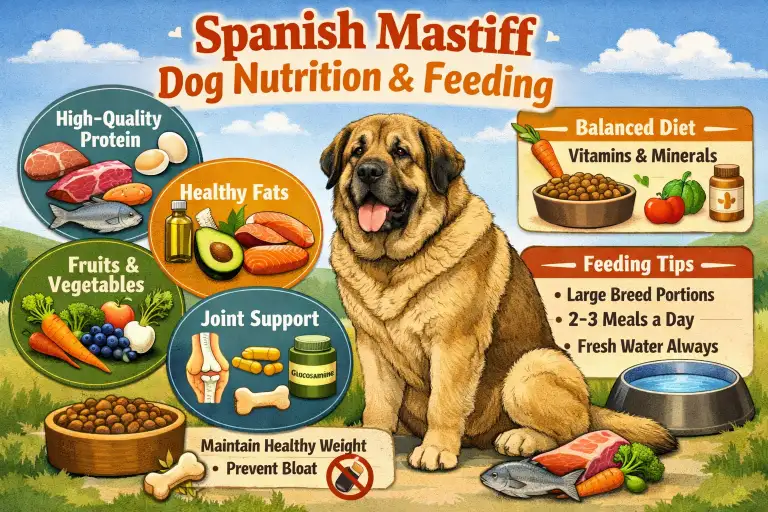
The Spanish Mastiff is one of the largest guardian dog breeds in the world, and feeding this giant breed correctly requires careful planning. Because adult Spanish Mastiffs can weigh between 140 and 220 pounds, even small mistakes in diet, portion sizes, or nutrient balance can affect their joints, weight, mobility, and overall health.
A proper Spanish Mastiff diet is not only about providing enough calories. It is about supporting controlled growth during puppyhood, maintaining lean muscle during adulthood, and protecting joint health as the dog ages. Giant breeds like the Spanish Mastiff are especially sensitive to rapid growth, obesity, and nutritional imbalances.
The best feeding plan depends on several factors, including your dog’s age, weight, activity level, health condition, and whether they work as livestock guardians or live as family companions. Puppies require carefully controlled nutrition to develop strong bones, while adults need balanced meals that maintain muscle without unnecessary weight gain.
This complete Spanish Mastiff nutrition guide explains everything owners need to know about feeding this giant breed, including daily food requirements, calories, protein needs, best food choices, feeding schedules, supplements, common diet mistakes, and answers to frequently asked questions.
Spanish Mastiff Growth & Weight Feeding Guide
Spanish Mastiffs grow slowly compared with smaller breeds and may continue developing until they are around 2 to 3 years old. During this period, feeding too much food can cause excessive growth, which may increase stress on developing bones and joints.
The goal is not to make a Spanish Mastiff puppy grow as quickly as possible. The goal is controlled, steady growth that supports a healthy adult body structure.
| Life Stage | Average Weight Range | Feeding Focus |
|---|---|---|
| 8 Weeks Puppy | 20–40 pounds | Feed high-quality giant breed puppy food with controlled calories and balanced minerals. |
| 3 Months | 40–70 pounds | Increase portions gradually while monitoring body condition and growth speed. |
| 6 Months | 70–110 pounds | Continue controlled growth and avoid excessive weight gain. |
| 12 Months | 110–160 pounds | Begin transition toward adult nutrition while maintaining healthy muscle development. |
| 2–3 Years Adult | 140–220 pounds | Maintain ideal weight with balanced calories based on activity level. |
| 7+ Years Senior | Varies | Adjust calories and focus on joint support and easy digestion. |
This growth chart helps Spanish Mastiff owners understand how feeding needs change throughout different life stages. A puppy, adult, and senior Spanish Mastiff should not receive the same diet because nutritional requirements change as the dog develops.
What Nutrients Does a Spanish Mastiff Need?
Because Spanish Mastiffs are giant working dogs, their diet requires the correct balance of protein, fat, carbohydrates, vitamins, and minerals. A poor-quality diet can contribute to obesity, weak muscles, poor coat condition, and joint problems.
Protein Requirements for Spanish Mastiffs
Protein plays an important role in maintaining muscle mass, repairing tissues, and supporting healthy growth. Spanish Mastiff puppies need enough protein for development, while adults need protein to preserve their powerful muscles.
| Nutrient | Importance | Recommended Feeding Consideration |
|---|---|---|
| Protein | Supports muscles, growth, and tissue repair | Puppies and active adults need high-quality animal-based protein sources. |
| Fat | Provides energy and supports skin and coat health | Moderate fat levels help active dogs without causing unnecessary weight gain. |
| Carbohydrates | Provides energy and supports digestion | Should come from quality sources and be adjusted based on activity level. |
Important Vitamins and Minerals
Giant breeds require careful mineral balance, especially during puppy growth. Too much calcium supplementation can create problems because large dogs already grow rapidly.
| Nutrient | Purpose | Why Spanish Mastiffs Need It |
|---|---|---|
| Calcium & Phosphorus | Bone and teeth development | Must remain balanced to support healthy skeletal growth. |
| Omega-3 Fatty Acids | Skin, coat, and joint support | May help maintain mobility in large breeds. |
| Vitamin D | Supports calcium absorption | Important for healthy bone development. |
| Antioxidants | Supports immune health | Helpful for maintaining health throughout adulthood. |
Spanish Mastiff Puppy Feeding Guidelines
Spanish Mastiff puppies require a carefully controlled diet because their bodies grow rapidly during the first year. Overfeeding puppies can lead to excessive growth, which places additional pressure on developing joints.
- Choose a high-quality giant breed puppy formula.
- Avoid adding calcium supplements unless recommended by a veterinarian.
- Feed measured portions instead of free feeding.
- Monitor weight regularly to maintain steady growth.
- Keep puppies lean rather than allowing excessive weight gain.
A healthy Spanish Mastiff puppy should grow steadily with visible muscle development, not become overweight. Maintaining the correct body condition during puppyhood can help support better mobility throughout life.
How Much Should You Feed a Spanish Mastiff?
The amount of food a Spanish Mastiff needs depends on their age, body weight, activity level, metabolism, and lifestyle. A working Spanish Mastiff that guards livestock may require significantly more calories than a family companion with moderate exercise.
Instead of following a fixed amount for every dog, owners should adjust portions based on body condition. A healthy Spanish Mastiff should have a visible waistline, and the ribs should be easy to feel without being clearly visible.
| Adult Weight | Low Activity | Moderate Activity | High Activity / Working Dog |
|---|---|---|---|
| 140–160 pounds | 2,500–2,800 calories/day | 2,800–3,200 calories/day | 3,200–3,600 calories/day |
| 160–180 pounds | 2,800–3,100 calories/day | 3,100–3,500 calories/day | 3,500–3,900 calories/day |
| 180–200 pounds | 3,100–3,400 calories/day | 3,400–3,800 calories/day | 3,800–4,200 calories/day |
| 200+ pounds | 3,400–3,700 calories/day | 3,700–4,100 calories/day | 4,100–4,500 calories/day |
These calorie ranges are general estimates. Individual dogs may require more or less food depending on metabolism, health, and daily activity. Regular weight checks are the best way to know if your feeding plan is working.
Spanish Mastiff Feeding Schedule by Age
Spanish Mastiffs benefit from structured meal schedules instead of free feeding. Controlled meal timing helps prevent overeating and supports healthy digestion.
| Age | Meals Per Day | Feeding Recommendation |
|---|---|---|
| 8–16 Weeks Puppy | 3–4 Meals | Small meals throughout the day to support growth and digestion. |
| 4–6 Months | 3 Meals | Continue controlled growth and monitor weight gain. |
| 6–12 Months | 2–3 Meals | Maintain balanced nutrition while avoiding excessive calories. |
| Adult (1–7 Years) | 2 Meals | Split daily food into two portions for better digestion. |
| Senior (7+ Years) | 1–2 Meals | Adjust calories and focus on joint and digestive support. |
Best Food Options for Spanish Mastiffs
The best food for a Spanish Mastiff should provide complete nutrition while supporting the needs of a giant breed. Owners can choose from several feeding styles, including commercial kibble, wet food, fresh diets, raw diets, or carefully prepared homemade meals.
| Food Type | Advantages | Disadvantages | Best Practice |
|---|---|---|---|
| Large Breed Kibble | Convenient, balanced, easy to measure | Quality varies between brands | Select formulas designed for giant breeds. |
| Wet Food | High moisture and increased palatability | More expensive and shorter shelf life | Can be mixed with dry food for variety. |
| Raw Diet | Natural ingredients and high protein | Requires careful balancing and food safety | Ensure proper calcium and nutrient ratios. |
| Fresh Cooked Diet | Ingredient control and high-quality nutrition | Requires planning and preparation | Should be nutritionally complete. |
| Homemade Diet | Full control over ingredients | Risk of nutritional deficiencies | Use professional guidance when possible. |
Safe and Unsafe Foods for Spanish Mastiffs
Many owners like to share human foods with their dogs, but some foods can be dangerous. Spanish Mastiffs should only receive safe foods in controlled amounts.
| Safe Foods | Unsafe Foods |
|---|---|
| Cooked chicken | Chocolate |
| Turkey and lean beef | Grapes and raisins |
| Carrots and green beans | Onions and garlic |
| Pumpkin and plain rice | Caffeine and alcohol |
| Blueberries and apples without seeds | Macadamia nuts |
Supplements for Spanish Mastiffs
A balanced diet should provide most nutrients a Spanish Mastiff needs. Supplements may be useful in specific situations but should not replace quality food.
| Supplement | Purpose | Common Use |
|---|---|---|
| Glucosamine and Chondroitin | Joint support | Often used for large adult or senior dogs. |
| Fish Oil | Omega-3 support for skin, coat, and joints | Useful when diets lack omega-3 fatty acids. |
| Probiotics | Digestive support | Helpful for dogs with sensitive stomachs. |
| Calcium Supplements | Bone support | Usually unnecessary unless specifically recommended. |
Common Spanish Mastiff Feeding Problems
| Problem | Possible Cause | Solution |
|---|---|---|
| Rapid Weight Gain | Too many calories or treats | Reduce portions and monitor body condition. |
| Loose Stool | Sudden food changes | Transition slowly over 7–10 days. |
| Poor Appetite | Stress, illness, or food preference | Check health status and improve food quality. |
| Joint Problems | Rapid growth or excess weight | Maintain controlled growth and healthy weight. |
Spanish Mastiff Diet Mistakes to Avoid
- Overfeeding puppies to make them grow faster.
- Adding calcium supplements without professional advice.
- Ignoring weight changes.
- Feeding too many treats.
- Choosing low-quality food because it is cheaper.
- Changing diets suddenly.
- Allowing a giant breed to become overweight.
Frequently Asked Questions About Spanish Mastiff Diet
What is the best food for a Spanish Mastiff?
The best food for a Spanish Mastiff is a high-quality, complete diet designed for large or giant breeds. It should provide balanced protein, controlled calories, and nutrients that support joints and muscle development.
How much food does a Spanish Mastiff eat per day?
An adult Spanish Mastiff usually eats around 5 to 8 cups of dry food per day, depending on calorie density, body size, activity level, and individual needs. Working dogs may require more food than inactive companions.
How many times should I feed my Spanish Mastiff puppy?
Spanish Mastiff puppies should usually eat three to four smaller meals per day when young. As they mature, meals can gradually be reduced to two meals daily.
Can Spanish Mastiffs eat raw food?
Spanish Mastiffs can eat raw diets if they are properly balanced and safely prepared. Owners should ensure the diet provides correct calcium, phosphorus, vitamins, and minerals.
Do Spanish Mastiffs need grain-free food?
Most Spanish Mastiffs do not automatically require grain-free food. A balanced diet with quality ingredients is more important than whether it contains grains.
How can I prevent obesity in my Spanish Mastiff?
Prevent obesity by measuring meals, limiting treats, providing regular exercise, and checking your dog’s body condition regularly.
What should I feed an older Spanish Mastiff?
Senior Spanish Mastiffs often benefit from diets with controlled calories, quality protein, joint-support nutrients, and ingredients that are easy to digest.
Can Spanish Mastiffs eat human food?
Some human foods are safe in moderation, such as cooked meat and certain vegetables. However, toxic foods like chocolate, grapes, onions, and garlic should always be avoided.
Final Thoughts: Feeding Your Spanish Mastiff for a Healthy Life
A proper Spanish Mastiff diet plays an important role in helping this giant breed live a healthy and active life. The right nutrition supports strong bones, lean muscle, healthy joints, and better overall wellbeing.
The most important feeding principles are simple: choose quality food, control portions, avoid excessive weight gain, and adjust nutrition as your Spanish Mastiff moves through different life stages.
Because every dog is different, owners should monitor body condition, activity level, and health changes regularly. With a balanced diet and responsible feeding routine, your Spanish Mastiff can thrive as both a loyal guardian and a loving family companion.

Ata Ur Rehman is the founder of Pet Age in Human Years Calculator, an educational platform that provides age conversion charts and lifespan guides for dogs, cats, birds, and other companion animals. His work focuses on helping pet owners understand how animal ages translate into human years using commonly accepted age conversion formulas and published lifespan averages.
The website compiles breed and species lifespan data from kennel clubs, breed organizations, and general animal lifespan studies to present simple and easy-to-understand guides for pet owners worldwide.
This website was created to centralize animal age conversion charts into one easy reference platform for pet owners.
This article is for general education. For symptoms, medication, diet changes, or health concerns, use a qualified veterinarian who can assess your individual pet.