On this page
Training a Spanish Mastiff requires a completely different approach compared with many traditional companion breeds. These giant dogs were developed as livestock guardians, which means they are naturally independent, protective, and capable of making decisions without constant human direction.
Successful Spanish Mastiff training is not about forcing obedience or trying to remove their natural instincts. Instead, it is about understanding their temperament, building trust, setting clear boundaries, and teaching them how to behave appropriately in a family environment.
Whether you are training a Spanish Mastiff puppy, working with an adolescent dog, or improving the behavior of an adult Spanish Mastiff, consistency is the foundation of success. This breed matures slowly, and many Spanish Mastiffs continue developing mentally until they are around 2 to 3 years old.
Many new owners expect a large dog to automatically become calm and obedient with age. However, size does not equal training. A Spanish Mastiff needs early socialization, structured routines, and positive guidance to become a stable and confident companion.
This complete Spanish Mastiff training guide covers puppy training, obedience training, socialization, behavior problems, and practical methods to help your dog become well-mannered while respecting their natural guardian instincts.
Understanding Spanish Mastiff Temperament Before Training
Before starting training, owners need to understand how a Spanish Mastiff thinks and why this breed behaves differently from many other dogs.
Spanish Mastiffs were bred for centuries to protect livestock from predators. Their job was not to wait for commands but to observe their surroundings and make independent decisions. This history created a dog that is intelligent, confident, and naturally cautious.
Because of these instincts, a Spanish Mastiff may sometimes appear stubborn. However, what looks like stubbornness is often independent thinking. They may understand a command but decide whether responding makes sense based on the situation.
Training works best when owners focus on cooperation rather than control. A calm and consistent approach creates better results than forceful methods.
Spanish Mastiff Temperament Traits
| Trait | Owner Expectation | What Actually Happens |
|---|---|---|
| Obedience | Immediate response every time | May think before responding and evaluate the situation |
| Intelligence | Learns quickly like obedience breeds | Learns well but prefers understanding the purpose |
| Protection | Can turn guarding instincts on and off | Naturally protective of family and territory |
| Maturity | Becomes adult within the first year | Mental maturity may take 2–3 years |
| Social Behavior | Accepts every stranger immediately | Often cautious and observant with new people |
Understanding these traits helps owners set realistic expectations. A Spanish Mastiff is not designed to perform endless repetitions like a working obedience breed. They respond best when training is based on trust, respect, and consistency.
Are Spanish Mastiffs Easy to Train?
Spanish Mastiffs are intelligent dogs, but they are not considered one of the easiest breeds to train. Their challenge does not come from a lack of intelligence—it comes from their independent personality.
A Spanish Mastiff can learn basic commands such as sit, stay, come, and leave it. However, owners must understand that reliability develops over time. These dogs often need more repetition and patience compared with breeds that were specifically developed for obedience.
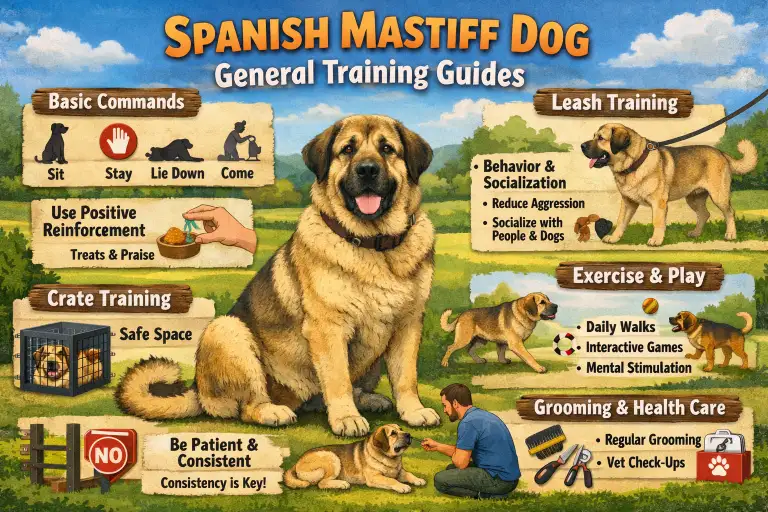
The best Spanish Mastiff training methods include:
- Using positive reinforcement instead of harsh corrections
- Keeping training sessions short and consistent
- Rewarding calm and desired behavior
- Establishing clear household rules
- Practicing commands in different environments
- Providing proper socialization from an early age
Harsh training methods can create problems with this breed. Spanish Mastiffs are naturally aware of their surroundings, and aggressive correction can increase fear, distrust, or defensive reactions.
A successful owner acts as a calm leader rather than trying to dominate the dog. When a Spanish Mastiff trusts the person guiding them, they become much easier to manage. <h2>Building the Right Foundation for Spanish Mastiff Training</h2>
The first stage of training is creating a strong relationship between the dog and owner. Before expecting reliable obedience, a Spanish Mastiff needs to understand that the owner provides structure, safety, and direction.
Early training should focus on communication and daily habits rather than advanced commands.
Spanish Mastiff Training Foundation
| Training Area | Goal | Example Practice |
|---|---|---|
| Name Recognition | Teach the dog to pay attention to you | Call the dog’s name and reward eye contact |
| House Rules | Create predictable boundaries | Keep rules consistent for everyone in the home |
| Handling Training | Prepare the dog for grooming and veterinary care | Practice touching paws, ears, and body calmly |
| Basic Commands | Build communication skills | Practice sit, stay, come, and leave it |
| Calm Behavior | Encourage self-control | Reward relaxing quietly around people |
The goal during the early stages is not perfect obedience. The goal is creating trust and communication that will make future training easier.
A well-trained Spanish Mastiff is not a dog that follows commands without thinking. It is a confident dog that understands expectations, respects boundaries, and knows how to behave safely around people and other animals.
Spanish Mastiff Puppy Training: Step-by-Step Guide
Training a Spanish Mastiff puppy should begin as soon as you bring your puppy home. Early training helps prevent unwanted behaviors and teaches your dog how to interact safely with people, animals, and different environments.
Spanish Mastiff puppies are naturally curious and learn through experience. However, because they grow into extremely large dogs, small training mistakes during puppyhood can become difficult problems later.
The main goals of puppy training should be:
- Building confidence
- Teaching household boundaries
- Creating positive habits
- Encouraging calm behavior
- Developing trust between the dog and owner
Start With Basic Commands
Basic obedience commands create communication between you and your Spanish Mastiff. These commands are especially important because this breed becomes very large and powerful as it matures.
| Command | Purpose | Training Tip |
|---|---|---|
| Sit | Teaches impulse control | Reward calm sitting behavior |
| Stay | Builds patience and self-control | Begin with short periods and slowly increase time |
| Come | Improves safety and recall | Always reward your puppy when they return |
| Leave It | Prevents unwanted behavior | Redirect attention toward a positive action |
| Place | Teaches calm behavior | Reward your puppy for relaxing in one area |
Keep training sessions short and positive. Spanish Mastiff puppies usually respond better to multiple short sessions rather than long training periods.
Spanish Mastiff Puppy Socialization
Socialization is one of the most important parts of raising a balanced Spanish Mastiff.
Because this breed naturally protects its family and territory, early positive experiences help prevent fear, anxiety, and excessive guarding behaviors.
A Spanish Mastiff puppy should gradually experience:
- Different people
- New places
- Household noises
- Friendly dogs
- Car travel
- Grooming routines
- Veterinary handling
Socialization does not mean forcing your puppy to interact with everyone. The goal is to help your dog feel comfortable and confident in different situations.
Spanish Mastiff Puppy Training Mistakes to Avoid
Many owners underestimate how quickly a Spanish Mastiff grows. A behavior that seems harmless in a small puppy can become difficult to manage when the dog reaches 100+ pounds.
| Training Mistake | Why It Creates Problems | Better Approach |
|---|---|---|
| Allowing jumping | Large adult dogs can accidentally hurt people | Teach calm greetings early |
| Skipping socialization | Can increase fear and guarding | Introduce experiences gradually |
| Using harsh punishment | Can damage trust | Use rewards and calm correction |
| Changing rules often | Creates confusion | Keep expectations consistent |
| Delaying training | Bad habits become stronger | Start basic training early |
Training an Adult Spanish Mastiff
Training an adult Spanish Mastiff is possible, even if the dog has already developed unwanted habits.
Adult dogs may require more patience because they already have established behaviors. However, mature Spanish Mastiffs can still learn new routines and improve their obedience.
Adult training should focus on:
- Reinforcing basic commands
- Improving leash manners
- Strengthening recall
- Managing territorial behavior
- Encouraging calm responses
Adult Spanish Mastiffs often benefit from consistent daily routines. Predictability helps them understand expectations and reduces unnecessary stress.
Spanish Mastiff Leash Training Tips
Because Spanish Mastiffs are powerful dogs, leash training is extremely important. A large dog that pulls constantly can become difficult and unsafe to handle.
Effective leash training methods include:
- Rewarding your dog for walking beside you
- Stopping when pulling begins
- Practicing in quiet areas first
- Slowly introducing distractions
- Avoiding harsh leash corrections
The goal is not to eliminate the breed’s confidence. The goal is teaching your Spanish Mastiff to remain calm and controlled while following your guidance.
Frequently Asked Questions About Spanish Mastiff Training
Are Spanish Mastiffs Difficult to Train?
Spanish Mastiffs can be challenging to train because they are independent thinkers. They are intelligent dogs, but they do not always respond immediately like breeds developed mainly for obedience. With patience, consistency, and positive reinforcement, they can become well-behaved companions.
When Should I Start Training My Spanish Mastiff Puppy?
Training should begin as soon as your Spanish Mastiff puppy comes home, usually around 8 weeks old. Early training should focus on socialization, basic commands, handling, and creating clear household boundaries.
Are Spanish Mastiffs Stubborn?
Spanish Mastiffs are often described as stubborn, but this behavior is usually connected to their independent guardian instincts. They are capable learners but prefer calm leadership, clear expectations, and consistent training methods.
How Long Does It Take to Train a Spanish Mastiff?
Basic commands can often be introduced within a few weeks, but reliable obedience takes more time. Spanish Mastiffs mature slowly, and their training development can continue for several years.
How Do I Stop My Spanish Mastiff From Being Overly Protective?
The best way to manage protective behavior is through early socialization, consistent boundaries, and rewarding calm responses. Owners should avoid encouraging aggressive behavior and instead teach their dog appropriate reactions to visitors and new situations.
Can an Adult Spanish Mastiff Be Trained?
Yes, adult Spanish Mastiffs can learn new behaviors and improve existing habits. Older dogs may require more patience, but consistent routines and positive reinforcement can create strong results.
What Is The Best Training Method For A Spanish Mastiff?
The best training method for a Spanish Mastiff is calm, reward-based training. Positive reinforcement, short sessions, consistency, and trust-building work better than harsh corrections.
How Do You Socialize A Spanish Mastiff Puppy?
A Spanish Mastiff puppy should be gradually introduced to different people, environments, sounds, animals, and experiences. Socialization should always be controlled and positive to build confidence.
Final Thoughts On Spanish Mastiff Training
Training a Spanish Mastiff requires patience, consistency, and a strong understanding of the breed’s natural instincts. These dogs are independent guardians, but with proper guidance, they can become loyal, calm, and dependable family companions.
The goal of training is not to remove their protective nature. Instead, it is to teach them when and how to use those instincts appropriately. Early socialization, positive reinforcement, and consistent boundaries create the foundation for a well-balanced Spanish Mastiff.
A trained Spanish Mastiff is a confident dog that understands expectations, respects its owner, and feels secure within its family environment. With the right approach, this powerful breed can become a gentle and devoted companion for many years.

Ata Ur Rehman is the founder of Pet Age in Human Years Calculator, an educational platform that provides age conversion charts and lifespan guides for dogs, cats, birds, and other companion animals. His work focuses on helping pet owners understand how animal ages translate into human years using commonly accepted age conversion formulas and published lifespan averages.
The website compiles breed and species lifespan data from kennel clubs, breed organizations, and general animal lifespan studies to present simple and easy-to-understand guides for pet owners worldwide.
This website was created to centralize animal age conversion charts into one easy reference platform for pet owners.
This article is for general education. For symptoms, medication, diet changes, or health concerns, use a qualified veterinarian who can assess your individual pet.