On this page
Grooming a Spanish Mastiff is an important part of keeping this giant guardian breed healthy, comfortable, and free from common coat and skin problems. Although Spanish Mastiffs are known for their rugged appearance and ability to handle outdoor conditions, their thick double coat requires consistent care to prevent mats, excessive shedding, dirt buildup, and skin irritation.
The Spanish Mastiff has a dense protective coat developed to survive harsh climates and protect the dog from extreme weather. This heavy double coat works as natural insulation, keeping the dog cooler in warm conditions and warmer during cold seasons. However, without regular brushing and maintenance, loose undercoat, debris, and moisture can become trapped close to the skin.
A proper Spanish Mastiff grooming routine is not only about keeping your dog looking clean. Regular grooming helps remove dead hair, improves circulation, allows early detection of skin issues, reduces odor, and creates a stronger bond between you and your dog.
Because of their giant size, grooming a Spanish Mastiff may seem challenging at first. However, with the right tools, schedule, and techniques, owners can manage most grooming tasks at home. The key is consistency rather than occasional intensive grooming sessions.
This complete Spanish Mastiff grooming guide covers everything you need to know, including brushing frequency, bathing requirements, shedding seasons, grooming tools, nail care, ear cleaning, coat maintenance, common mistakes, and professional grooming advice.
Spanish Mastiff Coat Type and Grooming Requirements
Spanish Mastiffs have a thick double coat consisting of two layers:
| Coat Layer | Purpose | Grooming Importance |
|---|---|---|
| Outer coat | Protects against weather, dirt, and outdoor conditions | Requires brushing to remove debris and maintain coat condition |
| Undercoat | Provides insulation and temperature regulation | Needs regular removal during heavy shedding seasons |
The double coat is one of the breed’s most important features. It protects the Spanish Mastiff from heat, cold, rain, and rough environments. However, this same protective coat means owners need to pay attention to regular grooming.
Unlike breeds with single coats, Spanish Mastiffs experience seasonal shedding periods when they lose large amounts of undercoat. During spring and fall, owners may notice increased hair around the home and thicker areas of loose fur coming out during brushing.
Regular grooming helps prevent several common problems, including:
| Grooming Benefit | Why It Matters |
|---|---|
| Removes loose hair | Reduces shedding around the home and prevents coat buildup |
| Prevents mats | Keeps the coat comfortable and easier to maintain |
| Supports skin health | Allows early detection of irritation, parasites, or infections |
| Controls odor | Removes dirt, moisture, and trapped debris |
| Improves bonding | Creates positive handling habits with your giant dog |
A Spanish Mastiff should never be considered completely low-maintenance simply because the breed is naturally hardy. Their coat is designed for protection, but it still requires regular attention from responsible owners.
How Often Should You Groom a Spanish Mastiff?
The ideal grooming schedule depends on your Spanish Mastiff’s lifestyle, coat condition, and season. Dogs that spend more time outdoors may require more frequent brushing because dirt, leaves, and moisture can collect in their coat.
A general grooming schedule looks like this:
| Grooming Task | Recommended Frequency | Purpose |
|---|---|---|
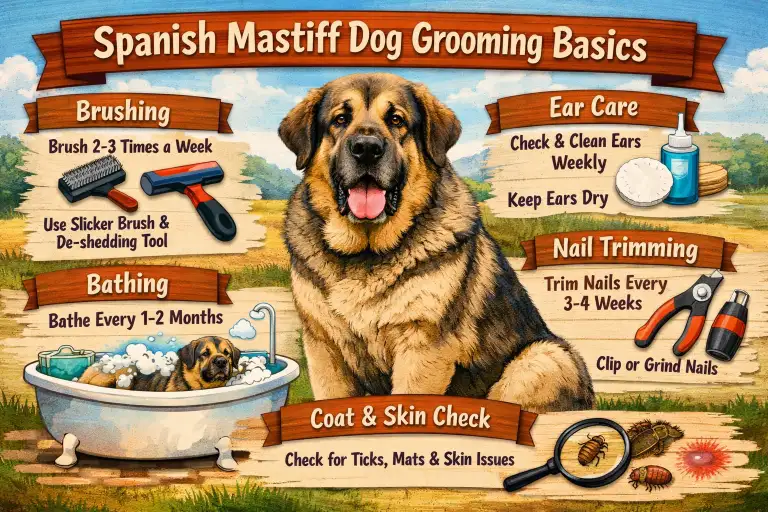
| Brushing | 2–3 times per week | Removes loose hair and prevents tangles |
| Heavy shedding brushing | 4–5 times per week during spring and fall | Removes loose undercoat |
| Bathing | Every 6–8 weeks or when dirty | Keeps skin and coat clean |
| Nail trimming | Every 4–6 weeks | Prevents discomfort and walking problems |
| Ear cleaning | Weekly check | Reduces risk of ear infections |
| Skin inspection | During every grooming session | Detects problems early |
During shedding season, brushing frequency should increase because Spanish Mastiffs release large amounts of their undercoat. Using the correct brush during these periods makes grooming faster and prevents loose hair from becoming trapped inside the coat.
Spanish Mastiff Shedding: What Owners Should Expect
Spanish Mastiffs are heavy shedders, especially during seasonal coat changes. Their shedding is a natural process where the old undercoat is removed to prepare for changing weather conditions.
Most owners notice two major shedding periods:
| Season | What Happens | Grooming Adjustment |
|---|---|---|
| Spring | Winter undercoat is released | Increase brushing frequency |
| Fall | Summer coat changes for colder months | Use an undercoat rake regularly |
During these periods, normal brushing may not be enough. A combination of an undercoat rake and slicker brush can help remove loose fur without damaging the protective outer coat.
Owners should avoid shaving a Spanish Mastiff to control shedding or keep the dog cool. The double coat naturally helps regulate temperature, and shaving can interfere with the coat’s protective function.
The best way to manage shedding is:
- Brush consistently throughout the year
- Increase grooming during coat-blowing seasons
- Use appropriate grooming tools
- Keep the coat clean and dry
- Check regularly for mats and skin issues
A well-maintained Spanish Mastiff coat should feel healthy, smooth, and free from large tangles. Consistent grooming makes maintenance easier and keeps this impressive giant breed comfortable throughout the year.
Best Grooming Tools for a Spanish Mastiff
Because Spanish Mastiffs have a thick double coat and heavy seasonal shedding, using the right grooming tools makes a major difference. Poor-quality tools may not reach the undercoat properly, while incorrect brushing techniques can cause discomfort.
The most useful grooming tools for a Spanish Mastiff include:
| Grooming Tool | Main Purpose | How to Use |
|---|---|---|
| Slicker brush | Removes loose hair and surface tangles | Brush gently through the coat, especially around the neck, legs, and body |
| Undercoat rake | Removes loose undercoat during shedding seasons | Use carefully during spring and fall when shedding increases |
| Wide-tooth comb | Finds and removes small tangles | Use after brushing to check deeper coat areas |
| Dog shampoo | Cleans skin and coat | Choose a gentle dog-specific formula |
| Microfiber towels | Removes excess water after bathing | Dry the coat thoroughly after washing |
| Pet dryer | Helps dry the thick coat completely | Use low or medium airflow to avoid skin irritation |
| Nail clippers | Maintains healthy nails | Trim carefully to avoid cutting the quick |
| Ear cleaner | Supports ear hygiene | Use only dog-safe cleaning products |
A Spanish Mastiff’s coat is thick enough that regular household brushes are usually not effective. Investing in proper grooming equipment saves time and prevents coat problems in the future.
How to Brush a Spanish Mastiff Correctly
Brushing is the most important part of Spanish Mastiff grooming. Because the breed has a dense undercoat, loose hair can become trapped if brushing is skipped.
Follow these steps for effective brushing:
- Start with a calm environment
Choose a comfortable area where your dog can stand or lie down safely. Giant breeds may become difficult to handle if grooming sessions feel stressful. - Brush in the direction of hair growth
Always move the brush through the coat naturally. Pulling against the coat can cause discomfort and make your dog dislike grooming. - Focus on problem areas
Mats and tangles commonly develop in areas such as:
- Behind the ears
- Around the neck
- Under the legs
- Between the back legs
- Around the tail
- Check the skin while brushing
Look for:
- Redness
- Dry patches
- Lumps
- Parasites
- Unusual odors
- Finish with a comb check
After brushing, use a wide-tooth comb to confirm there are no hidden tangles remaining.
Regular brushing sessions also help your Spanish Mastiff become comfortable with handling, which makes future grooming much easier.
Bathing a Spanish Mastiff: How Often and How to Do It
Spanish Mastiffs do not require frequent baths because excessive washing can remove natural oils from their skin and coat. Over-bathing may lead to dryness, irritation, and poor coat condition.
Most Spanish Mastiffs should be bathed:
| Situation | Bathing Recommendation |
|---|---|
| Normal indoor lifestyle | Every 6–8 weeks |
| Outdoor lifestyle | As needed when dirty |
| After muddy activities | Clean immediately when necessary |
| Skin problems | Follow veterinary advice |
When bathing your Spanish Mastiff:
- Brush the coat before bathing
Remove loose hair and tangles before adding water. Wet mats become harder to remove. - Use dog-specific shampoo
Human shampoos are not designed for canine skin and may cause irritation. - Rinse completely
A thick coat can trap shampoo residue, which may cause itching. - Dry thoroughly
A Spanish Mastiff’s dense coat takes time to dry. Leaving moisture trapped near the skin can increase the risk of skin problems. - Check the coat after drying
Make sure no hidden mats or damp areas remain.
Nail Care, Ear Cleaning, and Skin Checks
Grooming a Spanish Mastiff is not only about coat maintenance. Regular care of nails, ears, and skin is equally important.
Spanish Mastiff Nail Care
Long nails can affect how a giant dog walks and may put extra pressure on joints.
Trim nails every:
- 4–6 weeks for most dogs
- More often if nails grow quickly
Signs nails need trimming:
- Clicking sounds on hard floors
- Difficulty walking comfortably
- Nails curling downward
Always use large-dog nail clippers and avoid cutting too close to the quick.
Spanish Mastiff Ear Cleaning
Spanish Mastiffs should have their ears checked regularly because trapped moisture and wax buildup can contribute to infections.
Check ears weekly for:
| Warning Sign | Possible Issue |
|---|---|
| Bad smell | Ear infection |
| Excess wax | Ear irritation |
| Redness | Inflammation |
| Frequent scratching | Discomfort |
Clean only with veterinarian-approved ear cleaning products. Avoid inserting cotton swabs deep into the ear canal.
Spanish Mastiff Skin and Coat Checks
Every grooming session is an opportunity to examine your dog’s overall health.
Look for:
- Dry skin
- Hot spots
- Fleas or ticks
- Hair loss
- Unusual bumps
- Persistent itching
Early detection can prevent small problems from becoming serious.
Common Spanish Mastiff Grooming Mistakes to Avoid
Even experienced dog owners can make mistakes when grooming a large double-coated breed.
| Mistake | Why It Causes Problems | Better Approach |
|---|---|---|
| Shaving the coat | Removes natural protection and may affect coat quality | Brush regularly instead |
| Skipping brushing | Causes mats and excessive shedding | Maintain a weekly routine |
| Bathing too often | Can dry the skin | Bathe only when needed |
| Ignoring nails | Can affect movement and comfort | Trim regularly |
| Not drying properly | Moisture can stay trapped in the coat | Dry completely after bathing |
| Using wrong brushes | May not remove undercoat effectively | Use breed-appropriate tools |
Professional Grooming for Spanish Mastiffs
Most Spanish Mastiff owners can handle basic grooming at home, but professional grooming can be useful in certain situations.
Consider professional grooming if your dog:
- Has severe mats
- Becomes difficult to manage during grooming
- Needs a deep coat cleaning
- Has excessive shedding
- Has not been groomed regularly
Professional groomers have equipment designed for large breeds, including powerful dryers and specialized brushing tools.
However, professional grooming should support—not replace—a regular home grooming routine.
Spanish Mastiff Grooming FAQs
How often should you brush a Spanish Mastiff?
A Spanish Mastiff should generally be brushed 2–3 times per week. During heavy shedding seasons like spring and fall, brushing may need to increase to 4–5 times per week to remove loose undercoat.
Do Spanish Mastiffs shed a lot?
Yes, Spanish Mastiffs are heavy shedders because they have a thick double coat. Seasonal shedding is especially noticeable when they lose their winter or summer undercoat.
Can you shave a Spanish Mastiff in summer?
No, shaving a Spanish Mastiff is not recommended. Their double coat helps regulate temperature and protects their skin from environmental conditions. Regular brushing is a better way to manage heat and shedding.
Are Spanish Mastiffs easy to groom?
Spanish Mastiffs are moderate-maintenance dogs. They are not difficult to groom, but their large size and thick coat require consistent brushing and proper tools.
How often should a Spanish Mastiff be bathed?
Most Spanish Mastiffs should be bathed every 6–8 weeks or when they become dirty. Dogs that spend more time outdoors may need occasional additional cleaning.
What is the best brush for a Spanish Mastiff?
The best brushes for a Spanish Mastiff are a slicker brush and an undercoat rake. These tools help remove loose hair while maintaining the protective outer coat.
How do I stop my Spanish Mastiff from shedding so much?
You cannot completely stop natural shedding, but you can manage it by:
- Brushing regularly
- Using an undercoat rake during shedding seasons
- Feeding a balanced diet
- Keeping the coat clean
- Maintaining regular grooming sessions
Do Spanish Mastiffs need professional grooming?
Professional grooming is not always necessary, but it can help with heavy shedding, large mats, or difficult grooming situations. Most owners can manage routine grooming at home with the right tools.
Final Thoughts: Maintaining a Healthy Spanish Mastiff Coat
A proper Spanish Mastiff grooming routine is one of the most important parts of responsible ownership. Their thick double coat gives them protection and character, but it requires consistent care to stay healthy.
Regular brushing, occasional bathing, nail maintenance, ear cleaning, and skin checks will help your Spanish Mastiff remain comfortable and prevent many common problems.
The goal of grooming is not only a cleaner-looking dog—it is a healthier, happier companion. With the right routine and tools, even this giant guardian breed can maintain a beautiful, healthy coat throughout every stage of life.

Ata Ur Rehman is the founder of Pet Age in Human Years Calculator, an educational platform that provides age conversion charts and lifespan guides for dogs, cats, birds, and other companion animals. His work focuses on helping pet owners understand how animal ages translate into human years using commonly accepted age conversion formulas and published lifespan averages.
The website compiles breed and species lifespan data from kennel clubs, breed organizations, and general animal lifespan studies to present simple and easy-to-understand guides for pet owners worldwide.
This website was created to centralize animal age conversion charts into one easy reference platform for pet owners.
This article is for general education. For symptoms, medication, diet changes, or health concerns, use a qualified veterinarian who can assess your individual pet.