On this page
Feeding a Tibetan Mastiff is very different from feeding most other giant dog breeds. Although these dogs are massive and powerful, they are also one of the most naturally efficient and slow-maturing breeds in the world. Their metabolism, appetite patterns, growth rate, and nutritional needs often surprise owners who are used to Labrador Retrievers, German Shepherds, or other large working dogs.
Many Tibetan Mastiffs eat less than owners expect. Healthy adults may occasionally skip meals, eat less during warm weather, or naturally regulate their food intake without any health problem. This independent feeding behavior is normal for the breed and should not automatically cause concern.
Because Tibetan Mastiffs mature slowly and place enormous stress on developing bones and joints during growth, nutrition mistakes made during puppyhood can have lifelong consequences. Overfeeding, excessive calcium supplementation, and encouraging rapid growth are among the biggest feeding mistakes owners make.
Proper nutrition affects almost every aspect of a Tibetan Mastiff’s health, including:
| Health Area | Why Nutrition Matters |
|---|---|
| Growth and skeletal development | Prevents excessive growth and joint stress during puppyhood |
| Weight management | Reduces pressure on hips, elbows, and spine |
| Skin and coat health | Supports the dense double coat and seasonal shedding cycle |
| Digestive health | Helps prevent loose stool and stomach upset |
| Immune function | Supports disease resistance and recovery |
| Longevity | Maintaining ideal body condition improves lifespan |
Unlike many giant breeds, Tibetan Mastiffs are not highly food motivated. Owners often respond to reduced appetite by switching foods frequently, adding large amounts of toppers, or increasing treats. Over time this can create picky eating habits, digestive upset, and unnecessary weight gain.
The goal of this guide is to help owners:
- Understand the unique nutritional needs of Tibetan Mastiffs.
- Avoid common giant breed feeding mistakes.
- Choose appropriate food for every life stage.
- Understand realistic calorie requirements.
- Build healthy feeding habits that support long-term health.
Core Nutritional Needs of a Tibetan Mastiff
Tibetan Mastiffs require balanced nutrition rather than extreme nutrition. Their diet should support slow growth, strong joints, healthy muscle maintenance, digestive stability, and body condition management rather than maximum size gain.
Because this breed typically has a lower activity level than many working breeds, calorie density is often more important than food volume.
Ideal Macronutrient Balance for Tibetan Mastiffs
| Nutrient | Recommended Range | Why It Matters | Common Feeding Mistake |
|---|---|---|---|
| Protein | Moderate to high quality animal protein | Supports muscle development and immune function | Choosing extremely high-calorie performance diets |
| Fat | Moderate levels | Provides energy and supports coat health | Feeding excessive fat leading to obesity |
| Carbohydrates | Low to moderate | Provides digestible energy and fiber | Using heavily processed carbohydrate fillers |
| Fiber | Moderate | Supports digestion and stool quality | Diets with insufficient fiber causing digestive instability |
Tibetan Mastiffs do not benefit from extremely high protein diets if those diets also deliver excessive calories. Maintaining lean body condition is significantly more important than maximizing calorie intake.
Essential Micronutrients for Tibetan Mastiffs
Micronutrients play a critical role in giant breed development, particularly during puppy growth.
| Micronutrient | Primary Function | Most Important Life Stage | Risk of Imbalance |
|---|---|---|---|
| Calcium | Bone formation and skeletal growth | Puppies | Excess calcium can contribute to orthopedic problems |
| Phosphorus | Bone mineralization | Puppies | Improper ratios may affect development |
| Omega-3 Fatty Acids | Joint support, skin and coat health | All life stages | Increased inflammation and poor coat quality |
| Zinc | Immune support and skin health | All life stages | Skin problems and poor coat condition |
| Vitamin D | Calcium metabolism and bone health | All life stages | Toxicity when oversupplemented |
One of the most important feeding rules for Tibetan Mastiff puppies is simple:
Never add calcium supplements unless specifically instructed by your veterinarian.
Most large-breed puppy foods already contain carefully balanced calcium-to-phosphorus ratios designed to support safe growth.
Understanding Dog Food Labels
Dog food marketing often creates confusion for owners. Attractive packaging and premium pricing do not necessarily indicate superior nutrition.
| Label Term | What It Means | What Owners Should Look For | Potential Red Flags |
|---|---|---|---|
| Complete and Balanced | Meets minimum nutritional standards | Presence of an AAFCO nutritional statement | Missing feeding trials |
| First Ingredient | Highest ingredient by weight before cooking | Named animal protein source | Generic ingredients such as “meat by-products” |
| Guaranteed Analysis | Lists nutrient percentages | Moderate protein and fat levels | Extremely high fat percentages |
| Grain-Free | No grains included | Useful only for confirmed allergies | Marketing claims without nutritional benefit |
For most Tibetan Mastiffs, a large-breed or giant-breed formula offers a safer nutritional profile than standard adult dog food formulas because these diets are designed to support controlled growth and healthier body condition.
Supplements: When They Help and When They Hurt
Many owners assume supplements automatically improve health. In reality, unnecessary supplementation can create nutritional imbalances.
| Supplement Type | Potential Benefit | Suitable Candidates | Potential Risks |
|---|---|---|---|
| Joint supplements | May support cartilage health | Seniors and dogs with arthritis | Limited benefit in healthy young dogs |
| Fish oil | Supports skin, coat, and joints | Dogs with skin issues or inflammation | Excess calories if overdosed |
| Probiotics | May improve digestive stability | Dogs with sensitive stomachs | Product quality varies |
| Calcium supplements | Rarely needed | Only under veterinary guidance | Developmental orthopedic disease in puppies |
Healthy Tibetan Mastiffs eating a complete and balanced diet usually do not require additional vitamin or mineral supplementation.
When supplements are necessary, they should be introduced for a specific reason rather than as a preventive measure.
How Much to Feed a Tibetan Mastiff
Knowing how much to feed a Tibetan Mastiff is one of the most important parts of maintaining good health. Because this breed is naturally large and heavy-boned, many owners assume they need large portions. However, Tibetan Mastiffs are generally calm, low-to-moderate energy dogs, and overfeeding is one of the most common mistakes.
A healthy Tibetan Mastiff should grow slowly, maintain visible muscle definition, and stay lean enough to reduce stress on joints. The correct amount of food depends on:
- Age
- Body weight
- Activity level
- Metabolism
- Health condition
- Food calorie density
There is no single feeding amount that works for every Tibetan Mastiff. The best approach is to start with a recommended portion and adjust based on body condition.
Tibetan Mastiff Daily Calorie Requirements
The following table provides a general estimate for adult Tibetan Mastiffs.
| Adult Weight | Low Activity | Moderate Activity | Higher Activity |
|---|---|---|---|
| 90–110 lbs (41–50 kg) | 1,600–1,900 calories/day | 1,900–2,200 calories/day | 2,200–2,500 calories/day |
| 110–130 lbs (50–59 kg) | 1,900–2,200 calories/day | 2,200–2,600 calories/day | 2,600–2,900 calories/day |
| 130–150 lbs (59–68 kg) | 2,200–2,600 calories/day | 2,600–3,000 calories/day | 3,000+ calories/day |
These numbers are starting estimates only. Two Tibetan Mastiffs with the same weight may require different amounts of food depending on metabolism, lifestyle, and body condition.
Tibetan Mastiff Feeding Chart by Age
Tibetan Mastiffs grow slowly compared with many other large breeds. Puppy feeding should focus on controlled growth rather than rapid size gain.
| Life Stage | Feeding Frequency | Main Goal |
|---|---|---|
| 8–12 weeks puppy | 3–4 meals per day | Support steady growth and digestion |
| 3–6 months puppy | 3 meals per day | Maintain healthy bone development |
| 6–12 months puppy | 2–3 meals per day | Prevent excessive growth rate |
| Adult Tibetan Mastiff | 2 meals per day | Maintain ideal body condition |
| Senior Tibetan Mastiff | 2 smaller meals per day | Support weight control and digestion |
Feeding Tibetan Mastiff Puppies Safely
Tibetan Mastiff puppies require special attention because their bodies develop slowly over a long period.
The biggest mistake owners make is trying to make a giant breed puppy grow faster.
Rapid growth can increase stress on:
- Hips
- Elbows
- Joints
- Ligaments
- Developing bones
A healthy Tibetan Mastiff puppy should:
- Eat a balanced large-breed puppy formula.
- Maintain steady growth.
- Avoid excessive calorie intake.
- Avoid unnecessary supplements.
- Stay lean rather than oversized.
Puppy Feeding Mistakes to Avoid
| Mistake | Why It Is a Problem |
|---|---|
| Feeding extra calories to increase size | Can cause abnormal growth patterns |
| Adding calcium supplements | May disturb mineral balance |
| Using performance dog food | Often too calorie dense |
| Overusing treats | Adds unnecessary calories |
| Changing food frequently | Can cause digestive problems |
How to Know If Your Tibetan Mastiff Is at a Healthy Weight
Because Tibetan Mastiffs have a thick double coat, visual weight checks can be misleading. Owners should use body condition rather than appearance alone.
| Body Condition Sign | Meaning | Feeding Adjustment |
|---|---|---|
| Ribs easily felt but not visible | Ideal weight | Continue current feeding |
| Ribs difficult to feel | Overweight | Reduce calories gradually |
| Visible ribs and spine | Underweight | Increase food carefully |
A healthy Tibetan Mastiff should have:
- Easily felt ribs with light pressure.
- A visible waist from above.
- A slight abdominal tuck from the side.
Best Types of Food for Tibetan Mastiffs
There is no single perfect food for every Tibetan Mastiff. The best diet depends on your dog’s age, health, activity level, and tolerance.
Dry Kibble
High-quality dry kibble is the most common feeding choice.
Benefits include:
| Advantage | Explanation |
|---|---|
| Easy portion control | Helps prevent overfeeding |
| Convenient storage | Suitable for daily feeding |
| Balanced nutrition | Many formulas meet complete diet standards |
| Affordable | Usually less expensive than fresh diets |
Choose formulas designed for:
- Large breeds
- Giant breeds
- Controlled calorie intake
Wet, Fresh, and Canned Food
These foods can be useful for some Tibetan Mastiffs.
Benefits:
- Increased moisture intake.
- Better taste for picky eaters.
- Easier chewing for older dogs.
Potential disadvantages:
- Higher cost.
- Easier to overfeed.
- Requires careful calorie measurement.
Raw and Homemade Diets
Some owners choose raw or homemade diets, but they require careful planning.
Possible risks include:
| Risk | Explanation |
|---|---|
| Nutritional imbalance | Missing vitamins or minerals |
| Excess calcium | Dangerous for growing puppies |
| Bacterial contamination | Food safety concerns |
| Incorrect calorie levels | Weight gain or nutrient deficiency |
If choosing a homemade or raw diet, it should be properly formulated with professional guidance.
Frequently Asked Questions About Tibetan Mastiff Nutrition and Feeding
How much food should a Tibetan Mastiff eat per day?
An adult Tibetan Mastiff usually requires around 1,600–3,000 calories per day depending on weight, activity level, metabolism, and food type. The exact amount should be adjusted according to body condition.
How many times a day should I feed my Tibetan Mastiff?
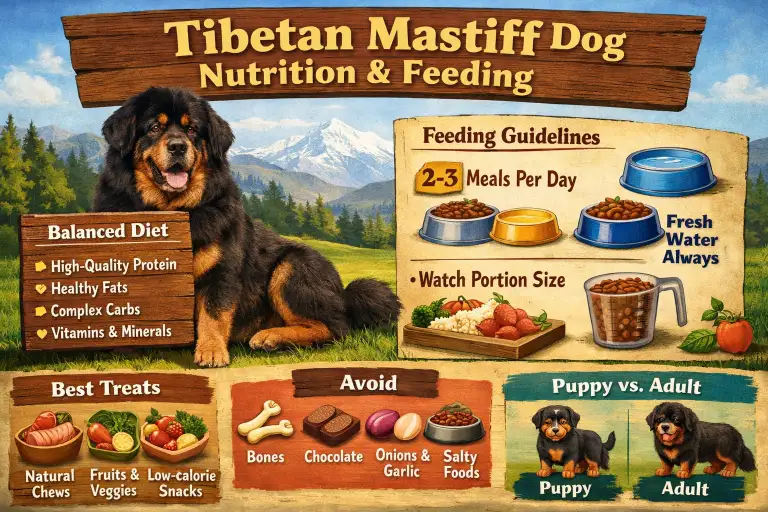
Adult Tibetan Mastiffs usually do best with two meals per day. Puppies may require three to four meals depending on age and growth stage.
What is the best food for a Tibetan Mastiff?
The best food for a Tibetan Mastiff is a complete and balanced large-breed or giant-breed formula that provides controlled calories, quality protein, balanced minerals, and appropriate fat levels.
Do Tibetan Mastiffs eat a lot?
Not always. Despite their enormous size, Tibetan Mastiffs often have lower food requirements than expected because they have a naturally efficient metabolism and calm temperament.
Why does my Tibetan Mastiff skip meals?
Healthy Tibetan Mastiffs may occasionally skip meals due to their natural appetite patterns, weather changes, or lower activity levels. However, sudden appetite loss combined with weight loss, vomiting, or illness should be checked by a veterinarian.
Can Tibetan Mastiffs eat raw food?
Tibetan Mastiffs can eat properly formulated raw diets, but raw feeding requires careful attention to nutritional balance and food safety. Poorly prepared raw diets may create health risks.
Should Tibetan Mastiff puppies eat high-protein food?
Tibetan Mastiff puppies need quality protein, but extremely high-protein and high-calorie diets are not recommended. Controlled growth is more important than rapid growth.
Do Tibetan Mastiffs need joint supplements?
Some older Tibetan Mastiffs or dogs with joint problems may benefit from supplements, but healthy dogs eating a balanced diet usually do not need them.
Can Tibetan Mastiffs eat human food?
Some human foods such as plain cooked chicken, carrots, and rice can be safe in moderation. Foods like chocolate, grapes, onions, garlic, and cooked bones should be avoided.
How can I help my overweight Tibetan Mastiff lose weight?
Weight loss should focus on controlled calories, fewer treats, measured portions, and appropriate exercise. Avoid sudden food reductions without monitoring your dog’s health.
Final Thoughts on Tibetan Mastiff Nutrition
Feeding a Tibetan Mastiff correctly is about balance, not simply providing more food because the breed is large. These dogs develop slowly, have unique appetite patterns, and often require fewer calories than owners expect.
The best Tibetan Mastiff diet supports:
- Healthy growth.
- Strong joints.
- Stable digestion.
- Healthy skin and coat.
- Ideal body weight.
- Long-term quality of life.
A consistent feeding routine, appropriate giant-breed nutrition, regular weight monitoring, and adjustments based on your dog’s lifestyle will help your Tibetan Mastiff stay healthy throughout every stage of life.

Ata Ur Rehman is the founder of Pet Age in Human Years Calculator, an educational platform that provides age conversion charts and lifespan guides for dogs, cats, birds, and other companion animals. His work focuses on helping pet owners understand how animal ages translate into human years using commonly accepted age conversion formulas and published lifespan averages.
The website compiles breed and species lifespan data from kennel clubs, breed organizations, and general animal lifespan studies to present simple and easy-to-understand guides for pet owners worldwide.
This website was created to centralize animal age conversion charts into one easy reference platform for pet owners.
This article is for general education. For symptoms, medication, diet changes, or health concerns, use a qualified veterinarian who can assess your individual pet.