On this page
Tibetan Mastiff grooming is not just about keeping this giant guardian breed looking clean. It is about protecting the breed’s unique double coat, maintaining healthy skin, controlling seasonal shedding, and preventing problems caused by trapped undercoat, mats, or poor grooming habits.
The Tibetan Mastiff has one of the most impressive coats in the dog world. Its thick outer guard hairs and dense undercoat were developed to protect the breed from harsh mountain climates. Because of this natural protection system, grooming requires understanding how the coat works rather than simply cutting or washing it frequently.
A properly maintained Tibetan Mastiff coat helps with:
| Benefit | Why It Matters |
|---|---|
| Temperature regulation | The double coat helps protect against both cold and heat |
| Skin protection | The coat blocks moisture, dirt, and environmental exposure |
| Reduced matting | Regular brushing removes loose undercoat before it tangles |
| Better comfort | Prevents heavy shedding buildup and skin irritation |
| Early health detection | Grooming helps owners notice lumps, irritation, or infections |
Many new owners underestimate Tibetan Mastiff grooming needs because this breed does not require traditional haircuts or styling. However, their thick coat demands consistent care, especially during seasonal shedding periods when large amounts of undercoat are released.
This guide explains everything you need to know about Tibetan Mastiff grooming, including:
- How often to brush a Tibetan Mastiff
- How to manage heavy shedding seasons
- The correct grooming tools for a double coat
- Bathing and drying requirements
- Nail, ear, and skin care
- Common grooming mistakes to avoid
- When professional grooming is recommended
The most important part of Tibetan Mastiff grooming is understanding the double coat. Unlike single-coated breeds, Tibetan Mastiffs have two separate layers that work together to protect the dog.
| Coat Layer | Function | Grooming Importance |
|---|---|---|
| Outer guard coat | Protects against rain, dirt, wind, and sunlight | Should never be shaved |
| Dense undercoat | Provides insulation and temperature control | Must be removed regularly during shedding |
| Neck and mane hair | Provides extra protection around vital areas | Requires careful brushing |
| Tail and rear coat | Protects sensitive areas | Common place for tangles |
The outer coat consists of long, coarse guard hairs that repel water and debris. Beneath this layer is a thick, soft undercoat that changes according to the season.
Tibetan Mastiffs are not constant heavy shedders throughout the year. Instead, they experience major seasonal shedding events known as coat blowing. During these periods, large amounts of old undercoat are released as the dog prepares for changing weather conditions.
During shedding season, owners may notice:
- Large amounts of loose hair around the home
- Increased brushing requirements
- Loose clumps of undercoat coming out
- More frequent coat maintenance needs
This shedding process is normal and healthy. The goal of grooming is not to stop shedding but to safely remove loose hair before it creates problems.
Yes, Tibetan Mastiffs shed heavily during seasonal coat changes, but they are not considered extreme year-round shedders. Their shedding pattern is different from many breeds that lose small amounts of hair every day.
The biggest shedding periods usually happen when the dog transitions between seasons. During these times, regular brushing becomes essential because loose undercoat can quickly collect beneath the outer coat.
A Tibetan Mastiff that is not brushed regularly may develop:
| Problem | Cause |
|---|---|
| Mats | Loose undercoat becomes trapped and tangled |
| Skin irritation | Moisture and debris remain close to the skin |
| Hot spots | Damp, compressed fur creates unhealthy skin conditions |
| Excess shedding indoors | Dead hair is not removed during brushing |
The correct approach is consistent coat maintenance rather than excessive bathing or shaving.
No. Tibetan Mastiffs should generally not be shaved unless recommended by a veterinarian for a specific medical reason.
Their double coat is designed to protect them naturally. Removing it can interfere with the coat’s ability to regulate temperature and protect the skin.
Shaving a Tibetan Mastiff can:
| Risk | Explanation |
|---|---|
| Remove natural insulation | The coat helps control body temperature |
| Increase sun exposure | Skin becomes more vulnerable |
| Affect regrowth | Coat texture may change after shaving |
| Reduce protection | The dog loses natural weather resistance |
Instead of shaving, owners should focus on:
- Regular brushing
- Removing loose undercoat
- Proper hydration
- Keeping the coat clean and dry
- Managing seasonal shedding
A healthy Tibetan Mastiff coat is maintained through care, not cutting.
Tibetan Mastiff grooming is considered moderate to high maintenance because of the breed’s size, coat thickness, and seasonal shedding pattern.
The grooming difficulty depends on:
| Factor | Impact |
|---|---|
| Coat density | More undercoat requires more brushing |
| Dog size | Large body area increases grooming time |
| Season | Shedding periods require extra effort |
| Training | Cooperative dogs are easier to groom |
| Environment | Outdoor dogs may collect more dirt |
For most owners, the biggest challenge is not daily brushing but managing the heavy coat blow periods. A consistent routine makes grooming much easier.
Tibetan Mastiffs have a unique coat that requires the correct approach. Many grooming problems happen because owners treat this breed like a regular long-haired dog. The goal is not to make the coat shorter or softer. The goal is to maintain its natural protective function.
Common grooming mistakes can lead to coat damage, skin irritation, and unnecessary stress for both the dog and owner.
| Grooming Mistake | Why It Happens | Why It Is a Problem | Better Approach |
|---|---|---|---|
| Shaving the coat | Owners want to reduce heat or shedding | Removes natural protection and can affect regrowth | Brush and remove loose undercoat instead |
| Bathing too frequently | Trying to keep the dog clean | Removes natural oils and dries skin | Bathe only when needed |
| Ignoring shedding season | Underestimating coat blow periods | Loose undercoat creates mats | Increase brushing frequency |
| Using human shampoo | Easy household option | Dog skin has different pH needs | Use dog-safe grooming products |
| Cutting mats aggressively | Trying to remove tangles quickly | Causes pain and skin damage | Loosen gently or seek professional help |
Most Tibetan Mastiff grooming can be handled at home with regular brushing and basic maintenance. However, professional grooming can be helpful during heavy shedding periods or when the coat becomes difficult to manage.
A professional groomer can help with:
- Deep undercoat removal during seasonal shedding
- Safe bathing and drying of the thick double coat
- Removing difficult mats
- Nail trimming for large dogs
- Coat assessment and skin checks
Because Tibetan Mastiffs are large, powerful dogs, grooming sessions should always focus on comfort and cooperation. A stressful grooming experience can make future care much harder.
| Grooming Need | Home Grooming | Professional Help |
|---|---|---|
| Weekly brushing | Recommended | Usually unnecessary |
| Seasonal deshedding | Possible with correct tools | Helpful for heavy coat blow |
| Bathing | Possible at home | Useful for large dogs |
| Severe mat removal | Not recommended | Best option |
| Nail trimming | Depends on owner experience | Safer for many owners |
A consistent grooming schedule prevents most coat problems. The amount of care needed changes throughout the year because Tibetan Mastiffs have seasonal shedding cycles.
| Grooming Task | Frequency | Purpose |
|---|---|---|
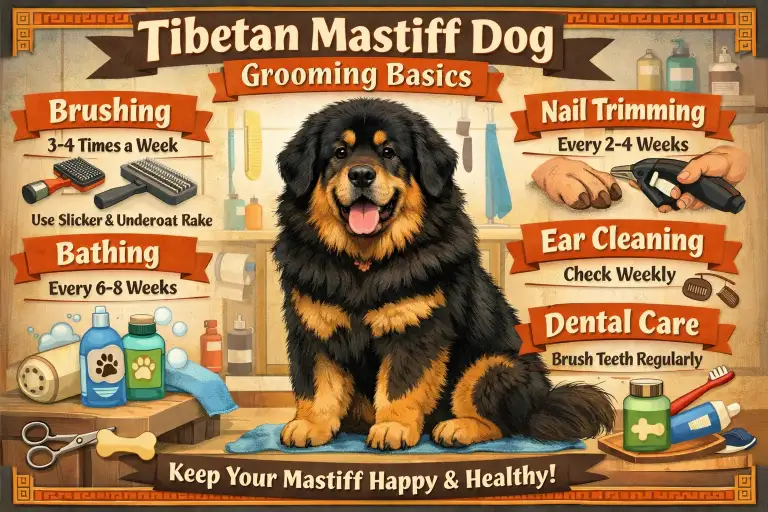
| Brushing | 2–3 times weekly | Removes loose hair and prevents mats |
| Heavy shedding brushing | Daily or every other day | Controls coat blow periods |
| Coat inspection | Weekly | Detects skin issues early |
| Bathing | Every 8–12 weeks or when dirty | Keeps coat clean without drying skin |
| Nail trimming | Every 3–4 weeks | Supports healthy movement |
| Ear cleaning | Monthly | Prevents buildup and irritation |
| Professional grooming | As needed | Helps with difficult maintenance |
The cost of grooming a Tibetan Mastiff depends on whether you maintain the coat yourself or use professional services.
Because this breed has a large body size and dense double coat, professional grooming usually costs more than grooming smaller breeds.
| Grooming Service | Estimated Frequency | Main Cost Factor |
|---|---|---|
| Basic brushing at home | Weekly | Owner time and tools |
| Professional bath and drying | Every few months | Dog size and coat thickness |
| Deshedding session | Seasonal | Amount of loose undercoat |
| Mat removal | As needed | Coat condition and difficulty |
Investing time in regular brushing is usually less expensive and healthier than waiting until the coat becomes severely tangled.
A Tibetan Mastiff should usually be brushed two to three times per week during normal periods. During seasonal shedding, grooming may need to increase to daily brushing to remove loose undercoat and prevent mats.
Yes, Tibetan Mastiffs shed heavily during seasonal coat changes. They usually experience major shedding periods when they release their old undercoat. Regular brushing helps manage this process and keeps loose hair from collecting around the home.
No, Tibetan Mastiffs should generally not be shaved for summer. Their double coat helps regulate temperature and protects the skin from sun exposure. Proper brushing and coat maintenance are safer ways to help them stay comfortable.
The best grooming tools for a Tibetan Mastiff usually include a slicker brush, undercoat rake, and wide-tooth comb. These tools help remove loose hair while protecting the natural structure of the double coat.
Most Tibetan Mastiffs only need bathing every eight to twelve weeks or when they become dirty. Too many baths can remove natural oils and cause dry or irritated skin.
A bad smell can come from trapped moisture, dirty undercoat, skin irritation, or ear problems. Make sure the coat dries completely after bathing and check for signs of infection or skin issues.
No. Tibetan Mastiffs do not need regular haircuts. Their natural coat is designed for protection, and trimming should only be done when medically necessary or to remove problem areas.
You cannot completely stop shedding because it is a natural process. The best way to manage it is regular brushing, proper deshedding tools, healthy nutrition, and maintaining a clean coat.
Tibetan Mastiffs require moderate to high grooming effort because of their size and thick double coat. They are not difficult when owners follow a consistent routine, but neglecting the coat can quickly create problems.
Yes, most routine grooming can be done at home. Regular brushing, basic bathing, nail care, and coat checks are manageable for many owners. Professional help is mainly needed for heavy shedding or severe coat issues.
Tibetan Mastiff grooming is about understanding the breed’s natural design. This powerful guardian dog does not need frequent haircuts or excessive bathing. It needs consistent brushing, careful coat maintenance, and respect for its double coat.
The most important grooming habits are:
| Habit | Why It Matters |
|---|---|
| Regular brushing | Removes loose undercoat and prevents mats |
| Avoiding shaving | Protects natural temperature control |
| Proper drying | Prevents trapped moisture and skin problems |
| Seasonal grooming adjustments | Matches the coat’s natural shedding cycle |
| Routine health checks | Helps identify issues early |
With the right routine, a Tibetan Mastiff’s impressive coat can remain healthy, clean, and functional throughout the year. Good grooming is not about changing this breed’s appearance—it is about protecting the coat that makes the Tibetan Mastiff uniquely suited for its environment.
A Tibetan Mastiff should be brushed at least 2–3 times per week during normal periods and more frequently during seasonal shedding. During heavy coat-blowing seasons, daily brushing may be needed to remove loose undercoat and prevent mats.
Because Tibetan Mastiffs have a thick double coat, grooming frequency depends on coat condition, climate, and activity level rather than appearance alone. Regular brushing helps maintain healthy skin, reduce loose hair buildup, and keep the coat functional.
Yes, Tibetan Mastiffs shed heavily during seasonal coat changes, especially when they release their thick winter or summer undercoat. This period is known as coat blowing.
Unlike some breeds that shed small amounts throughout the year, Tibetan Mastiffs typically have intense shedding periods where large amounts of loose undercoat come out within a few weeks.
Regular brushing during shedding season helps:
| Benefit | Result |
|---|---|
| Removes loose undercoat | Less hair around the home |
| Prevents trapped fur | Lower risk of mats |
| Improves airflow | Healthier skin |
| Spreads natural oils | Better coat condition |
No, Tibetan Mastiffs should not normally be shaved during summer. Their double coat is designed to protect them from both cold and warm conditions by regulating temperature naturally.
Shaving can:
| Risk | Explanation |
|---|---|
| Remove natural protection | The coat blocks sunlight and environmental exposure |
| Affect temperature control | The double coat helps regulate heat |
| Damage coat regrowth | Some coats may grow back unevenly |
| Increase sun exposure | Skin becomes more vulnerable |
Instead of shaving, owners should focus on brushing out loose undercoat, providing shade, fresh water, and proper ventilation.
A Tibetan Mastiff usually only needs a bath every 8–12 weeks or when the coat becomes dirty. Frequent bathing is unnecessary and may remove natural oils that protect the skin.
When bathing:
- Brush the coat before washing
- Use a dog-specific shampoo
- Rinse thoroughly
- Dry the coat completely
A damp double coat can trap moisture and increase the risk of skin irritation or hot spots.
The best grooming tools for a Tibetan Mastiff are those designed for thick double coats.
| Tool | Purpose |
|---|---|
| Slicker brush | Removes loose hair and surface tangles |
| Undercoat rake | Removes dead undercoat during shedding |
| Wide-tooth comb | Checks for hidden mats |
| Dog dryer | Helps remove loose coat after bathing |
Using the correct tool is important because aggressive brushing can damage the skin or break healthy coat hairs.
You cannot completely stop a Tibetan Mastiff from shedding because shedding is a natural process. The goal is to manage shedding through proper grooming.
The best ways to control shedding include:
- Brushing several times per week
- Increasing brushing during coat-blowing season
- Removing loose undercoat regularly
- Feeding a balanced diet
- Keeping the coat clean and dry
A healthy Tibetan Mastiff will still shed, but regular maintenance makes it much easier to manage.
Tibetan Mastiffs are considered moderate to high-maintenance grooming dogs because of their large size and dense double coat.
The biggest challenges are:
- Managing seasonal shedding
- Preventing mats in thick areas
- Drying the coat completely after bathing
- Maintaining grooming habits with a large dog
However, owners who establish a consistent routine usually find grooming manageable.
A regular brushing session may take around 20–45 minutes depending on coat condition and size. During heavy shedding periods, grooming sessions may take longer because more undercoat needs to be removed.
Professional grooming appointments can take several hours because of the breed’s size and coat density.
A de-shedding tool should be used carefully on a Tibetan Mastiff. Tools designed to cut or aggressively remove coat may damage the protective outer layer.
For this breed, safer options include:
- Undercoat rakes
- Slicker brushes
- Wide-tooth combs
The goal is removing loose undercoat while protecting the healthy guard coat.
Small mats can sometimes be gently removed at home, but large or tight mats near the skin should be handled carefully.
To prevent mats:
| Area | Grooming Attention |
|---|---|
| Behind ears | Check frequently |
| Neck mane | Brush thoroughly |
| Behind legs | Inspect during every session |
| Tail area | Remove trapped undercoat |
Never pull hard on mats because it can hurt the dog and damage the skin.
Professional grooming is not always required, but it can be helpful during heavy shedding periods or when dealing with difficult coat problems.
A professional groomer can help with:
- Deep deshedding
- Severe mats
- Nail trimming
- Difficult bathing and drying
Routine brushing and basic maintenance can usually be done at home with proper tools and patience.
Tibetan Mastiff grooming is about understanding and respecting the breed’s natural double coat. This powerful guardian was developed with a coat designed for protection, so the goal is not to remove the coat but to maintain it properly.
A consistent grooming routine that includes regular brushing, careful bathing, proper drying, and seasonal shedding management will keep your Tibetan Mastiff comfortable and healthy.
The most important grooming rules are simple:
| Rule | Why It Matters |
|---|---|
| Never shave the coat | Protects natural insulation and skin |
| Brush consistently | Prevents mats and controls shedding |
| Bathe only when needed | Maintains healthy skin oils |
| Check skin regularly | Detects problems early |
| Use correct tools | Protects coat quality |
With patience and regular care, Tibetan Mastiff grooming becomes a manageable routine rather than a difficult task. A well-maintained coat allows this remarkable breed to stay comfortable, protected, and healthy throughout the year.

Ata Ur Rehman is the founder of Pet Age in Human Years Calculator, an educational platform that provides age conversion charts and lifespan guides for dogs, cats, birds, and other companion animals. His work focuses on helping pet owners understand how animal ages translate into human years using commonly accepted age conversion formulas and published lifespan averages.
The website compiles breed and species lifespan data from kennel clubs, breed organizations, and general animal lifespan studies to present simple and easy-to-understand guides for pet owners worldwide.
This website was created to centralize animal age conversion charts into one easy reference platform for pet owners.
This article is for general education. For symptoms, medication, diet changes, or health concerns, use a qualified veterinarian who can assess your individual pet.