On this page
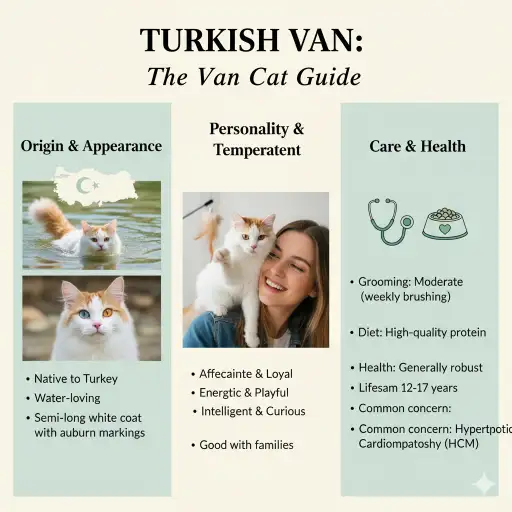
The Turkish Van is one of the most unusual and eye-catching natural cat breeds in the world. It comes from the Lake Van region of eastern Turkey, where it developed naturally over hundreds of years. Unlike many modern breeds that were created through careful crossbreeding, the Turkish Van is considered a landrace breed. This means it adapted on its own to its environment. Because of this, it is strong, athletic, and well balanced in both body and personality.
Major cat registries such as The International Cat Association and Cat Fanciers’ Association recognize the Turkish Van as a distinct breed. However, it is still rare outside its homeland. Many people confuse it with the Turkish Angora, but they are different in body type, coat texture, and personality. The Turkish Van is larger, more muscular, and more energetic.
The first thing most people notice about this breed is its coat pattern. The classic “Van pattern” means the body is mostly white, while color appears only on the head and tail. The tail is full and fluffy, often with ring markings. The coat feels soft like cashmere and has very little undercoat. Because of this, it does not mat easily. The fur is also somewhat water-resistant, which connects to the breed’s famous love of water.
Turkish Vans are large cats. Adult males usually weigh between 12 to 18 pounds, while females often range from 10 to 14 pounds. They grow slowly and may not reach full maturity until 3 to 5 years of age. This slow development is common in larger breeds. Their bodies are long, muscular, and powerful, especially in the back legs. This makes them excellent jumpers and climbers.
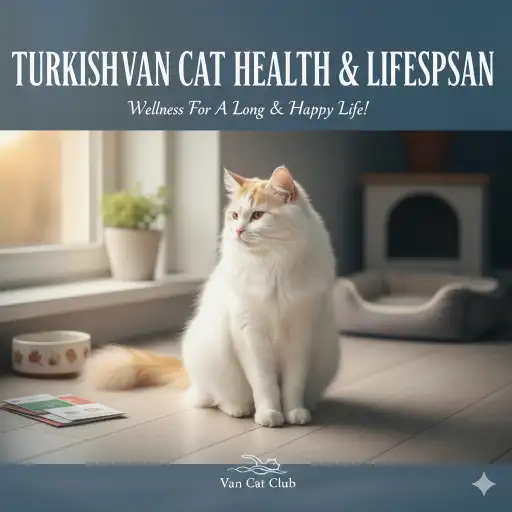
Eye color can be amber, blue, or odd-eyed, meaning one blue eye and one amber eye. This striking look adds to their charm. On average, a healthy Turkish Van lives between 12 to 17 years when cared for properly. Good breeding, regular vet visits, and proper diet play an important role in lifespan.
Here is a quick overview:
| Trait | Details |
|---|---|
| Origin | Turkey (Lake Van region) |
| Size | Large |
| Weight | 10–18 lbs |
| Lifespan | 12–17 years |
| Coat | Semi-long, water-resistant |
| Energy Level | High |
| Affection Level | Moderate |
| Rarity | Rare outside Turkey |
Turkish Van Personality & Behavior: What Living With One Is Really Like
Living with a Turkish Van is exciting. This is not a quiet, sleepy cat that sits still all day. It is active, smart, and always curious about what you are doing. Many owners say their Van follows them from room to room, watching closely and wanting to be part of everything. They bond strongly with their people but usually choose one favorite person.
This breed is playful well into adulthood. They love to jump to high places, explore shelves, and sit on top of cabinets. Because of their strong back legs, they can leap higher than many other cats. They also enjoy interactive play, such as chasing feather toys or even playing fetch. Some Turkish Vans will bring toys back again and again like a dog.
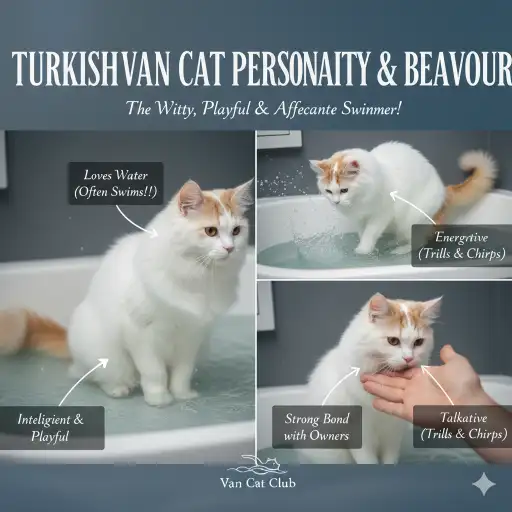
One of the most famous traits of this breed is its interest in water. Many Turkish Vans are curious about running taps, sinks, or even showers. Some may dip their paws in water or try to splash. Not every Van will swim, but compared to most cats, they are much more comfortable around water. This does not mean they need swimming pools, but it does mean you may find wet paw prints near the sink.
They are affectionate but not usually clingy lap cats. They like to sit near you, not always on you. Their love is active and playful rather than calm and cuddly. They are not known for loud, constant meowing like the Siamese. Instead, their voice is moderate. They will speak when they want attention but are not overly noisy.
Turkish Vans can do well with children if the children are respectful. Because they are energetic, they match well with active families. In homes with other cats, early socialization helps. They can be confident and sometimes dominant, especially with cats of the same sex. With dogs, they often adjust well if introductions are done slowly.
Apartment living is possible, but only if there is enough vertical space. Cat trees, shelves, and daily playtime are very important. Without mental and physical activity, they may become bored and get into trouble, such as knocking items off counters.
| Household Type | Good Fit? | Why / Why Not |
|---|---|---|
| Families with kids | Yes | Energetic and playful |
| First-time owners | Maybe | Needs active engagement |
| Apartments | Yes, with effort | Needs climbing space |
| Multi-cat homes | Yes, with intro | Can be dominant |
| Seniors | Maybe | High energy may be tiring |
Care Needs: Activity, Grooming, Training & Health
Turkish Vans need daily activity. This is not optional. They require strong play sessions at least once or twice a day. Wand toys, climbing trees, and puzzle feeders work well. Because they are smart, they enjoy challenges. Mental stimulation is just as important as physical exercise.
Training is possible and often successful. Many owners use clicker training to teach simple tricks. They learn quickly and respond well to positive rewards. However, they do not like harsh discipline. If bored, they may climb curtains or jump onto kitchen counters. The best way to prevent bad behavior is to provide enough enrichment.
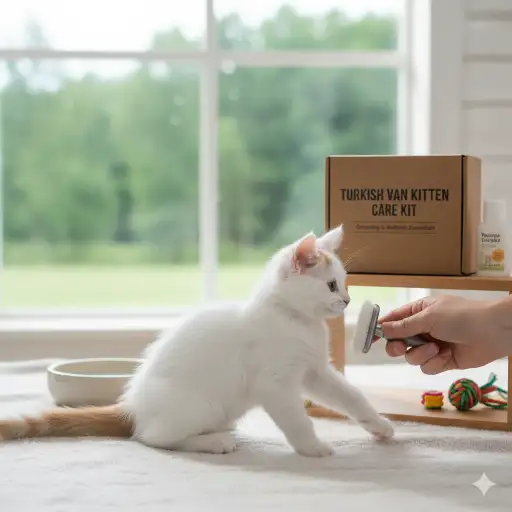
Grooming is easier than people expect. Even though the coat is semi-long, it has little undercoat. This means matting is rare. Brushing once a week is usually enough, except during seasonal shedding when brushing may be needed more often. Most Turkish Vans enjoy attention during grooming, especially if introduced early.
Health-wise, the breed is generally strong. However, like many larger breeds, there is a risk of hypertrophic cardiomyopathy (HCM), a heart condition. Responsible breeders screen their cats for heart problems. Regular vet visits are important to catch issues early. With proper care, many Turkish Vans live long and healthy lives.
| Category | What to Expect |
|---|---|
| Exercise Needs | High daily play |
| Grooming | Weekly brushing |
| Shedding | Moderate, seasonal heavy |
| Trainability | High |
| Common Health Risk | HCM |
| Lifespan | 12–17 years |
Cost of Owning a Turkish Van: Price, Maintenance & Long-Term Expenses
Turkish Vans are rare, and this affects their price. A kitten from a responsible breeder often costs between $800 and $2,000, depending on location and bloodline. Show-quality kittens may cost more. Because the breed is uncommon, waiting lists are normal.
In the first year, you will spend money on basic supplies such as a litter box, scratching posts, cat tree, toys, and carrier. Initial setup costs may range from $300 to $600. High-quality food is important for a large, active breed, so monthly food costs may be slightly higher than for smaller cats.
Annual vet care includes vaccinations, checkups, and preventive treatments. This may cost around $200 to $400 per year, not including emergencies. Pet insurance is something many owners consider, especially because heart screenings may be recommended.
Overall, Turkish Vans are not the most expensive breed long term, but their high energy level means you will likely spend more on enrichment toys and climbing furniture.
| Expense Type | Estimated Cost |
|---|---|
| Kitten Price | $800–$2,000 |
| Initial Supplies | $300–$600 |
| Annual Vet Care | $200–$400 |
| Monthly Food | Moderate to High |
| Insurance | Varies |
Pros, Cons & Similar Breeds: Is the Turkish Van Right for You?
The Turkish Van is perfect for active homes that enjoy playful and smart pets. They are loyal, bold, and full of personality. However, they are not ideal for people who want a quiet lap cat that sleeps most of the day.
Pros include strong bonding, playful behavior, striking looks, and low matting coat. Cons include high energy, possible dominance with other cats, and the need for daily interaction. They are best for owners who enjoy engaging with their pet.
People sometimes compare them to the Maine Coon or the Norwegian Forest Cat. While those breeds are also large, they are usually calmer. The Turkish Van tends to be more energetic and mischievous.
| Trait | Turkish Van | Maine Coon | Norwegian Forest Cat |
|---|---|---|---|
| Size | Large | Very Large | Large |
| Energy | High | Moderate | Moderate |
| Coat | Semi-long | Dense | Thick double |
| Water Interest | Very High | Low | Low |
| Best For | Active homes | Gentle families | Cold climates |
If you want a confident, playful, and rare cat that will keep life interesting, the Turkish Van may be a great choice. If you prefer a calm, quiet cat that enjoys long cuddle sessions, another breed may suit you better.

Ata Ur Rehman is the founder of Pet Age in Human Years Calculator, an educational platform that provides age conversion charts and lifespan guides for dogs, cats, birds, and other companion animals. His work focuses on helping pet owners understand how animal ages translate into human years using commonly accepted age conversion formulas and published lifespan averages.
The website compiles breed and species lifespan data from kennel clubs, breed organizations, and general animal lifespan studies to present simple and easy-to-understand guides for pet owners worldwide.
This website was created to centralize animal age conversion charts into one easy reference platform for pet owners.
This article is for general education. For symptoms, medication, diet changes, or health concerns, use a qualified veterinarian who can assess your individual pet.