On this page
Potty training a dog in an apartment can feel harder because you do not have a yard right outside the door. By the time you grab the leash, wait for the elevator, walk through the lobby, and reach the nearest potty spot, your dog may already have had an accident.
The good news is that you can potty train a dog in an apartment with the right setup and routine. The key is to choose one clear potty option, take your dog there consistently, reward them immediately, and prevent unsupervised accidents inside.
This guide will show you how to handle apartment dog potty training without a yard, including when to use outdoor breaks, pee pads, or an indoor potty for dogs.
The Best Way to Potty Train a Dog in an Apartment
The best way to potty train a dog in an apartment is to make the potty routine simple and predictable.
Your dog needs to learn three things:
- Where they should go
- When they will get the chance to go
- What happens when they get it right
That means you should choose one main potty spot and use it consistently. This could be a grass area outside your building, a pee pad in one part of the apartment, or an indoor potty tray. Switching between too many places can confuse your dog, especially in the beginning.
For most apartment dogs, potty training works best when you follow this basic pattern:
- Take your dog to the potty spot at predictable times.
- Stay calm and give them a few minutes to go.
- Reward them immediately after they pee or poop in the right place.
- Supervise them closely indoors.
- Clean accidents properly so they are not drawn back to the same spot.
The biggest apartment-specific challenge is timing. A dog in a house with a yard may only need to get to the back door. A dog in an apartment may need to make it down a hallway, into an elevator, through a lobby, and outside. That extra time matters, especially for puppies.
Because of that, do not wait until your dog is desperate. Take them out before they are likely to have an accident. In the early stages, it is better to offer too many potty breaks than too few.
If you are using pee pads or an indoor potty for dogs, the same rule applies. The potty area should be easy to reach, always in the same place, and separate from your dog’s food, water, bed, and main play area.
Choose One Potty Setup Before You Start
Before you begin apartment dog potty training, decide where you actually want your dog to go. This decision shapes the whole routine.
There are three realistic options for apartments without yards:
- Outdoor potty breaks
- Pee pads
- An indoor potty system
None of these is automatically right or wrong. The best choice depends on your dog’s age, your schedule, your building, and how quickly you can get outside.
Option 1: Outdoor Potty Breaks
Outdoor potty training is usually the best choice if you want your dog to eventually go only outside.
This works well if you have:
- A safe potty area near your building
- Easy access to stairs or an elevator
- A schedule that allows regular walks
- A dog that can hold it long enough to get outside
The main advantage is clarity. Your dog learns that outside is the potty place from the start. This can reduce the need to transition away from pee pads later.
The challenge is speed. In an apartment, you need to plan ahead. Puppies often cannot wait while you search for keys, put on shoes, and wait for the elevator. Keep a leash, waste bags, and shoes near the door so you can move quickly.
For young puppies, you may need to carry them outside at first, especially if they tend to pee in the hallway or elevator. Carrying them does not ruin the training. It simply helps prevent accidents before they understand the routine.
Option 2: Pee Pads
Pee pads can be useful for apartment dog potty training, especially when getting outside quickly is difficult.
They may make sense if:
- You live in a high-rise apartment
- Your puppy cannot hold it long enough to get outside
- You work from home but cannot leave constantly
- Bad weather makes frequent trips difficult
- Your dog needs an emergency potty option
If you use pee pads, place them in one consistent spot. Do not move them around the apartment every day. A laundry area, bathroom corner, or easy-to-clean floor space is usually better than a carpeted room.
When your dog uses the pee pad correctly, reward them right away. Do not assume the pad itself teaches the behavior. The reward is what helps your dog understand that this is the right place to go.
The main downside of pee pads is that some dogs may start thinking soft surfaces are acceptable potty spots. Rugs, bath mats, and blankets can become confusing if they feel similar under your dog’s paws. To avoid this, keep pee pads in a defined area and remove tempting soft items during training.
If your long-term goal is outdoor potty training, treat pee pads as a temporary step, not a permanent routine.
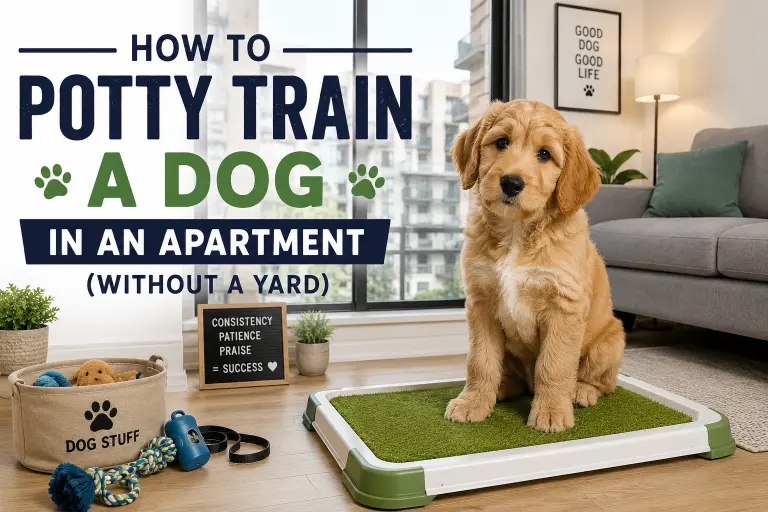
Option 3: Indoor Potty for Dogs
An indoor potty for dogs can be a good option when outdoor access is limited but you want something more structured than pee pads.
Common indoor potty options include:
- Real grass patches
- Artificial turf trays
- Potty trays with replaceable liners
- Dog litter-style systems
These can work well for small dogs, puppies, senior dogs, or owners who cannot make frequent outdoor trips. They can also be helpful in apartments where late-night potty breaks are inconvenient or unsafe.
The key is to keep the indoor potty in one location and treat it like a real potty area. Take your dog there on schedule, use a simple cue like “go potty,” and reward successful use.
Do not place the indoor potty too close to your dog’s bed or food bowls. Dogs usually prefer to keep their sleeping and eating areas separate from where they eliminate. A bathroom, balcony-style area if allowed and safe, laundry room, or easy-to-clean corner may work better.
An indoor potty can be a long-term solution or a bridge to outdoor potty training. The important thing is to decide your goal early so your dog gets a clear message.
Set a Simple Apartment Potty Training Schedule
A clear schedule is what makes potty training easier in an apartment. Your dog should not have to guess when the next potty break is coming, and you should not wait until they are already pacing, whining, or sniffing the floor.
Take your dog to the potty spot at the same key times every day:
- First thing in the morning
- After meals
- After naps
- After playtime
- Before bedtime
- Anytime they start sniffing, circling, whining, or walking toward the door
In an apartment, add extra time for the trip itself. If it takes five minutes to get outside, start moving before your dog urgently needs to go. This is especially important for puppies, small breeds, and dogs that are still learning bladder control.
If you are using pee pads or an indoor potty for dogs, the schedule still matters. Do not just leave the pad there and hope your dog figures it out. Bring your dog to the potty area at predictable times, wait calmly, and reward them when they use it.
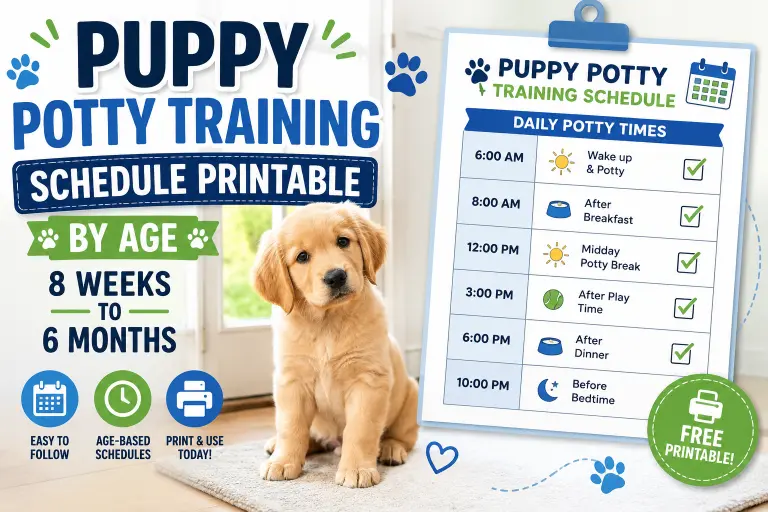
Puppy Schedule
Puppies need more frequent potty breaks because they are still developing control. In the beginning, plan to take your puppy to the potty spot very often, especially after eating, drinking, sleeping, or playing.
A simple puppy routine may look like this:
- Potty break immediately after waking up
- Potty break after breakfast
- Potty break after active play
- Potty break after each nap
- Potty break after dinner
- Potty break before bed
Very young puppies may also need potty opportunities during the night. If your puppy wakes up, whines, or becomes restless, take them to the potty spot calmly and keep the trip boring. This helps them understand that nighttime potty breaks are for bathroom needs, not playtime.
For apartment puppies, prevention is more effective than correction. If your puppy has accidents on the way to the elevator or outside, carry them until they are more reliable. You can still let them walk back after they finish.
Adult Dog Schedule
Adult dogs usually do not need potty breaks as often as puppies, but they still need consistency when adjusting to apartment life.
An adult dog may need potty breaks:
- In the morning
- Midday or early afternoon
- After dinner
- Before bedtime
Some adult dogs adjust quickly. Others need time, especially if they previously lived in a house with a yard and are used to going out whenever they want. For these dogs, apartment dog potty training is not only about bladder control. It is also about teaching a new routine.
If your adult dog has accidents, do not assume they are being stubborn. They may not understand how to signal in an apartment, or they may not be used to waiting for an elevator, leash, and walk. Go back to a stricter schedule for a while, then gradually increase freedom as they improve.
How to Use Rewards, Cues, and Supervision
Potty training works faster when your dog clearly understands what behavior earns a reward. The reward needs to happen immediately after your dog pees or poops in the correct place.
Do not wait until you get back upstairs or inside the apartment. By then, your dog may not connect the reward with going potty. Keep small treats near the door or in your pocket so you can reward at the right moment.
Use a simple cue each time you bring your dog to the potty spot. Say something like:
- “Go potty”
- “Potty time”
- “Do your business”
Say the cue once or twice when your dog is in the right area. Avoid repeating it nonstop. The goal is to help your dog connect the phrase with the action, not create noise they learn to ignore.
When your dog goes in the right place, praise them calmly and give the treat right away. You do not need to overexcite them. A clear reward is enough.
Supervision is just as important as rewards. During apartment dog potty training, your dog should not have full access to every room until they are reliable. Too much freedom makes it easy for them to sneak away and have accidents behind furniture, on rugs, or in quiet corners.
Use simple management tools:
- Keep your dog in the same room as you
- Close bedroom and bathroom doors
- Use baby gates if needed
- Keep them on a leash indoors during the early stage
- Use a crate or safe pen when you cannot supervise
The goal is not to restrict your dog forever. The goal is to prevent repeated accidents while they are learning. Every successful potty trip builds the habit you want. Every unnoticed accident makes the training take longer.
As your dog becomes more reliable, slowly give them more freedom. Start with one extra room, then expand access over time. If accidents return, reduce freedom again and tighten the schedule.
What to Do About Accidents in an Apartment
Accidents will happen during potty training, especially in an apartment where getting to the potty spot can take extra time. What matters most is how you respond afterward.
If you catch your dog in the middle of an accident, interrupt gently with a calm sound like “outside” or “potty,” then take them to the correct potty spot right away. If they finish there, reward them. If they do not, stay calm and try again at the next scheduled break.
Do not punish your dog for accidents. Yelling, scolding, or rubbing their nose in it can make them afraid to go potty near you. That often creates a worse problem: the dog learns to hide when they need to pee or poop.
Clean every accident thoroughly with an enzymatic cleaner. Regular household cleaners may remove the visible mess, but they may not fully break down the odor your dog can still smell. If the scent remains, your dog may return to the same area.
Pay close attention to accident patterns. They usually tell you what needs to change.
If accidents happen near the front door, your dog may understand they need to go out but cannot hold it long enough. Start the trip earlier or carry them outside for a while.
If accidents happen on rugs, bath mats, or blankets, remove those items temporarily. Soft surfaces can feel too similar to pee pads.
If accidents happen in hidden corners, your dog has too much freedom too soon. Keep them closer to you and block access to those areas.
If accidents happen right after coming back inside, your dog may not have fully finished outside. Give them more time at the potty spot and avoid turning every trip into a walk or play session before they go.
For a dog that was previously potty trained and suddenly starts having frequent accidents, consider whether something else is going on. Stress, schedule changes, new environments, or health issues can affect bathroom habits. If the change is sudden or unusual, it is worth checking with a vet.
When to Stop Using Pee Pads or Indoor Potty Options
If your goal is for your dog to go outside only, pee pads or an indoor potty should be treated as a temporary step. Do not remove them suddenly before your dog understands the outdoor routine.
Start by making outdoor potty breaks more rewarding than indoor ones. When your dog goes outside, give immediate praise and a high-value treat. Keep indoor rewards calmer or smaller, so outside becomes the preferred option.
Next, reduce indoor potty access gradually. For pee pads, you can move the pad closer to the door over time, then eventually remove it once your dog is regularly going outside. Do this slowly enough that your dog can follow the change.
If you use an indoor potty tray, begin adding more scheduled outdoor breaks while keeping the tray available as backup. Once your dog is consistently going outside, limit access to the indoor potty during the times they are most likely to succeed outdoors.
Do not rush the transition if your dog is still having frequent accidents. Removing pee pads too early can make the apartment feel like one big potty area. It is better to wait until your dog has built a reliable habit.
Some apartment dogs may continue using an indoor potty for dogs long term, and that is fine if it works for your household. This may be practical for very small dogs, senior dogs, bad weather days, or owners who cannot safely go outside late at night.
The important thing is consistency. Whether your dog uses outdoor breaks, pee pads, or an indoor potty, they need one clear routine that does not change every few days.
FAQs About Potty Training a Dog in an Apartment
Can you potty train a dog in an apartment without a yard?
Yes. You can potty train a dog in an apartment without a yard by choosing one clear potty location and building a consistent routine around it. That location might be an outdoor spot near your building, a pee pad area, or an indoor potty for dogs.
The main difference is timing. Because you may need to use an elevator, hallway, stairs, or lobby, you need to start potty breaks before your dog is desperate.
Should I use pee pads when potty training a dog in an apartment?
Pee pads can help if you live in a high-rise, have a young puppy, deal with bad weather, or cannot get outside quickly enough every time. They are especially useful as a backup during the early stage of apartment dog potty training.
However, pee pads should be used consistently. Keep them in one place, reward your dog for using them, and avoid placing them near rugs or bath mats that may feel similar. If your long-term goal is outdoor potty training, transition away from pee pads gradually.
What is the best indoor potty for dogs in apartments?
The best indoor potty depends on your dog and your apartment setup. Real grass patches may feel more natural to some dogs, while artificial turf trays or pee pad holders may be easier to manage indoors.
Choose an option that is easy to clean, large enough for your dog to use comfortably, and simple to keep in one consistent location. The exact product matters less than the routine you build around it.
How long does apartment dog potty training take?
Some dogs start improving within a few weeks, but full reliability can take longer. Puppies usually need more time because they are still developing bladder control. Adult dogs may learn faster, but they still need consistency if apartment living is new to them.
Progress depends on your schedule, supervision, cleanup, rewards, and how clearly you show your dog where to go.
How do I stop my dog from having accidents in the apartment?
Start by reducing your dog’s freedom indoors until they are more reliable. Keep them near you, close doors to rooms where accidents happen, and take them to the potty spot more often.
Clean accidents with an enzymatic cleaner, reward successful potty breaks immediately, and watch for signs like sniffing, circling, whining, or heading toward the door. If accidents keep happening, the schedule may need to be tighter for a while.

Ata Ur Rehman is the founder of Pet Age in Human Years Calculator, an educational platform that provides age conversion charts and lifespan guides for dogs, cats, birds, and other companion animals. His work focuses on helping pet owners understand how animal ages translate into human years using commonly accepted age conversion formulas and published lifespan averages.
The website compiles breed and species lifespan data from kennel clubs, breed organizations, and general animal lifespan studies to present simple and easy-to-understand guides for pet owners worldwide.
This website was created to centralize animal age conversion charts into one easy reference platform for pet owners.
This article is for general education. For symptoms, medication, diet changes, or health concerns, use a qualified veterinarian who can assess your individual pet.