On this page
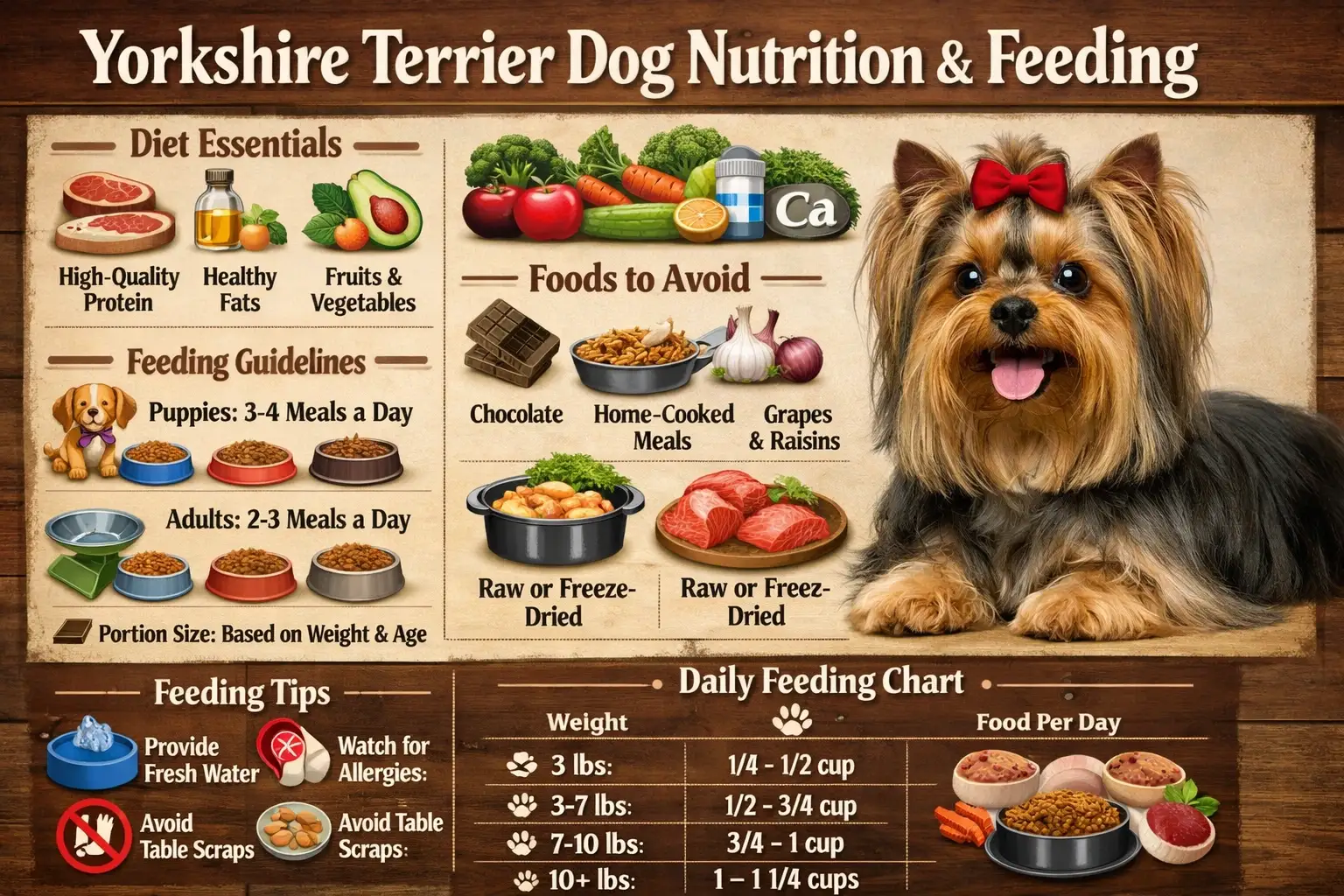
This Yorkshire Terrier feeding guide explains what to feed a Yorkie, how much food they need, how often to feed them, and which foods are safe or unsafe. Yorkshire Terriers may be small, but their nutrition needs are not simple. As a toy breed with a fast metabolism, small stomach, delicate digestion, and long lifespan, Yorkies are more sensitive to portion size, meal timing, and food quality than many larger dogs.
The right feeding routine can support your Yorkshire Terrier’s energy, coat health, digestion, dental condition, and healthy body weight. The wrong routine can quickly lead to picky eating, upset stomach, weight gain, low blood sugar, or poor appetite – especially in puppies and very small adults.
Quick answer: Most adult Yorkshire Terriers do best with 2 measured meals per day, while Yorkie puppies usually need 3-4 smaller meals per day. Daily food amounts depend on weight, age, activity level, body condition, and the calories in your dog’s food.
Use this guide as a practical starting point for building a safe Yorkshire Terrier diet. If you also want to understand how your Yorkie’s age compares in human years, use our Yorkshire Terrier Dog Age Calculator to check their life stage before adjusting feeding routines.
Proper nutrition matters more for Yorkshire Terriers because:
- Their small body size means even minor overfeeding can quickly cause weight gain
- Their fast metabolism can increase the risk of low blood sugar when meals are skipped
- Their small jaws and crowded teeth make food size, texture, and dental support important
- Their long, fine coat depends on balanced protein, fat, vitamins, and minerals
- Their sensitive stomachs often react poorly to sudden diet changes or rich table foods
Basic Nutrition Needs for Yorkshire Terriers
Yorkshire Terriers need a complete and balanced diet made from digestible ingredients. Protein supports lean muscle and coat quality. Fat provides energy and helps skin health. Carbohydrates and fiber can support steady energy and digestion when included in appropriate amounts. Vitamins and minerals support bones, teeth, immunity, and overall wellness.
Because Yorkies are tiny, every bite matters. Their food should provide enough nutrition without forcing them to eat large portions. For most Yorkies, a small-breed or toy-breed formula is easier to chew and portion correctly than food made for larger dogs.
Yorkshire Terrier Nutritional Needs Overview
| Nutrient | Recommended focus | Why it matters for Yorkies |
|---|---|---|
| Protein | Moderate to high-quality protein | Supports lean muscle, energy, and coat condition |
| Fat | Moderate, not excessive | Provides concentrated energy and supports skin and coat health |
| Carbohydrates | Digestible sources | Provides steady fuel when tolerated well |
| Fiber | Low to moderate | Helps stool quality and digestive regularity |
| Vitamins and minerals | Balanced levels | Supports teeth, bones, immunity, and long-term health |
| Water | Available at all times | Supports digestion, hydration, and normal body function |
A complete and balanced dog food usually provides these nutrients in the right amounts. Extra supplements are usually not needed unless your veterinarian recommends them for a specific health reason.
Best Food Types for Yorkshire Terriers
There is no single best food type for every Yorkie. The right option depends on your dog’s age, teeth, digestion, appetite, activity level, and body condition. The main goal is to choose food that is easy to measure, easy to chew, and appropriate for small dogs.
Food Type Comparison for Yorkshire Terriers
| Food type | Pros | Cons | Best for which Yorkies |
|---|---|---|---|
| Dry kibble | Easy to store, easy to measure, may help reduce plaque buildup | Can be hard for Yorkies with dental pain or missing teeth | Healthy adult Yorkies with good teeth |
| Wet food | Soft, tasty, higher moisture | Spoils faster and can be higher in calories per serving | Picky eaters, seniors, or Yorkies with chewing difficulty |
| Fresh cooked food | Highly palatable and often gentle on digestion | Can be expensive and must be nutritionally complete | Yorkies with sensitive stomachs when properly formulated |
| Freeze-dried food | Nutrient-dense and convenient | Often costly and may need rehydration | Mixed feeding or travel feeding routines |
| Homemade food | Allows ingredient control | High risk of nutrient imbalance without expert formulation | Only with veterinary or canine nutrition guidance |
For most owners, a small-breed kibble, wet food, or a measured mix of both works well. Avoid choosing food only because it sounds premium. The food should match your Yorkie’s size, age, calorie needs, chewing ability, and digestion.
Yorkshire Terrier Feeding by Life Stage
Yorkshire Terrier feeding needs change as they grow from puppies into adults and seniors. Puppies need more frequent meals because they are growing quickly and have small stomachs. Adults need stable portions to maintain a healthy weight. Seniors may need easier-to-chew food and careful calorie control.
Yorkshire Terrier Nutrition by Life Stage
| Life stage | Main feeding focus | Feeding notes |
|---|---|---|
| Puppy | Growth, energy, and blood sugar stability | Needs smaller, more frequent meals |
| Adult | Weight maintenance and steady energy | Needs measured portions and consistent meal times |
| Senior | Digestion, dental comfort, and lean body condition | May need softer food, fewer calories, or smaller meals |
How to Read Dog Food Labels for a Yorkie
Food labels can be confusing, but Yorkie owners should focus on the basics first. Look for a complete and balanced formula for your dog’s life stage, small-breed serving guidance, clear ingredient names, and calorie information per cup, can, or serving.
- Choose food labeled for small breeds, toy breeds, puppies, adults, or seniors when appropriate
- Check the calorie amount so you can measure portions accurately
- Look for clear protein sources instead of vague ingredient names
- Avoid frequent food changes unless there is a real reason
- Do not rely on grain-free, raw, or boutique labels as proof of better nutrition
Grain-free food is not required for most Yorkshire Terriers unless your veterinarian recommends it for a specific reason.
How Much to Feed a Yorkshire Terrier
How much to feed a Yorkshire Terrier depends mainly on weight, age, activity level, metabolism, and body condition. Because Yorkies are very small, even a small amount of extra food can add too many calories. The safest approach is to start with a measured portion, monitor body condition, and adjust gradually.
As a general rule, most adult Yorkies need small, calorie-dense meals split into two feedings per day. Puppies usually need more frequent meals to support growth and help prevent energy crashes.
Yorkshire Terrier Feeding Chart by Weight
| Yorkie weight | Daily calories | Approx. daily dry food amount | Best feeding split |
|---|---|---|---|
| 3 lb (1.4 kg) | 120-150 calories | About 1/4 cup | 2-3 small meals |
| 5 lb (2.3 kg) | 180-220 calories | About 1/3 cup | 2 meals |
| 7 lb (3.2 kg) | 230-270 calories | About 1/2 cup | 2 meals |
| 9 lb (4 kg) | 280-320 calories | About 2/3 to 3/4 cup | 2 meals |
These amounts are estimates based on average dry dog food. Your Yorkie may need more or less depending on the calories in the food, activity level, age, spay or neuter status, and body condition. Always measure food instead of guessing.
Yorkshire Terrier Feeding Schedule by Age
A consistent Yorkshire Terrier feeding schedule helps prevent overeating, picky eating, digestive upset, and skipped-meal energy drops. Puppies need more frequent meals than adults because their stomachs are small and their energy needs are higher.
Yorkie Feeding Schedule Chart
| Age | Meals per day | Feeding guidance |
|---|---|---|
| 2-4 months | 4 meals per day | Small frequent meals help support steady energy |
| 4-6 months | 3 meals per day | Continue regular meals while growth is still active |
| 6-12 months | 2-3 meals per day | Transition gradually based on appetite and body condition |
| Adult | 2 meals per day | Morning and evening meals work well for most Yorkies |
| Senior | 2 smaller meals per day | Softer food or smaller portions may help digestion and chewing comfort |
Skipping meals is not recommended for Yorkie puppies or very small adults. If your Yorkshire Terrier refuses food repeatedly, loses weight, vomits, or seems weak, treat it as a health concern rather than a normal picky eating habit.
Adjusting Yorkshire Terrier Food for Activity Level
Not all Yorkshire Terriers need the same amount of food. A calm indoor Yorkie may gain weight on the same portion that works well for a more active dog. Use the feeding chart as a starting point, then adjust based on activity level, body condition, and monthly weight changes.
Activity Level Portion Guide
| Activity level | How to adjust food | Example |
|---|---|---|
| Low activity | Reduce the daily amount slightly | Mostly indoor, short walks, low playtime |
| Moderate activity | Feed the listed amount | Daily walks, normal play, healthy body weight |
| High activity | Increase slightly if weight is dropping | Very playful, active training, long walks |
| Overweight | Reduce treats first, then adjust meals | Ribs hard to feel, round body shape |
| Underweight | Increase gradually and monitor closely | Ribs or spine too visible, low energy |
Watch your Yorkie’s body, not just the bowl. You should be able to feel the ribs easily but not see them sharply. If your dog is gaining or losing weight without a clear reason, adjust portions slowly and speak with a vet if the change continues.
Common Feeding Tips for Yorkshire Terriers
- Measure food with a proper measuring cup instead of guessing
- Limit treats to 10% or less of daily calories
- Weigh your Yorkie at least once a month
- Adjust food after spaying, neutering, weight gain, or activity changes
- Keep meal times consistent to reduce picky eating
- Avoid free-feeding if your Yorkie gains weight easily
Small changes make a big difference for small dogs. Even a few extra treats per day can affect a Yorkshire Terrier’s weight over time.
Safe Foods, Treats, and Foods Yorkshire Terriers Must Avoid
Yorkshire Terriers often beg for human food, but not all foods are safe for them. Because Yorkies are small, even a small amount of the wrong food can cause stomach upset, weight gain, choking, or toxicity. This section explains which foods are safer in small amounts and which foods Yorkies should never eat.
Safe Human Foods for Yorkshire Terriers
The foods below may be safe for many Yorkshire Terriers when served plain and in very small portions. They should be used as occasional treats, not as a replacement for complete dog food.
Safe Foods for Yorkies Table
| Food | Safe portion | Important notes |
|---|---|---|
| Cooked chicken | Small plain bites | No salt, skin, seasoning, or bones |
| Cooked turkey | Small plain bites | Plain only, no gravy or spices |
| Cooked rice | 1-2 small spoons | May be gentle during mild stomach upset |
| Carrots | A few small slices | Low-calorie treat; cut small to prevent choking |
| Apple | Small slices | Remove seeds and core first |
| Plain pumpkin | 1 small spoon | May help stool quality when used correctly |
| Green beans | A few soft pieces | Plain only, no butter or seasoning |
Always introduce new foods slowly. If your Yorkie develops vomiting, diarrhea, itching, gas, or refusal to eat after a new food, stop giving it and return to their normal diet.
Foods Yorkshire Terriers Should Avoid
Some foods are unsafe or toxic for Yorkshire Terriers and should never be offered. Small dogs can react strongly because their body weight is low, so even a small amount may be dangerous.
Toxic Foods for Yorkies Table
| Food | Why it is dangerous | Risk level |
|---|---|---|
| Chocolate | Can affect the heart, nerves, and digestion | Very high |
| Grapes and raisins | Can cause serious kidney problems | Very high |
| Onions and garlic | Can damage red blood cells | High |
| Xylitol | Can cause dangerous low blood sugar | Very high |
| Alcohol | Toxic even in small amounts | Very high |
| Cooked bones | Can splinter, choke, or injure the gut | High |
| Fatty table scraps | Can trigger vomiting, diarrhea, or pancreatitis risk | High |
| Caffeinated drinks | Can affect heart rate and nervous system | High |
If your Yorkshire Terrier eats a toxic food, contact a veterinarian or emergency pet clinic right away. Do not wait for symptoms to appear.
Treat Guidelines for Yorkshire Terriers
Treats can help with training, but too many treats quickly unbalance a Yorkie’s diet. Since Yorkshire Terriers are tiny, treat size matters as much as treat type.
Yorkshire Terrier Treat Guide
| Treat type | Suggested limit | Notes |
|---|---|---|
| Small training treats | 3-5 tiny pieces | Break treats into very small pieces |
| Dental treats | 1 small treat if calories allow | Choose a size made for toy breeds |
| Human food treats | 1-2 small bites | Count them toward daily calories |
| High-calorie treats | Use rarely | Can cause weight gain fast |
Treats should make up less than 10% of daily calories. If your Yorkie is gaining weight, reduce treats before cutting balanced meals.
Simple Food Safety Tips
- Teach every family member which foods Yorkies must avoid
- Do not feed from the table during meals
- Read labels on human snacks before sharing anything
- Keep chocolate, raisins, xylitol products, and cooked bones out of reach
- Cut safe foods into tiny pieces to reduce choking risk
- Introduce new foods one at a time
Special Diets, Common Feeding Problems, and When to See a Vet
Some Yorkshire Terriers need extra care with food because of allergies, sensitive stomachs, dental issues, low appetite, or weight gain. Others may develop feeding problems because of inconsistent routines or too many treats. The goal is to identify the pattern before making major diet changes.
Special Diet Needs in Yorkshire Terriers
Special diets should be chosen carefully. A food change may help some Yorkies, but strict diets, homemade diets, or major ingredient restrictions should not be started without proper guidance.
Special Diet Needs Overview
| Condition or concern | Diet focus | What to watch for |
|---|---|---|
| Food allergies | Limited or controlled ingredients | Itching, ear issues, repeated skin irritation |
| Sensitive stomach | Easy-to-digest food | Soft stool, gas, vomiting, appetite changes |
| Weight gain | Calorie control | Too many treats, low activity, round body shape |
| Low appetite | Palatable but balanced meals | Skipping meals, weight loss, weakness |
| Dental problems | Softer texture or smaller kibble | Dropping food, chewing on one side, bad breath |
| Tear staining | Consistent balanced diet | Diet alone may not solve the issue |
Never change to a strict diet suddenly. Watch stool quality, appetite, energy, weight, and skin condition after any food change.
Yorkie Sensitive Stomach and Diarrhea After Food
Yorkie diarrhea after food changes is often caused by switching diets too quickly, feeding rich table scraps, giving too many treats, or offering foods that are hard to digest. A sensitive stomach does not always mean your dog needs a complicated diet. Often, the first step is to simplify meals and return to a consistent routine.
- Stop new treats and table scraps temporarily
- Return to the food your Yorkie tolerated well, if appropriate
- Make future food changes gradually over 7-10 days
- Keep portions small and consistent
- Contact a vet if diarrhea is severe, repeated, bloody, or paired with vomiting or weakness
Common Feeding Problems and Simple Solutions
Many Yorkshire Terrier feeding problems are caused by habits, not illness. Before changing foods, review meal timing, treat amounts, portion size, and table feeding.
Feeding Problems and Solutions
| Problem | Likely cause | What to try first |
|---|---|---|
| Picky eater | Too many treats or frequent food changes | Set meal times and remove uneaten food after a short period |
| Always hungry | Treats replacing balanced meals or low satiety | Measure food and reduce extras |
| Loose stool | Food change too fast or rich foods | Return to a simple routine and transition slowly |
| Weight gain | Extra calories from treats or oversized portions | Reduce treats, measure meals, increase activity if safe |
| Won’t eat in the morning | Late-night snacks or picky feeding habits | Move dinner earlier and avoid bedtime treats |
| Begging for food | Table feeding habit | Stop feeding from the table and reward calm behavior instead |
If your Yorkie’s feeding problem is new, severe, or paired with weight loss, vomiting, diarrhea, pain, or weakness, treat it as a health issue rather than a training issue.
Switching Yorkshire Terrier Food the Safe Way
Always change Yorkshire Terrier food slowly unless your vet gives different instructions. A gradual transition helps reduce diarrhea, vomiting, gas, and refusal to eat.
7-10 Day Food Transition Plan
| Days | Old food | New food |
|---|---|---|
| Days 1-3 | 75% | 25% |
| Days 4-6 | 50% | 50% |
| Days 7-10 | 25% | 75% |
| After day 10 | 0% | 100% |
If your Yorkie develops loose stool during the switch, slow down the transition and avoid adding other new foods at the same time.
When to See a Vet About Your Yorkie’s Diet
Contact a vet if your Yorkshire Terrier:
- Stops eating for more than 24 hours
- Loses weight without a clear reason
- Has repeated vomiting or diarrhea
- Has bloody stool or severe stomach upset
- Shows weakness, shaking, pain, or unusual tiredness
- Has repeated food reactions, itching, or ear problems
- Needs a homemade, weight-loss, or medical diet
A vet can help rule out health problems and guide safe diet changes, especially for puppies, seniors, underweight Yorkies, overweight Yorkies, or dogs with ongoing digestive issues.
Final Takeaway: How to Feed a Yorkshire Terrier Well
Yorkshire Terriers stay healthiest when their food is measured, consistent, age-appropriate, and easy to digest. The best feeding plan is not just about choosing a food brand. It is about matching portions, calories, meal timing, treats, and safe food choices to your Yorkie’s size and life stage.
- Feed measured portions instead of guessing
- Use a consistent feeding schedule
- Choose food made for small or toy breeds when possible
- Limit treats and avoid unsafe human foods
- Adjust portions based on weight, activity, and age
- Make food changes slowly to protect digestion
As your Yorkie moves from puppyhood into adulthood and senior years, feeding needs can change. You can use the Yorkshire Terrier Dog Age Calculator to understand your dog’s life stage and support better feeding decisions.
Can Yorkshire Terriers Eat Homemade Food?
Yorkshire Terriers can eat homemade food, but it must be carefully balanced. Homemade meals are not automatically healthier than commercial dog food. The biggest risk is missing important nutrients such as calcium, essential fatty acids, vitamins, minerals, and the right protein-to-fat balance.
Homemade food may be considered for Yorkies with picky eating, sensitive stomachs, food reactions, or special medical needs, but it should not be built from random human foods. A safe homemade Yorkshire Terrier diet should be planned with veterinary guidance, especially for puppies, seniors, underweight dogs, or Yorkies with health problems.
Homemade Food Guidelines for Yorkies
| Homemade food rule | Why it matters |
|---|---|
| Use plain cooked ingredients | Seasonings, salt, butter, and sauces can upset digestion |
| Include balanced nutrition | Meat alone does not provide a complete diet |
| Measure portions carefully | Yorkies gain weight quickly from small calorie increases |
| Avoid toxic foods | Chocolate, grapes, raisins, onions, garlic, and xylitol are unsafe |
| Do not guess puppy diets | Growing Yorkies need precise nutrients for healthy development |
If you want to feed homemade meals long term, use a complete recipe created for dogs, not a human-style meal plan. Homemade feeding works best when it is measured, balanced, and monitored through body weight, stool quality, coat condition, and energy level.
Yorkshire Terrier Feeding FAQs
How much should a Yorkshire Terrier eat per day?
Most adult Yorkshire Terriers eat about 1/4 to 3/4 cup of dry food per day, depending on weight, age, activity level, and food calories. A small 3 lb Yorkie may need about 120-150 calories daily, while a larger 9 lb Yorkie may need about 280-320 calories daily.
How often should I feed a Yorkshire Terrier?
Most adult Yorkshire Terriers do best with 2 meals per day. Yorkie puppies usually need 3-4 smaller meals daily because they have small stomachs and higher energy needs. Senior Yorkies may also do better with smaller, softer meals split across the day.
What is the best food for a Yorkshire Terrier?
The best food for a Yorkshire Terrier is a complete and balanced small-breed or toy-breed dog food that matches their life stage. It should be easy to chew, easy to digest, calorie-appropriate, and suitable for your Yorkie’s weight, teeth, appetite, and stomach sensitivity.
What can Yorkies eat besides dog food?
Yorkies can eat small amounts of plain cooked chicken, plain cooked turkey, rice, carrots, apple slices without seeds, plain pumpkin, and green beans. These should only be occasional extras and should not replace complete dog food.
What foods should Yorkshire Terriers avoid?
Yorkshire Terriers should avoid chocolate, grapes, raisins, onions, garlic, xylitol, alcohol, cooked bones, fatty table scraps, and caffeinated drinks. Because Yorkies are small, even a small amount of unsafe food can be dangerous.
How much should I feed a Yorkie puppy?
A Yorkie puppy should be fed small, frequent meals based on age, weight, and puppy food calories. Most Yorkie puppies need 3-4 meals per day. Very young or tiny puppies should not skip meals because they are more vulnerable to low blood sugar and energy crashes.
Why is my Yorkshire Terrier always hungry?
A Yorkshire Terrier may seem always hungry because of habit, too many treats, low-fiber food, inconsistent meal times, or underfeeding. First check measured portions, treat calories, and body condition. If hunger is sudden or paired with weight loss, speak with a vet.
Why does my Yorkie get diarrhea after eating?
Yorkies may get diarrhea after eating because of sudden food changes, rich table scraps, too many treats, food sensitivity, or eating unsafe foods. Return to a simple feeding routine and avoid new foods. Contact a vet if diarrhea is repeated, severe, bloody, or paired with vomiting or weakness.
Can Yorkshire Terriers eat wet food every day?
Yes, Yorkshire Terriers can eat wet food every day if it is complete and balanced for their life stage. Wet food can help picky eaters and seniors, but portions must be measured carefully because calories vary by brand and serving size.
Should Yorkies eat grain-free food?
Most Yorkshire Terriers do not need grain-free food unless a vet recommends it for a specific reason. A balanced food with digestible grains can be suitable for many Yorkies. The overall nutrition, calories, digestibility, and life-stage fit matter more than the grain-free label.
More Yorkshire Terrier Resources
Use these related Yorkshire Terrier resources for topics that are covered in more detail on their dedicated pages:
- Yorkshire Terrier Dog Breed Guide
- Yorkshire Terrier Training Guide
- Yorkie Age Chart
- Yorkshire Terrier Grooming Guide
- Yorkshire Terrier Cost of Ownership Guide

Ata Ur Rehman is the founder of Pet Age in Human Years Calculator, an educational platform that provides age conversion charts and lifespan guides for dogs, cats, birds, and other companion animals. His work focuses on helping pet owners understand how animal ages translate into human years using commonly accepted age conversion formulas and published lifespan averages.
The website compiles breed and species lifespan data from kennel clubs, breed organizations, and general animal lifespan studies to present simple and easy-to-understand guides for pet owners worldwide.
This website was created to centralize animal age conversion charts into one easy reference platform for pet owners.
This article is for general education. For symptoms, medication, diet changes, or health concerns, use a qualified veterinarian who can assess your individual pet.