On this page
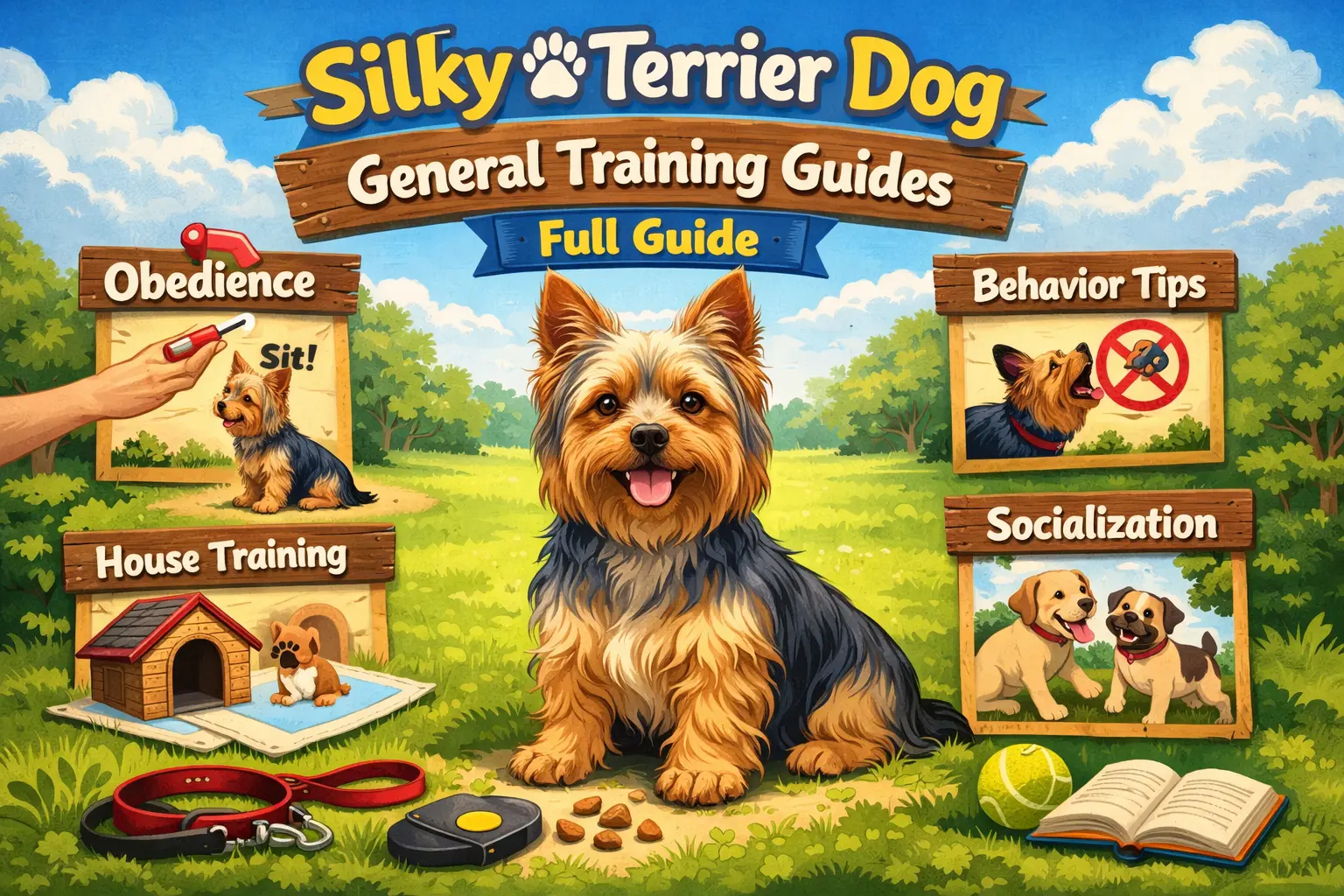
Silky Terrier training methods work best when they are short, consistent, positive, and adapted to the breed’s bold personality. Silky Terriers are small dogs, but they are alert, energetic, curious, and independent. That combination makes them quick learners, but it can also lead to barking, stubbornness, pulling on the leash, nipping, or selective listening if training is not started early.
This guide explains how to train a Silky Terrier using practical obedience steps, behavior fixes, socialization routines, and age-based training tips. The goal is not only to teach commands, but to build a calmer, safer, and more confident dog at home, outdoors, and around other people or pets.
Training your Silky Terrier is important for several reasons:
- Safety: Reliable commands help prevent running off, jumping, leash pulling, and unsafe reactions around people, traffic, or other dogs.
- Behavior control: Silky Terriers can become bossy or overly vocal without clear boundaries, especially in busy homes or apartments.
- Confidence: Positive training helps reduce fear, anxiety, and nervous reactions to new sounds, visitors, dogs, and environments.
- Better daily routine: Obedience, house training, leash manners, and calm behavior make everyday care easier for both the dog and owner.
Because Silky Terriers are intelligent but independent, avoid long, repetitive sessions. Use short training blocks, reward good choices immediately, and keep your commands simple. Treats, praise, toys, and play can all work well, but the reward must be valuable enough to hold your dog’s attention.
Quick Silky Terrier Training Reference
| Breed Trait | Training Impact | Best Owner Strategy |
|---|---|---|
| High energy | May lose focus or become restless | Use 5-10 minute sessions several times daily |
| Independent nature | May ignore repeated commands | Use clear cues, high-value rewards, and consistent rules |
| Alert and vocal | May bark at sounds, visitors, or movement | Teach quiet behavior early and reward calm responses |
| Curious personality | May get distracted outdoors | Start indoors, then slowly add distractions |
| Small size | Bad habits may be ignored by owners | Set the same boundaries you would set for a larger dog |
If you are also tracking your dog’s life stage, use the Silky Terrier Dog Age Calculator to understand whether your dog is in a puppy, adult, or senior stage. Training expectations should match your dog’s age, energy level, and maturity.
Understanding Silky Terrier Behavior Before Training
Before choosing a training plan, it is important to understand how Silky Terriers usually behave. They are confident, alert, playful, and often very attached to their owners. Many training problems happen because the dog is bored, overstimulated, under-socialized, or receiving mixed signals from the household.
Common Silky Terrier behavior traits include:
- Curious and energetic: They enjoy exploring and may become distracted during training, especially outdoors.
- Alert and vocal: They often bark at unfamiliar sounds, visitors, other dogs, or movement outside the home.
- Independent: They may test boundaries or ignore commands if training feels boring or inconsistent.
- People-focused: Many Silky Terriers enjoy attention and respond well to praise, play, and reward-based training.
- Potentially cautious: Without early socialization, some may become nervous around strangers, children, dogs, or new environments.
Silky Terrier Behavior Challenges and Training Fixes
| Behavior Challenge | Why It Happens | Training Fix |
|---|---|---|
| Barking | Alert instinct, boredom, anxiety, or outside triggers | Reward quiet moments, teach a “quiet” cue, and redirect before barking escalates |
| Nipping | Excitement, play, teething, or poor bite control | Stop play briefly, offer a chew toy, then reward gentle interaction |
| Stubbornness | Independent temperament or unclear rules | Use short sessions, consistent cues, and rewards your dog truly values |
| Leash pulling | Excitement, curiosity, or lack of leash structure | Stop when pulling starts and reward loose-leash walking beside you |
| Fear of strangers | Limited socialization or negative past experiences | Use slow introductions, distance, treats, and calm praise |
| Separation stress | Over-attachment or lack of alone-time practice | Practice short absences and reward calm behavior when alone |
The best Silky Terrier training methods work with the breed’s personality instead of fighting against it. Keep the dog mentally engaged, reward calm choices, and avoid harsh corrections that can increase fear, anxiety, or defensive behavior.
Step-by-Step Silky Terrier Training Methods
Training a Silky Terrier should begin with simple commands and daily routines. Start in a quiet room, then slowly move to more distracting places such as the yard, sidewalk, park, or a friend’s home. Each new location should be treated as a new training level.
Keep most sessions around 5-10 minutes. For puppies or highly distracted dogs, even 2-3 focused minutes can be useful. End each session while your dog is still engaged instead of waiting until they become bored or frustrated.
Core Training Rules
- Use the same command words: Choose simple cues like “sit,” “stay,” “come,” “leave it,” and “quiet.”
- Reward immediately: Give the treat, praise, or toy as soon as your Silky Terrier performs the correct behavior.
- Train before problem moments: Practice quiet, recall, and leash walking before your dog is already overexcited.
- Increase difficulty slowly: Add distance, distractions, and duration one step at a time.
- Avoid rewarding bad habits: Do not give attention, food, or freedom when your dog is barking, jumping, or pulling.
Silky Terrier Training Plan by Skill
| Skill | How to Train It | Session Length | Best Reward |
|---|---|---|---|
| Sit | Lure with a treat, reward when the bottom touches the floor, then add the verbal cue | 5 minutes | Treat and praise |
| Come / Recall | Start close indoors, use a happy voice, reward every successful return | 3-5 minutes | High-value treat |
| Stay | Ask for sit, pause for one second, reward, then slowly increase time | 5 minutes | Treat and calm praise |
| Leave It | Cover a treat in your hand, reward when your dog looks away or waits | 5 minutes | Better treat from other hand |
| Loose-Leash Walking | Reward your dog for walking beside you; stop moving when pulling starts | 10 minutes | Treat and forward movement |
| House Training | Use a consistent potty schedule after meals, naps, play, and waking | Daily routine | Treat immediately after potty outside |
| Socialization | Expose your dog slowly to people, dogs, sounds, surfaces, and places | 5-10 minutes | Treats and calm praise |
Use this plan as a daily structure, but adjust it to your dog’s age and confidence. A young puppy may need more house training and socialization, while an adult Silky Terrier may need more leash manners, barking control, and impulse-control work.
Silky Terrier Training by Age
Training should change as your Silky Terrier grows. A puppy needs foundation skills, an adult dog needs consistency and behavior control, and a senior dog may need gentler routines with more patience.
| Life Stage | Main Training Focus | Best Approach |
|---|---|---|
| Puppy | House training, crate comfort, bite control, socialization, basic commands | Very short sessions, frequent rewards, gentle exposure to new experiences |
| Adult | Leash manners, barking control, recall, stay, impulse control | Consistent rules, structured walks, and reward-based correction of bad habits |
| Senior | Maintaining obedience, calm routines, mental stimulation | Low-pressure practice, shorter walks, puzzle games, and patient reinforcement |
To better match training to your dog’s stage of life, check your dog’s age using the Silky Terrier Dog Age Calculator. This helps connect behavior expectations with your dog’s maturity and daily energy needs.
Common Silky Terrier Training Problems and How to Fix Them
Even with consistent training, Silky Terriers can develop behavior problems if their energy, alertness, or need for attention is not managed. The most common issues include barking, jumping, nipping, leash pulling, separation anxiety, and selective listening.
Common issues to watch for:
- Excessive barking: Often triggered by visitors, noises, boredom, windows, other dogs, or lack of mental stimulation.
- Jumping: Usually caused by excitement and reinforced when the dog receives attention.
- Nipping or biting: Common during play, teething, or overstimulation.
- Separation anxiety: Some Silky Terriers become stressed when left alone for too long without gradual practice.
- Stubbornness: Often appears when commands are repeated too often without clear reward or consequence.
- Leash pulling: Usually caused by excitement, curiosity, or being allowed to move forward while pulling.
Problem-Solving Training Table
| Problem | Likely Cause | What to Do | What to Avoid |
|---|---|---|---|
| Barking | Alert behavior, boredom, anxiety, or outside triggers | Teach “quiet,” block visual triggers, reward calm behavior, add mental enrichment | Yelling, which can sound like barking back |
| Jumping | Excitement and attention-seeking | Turn away, wait for four paws on the floor, then reward calm greeting | Petting or talking while the dog is jumping |
| Nipping | Play, teething, or overstimulation | Pause play, redirect to a toy, reward gentle mouth behavior | Rough hand play that encourages biting |
| Separation anxiety | Stress when alone | Practice short absences, use calm departures, reward relaxed alone time | Sudden long absences without preparation |
| Leash pulling | Excitement and forward reward | Stop when pulling starts, reward loose leash, change direction calmly | Letting pulling move the dog toward what they want |
| Selective listening | Distractions or weak reward value | Train in easier settings first, use better rewards, increase difficulty slowly | Repeating commands many times with no follow-through |
How to Stop Silky Terrier Barking
Silky Terrier barking is one of the most common training concerns because the breed is naturally alert. The goal is not to stop all barking, but to teach your dog when to settle and how to respond calmly after noticing a trigger.
- Identify the trigger: Notice whether your dog barks at windows, visitors, noises, other dogs, boredom, or being left alone.
- Reward quiet moments: Mark and reward the moment your dog pauses or looks back at you instead of continuing to bark.
- Teach a “quiet” cue: Say the cue once during a pause, then reward calm silence.
- Reduce rehearsals: Use curtains, distance, white noise, or a calmer room if your dog practices barking all day.
- Add mental enrichment: Short training games, scent work, puzzle feeders, and structured play can reduce boredom barking.
- Do not yell: Loud correction can make an alert dog more excited or more anxious.
If barking is linked to fear, anxiety, or aggression, use slower training and consider professional guidance. Punishment-based methods can make reactive barking worse, especially in sensitive or nervous dogs.
When to Seek Professional Help
Most Silky Terriers improve with consistent reward-based training at home. However, some behavior issues need help from a qualified dog trainer or veterinary behavior professional. Early support is especially important when the behavior affects safety, causes distress, or continues despite consistent training.
Professional Help Red Flags
- Aggression toward people, children, or other pets
- Severe fear, panic, or anxiety
- Uncontrollable barking that does not improve with training
- Severe separation anxiety, destructive behavior, or self-injury when alone
- Biting, guarding, or repeated snapping
Red Flag Checklist
| Sign | Severity | Recommended Action |
|---|---|---|
| Aggression toward people | High | Contact a certified trainer or veterinary behavior professional immediately |
| Aggression toward other dogs | High | Avoid uncontrolled interactions and seek professional guidance |
| Repeated biting or snapping | High | Stop risky situations and get professional help before continuing exposure |
| Uncontrollable barking | Medium | Use structured training; seek help if it does not improve |
| Severe separation anxiety | Medium/High | Use gradual desensitization and professional support |
| Fear of new environments | Low/Medium | Use controlled exposure, distance, and reward-based confidence building |
If your Silky Terrier shows any of these signs, do not wait for the behavior to become a habit. A professional can help identify the cause, build a safer plan, and prevent training mistakes that may increase fear, stress, or aggression.
Silky Terrier Training FAQs
How do you train a Silky Terrier?
Train a Silky Terrier with short, positive, and consistent sessions. Start with simple commands like sit, stay, come, leave it, and quiet. Reward good behavior immediately with treats, praise, or play, then slowly add distractions once your dog understands the command indoors.
Are Silky Terriers hard to train?
Silky Terriers are intelligent and can learn quickly, but they may be independent or stubborn if training is boring or inconsistent. They are not impossible to train, but they need clear rules, short sessions, and rewards that keep their attention.
How do you stop a Silky Terrier from barking?
To stop excessive Silky Terrier barking, first identify the trigger. Common triggers include visitors, outdoor noises, boredom, other dogs, and separation stress. Teach a quiet cue, reward calm behavior, reduce repeated exposure to triggers, and avoid yelling because it can make barking worse.
How long should Silky Terrier training sessions be?
Most Silky Terrier training sessions should last about 5 to 10 minutes. Puppies or distracted dogs may do better with 2 to 3 minute sessions. Several short sessions throughout the day usually work better than one long session.
What age should Silky Terrier training start?
Silky Terrier training should start as early as possible, ideally when the puppy first comes home. Begin with house training, name recognition, gentle handling, crate comfort, and simple commands. Early socialization also helps prevent fear, barking, and nervous behavior later.
Can Silky Terriers be left alone?
Silky Terriers can be left alone for short periods if they are trained gradually. Start with brief absences, reward calm behavior, and avoid making departures emotional. If your dog barks, panics, destroys items, or cannot settle when alone, separation anxiety training may be needed.
What are the best Silky Terrier training methods?
The best Silky Terrier training methods are positive reinforcement, consistent commands, short daily sessions, early socialization, leash practice, house training, and calm behavior rewards. Harsh corrections are not recommended because they can increase fear, anxiety, or defensive behavior.
More Silky Terrier Resources
Use these related Silky Terrier resources for topics that are covered in more detail on their dedicated pages:
- Silky Terrier Dog Breed Guide
- Silky Terrier Age Chart
- Silky Terrier Grooming Guide
- Silky Terrier Nutrition and Feeding Guide
- Silky Terrier Cost of Ownership Guide

Ata Ur Rehman is the founder of Pet Age in Human Years Calculator, an educational platform that provides age conversion charts and lifespan guides for dogs, cats, birds, and other companion animals. His work focuses on helping pet owners understand how animal ages translate into human years using commonly accepted age conversion formulas and published lifespan averages.
The website compiles breed and species lifespan data from kennel clubs, breed organizations, and general animal lifespan studies to present simple and easy-to-understand guides for pet owners worldwide.
This website was created to centralize animal age conversion charts into one easy reference platform for pet owners.
This article is for general education. For symptoms, medication, diet changes, or health concerns, use a qualified veterinarian who can assess your individual pet.