On this page
The Alaskan Klee Kai is a small, intelligent, energetic, and alert dog that often looks like a miniature Husky. Because this breed is quick-thinking, sensitive, and sometimes stubborn, Alaskan Klee Kai training should start early and stay consistent. Without the right structure, these dogs may develop barking, leash pulling, anxiety, or selective listening habits.
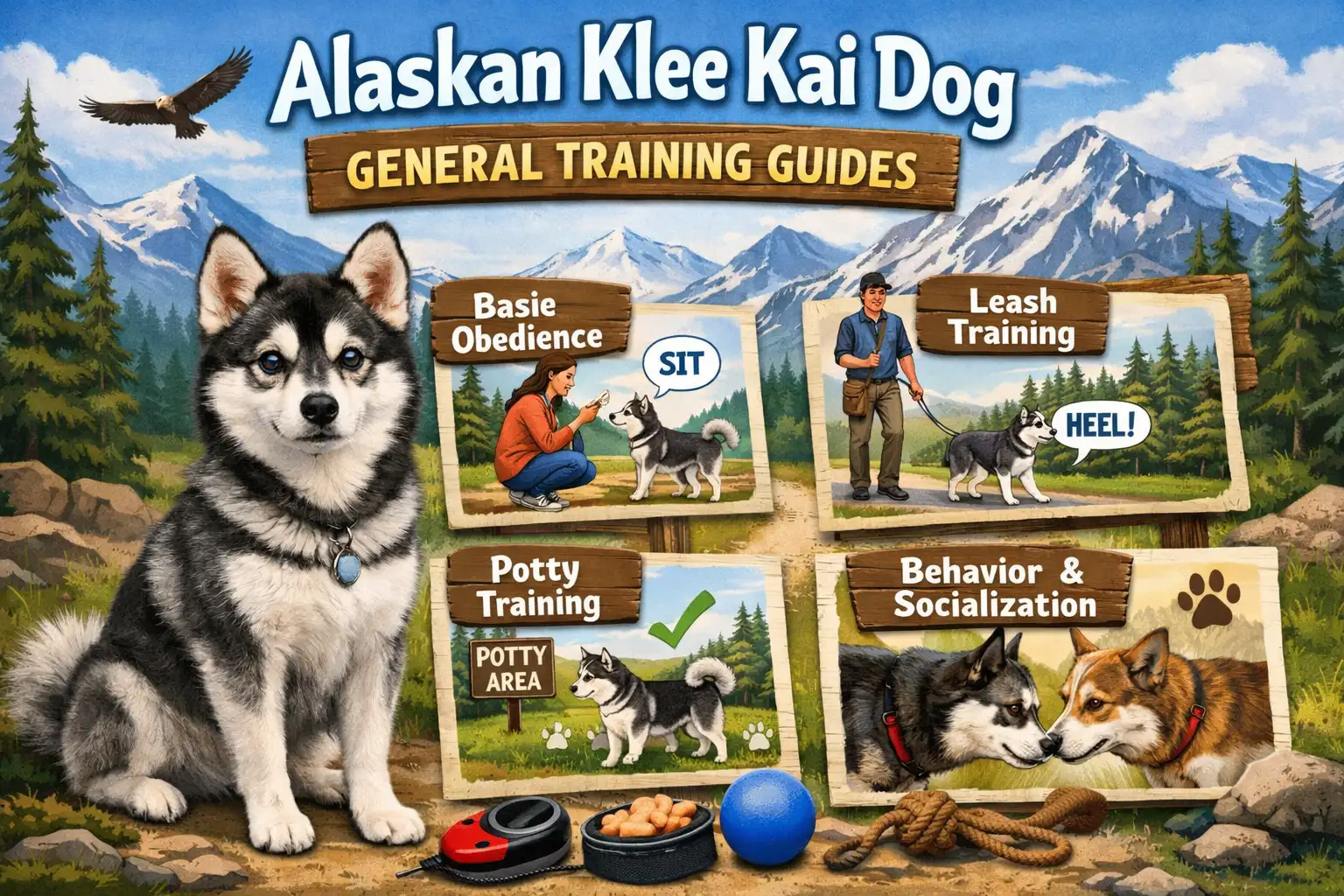
This guide gives practical Alaskan Klee Kai training tips for both puppies and adult dogs. It covers basic obedience, leash manners, recall, socialization, stubborn behavior, separation anxiety, and common behavior problems. The goal is to help your Klee Kai become calmer, more confident, and easier to manage at home and outdoors.
Training your Klee Kai is not only about teaching commands. It also builds trust, improves communication, reduces stress, and helps your dog understand what behavior is expected. With short sessions, positive reinforcement, and breed-specific consistency, most Alaskan Klee Kai dogs can learn quickly and respond well.
Why Alaskan Klee Kai Training Matters
Training an Alaskan Klee Kai matters because this breed is intelligent, alert, and emotionally sensitive. They notice small changes in their environment, react quickly to sounds or movement, and may become vocal or stubborn when they are bored, anxious, or under-stimulated.
A good training routine helps prevent common problems before they become daily habits. For puppies, early structure builds confidence and teaches basic rules. For adults, consistent training helps improve focus, reduce unwanted behaviors, and strengthen obedience.
Good Alaskan Klee Kai training helps your dog:
- Listen to basic commands more reliably
- Walk calmly on a leash
- Respond better to recall cues
- Stay calmer around new people, pets, and places
- Reduce barking, jumping, and stubborn behavior
- Feel more secure when left alone for short periods
Here is a quick table showing the most important training priorities for this breed:
| Training Focus | Why It Matters | Quick Tip |
|---|---|---|
| Barking Control | Alaskan Klee Kai dogs can be alert and vocal | Reward quiet behavior before barking becomes intense |
| Recall Training | This breed may chase movement or ignore commands outside | Start indoors, then practice in fenced or low-distraction areas |
| Leash Walking | Prevents pulling, lunging, and overstimulation on walks | Stop moving when the leash tightens and reward calm walking |
| Socialization | Reduces fear, shyness, and reactivity around new things | Introduce people, dogs, sounds, and places gradually |
| Impulse Control | Helps with jumping, barking, and stubborn responses | Practice sit, stay, wait, and leave it in short sessions |
By focusing on these areas, your Klee Kai can learn faster, feel more secure, and become easier to guide in everyday situations.
Understanding Alaskan Klee Kai Behavior Before Training
Before starting obedience work, it is important to understand the breed’s natural behavior. Alaskan Klee Kai dogs are smart, observant, and independent. They often learn quickly, but they may also test boundaries if training is inconsistent or boring.
This breed usually responds best to calm handling, clear rules, and rewards. Harsh corrections can make a sensitive Klee Kai nervous, avoidant, or less willing to engage. Positive reinforcement is usually the better approach because it builds confidence while still teaching structure.
Here are the key behavior traits to consider during training:
| Trait | How It Shows | Training Consideration |
|---|---|---|
| Intelligent | Learns commands quickly and remembers routines | Use short sessions with variety so training does not feel repetitive |
| Alert | Watches people, sounds, dogs, and movement closely | Reward calm observation before barking or reacting begins |
| Sensitive | May shut down with rough handling or loud correction | Use calm praise, food rewards, and gentle repetition |
| Independent | May ignore commands when distracted or unmotivated | Use high-value rewards and practice in low-distraction areas first |
| Energetic | Needs both physical activity and mental stimulation | Combine walks, play, puzzle toys, and obedience practice |
Alaskan Klee Kai puppy training should focus on socialization, potty routines, crate comfort, name recognition, and simple commands. Adult Klee Kai training often requires more patience because older dogs may already have habits such as barking, pulling, jumping, or refusing recall.
Once you understand these traits, training becomes easier because you can match the method to the dog instead of using generic dog training advice.
Step-by-Step Alaskan Klee Kai Training Methods
The best way to train an Alaskan Klee Kai is to use short, focused sessions with clear rewards. Long sessions can cause boredom or frustration, especially with puppies. A few minutes of good training several times a day is usually better than one long session.
Daily Training Tips
- Keep puppy sessions around 5-10 minutes.
- Keep adult sessions around 10-15 minutes.
- Train 2-3 times per day instead of doing one long session.
- Start in a quiet area before practicing around distractions.
- Reward immediately when your dog performs the correct behavior.
- Use high-value treats for hard skills like recall, leash focus, and ignoring distractions.
- End sessions before your dog becomes bored, frustrated, or overstimulated.
Here is a core Alaskan Klee Kai obedience training checklist:
| Command | How to Teach It | Reward | Expected Outcome |
|---|---|---|---|
| Sit | Hold a treat above the nose and slowly move it back until your dog sits | Treat and praise | Dog sits on cue without jumping |
| Stay | Ask for sit, show your palm, step back briefly, then release | Treat and calm praise | Dog waits until released |
| Come | Call your dog’s name followed by “come” in a happy voice | High-value treat | Dog returns quickly when called |
| Leave It | Show an item, say “leave it,” then reward when your dog looks away | Treat and praise | Dog ignores unsafe or unwanted items |
| Loose-Leash Walk | Stop when the leash tightens and move again when your dog returns to your side | Treat and forward movement | Dog walks with less pulling |
| Quiet | Wait for a pause in barking, say “quiet,” then reward the silence | Treat and calm praise | Dog learns that quiet behavior earns rewards |
Here is a simple daily training schedule for puppies and adults:
| Time of Day | Training Focus | Duration | Best Use |
|---|---|---|---|
| Morning | Name response, sit, recall, potty routine | 5-10 min puppy / 10-15 min adult | Build focus before the day becomes busy |
| Afternoon | Leash walking, leave it, impulse control | 5-10 min puppy / 10-15 min adult | Use after light exercise to reduce excess energy |
| Evening | Socialization, handling, stay, quiet behavior | 5-10 min puppy / 10-15 min adult | Practice calm behavior before rest time |
For best results, keep the training tone positive and predictable. Your Klee Kai should understand which behavior earns rewards and which behavior does not. Consistency from every family member is important because mixed signals can make this smart breed confused or more stubborn.
Common Alaskan Klee Kai Behavior Problems and Training Fixes
Many Alaskan Klee Kai behavior problems come from boredom, anxiety, lack of socialization, or inconsistent rules. Because this breed is alert and intelligent, unwanted behaviors can become habits quickly if they are rewarded by attention, excitement, or escape from a situation.
Common Issues
- Excessive barking – often caused by alertness, boredom, fear, or excitement.
- Leash pulling – usually happens when the dog is overstimulated outside.
- Jumping on people – often caused by greeting excitement or attention-seeking.
- Separation anxiety – may appear as whining, barking, pacing, chewing, or distress when alone.
- Stubborn behavior – can happen when rewards are weak, sessions are too long, or rules are inconsistent.
- Poor recall – often appears outdoors when distractions are stronger than the reward.
Use this troubleshooting table to correct common issues without using harsh punishment:
| Problem | Do | Don’t | When to Seek Help |
|---|---|---|---|
| Excessive Barking | Reward quiet moments, reduce triggers, add mental enrichment | Yell, chase, or reward barking with attention | If barking is linked to panic, aggression, or severe fear |
| Leash Pulling | Stop walking when the leash tightens and reward attention beside you | Yank, drag, or allow pulling to move forward | If your dog lunges, reacts strongly, or becomes uncontrollable outside |
| Jumping | Turn away, wait for calm behavior, then reward four paws on the floor | Push, shout, or reward jumping with attention | If jumping causes injury, nipping, or unsafe greetings |
| Separation Anxiety | Practice short alone-time sessions and build duration gradually | Leave suddenly for long periods or punish anxiety after returning | If your dog panics, destroys items, or cannot settle when alone |
| Stubbornness | Use better rewards, shorter sessions, and clearer commands | Repeat commands many times or force compliance | If your dog refuses basic cues despite consistent training |
| Poor Recall | Practice indoors first, use a long line outside, and reward heavily | Call your dog only to end fun or punish after they come | If your dog bolts, chases, or cannot be safely managed outdoors |
Some issues need professional support. Contact a certified dog trainer, veterinary behavior professional, or veterinarian if your Alaskan Klee Kai shows aggression, severe anxiety, intense fear, destructive separation-related behavior, or unsafe outdoor behavior. Getting help early is better than waiting until the behavior becomes harder to change.
Some issues need professional support. Contact a certified dog trainer, veterinary behavior professional, or veterinarian if your Alaskan Klee Kai shows aggression, severe anxiety, intense fear, destructive separation-related behavior, or unsafe outdoor behavior. Getting help early is better than waiting until the behavior becomes harder to change.
More Alaskan Klee Kai Resources
Use these related Alaskan Klee Kai resources for topics that are covered in more detail on their dedicated pages:
- Alaskan Klee Kai Dog Breed Guide
- Alaskan Klee Kai Dog Age Calculator
- Alaskan Klee Kai Age Chart
- Alaskan Klee Kai Grooming Guide
- Alaskan Klee Kai Nutrition and Feeding Guide
- Alaskan Klee Kai Cost of Ownership Guide

Ata Ur Rehman is the founder of Pet Age in Human Years Calculator, an educational platform that provides age conversion charts and lifespan guides for dogs, cats, birds, and other companion animals. His work focuses on helping pet owners understand how animal ages translate into human years using commonly accepted age conversion formulas and published lifespan averages.
The website compiles breed and species lifespan data from kennel clubs, breed organizations, and general animal lifespan studies to present simple and easy-to-understand guides for pet owners worldwide.
This website was created to centralize animal age conversion charts into one easy reference platform for pet owners.
This article is for general education. For symptoms, medication, diet changes, or health concerns, use a qualified veterinarian who can assess your individual pet.