On this page
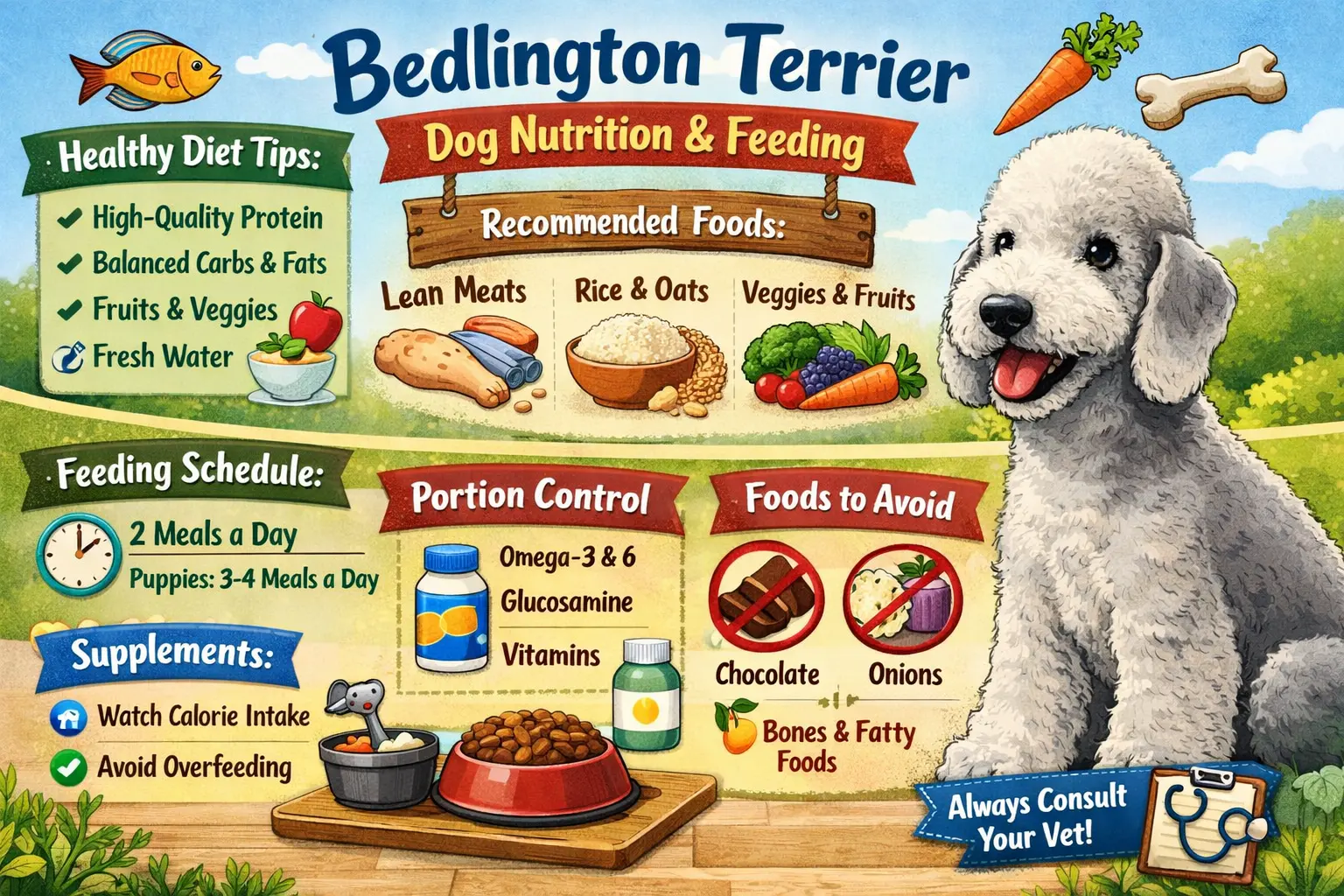
Feeding a Bedlington Terrier correctly is not just about choosing dog food. This breed needs a balanced diet that supports steady energy, lean muscle, healthy skin and coat, and long-term weight control. This Bedlington Terrier feeding guide explains how much to feed a Bedlington Terrier, how often to feed them, what foods work best, and how nutrition needs change from puppyhood to adulthood and senior age.
Because feeding needs change with age, weight, activity level, and health condition, use the guidance below as a starting point. For age-based planning, you can also use our Bedlington Terrier dog age calculator to understand your dog’s current life stage before adjusting their feeding routine.
Quick answer: Most adult Bedlington Terriers eat about 1 to 1.5 cups of food per day, split into two meals. Puppies usually need smaller, more frequent meals, while senior dogs may need fewer calories depending on activity level and body condition.
Bedlington Terrier Feeding Guide: Daily Food, Calories, and Meals
The right amount of food for a Bedlington Terrier depends on their weight, age, metabolism, activity level, and whether they are eating dry kibble, wet food, fresh food, raw food, or a mixed diet. Feeding charts are useful, but they should not replace regular weight checks and body condition monitoring.
General feeding rule: start with the food label recommendation, adjust for your dog’s body condition, and avoid free-feeding if your Bedlington Terrier gains weight easily.
Bedlington Terrier Feeding Chart by Age
| Life Stage | Typical Age | Meals Per Day | Estimated Daily Food | Feeding Notes |
|---|---|---|---|---|
| Puppy | 2-12 months | 3-4 meals | About 1 to 1.5 cups | Use puppy-formulated food and divide meals evenly throughout the day. |
| Adult | 1-7 years | 2 meals | About 1 to 1.5 cups | Adjust portions based on activity level and body condition. |
| Senior | 7+ years | 2 meals | About 0.75 to 1.25 cups | Monitor weight closely and reduce calories if activity decreases. |
These amounts are estimates. Food calorie density varies widely, so one cup of one food may contain far more calories than one cup of another. Always check the calorie information on the food packaging.
Bedlington Terrier Calories Per Day by Weight
| Weight | Less Active Dog | Moderately Active Dog | Very Active Dog |
|---|---|---|---|
| 10 lbs | 200-250 calories | 250-300 calories | 300-350 calories |
| 12 lbs | 240-300 calories | 300-360 calories | 360-420 calories |
| 14 lbs | 280-350 calories | 350-420 calories | 420-490 calories |
| 16 lbs | 320-400 calories | 400-480 calories | 480-560 calories |
| 18 lbs | 360-450 calories | 450-540 calories | 540-630 calories |
If your Bedlington Terrier is gaining weight, reduce treats first before cutting balanced meals. If your dog is losing weight unexpectedly, has poor appetite, vomiting, diarrhea, or low energy, speak with a veterinarian before changing the diet.
How Much Should a Bedlington Terrier Eat?
Most Bedlington Terriers do well with measured meals instead of constant access to food. Measured feeding helps prevent obesity, makes appetite changes easier to notice, and gives you better control over daily calories.
Bedlington Terrier Puppy Feeding
A Bedlington Terrier puppy needs more frequent meals because they are growing quickly and have smaller stomach capacity. Feed a complete puppy food designed for growth, then split the daily amount into three to four meals.
- 2-4 months: 4 small meals per day
- 4-6 months: 3 meals per day
- 6-12 months: 2-3 meals per day depending on appetite and growth
- After 12 months: gradually transition to adult feeding if growth is complete
Do not overfeed a puppy to make them grow faster. Steady growth is healthier than rapid weight gain.
Adult Bedlington Terrier Feeding
An adult Bedlington Terrier usually needs two meals per day. Active adults may need slightly more food, while low-activity dogs may need less. The best sign that the feeding amount is correct is a stable, healthy body condition: you should be able to feel the ribs without seeing excessive rib definition, and the waist should be visible from above.
For most adult Bedlington Terriers, begin with 1 to 1.5 cups per day, divided into morning and evening meals. Then adjust every two to three weeks based on weight, stool quality, energy, and body condition.
Senior Bedlington Terrier Feeding
Senior Bedlington Terriers often need fewer calories because they may become less active. Some seniors also need food that is easier to digest, lower in calories, or supportive of joint health. However, senior dogs should still receive enough protein to help maintain lean muscle.
If your senior Bedlington Terrier is gaining weight, reduce calorie-dense treats and adjust meal portions slowly. If they are losing muscle or becoming thin, ask your vet whether a senior diet or medical evaluation is needed.
Core Nutrition Needs for Bedlington Terriers
A good Bedlington Terrier diet should provide complete and balanced nutrition. The main nutrients to focus on are protein, fat, carbohydrates, vitamins, minerals, and water.
Protein
Protein supports muscle maintenance, growth, immune function, and tissue repair. Good protein sources include chicken, turkey, fish, lamb, egg, and properly formulated commercial dog foods. Puppies and active dogs usually need more protein than less active adults.
Fat
Fat provides concentrated energy and supports skin and coat health. Healthy fats may come from fish oil, poultry fat, and other balanced fat sources in complete dog food. Too much fat can lead to weight gain or digestive upset, so portion control matters.
Carbohydrates and Fiber
Carbohydrates are not always the main focus of dog nutrition, but digestible sources such as rice, oats, sweet potato, and certain grains can provide energy and fiber. Fiber can help digestion and may support weight control when used properly.
Vitamins and Minerals
Vitamins and minerals support bones, teeth, immune health, blood function, and metabolism. Calcium and phosphorus are important for bone health, while trace minerals must be balanced carefully. Bedlington Terriers require special attention around copper intake because the breed can be associated with copper storage problems.
Water
Fresh water should be available at all times. Many dogs drink about 1 ounce of water per pound of body weight per day, but activity, weather, diet type, and health can change water needs. Wet food and fresh food may provide more moisture than dry kibble.
Best Food for a Bedlington Terrier
The best food for a Bedlington Terrier is a complete and balanced diet that matches their age, weight, activity level, and health needs. Avoid choosing food based only on marketing claims. Instead, look for appropriate life-stage labeling, clear feeding instructions, digestible ingredients, and a calorie level that helps your dog maintain a healthy weight.
Food Type Comparison
| Food Type | Best For | Pros | Watch-Outs |
|---|---|---|---|
| Dry kibble | Most healthy adults | Convenient, easy to measure, usually affordable | Calorie density varies; some dogs need added moisture |
| Wet food | Picky eaters or dogs needing more moisture | Higher moisture, often more appealing | Can be more expensive and easier to overfeed |
| Fresh food | Owners wanting whole-food style meals | Often palatable and easy to digest | Must be complete and balanced; storage matters |
| Raw food | Experienced owners with vet guidance | Can be customized | Food safety and nutrient balance risks |
| Homemade food | Dogs with specific needs under guidance | Ingredient control | High risk of nutrient imbalance without a proper recipe |
| Veterinary diet | Medical conditions | Designed for specific health needs | Should be used under veterinary direction |
For most Bedlington Terriers, a high-quality dry or wet food that is complete and balanced is the safest starting point. If you want to feed homemade, raw, or a restricted diet, work with a veterinarian or canine nutrition professional to avoid deficiencies.
Low-Copper Diet Considerations for Bedlington Terriers
Bedlington Terriers are known for a breed-specific risk of copper storage disease, a condition where excess copper can build up in the liver. This does not mean every Bedlington Terrier needs a low-copper diet, but it does mean copper intake should not be ignored.
If your dog has been diagnosed with copper storage disease, liver disease, or abnormal liver values, do not create a low-copper diet on your own. A veterinarian may recommend bloodwork, liver testing, a prescription diet, medication, or specific copper restrictions depending on your dog’s condition.
Important: Avoid giving high-copper foods or supplements unless your veterinarian approves them. Organ meats, some seafood, and unnecessary mineral supplements may be unsuitable for dogs with copper-related liver concerns.
Safe and Unsafe Foods for Bedlington Terriers
Some human foods can be safe in small amounts, but treats should not replace balanced meals. Keep extras limited so your Bedlington Terrier does not gain weight or develop digestive problems.
| Generally Safe in Small Amounts | Avoid Completely |
|---|---|
| Plain cooked chicken or turkey | Chocolate |
| Plain cooked rice | Grapes and raisins |
| Carrots | Onions and garlic |
| Blueberries | Alcohol |
| Apple slices without seeds | Xylitol |
| Plain sweet potato | Cooked bones |
Introduce new foods slowly and in small amounts. If your Bedlington Terrier develops vomiting, diarrhea, itching, ear problems, or repeated stomach upset, stop the new food and speak with your vet.
Common Bedlington Terrier Feeding Mistakes
- Guessing portions: Measuring food is more accurate than filling the bowl by eye.
- Ignoring calories in treats: Treats can quietly add too many calories, especially for a small-to-medium breed.
- Changing food too quickly: Sudden diet changes can cause vomiting, gas, or diarrhea. Transition gradually over 7-10 days.
- Using adult food for young puppies: Puppies need growth-appropriate nutrition.
- Overlooking copper concerns: Bedlington Terriers with liver or copper issues may need veterinary diet management.
- Not adjusting with age: A senior Bedlington Terrier may not need the same calories as a young active adult.
Bedlington Terrier Feeding FAQs
How much should I feed a Bedlington Terrier per day?
Most adult Bedlington Terriers need about 1 to 1.5 cups of food per day, split into two meals. The exact amount depends on weight, activity level, age, calorie density, and body condition.
How often should I feed a Bedlington Terrier?
Puppies usually need three to four meals per day. Adult and senior Bedlington Terriers usually do well with two meals per day.
What is the best food for a Bedlington Terrier?
The best food is a complete and balanced diet appropriate for your dog’s life stage, weight, activity level, and health needs. Dogs with liver or copper-related concerns may need veterinary diet guidance.
Can Bedlington Terriers eat chicken?
Plain cooked chicken can be safe for many Bedlington Terriers in small amounts, as long as it is boneless, unseasoned, and not used as the entire diet.
Can Bedlington Terriers eat rice?
Plain cooked rice is generally safe for many dogs in small amounts and may be used temporarily during mild digestive upset if your vet recommends it.
Do Bedlington Terriers need a low-copper diet?
Not every Bedlington Terrier needs a low-copper diet. However, the breed can be associated with copper storage disease, so dogs with liver concerns should be evaluated by a veterinarian before diet changes are made.
How do I know if I am overfeeding my Bedlington Terrier?
Signs of overfeeding include weight gain, loss of waist definition, difficulty feeling the ribs, low energy, and leftover food after meals. Reduce treats first, then adjust meal portions if needed.
When should I switch my Bedlington Terrier from puppy food to adult food?
Many Bedlington Terriers can transition to adult food around 12 months of age, but growth rate and body condition matter. Make the transition gradually over 7-10 days.
For more detail, see our Bedlington Terrier age chart.
Final Feeding Tips for Bedlington Terriers
A strong Bedlington Terrier feeding plan should be simple, measured, and adjusted over time. Choose a complete and balanced food, feed measured portions, monitor body condition, limit treats, and adjust meals as your dog moves from puppy to adult to senior life stage.
For better life-stage planning, check your dog’s age using the Bedlington Terrier dog age calculator, then use this feeding guide to match their food portions, schedule, and nutrition needs to their current stage of life.

Ata Ur Rehman is the founder of Pet Age in Human Years Calculator, an educational platform that provides age conversion charts and lifespan guides for dogs, cats, birds, and other companion animals. His work focuses on helping pet owners understand how animal ages translate into human years using commonly accepted age conversion formulas and published lifespan averages.
The website compiles breed and species lifespan data from kennel clubs, breed organizations, and general animal lifespan studies to present simple and easy-to-understand guides for pet owners worldwide.
This website was created to centralize animal age conversion charts into one easy reference platform for pet owners.
This article is for general education. For symptoms, medication, diet changes, or health concerns, use a qualified veterinarian who can assess your individual pet.