On this page
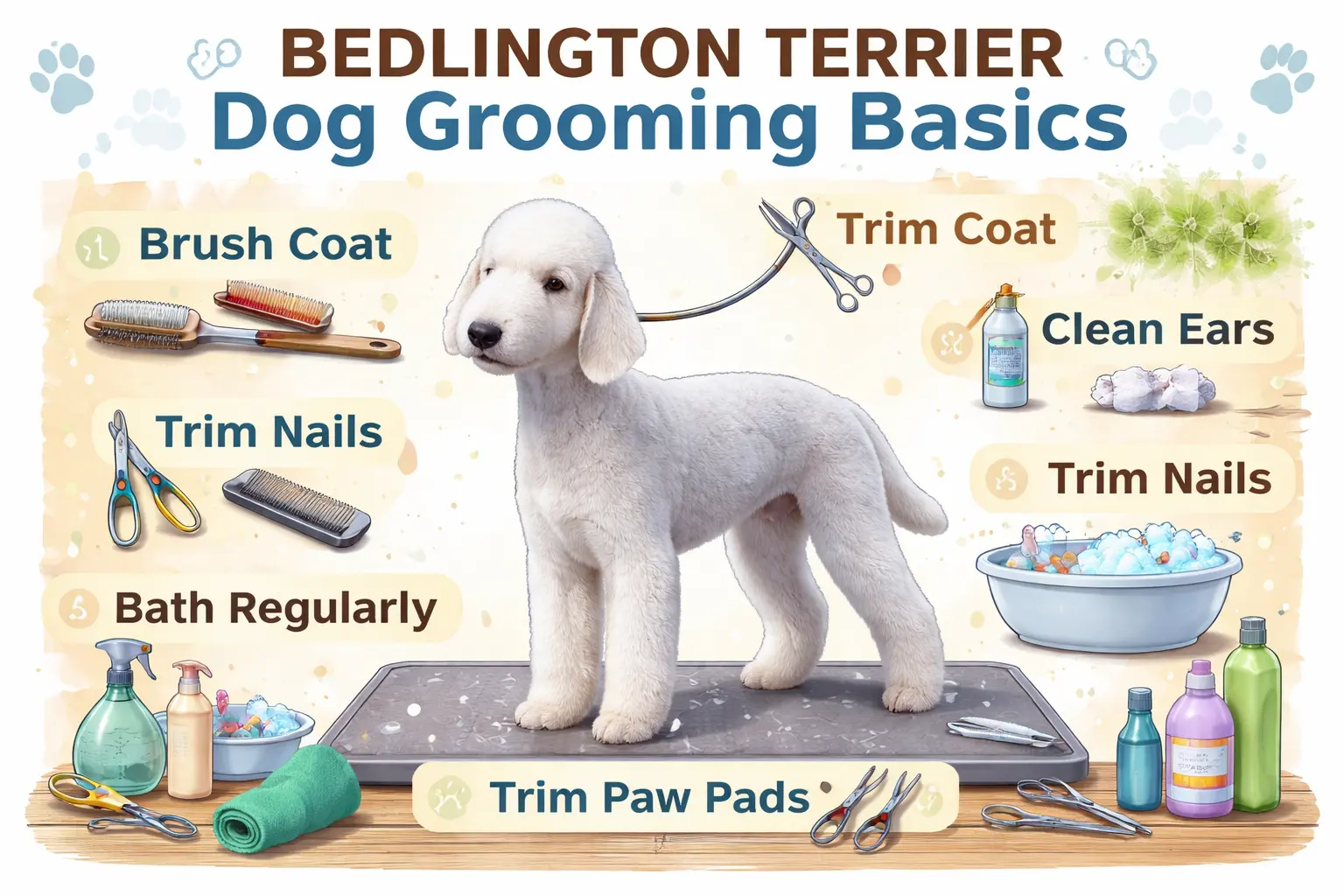
Grooming a Bedlington Terrier is not just about keeping the coat neat. This breed has a soft, curly, woolly coat that can mat quickly without a regular routine. A proper Bedlington Terrier grooming schedule helps protect the coat, reduce tangles, keep the skin healthy, and maintain the breed’s signature lamb-like appearance.
In this Bedlington Terrier grooming guide, you’ll learn how often to brush, bathe, trim, and maintain your dog’s coat at home, which grooming tools are most useful, when professional grooming is needed, and how to avoid the most common coat-care mistakes.
If you also want to understand your dog’s current life stage before adjusting grooming, care, or activity routines, use our Bedlington Terrier Dog Age Calculator.
Why Grooming Matters for Bedlington Terriers
Bedlington Terriers need consistent grooming because their coat is different from many other terrier breeds. Instead of a short, wiry coat, they have a curly and soft coat that can trap dirt, moisture, and loose hair. If the coat is ignored, mats can form around the ears, legs, chest, belly, and underarms.
Regular grooming helps prevent painful tangles, supports healthier skin, reduces odor, and makes it easier to spot irritation, bumps, parasites, or skin changes early. It also helps your Bedlington Terrier stay more comfortable during daily activity, especially if the coat grows thick or uneven.
Grooming also gives you a chance to check your dog’s ears, nails, teeth, paws, and coat condition. This is especially important as your dog gets older, because senior dogs may need gentler brushing, shorter grooming sessions, and closer skin checks.
Bedlington Terrier Coat Care: Unique Features and Grooming Needs
The Bedlington Terrier has a distinctive coat that is often described as soft, curly, and wool-like. This coat gives the breed its recognizable appearance, but it also requires regular care. Unlike heavy-shedding breeds, Bedlington Terriers usually shed very little, but their coat can still mat if it is not brushed and trimmed correctly.
Understanding the Bedlington Terrier Coat
The Bedlington Terrier coat is made up of soft and curly hair that can feel dense as it grows. Because the coat does not shed heavily, loose hair can remain trapped inside the curls. This is why brushing is still necessary even though the breed is often considered low-shedding.
The most important grooming goal is to prevent mats before they become tight. Small tangles are usually easy to remove with brushing and combing, but severe mats may pull on the skin and require professional help.
How Often Should You Groom a Bedlington Terrier?
A Bedlington Terrier should be brushed several times per week and professionally trimmed on a regular schedule. The exact routine depends on coat length, activity level, weather, and whether you keep the coat in a shorter pet trim or a more traditional Bedlington style.
| Grooming Task | Recommended Frequency | Why It Matters |
|---|---|---|
| Brushing | Every 2–3 days | Prevents tangles, loose hair buildup, and early matting |
| Combing | 2–3 times per week | Finds hidden knots close to the skin |
| Bathing | Every 4–8 weeks | Keeps the coat clean without drying the skin |
| Trimming | Every 6–8 weeks | Maintains coat shape and prevents overgrowth |
| Professional grooming | Every 6–8 weeks | Helps maintain the Bedlington Terrier’s signature coat style |
| Nail trimming | Every 2–4 weeks | Prevents discomfort and poor paw posture |
| Ear checks | Weekly | Helps catch wax buildup, odor, or irritation early |
If your Bedlington Terrier spends a lot of time outdoors, gets wet often, or has a longer coat, brushing may be needed more frequently. Shorter pet trims are usually easier to maintain at home.
How the Coat Affects Shedding, Matting, and Odor
Bedlington Terriers are low-shedding dogs, but low shedding does not mean low maintenance. Their curly coat can hold loose hair, dust, moisture, and debris. Without regular brushing, these trapped hairs can turn into tangles and mats.
Odor can also become an issue if the coat stays damp after bathing, rain, or outdoor play. Always dry the coat properly after it gets wet, especially around the ears, chest, belly, and legs.
Essential Grooming Tools for Bedlington Terriers
The right Bedlington Terrier grooming tools make coat care easier and safer. Because this breed has a soft, curly coat, you need tools that can separate curls, remove tangles gently, and check for mats near the skin without damaging the coat.
Must-Have Grooming Tools for Home Care
- Slicker brush: Useful for loosening tangles and smoothing curly areas of the coat.
- Metal comb: Helps detect hidden mats close to the skin after brushing.
- Pin brush: Good for light maintenance brushing and keeping the coat neat between deeper grooming sessions.
- Grooming scissors: Helpful for careful trimming around the face, feet, and small uneven areas.
- Dog clippers: Useful for maintaining a shorter pet trim or keeping the coat manageable between professional appointments.
- Dog-safe shampoo: Keeps the coat clean without irritating the skin.
- Towel and low-heat dryer: Helps dry the coat fully after bathing and reduces moisture-related odor.
Recommended Grooming Tools for a Bedlington Terrier
| Tool | Best Use | How Often to Use |
|---|---|---|
| Slicker brush | Removing tangles and light mats | Every 2–3 days |
| Metal comb | Checking for knots after brushing | 2–3 times per week |
| Pin brush | Light coat maintenance | As needed |
| Scissors | Small trims around feet, ears, and face | Every few weeks or as needed |
| Clippers | Maintaining a shorter pet trim | Every 6–8 weeks |
| Dog shampoo | Bathing and odor control | Every 4–8 weeks |
Avoid using harsh brushes, dull scissors, or human grooming products. The goal is to keep the coat clean and controlled without irritating the skin or cutting too much hair at once.
Step-by-Step Bedlington Terrier Grooming Routine
A simple routine is the best way to keep a Bedlington Terrier’s coat healthy. You do not need to do every grooming task every day, but brushing, combing, checking problem areas, and keeping the coat dry should become part of regular care.
Step 1: Brush the Coat Before Bathing
Always brush your Bedlington Terrier before a bath. Water can tighten existing mats, making them harder to remove. Start with a slicker brush and gently work through the coat in sections. Pay close attention to the ears, chest, belly, legs, armpits, and behind the elbows.
After brushing, use a metal comb to check whether the coat is fully detangled. If the comb catches, gently work through that area again before moving on.
Step 2: Bathe With a Dog-Safe Shampoo
Bedlington Terriers usually do not need frequent baths unless they get dirty or develop odor. When bathing, use lukewarm water and a gentle dog-safe shampoo. Massage the shampoo into the coat carefully, but do not scrub aggressively because this can create tangles.
- Wet the coat fully: Make sure the water reaches the coat without soaking the ears.
- Apply dog shampoo: Use a gentle product made for dogs, not human shampoo.
- Rinse completely: Shampoo residue can irritate the skin and make the coat feel sticky.
- Dry thoroughly: Towel dry first, then use a low-heat or cool dryer setting if your dog tolerates it.
Step 3: Dry and Comb the Coat
Drying is especially important for Bedlington Terriers because moisture can stay trapped in the curly coat. After bathing, gently towel dry the coat and then comb through it once it is mostly dry. A low-heat dryer can help prevent damp areas from causing odor or skin irritation.
Step 4: Trim Overgrown Areas Carefully
Small maintenance trims can help keep the coat neat between grooming appointments. Focus on areas that grow unevenly, such as the feet, ears, face, and sanitary areas. If you are not confident using scissors or clippers, leave detailed trimming to a professional groomer.
Bedlington Terriers have a distinctive shape, so over-trimming can quickly change the look of the coat. Trim conservatively and remove only small amounts at a time.
Step 5: Check Nails, Ears, Teeth, and Paws
Coat care is only one part of Bedlington Terrier grooming. During each grooming session, check the nails, ears, teeth, and paws so small issues do not become bigger problems.
- Nails: Trim every 2–4 weeks, or when you hear nails clicking on hard floors.
- Ears: Check weekly for wax, odor, redness, or irritation.
- Teeth: Brush with dog-safe toothpaste several times per week when possible.
- Paws: Check for debris, cracked pads, or hair growing between the toes.
How to Prevent Mats in a Bedlington Terrier Coat
Matting is one of the biggest grooming problems for Bedlington Terriers. Mats often form in areas where the coat rubs together or stays damp. Common trouble spots include behind the ears, under the collar, under the legs, around the chest, and near the tail.
| Coat Condition | Best Action | Tool to Use |
|---|---|---|
| No tangles | Brush every 2–3 days | Pin brush or slicker brush |
| Small tangles | Work through gently before bathing | Slicker brush and metal comb |
| Light mats | Separate slowly and avoid pulling | Comb and fingers |
| Tight mats | Do not force brushing | Professional groomer recommended |
| Recurring mats | Use a shorter pet trim | Clippers or professional grooming |
Never pull hard on a mat. Tight mats can be painful because they tug on the skin. If a mat is close to the skin, difficult to separate, or located near the ears, face, or sensitive areas, professional grooming is safer.
When to Visit a Professional Groomer
Many basic grooming tasks can be done at home, but Bedlington Terriers often benefit from regular professional grooming. Their coat shape is more specialized than many breeds, and a groomer can help maintain the correct outline while keeping the coat manageable.
- Severe matting: A professional groomer can remove tight mats more safely than forcing them out at home.
- Breed-specific trimming: The Bedlington Terrier’s signature look requires careful shaping around the head, ears, body, and legs.
- Uneven coat growth: Regular trims help prevent the coat from becoming bulky or hard to manage.
- Skin concerns: If you notice redness, sores, flakes, odor, or irritation, professional advice may be needed.
- Senior dog comfort: Older Bedlington Terriers may need shorter sessions, gentler handling, and simpler coat styles.
For a complete age-based care view, check your dog’s current stage with the Bedlington Terrier Dog Age Calculator.
Common Bedlington Terrier Grooming Mistakes to Avoid
Most grooming problems happen when the coat is brushed too rarely, dried poorly, or trimmed without a plan. Avoid these common Bedlington Terrier grooming mistakes to keep your dog comfortable and looking neat.
| Mistake | Why It Is a Problem | Better Approach |
|---|---|---|
| Brushing only the surface | Hidden mats can form close to the skin | Use a comb after brushing to check deeper layers |
| Bathing before detangling | Water can tighten existing mats | Brush and comb before every bath |
| Leaving the coat damp | Moisture can cause odor and irritation | Dry the coat fully after bathing or rain |
| Over-bathing | Can dry the skin and coat | Bathe every 4–8 weeks or when needed |
| Using human shampoo | May irritate dog skin | Use dog-safe shampoo only |
| Cutting too much at once | Can ruin coat shape or risk injury | Trim small amounts or use a groomer |
| Ignoring ears and nails | Can lead to discomfort or hygiene issues | Check ears weekly and trim nails regularly |
For more detail, see our Bedlington Terrier nutrition and feeding guide.
Bedlington Terrier Grooming FAQs
How often should a Bedlington Terrier be groomed?
A Bedlington Terrier should usually be brushed every 2–3 days and professionally groomed every 6–8 weeks. Dogs with longer coats or frequent outdoor activity may need more brushing.
How do I stop my Bedlington Terrier from matting?
Brush the coat several times per week, use a comb to check for hidden tangles, dry the coat fully after it gets wet, and keep high-friction areas like the ears, chest, belly, and underarms well maintained.
Can I groom a Bedlington Terrier at home?
Yes, you can handle brushing, combing, bathing, nail checks, and small maintenance trims at home. However, detailed coat shaping is usually best handled by a professional groomer because the Bedlington Terrier has a specific breed style.
Do Bedlington Terriers shed a lot?
No, Bedlington Terriers are generally low-shedding dogs. However, their curly coat can trap loose hair, so regular brushing is still important to prevent mats.
How often should I bathe a Bedlington Terrier?
Most Bedlington Terriers can be bathed every 4–8 weeks, depending on coat condition, odor, and activity level. Avoid bathing too often unless needed because frequent washing can dry the skin.
Why does my Bedlington Terrier smell after grooming?
Odor can happen if shampoo is not rinsed fully, the coat stays damp, or dirt and moisture remain trapped in the curls. Rinse thoroughly, dry completely, and brush regularly to reduce odor.

Ata Ur Rehman is the founder of Pet Age in Human Years Calculator, an educational platform that provides age conversion charts and lifespan guides for dogs, cats, birds, and other companion animals. His work focuses on helping pet owners understand how animal ages translate into human years using commonly accepted age conversion formulas and published lifespan averages.
The website compiles breed and species lifespan data from kennel clubs, breed organizations, and general animal lifespan studies to present simple and easy-to-understand guides for pet owners worldwide.
This website was created to centralize animal age conversion charts into one easy reference platform for pet owners.
This article is for general education. For symptoms, medication, diet changes, or health concerns, use a qualified veterinarian who can assess your individual pet.