On this page
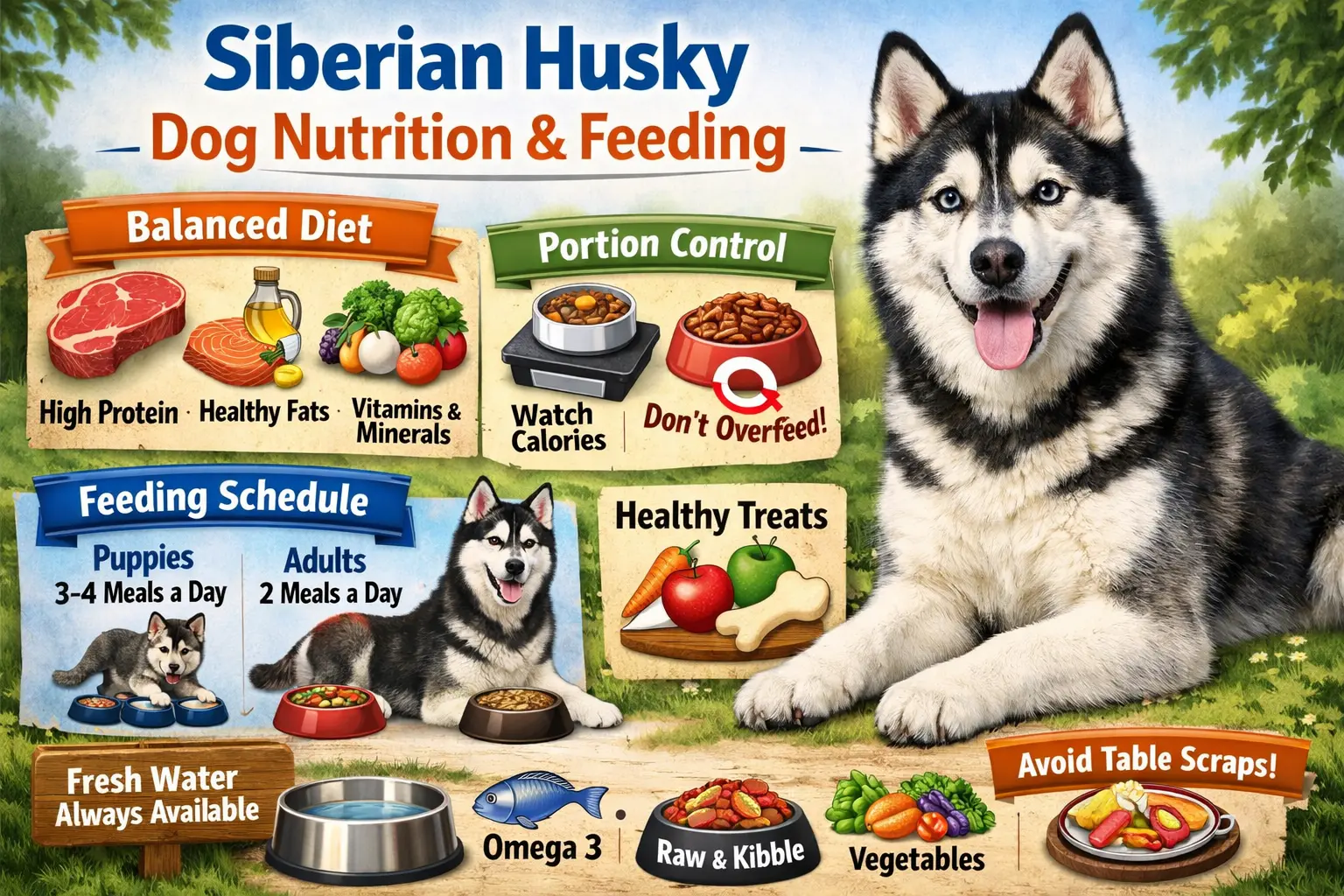
Siberian Huskies are not typical dogs when it comes to food. Many owners are surprised by how little some Huskies eat, how easily others gain weight, and how much diet affects their coat, energy, digestion, and body condition. This Siberian Husky feeding guide explains how much to feed a Husky, what food works best, how often to feed them, and how to adjust portions based on age, weight, and activity level.
Siberian Huskies were developed to work efficiently in harsh conditions, pulling sleds over long distances while using energy carefully. That background still matters today. Compared with many dogs of similar size, Huskies often have an efficient metabolism, which means they may need fewer calories than expected, especially if they are not working or exercising heavily.
The goal is not to feed the largest amount possible. The goal is to match your Husky’s calories, protein, fat, and meal routine to the dog in front of you: age, weight, activity level, appetite, and body condition.
In this guide, you’ll learn:
- How much to feed a Siberian Husky per day
- Daily calorie needs by weight and activity level
- How many meals Huskies should eat by age
- Best food types for Siberian Huskies
- Why some Huskies eat less than expected
- Common feeding mistakes to avoid
How Much to Feed a Siberian Husky
Most adult Siberian Huskies need about 800 to 1,600 calories per day, depending on weight, activity level, metabolism, and body condition. Working or highly active Huskies may need more, while less active indoor Huskies may need less.
The safest way to feed a Husky is to start with a calorie range, divide it into meals, and then adjust based on body shape, energy, and stool quality.
Daily calorie needs for a Siberian Husky
| Husky Weight | Low Activity | Moderate Activity | High Activity / Working |
|---|---|---|---|
| 35 lb (16 kg) | 800–900 kcal | 1,000–1,100 kcal | 1,300–1,400 kcal |
| 45 lb (20 kg) | 900–1,050 kcal | 1,100–1,300 kcal | 1,500–1,700 kcal |
| 55 lb (25 kg) | 1,050–1,200 kcal | 1,300–1,500 kcal | 1,700–2,000 kcal |
| 60 lb (27 kg) | 1,100–1,300 kcal | 1,400–1,600 kcal | 1,900–2,200 kcal |
These are daily totals, not calories per meal. If your Husky eats two meals per day, divide the daily amount into two portions.
Want to understand your Husky’s age stage before adjusting food? Use the Siberian Husky Dog Age Calculator to check your dog’s life stage and support better feeding decisions.
Siberian Husky Feeding Chart by Age
A Husky’s feeding schedule changes as they grow. Puppies need more frequent meals, adults usually do best with two meals, and seniors may need smaller portions with easier-to-digest food.
| Life Stage | Meals Per Day | Feeding Guidance |
|---|---|---|
| Puppy, 2–6 months | 3–4 meals | Small meals with enough calories for growth |
| Puppy, 6–12 months | 2–3 meals | Gradually reduce meal frequency as growth slows |
| Adult Husky | 2 meals | Maintain steady portions based on activity and body condition |
| Senior Husky | 2 smaller meals | Slightly lower calories if activity decreases |
Puppies need more calories per pound than adult dogs, but adult Huskies usually eat more total food because they are larger.
How Many Cups of Food Should a Siberian Husky Eat?
The number of cups depends on the calorie density of the food. Dry dog food can range from about 300 to 450 calories per cup, so two foods can have very different portion sizes.
Example:
- If your adult Husky needs 1,200 calories per day
- And the food contains 400 calories per cup
- Your Husky needs about 3 cups per day, split into two meals
This is why feeding by calories is more accurate than feeding by cup size alone.
Body Condition: The Best Way to Adjust Food
A healthy Siberian Husky should look lean and athletic, not round. Use body condition to decide whether to increase, reduce, or maintain food portions.
| Body Condition | What You See | What to Do |
|---|---|---|
| Too thin | Ribs and hips very visible | Increase food slightly |
| Ideal | Ribs easy to feel, waist visible | Keep feeding the same |
| Overweight | No waist, ribs hard to feel | Reduce food and treats |
Why Some Siberian Huskies Eat Less Than Expected
Many Huskies naturally self-regulate their food intake. They may skip meals on low-activity days, eat less in hot weather, or eat more during colder months and periods of heavy exercise.
This can be normal if your Husky maintains a healthy weight, has good energy, and produces normal stool. It becomes a concern if your dog loses weight quickly, seems weak, vomits repeatedly, has diarrhea, or refuses food for more than 24–48 hours.
Best Food for Siberian Huskies
The best food for a Siberian Husky is not one specific brand. It is a complete, balanced food that supports lean weight, steady energy, healthy digestion, and coat quality.
Most Siberian Huskies do well on high-quality kibble, wet food, fresh food, or a carefully planned mix. The right choice depends on your dog’s stomach, activity level, age, and budget.
| Food Type | Pros | Cons | Best For |
|---|---|---|---|
| Dry food / kibble | Convenient, affordable, easy to measure | Quality varies by formula | Most Husky owners |
| Wet food | More moisture, often more appealing | More expensive, less convenient | Picky eaters |
| Fresh food | Often easy to digest | Costly and needs storage | Sensitive stomachs |
| Raw diet | High control over ingredients | Risky if unbalanced or unsafe | Experienced owners only |
| Homemade food | Full ingredient control | Easy to create nutrient gaps | Vet-guided diets only |
Ideal Nutrients for Siberian Huskies
Siberian Huskies need balanced nutrition, not extreme protein or fat levels. Very high-calorie foods may be useful for working Huskies, but they can cause weight gain in less active dogs.
| Nutrient | Good Range for Most Huskies | Why It Matters |
|---|---|---|
| Protein | 22–30% | Supports muscle, energy, and coat health |
| Fat | 12–18% | Supports energy, skin, and coat condition |
| Fiber | 3–6% | Supports digestion and stool quality |
Grain-Free vs Grain-Inclusive Food for Huskies
Grain-free food is not automatically better for Siberian Huskies. Many Huskies digest rice, oats, barley, and other grains without issues. Grain-free food should usually be considered only when there is a confirmed sensitivity or a veterinarian recommends it.
For most Huskies, a well-balanced grain-inclusive food is a practical and safe choice.
How to Read a Dog Food Label
When choosing food for a Siberian Husky, look beyond marketing words. Focus on the actual ingredients, calorie content, and nutrient levels.
- The food should be complete and balanced for your dog’s life stage
- The first ingredients should be quality protein sources
- Protein and fat should match your Husky’s activity level
- Calories per cup should be clear on the label
- Avoid constantly switching foods without a reason
Treats and Human Foods for Siberian Huskies
Treats should make up less than 10% of your Husky’s daily calories. Too many treats can quickly lead to weight gain, even if the main meals are measured correctly.
Safe human foods in small amounts include:
- Plain cooked chicken
- Plain rice
- Carrots
- Apples without seeds
- Plain pumpkin
- Plain yogurt if tolerated
Foods Siberian Huskies Should Avoid
Some foods are unsafe for Siberian Huskies and should never be given intentionally.
| Unsafe Food | Reason to Avoid |
|---|---|
| Chocolate | Toxic to dogs |
| Grapes and raisins | Can cause serious kidney problems |
| Onions and garlic | Can damage red blood cells |
| Xylitol | Can cause dangerous blood sugar drops and liver problems |
| Alcohol | Dangerous even in small amounts |
| Cooked bones | Can splinter and cause choking or injury |
Common Siberian Husky Feeding Problems
Siberian Huskies can be picky, sensitive, or inconsistent eaters. The key is knowing when the behavior is normal and when it may signal a health or diet problem.
| Problem | Likely Cause | What to Try First | When to See a Vet |
|---|---|---|---|
| Skipping meals | Low activity, heat, or self-regulation | Use set meal times and limit treats | Weight loss, weakness, or refusal for 48 hours |
| Picky eating | Learned behavior or too many food changes | Stop frequent food swaps | Persistent refusal or weight loss |
| Loose stool | Food change too fast or poor tolerance | Switch foods slowly | Lasts more than 2–3 days |
| Weight gain | Too many calories or treats | Reduce portions and increase activity | No improvement after portion control |
| Gas or bloating | Poor digestion or fast eating | Try simpler food and slower feeding | Repeated vomiting or severe bloating |
How to Switch a Husky’s Food Safely
Do not change your Husky’s food suddenly unless your veterinarian tells you to. A slow transition helps prevent stomach upset.
A safe switch usually takes 7–10 days:
- Days 1–2: mostly old food with a small amount of new food
- Days 3–5: half old food and half new food
- Days 6–8: mostly new food with a small amount of old food
- Days 9–10: fully transition if stool and appetite are normal
Signs Your Husky’s Diet Is Working
Your Siberian Husky is likely eating the right food and portion size if you see:
- Steady energy
- Lean body condition
- Visible waist from above
- Ribs that are easy to feel but not sharply visible
- Firm stool
- Healthy coat condition
- Stable appetite most days
When to See a Vet About Your Husky’s Diet
You should talk to a vet if your Siberian Husky refuses food for more than two days, loses or gains weight quickly, has repeated vomiting or diarrhea, develops ongoing itchy skin, or needs a special diet because of a health condition.
For more detail, see our Siberian Husky age chart.
Siberian Husky Feeding FAQs
How much should I feed a Siberian Husky per day?
Most adult Siberian Huskies need around 800 to 1,600 calories per day, depending on size, activity level, and metabolism. Working Huskies may need more.
How many times a day should a Siberian Husky eat?
Most adult Huskies do best with two meals per day. Puppies usually need three to four meals per day when young, then fewer meals as they mature.
Why does my Husky eat so little?
Some Huskies naturally eat less than other dogs of similar size because they are efficient with energy. This can be normal if weight, energy, and stool remain healthy.
What is the best food for a Siberian Husky?
The best food is a complete, balanced diet that keeps your Husky lean, energetic, and comfortable digestively. Most Huskies do well with quality kibble, wet food, fresh food, or a carefully planned mix.
Can Siberian Huskies eat human food?
Yes, some plain human foods are safe in small amounts, such as cooked chicken, rice, carrots, apples without seeds, and plain pumpkin. Treats and extras should stay below 10% of daily calories.
Should Siberian Huskies eat grain-free food?
Most Siberian Huskies do not need grain-free food. A grain-inclusive food is usually fine unless your dog has a confirmed sensitivity or your vet recommends a different diet.
Final Takeaway
Feeding a Siberian Husky comes down to the right calories, the right food quality, a consistent meal routine, and regular body condition checks. Start with the feeding chart, adjust based on your dog’s activity and body shape, and avoid overfeeding just because a Husky seems hungry or underfeeding just because they skip meals occasionally.
For age-based support, visit the Siberian Husky Dog Age Calculator. You can also explore the Siberian Husky Dog Full Guide, Siberian Husky Training Guide, Siberian Husky Grooming Guide, and Siberian Husky Cost Guide.

Ata Ur Rehman is the founder of Pet Age in Human Years Calculator, an educational platform that provides age conversion charts and lifespan guides for dogs, cats, birds, and other companion animals. His work focuses on helping pet owners understand how animal ages translate into human years using commonly accepted age conversion formulas and published lifespan averages.
The website compiles breed and species lifespan data from kennel clubs, breed organizations, and general animal lifespan studies to present simple and easy-to-understand guides for pet owners worldwide.
This website was created to centralize animal age conversion charts into one easy reference platform for pet owners.
This article is for general education. For symptoms, medication, diet changes, or health concerns, use a qualified veterinarian who can assess your individual pet.