On this page
A Norfolk Terrier feeding guide should answer one main question quickly: how much should you feed a Norfolk Terrier each day? The right answer depends on your dog’s age, weight, activity level, body condition, and the calorie density of the food you use.
Most adult Norfolk Terriers need small, measured meals because they are compact, energetic dogs that can gain weight quickly if portions are guessed instead of tracked. Puppies need more frequent meals for growth, while senior Norfolk Terriers often need fewer calories to maintain a healthy weight.
This Norfolk Terrier feeding guide covers daily food amounts, calorie needs, feeding charts, puppy, adult, and senior meal schedules, safe foods, foods to avoid, and practical nutrition tips to help you feed your dog with confidence.
Norfolk Terrier Nutrition Needs
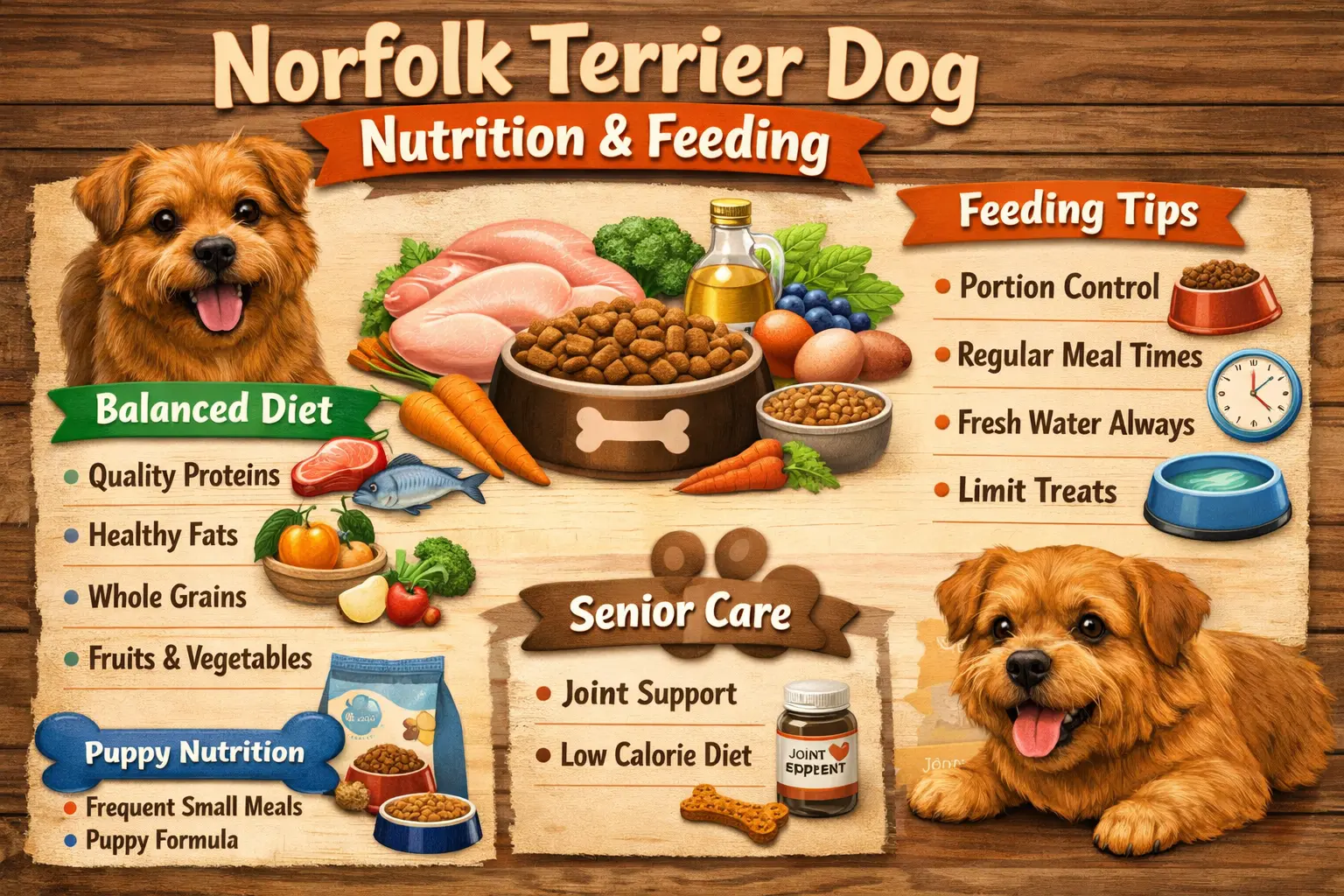
Norfolk Terrier nutrition should focus on balanced protein, healthy fats, digestible carbohydrates, fiber, vitamins, and minerals. Because this breed is small but active, food quality matters as much as portion size. A diet that is too calorie-dense can lead to weight gain, while a low-quality diet may not support energy, muscle tone, digestion, or coat health.
The best diet for a Norfolk Terrier usually includes:
- Animal-based protein to support lean muscle and daily activity.
- Moderate fat for energy, skin health, and coat condition.
- Digestible carbohydrates for steady fuel and easier digestion.
- Fiber to support healthy stools and weight control.
- Vitamins and minerals to support bones, teeth, immune health, and overall wellbeing.
- Omega fatty acids to support skin, coat, and joint health.
Norfolk Terrier nutrition chart
| Nutrient | Recommended Role | Good Food Sources |
|---|---|---|
| Protein | Supports muscle, growth, repair, and activity | Chicken, turkey, fish, eggs, beef, lamb |
| Fat | Provides energy and supports skin and coat health | Fish oil, chicken fat, salmon, flaxseed |
| Carbohydrates | Provides usable energy for daily movement | Rice, oats, sweet potatoes, peas |
| Fiber | Supports digestion and helps with fullness | Pumpkin, green beans, carrots, beet pulp |
| Omega-3 fatty acids | Supports coat, skin, joints, and inflammation balance | Fish oil, salmon, sardines |
| Vitamins and minerals | Supports bones, teeth, immunity, and body function | Complete commercial dog food or vet-guided supplements |
A complete and balanced dog food is usually the safest base diet for a Norfolk Terrier. Homemade diets should only be used when they are properly balanced, because missing calcium, essential fatty acids, or key vitamins can cause long-term health problems.
How Much to Feed a Norfolk Terrier
Most Norfolk Terriers weigh around 5 to 12 pounds, so even small portion changes can make a big difference. As a general guide, an adult Norfolk Terrier may need about 220 to 340 calories per day, depending on weight, activity level, metabolism, and body condition.
Use the chart below as a starting point, then adjust based on your dog’s weight trend, waistline, activity level, and your food label’s calories per cup or per serving.
Norfolk Terrier feeding chart by weight and life stage
| Weight | Puppy Calories / Day | Adult Calories / Day | Senior Calories / Day | Feeding Notes |
|---|---|---|---|---|
| 5–7 lbs | 250–300 kcal | 220–260 kcal | 200–240 kcal | Use small meals and monitor body condition closely |
| 8–10 lbs | 300–350 kcal | 260–300 kcal | 240–280 kcal | Good range for many healthy adult Norfolk Terriers |
| 11–12 lbs | 350–400 kcal | 300–340 kcal | 280–320 kcal | Adjust carefully if your dog is less active or gaining weight |
This Norfolk Terrier feeding chart is not a fixed rule. A very active dog may need more food, while an indoor or overweight Norfolk Terrier may need less. If your dog is gaining weight, reduce calories slightly. If your dog is losing weight without trying, increase food gradually and speak with a veterinarian if weight loss continues.
Norfolk Terrier Feeding Schedule
Norfolk Terriers usually do better with smaller meals instead of one large meal. Smaller meals can help support steady energy, easier digestion, and better portion control.
Recommended Norfolk Terrier feeding schedule
| Life Stage | Meals Per Day | Portion Guidance |
|---|---|---|
| Puppy | 3–4 meals | Split daily calories into small meals to support growth and prevent long gaps without food |
| Adult | 2 meals | Feed measured portions in the morning and evening |
| Senior | 2 meals | Use slightly smaller portions if activity level decreases |
For accuracy, measure food with a proper measuring cup or kitchen scale. Do not rely on “scoops,” because scoop sizes vary and can easily lead to overfeeding.
Norfolk Terrier Puppy Feeding Guide
A Norfolk Terrier puppy needs more frequent meals than an adult because puppies are growing and have smaller stomachs. Most puppies do best with 3 to 4 small meals per day. Choose a puppy food made for growth and small breeds, then follow the food label as a starting point.
Do not free-feed a Norfolk Terrier puppy all day unless your vet specifically recommends it. Scheduled meals make it easier to track appetite, digestion, stool quality, and healthy growth.
- Feed 3–4 meals daily during early puppy growth.
- Use small-breed puppy food with complete and balanced nutrition.
- Track weight weekly during growth stages.
- Transition slowly if changing food.
- Avoid too many treats during training sessions.
Adult Norfolk Terrier Feeding Guide
An adult Norfolk Terrier usually needs 2 measured meals per day. The goal is to maintain a lean body condition where the ribs can be felt without heavy fat cover and the waist is visible from above.
For most adults, the key is consistency. Feed the same measured amount each day, count treats as part of total calories, and adjust portions if your dog becomes less active, gains weight, or starts looking too thin.
Senior Norfolk Terrier Feeding Guide
Senior Norfolk Terriers may need fewer calories because activity often decreases with age. However, they still need high-quality protein to support muscle maintenance. A senior dog that is gaining weight may need smaller portions, while a senior dog losing muscle or weight may need a diet review.
Senior feeding should focus on healthy weight, easy digestion, joint support, and stable energy. If your older Norfolk Terrier has dental issues, kidney concerns, food sensitivities, or appetite changes, ask your vet before making major diet changes.
Best Food for a Norfolk Terrier
The best food for a Norfolk Terrier is a complete and balanced diet that fits your dog’s age, weight, activity level, digestion, and health needs. There is no single best food type for every Norfolk Terrier, but the food should be easy to digest, properly portioned, and suitable for small breeds.
Norfolk Terrier food type comparison
| Food Type | Pros | Cons | Best For |
|---|---|---|---|
| Kibble | Convenient, easy to measure, often complete and balanced | Quality varies by brand | Most healthy adult Norfolk Terriers |
| Wet food | Higher moisture, often more appealing | Can cost more and spoil faster after opening | Picky eaters or dogs needing more moisture |
| Fresh food | Highly palatable and often less processed | Can be expensive and must be stored properly | Owners who want pre-portioned meals |
| Raw food | Some owners prefer it for ingredient control | Higher safety and balance risks | Only with careful handling and vet guidance |
| Homemade food | Full ingredient control | Easy to create nutrient gaps if not formulated correctly | Dogs with specific needs under vet guidance |
| Freeze-dried food | Shelf-stable and palatable | Can be calorie-dense and expensive | Meal toppers or carefully measured diets |
If your Norfolk Terrier has a sensitive stomach, choose a food with simple ingredients, consistent protein sources, and moderate fat. Avoid changing foods suddenly, because quick changes can cause loose stools or digestive upset.
Safe Foods and Foods to Avoid
Some human foods are safe for Norfolk Terriers in small amounts, while others are dangerous and should never be given. Treats and extras should stay limited so they do not replace balanced dog food or cause weight gain.
Safe foods and foods to avoid for Norfolk Terriers
| Safe Foods | Foods to Avoid | Important Notes |
|---|---|---|
| Plain cooked chicken or turkey | Chocolate and caffeine | Chocolate and caffeine can be dangerous for dogs |
| Plain cooked fish or eggs | Grapes and raisins | These can cause serious kidney problems |
| Pumpkin or green beans | Onions and garlic | These can damage red blood cells |
| Rice, oats, or sweet potato | Macadamia nuts | Macadamia nuts are toxic to dogs |
| Carrots, peas, or cucumber | Alcohol and xylitol | Xylitol is extremely dangerous even in small amounts |
When adding safe foods, keep portions small and introduce one food at a time. If your Norfolk Terrier develops vomiting, diarrhea, itching, or appetite changes after a new food, stop feeding it and monitor your dog closely.
Treat Guidelines for Norfolk Terriers
Treats should make up only a small part of your Norfolk Terrier’s daily calories. Because this breed is small, even a few extra treats can push your dog over its calorie needs.
Norfolk Terrier treat guide
| Treat Type | Suggested Amount | Notes |
|---|---|---|
| Small commercial treats | 2–4 tiny pieces | Count them toward daily calories |
| Carrot pieces or peas | 1–2 tablespoons | Low-calorie option for many dogs |
| Cheese | Very small amount | High in fat, so use sparingly |
| Freeze-dried meat treats | 1–2 small pieces | High-value training reward |
| Safe human foods | Small occasional amounts | Avoid seasoning, sauces, and toxic foods |
If your Norfolk Terrier is overweight, replace calorie-dense treats with small pieces of carrot, green bean, or part of the dog’s regular kibble allowance.
Special Diets and Common Feeding Problems
Some Norfolk Terriers need a more careful feeding plan because of allergies, sensitive digestion, weight gain, low activity, or age-related changes. The right approach depends on the problem you are trying to solve.
Norfolk Terrier special diet guide
| Special Need | Diet Approach | What to Watch |
|---|---|---|
| Sensitive stomach | Simple ingredients, gradual food changes, moderate fat | Loose stool, gas, vomiting, appetite changes |
| Food allergies | Limited-ingredient or vet-guided elimination diet | Itching, ear issues, skin irritation, digestive upset |
| Overweight dog | Measured portions, fewer treats, lower-calorie food if needed | Weight gain, loss of waistline, reduced activity |
| Very active dog | Slightly higher calories and enough protein | Weight loss, hunger, low energy |
| Senior dog | Controlled calories, quality protein, easy digestion | Weight changes, dental issues, muscle loss |
Common Norfolk Terrier feeding problems and fixes
| Problem | Likely Cause | Practical Fix |
|---|---|---|
| Picky eating | Too many treats, frequent food changes, preference for wet food | Use scheduled meals and avoid constantly switching foods |
| Loose stools after new food | Food changed too quickly | Transition gradually over 7–10 days |
| Always hungry | Too many calorie-dense foods or low fullness | Measure portions and consider more fiber-rich safe foods |
| Weight gain | Overfeeding, too many treats, low activity | Reduce extras and track daily calories |
| Food guarding | Stress, competition, or learned behavior | Feed separately and keep mealtimes calm |
For ongoing vomiting, diarrhea, rapid weight change, severe itching, appetite loss, or suspected food allergies, speak with a veterinarian before making major diet changes. Feeding advice should be adjusted for your Norfolk Terrier’s individual health needs.
To understand your dog’s current life stage, use the Norfolk Terrier Dog Age Calculator.
For more detail, see our Norfolk Terrier age chart.
Norfolk Terrier Feeding FAQs
How much should I feed a Norfolk Terrier each day?
Most adult Norfolk Terriers need about 220 to 340 calories per day, depending on weight, activity level, age, metabolism, and body condition. A smaller Norfolk Terrier may need less, while a very active dog may need more. Always check the calories per cup on your dog food label and adjust portions based on weight changes.
How many times a day should a Norfolk Terrier eat?
Most adult Norfolk Terriers do best with two measured meals per day. Puppies usually need 3 to 4 small meals per day, while senior Norfolk Terriers often do well with two smaller meals. Avoid one large meal because smaller meals are easier to digest and help with portion control.
What is the best food for a Norfolk Terrier?
The best food for a Norfolk Terrier is a complete and balanced small-breed dog food that matches your dog’s life stage. Puppies need puppy food for growth, adults need maintenance food, and seniors may need a diet with controlled calories and easy digestion. Choose food with quality protein, moderate fat, and clear feeding instructions.
How much should I feed a Norfolk Terrier puppy?
A Norfolk Terrier puppy usually needs more calories per pound than an adult because it is growing. Most puppies do best with 3 to 4 meals per day. Use the puppy food label as your starting point, then adjust based on growth, stool quality, appetite, and your vet’s advice.
Can Norfolk Terriers eat wet food?
Yes, Norfolk Terriers can eat wet food if it is complete and balanced for their age. Wet food can be helpful for picky eaters or dogs that need more moisture, but it should still be measured carefully because calories can add up quickly.
Can Norfolk Terriers eat raw food?
Some owners feed raw diets, but raw feeding has safety and nutrient-balance risks. If you want to feed raw food to a Norfolk Terrier, use careful handling and speak with a veterinarian or canine nutrition professional first. A poorly balanced raw diet can lead to nutritional gaps over time.
What foods should Norfolk Terriers avoid?
Norfolk Terriers should avoid chocolate, caffeine, grapes, raisins, onions, garlic, macadamia nuts, alcohol, xylitol, cooked bones, heavily seasoned foods, and fatty table scraps. These foods can cause serious health problems, digestive upset, or toxicity.
How do I know if my Norfolk Terrier is overweight?
Your Norfolk Terrier may be overweight if you cannot easily feel the ribs, the waist is hard to see from above, or your dog is becoming less active. If weight gain continues, reduce treats, measure meals more carefully, and adjust daily calories gradually.
Should senior Norfolk Terriers eat less food?
Many senior Norfolk Terriers need slightly fewer calories because they become less active with age. However, they still need quality protein to support muscle maintenance. If your senior dog is gaining weight, reduce portions slightly. If your dog is losing weight or muscle, ask your vet before changing the diet.
How should I switch my Norfolk Terrier to a new food?
Switch your Norfolk Terrier to a new food gradually over 7 to 10 days. Start by mixing a small amount of the new food with the old food, then increase the new food slowly. A slow transition helps reduce the risk of loose stools, vomiting, gas, or picky eating.

Ata Ur Rehman is the founder of Pet Age in Human Years Calculator, an educational platform that provides age conversion charts and lifespan guides for dogs, cats, birds, and other companion animals. His work focuses on helping pet owners understand how animal ages translate into human years using commonly accepted age conversion formulas and published lifespan averages.
The website compiles breed and species lifespan data from kennel clubs, breed organizations, and general animal lifespan studies to present simple and easy-to-understand guides for pet owners worldwide.
This website was created to centralize animal age conversion charts into one easy reference platform for pet owners.
This article is for general education. For symptoms, medication, diet changes, or health concerns, use a qualified veterinarian who can assess your individual pet.