On this page
The German Shepherd is one of the most intelligent, loyal, and versatile dog breeds. This German Shepherd guide covers the breed’s size, temperament, care needs, training requirements, grooming, health risks, lifespan, and age-related changes so owners can understand what this breed needs at every life stage.
If you are comparing German Shepherd care requirements, planning for a puppy, or already caring for an adult or senior dog, this guide will help you understand the breed more clearly. You can also use our German Shepherd Dog Age Calculator to estimate your dog’s age in human years and better understand their life stage.
German Shepherd Age in Human Years
German Shepherds age faster than humans, but their aging pattern is not the same as simply multiplying their dog age by seven. As a medium-to-large breed, a German Shepherd usually reaches adulthood quickly, then continues aging based on size, health, weight, activity level, and genetics.
Understanding your German Shepherd’s age in human years can help you adjust exercise, diet, training expectations, joint care, and senior health monitoring. This is especially important because German Shepherds can be prone to mobility issues as they get older.
| German Shepherd Age | Estimated Human Age | Life Stage |
|---|---|---|
| 1 year | 15 years | Adolescent |
| 2 years | 24 years | Young adult |
| 3 years | 28 years | Adult |
| 5 years | 36 years | Adult |
| 7 years | 48 years | Mature adult |
| 9 years | 61 years | Senior |
| 11 years | 72 years | Senior |
| 13 years | 82 years | Advanced senior |
For a more specific estimate, use the German Shepherd Dog Age Calculator to compare your dog’s age with an estimated human-age equivalent and better understand their current life stage.
German Shepherd Characteristics and Appearance
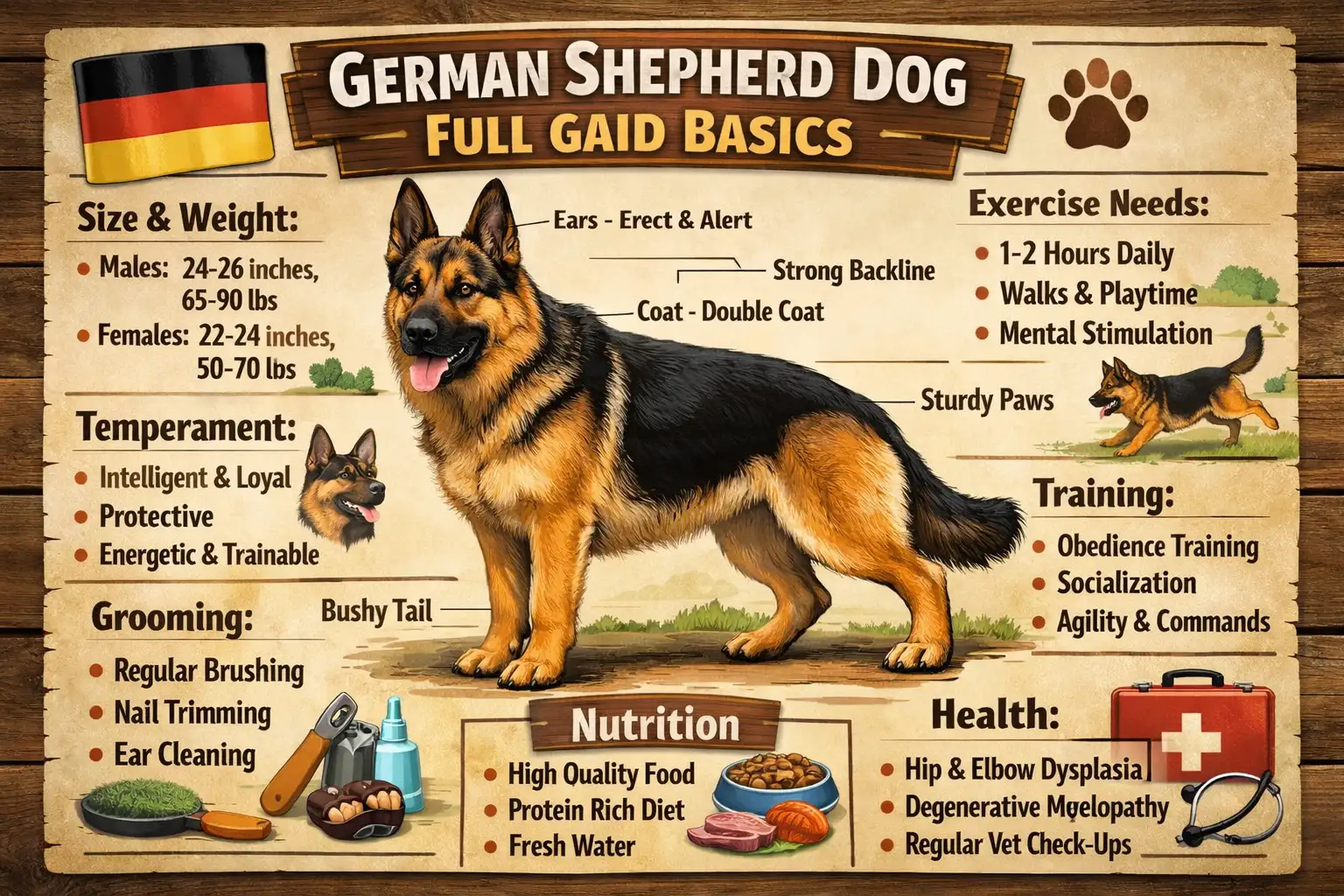
German Shepherds are medium-to-large working dogs with strong, athletic bodies and a confident appearance. Their build reflects their original purpose as active herding and working dogs, which is why they need regular exercise, structure, and mental stimulation.
German Shepherd Size and Weight
German Shepherd size can vary depending on gender, genetics, activity level, and whether the dog comes from working or show lines. On average, males are larger and heavier than females.
| Gender | Height Range | Weight Range |
|---|---|---|
| Male | 24–26 inches | 65–90 pounds |
| Female | 22–24 inches | 50–70 pounds |
A healthy German Shepherd should look strong and well-conditioned, not overweight. Because this breed is prone to joint stress, maintaining a healthy weight is especially important as they age.
Build and Body Type
German Shepherds have a muscular frame, deep chest, strong legs, and an agile body. Their structure supports endurance, speed, and controlled movement, which is why they are commonly associated with police work, search and rescue, service roles, protection work, and advanced obedience activities.
Coat Type and Colors
Most German Shepherds have a dense double coat with a softer undercoat and a harsher outer coat. This coat helps protect them from weather changes, but it also means they shed regularly and need consistent grooming.
Common German Shepherd coat colors include:
- Black and tan
- Sable
- Solid black
- Black and red
- Bi-color
- Gray or lighter variations
Coat color does not determine temperament or health. Training, genetics, socialization, and care quality matter far more than color.
Distinguishing Features
German Shepherds are known for their alert expression, upright ears, intelligent eyes, strong muzzle, and confident posture. Their movement is typically smooth and powerful, which adds to their recognizable working-dog appearance.
German Shepherd Temperament and Personality
German Shepherd temperament is one of the main reasons this breed is so popular. They are loyal, protective, intelligent, and highly trainable, but they also need structure. Without training, socialization, and daily activity, their confidence and energy can turn into problem behaviors.
Core Traits
German Shepherds are usually brave, alert, focused, and deeply bonded to their families. They are quick learners and often enjoy having a job to do. This makes them excellent companions for active owners, but it also means they are not a low-effort breed.
Behavior with Family and Kids
A well-socialized German Shepherd can be affectionate and reliable with family members, including children. However, because they are large, energetic, and protective, interactions with young children should always be supervised. Early boundaries and consistent training are important.
Behavior with Strangers and Other Pets
German Shepherds may be reserved around strangers. This does not automatically mean aggression, but it does mean socialization matters. With other pets, German Shepherds can do well when introduced properly, but some may show territorial or dominant behavior without training.
| Interaction | Typical Behavior | Owner Priority |
|---|---|---|
| Family | Loyal, affectionate, protective | Consistent boundaries |
| Children | Often good with supervision | Early training and safe handling |
| Strangers | Reserved or cautious | Socialization |
| Other Pets | Can adapt with proper introductions | Controlled exposure |
German Shepherd Care, Grooming, and Health
German Shepherd care includes grooming, exercise, training, nutrition, preventive health checks, and age-based adjustments. This breed is not difficult to care for when owners are consistent, but neglecting exercise, weight control, or joint health can create long-term problems.
Grooming Needs
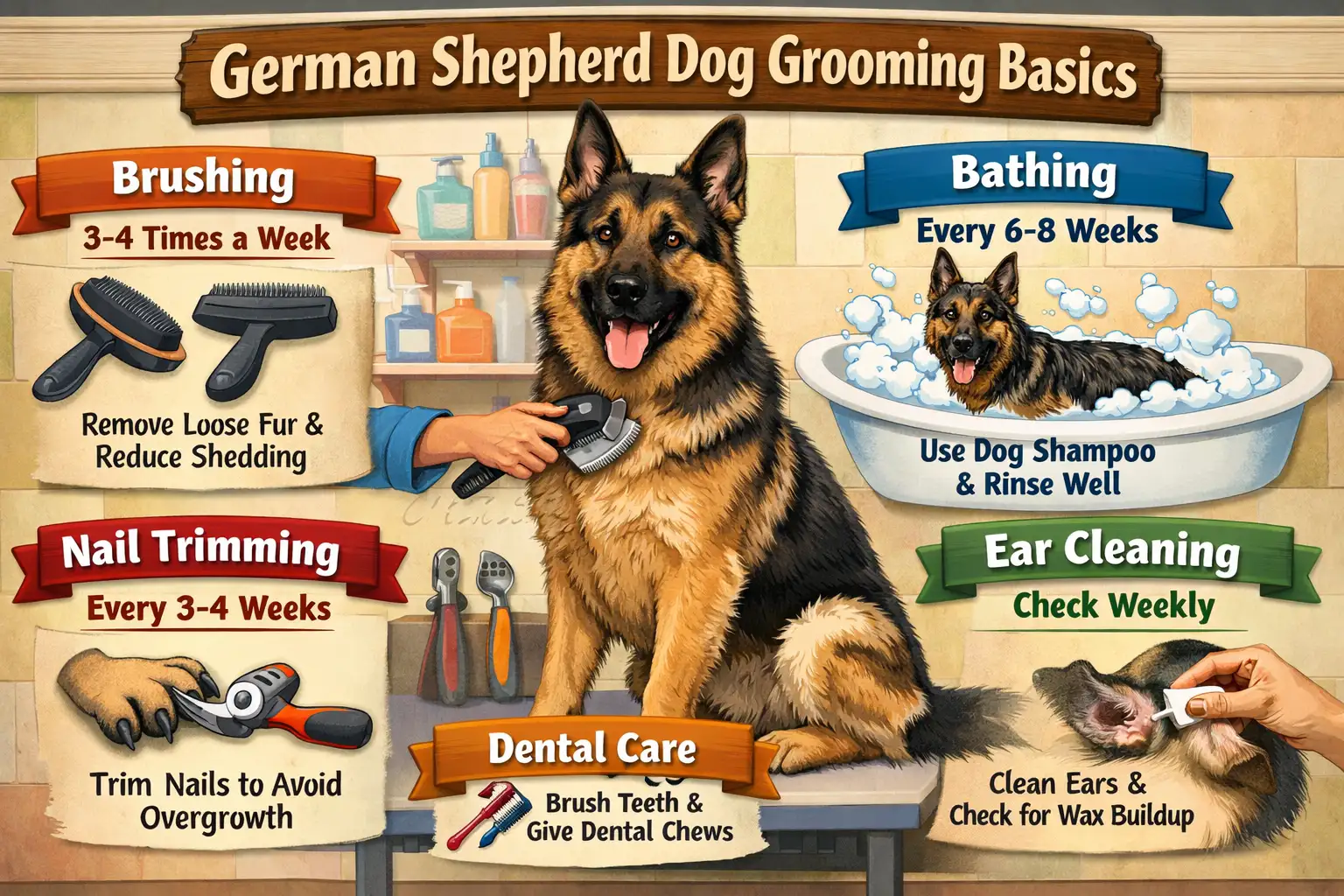
German Shepherds shed throughout the year and usually shed more heavily during seasonal coat changes. Regular brushing helps control loose hair, supports coat health, and reduces matting.
- Brushing: Brush at least once or twice per week, and more often during heavy shedding periods.
- Bathing: Bathe only when needed to avoid drying out the coat and skin.
- Nails: Trim nails regularly to support healthy movement and posture.
- Ears: Check ears for wax, odor, or irritation.
- Teeth: Brush teeth regularly to support long-term dental health.
For more detailed grooming help, visit the German Shepherd Grooming Guide.
Health Concerns
German Shepherds are generally strong dogs, but they are known for certain health risks. Owners should pay close attention to mobility, weight, digestion, and age-related changes.
| Health Issue | Risk Level | What Owners Should Watch For |
|---|---|---|
| Hip Dysplasia | High | Stiffness, limping, difficulty rising |
| Elbow Dysplasia | Moderate | Front-leg lameness or discomfort |
| Degenerative Myelopathy | Breed concern | Weakness in rear legs, coordination issues |
| Bloat | Emergency risk | Swollen abdomen, restlessness, unsuccessful vomiting |
| Skin or coat problems | Variable | Itching, hair loss, irritation |
Routine veterinary care, healthy weight management, controlled exercise, and early attention to symptoms can improve quality of life as a German Shepherd gets older.
German Shepherd Lifespan and Aging
The average German Shepherd lifespan is usually around 9 to 13 years. Puppies grow quickly, adults need strong activity routines, and senior German Shepherds often need more joint support, weight control, and lower-impact exercise.
Because large breeds age differently from small breeds, a German Shepherd’s age in human years is not a simple 1-to-7 conversion. Use the German Shepherd Dog Age Calculator to estimate your dog’s human-age equivalent and understand whether they are in a puppy, adult, mature, or senior life stage.
Training and Exercise Needs for German Shepherds
German Shepherds need consistent training and daily exercise. They are intelligent enough to learn quickly, but they can also become bored, reactive, or destructive if they do not receive enough structure.
Training Challenges and Methods
German Shepherd training should begin early and focus on obedience, leash manners, impulse control, socialization, and calm behavior around people and other animals. Positive reinforcement, consistency, and clear rules work better than harsh correction.
This breed often responds well to structured training because they enjoy learning and working with their owner. For a deeper training breakdown, visit the German Shepherd Training Guide.
German Shepherd Exercise Requirements
Most healthy adult German Shepherds need around 1 to 2 hours of daily exercise, along with mental stimulation. Puppies and senior dogs need age-appropriate activity, so exercise should be adjusted based on growth stage, health, and energy level.
- Walking: Daily walks help manage energy and support routine.
- Running or hiking: Good for healthy adult dogs with proper conditioning.
- Agility or obedience work: Helps combine physical activity with training.
- Scent work: Gives mental stimulation without excessive joint impact.
- Fetch and structured play: Useful when controlled and not overdone.
Exercise should not only tire a German Shepherd physically. It should also give them structure, mental challenge, and owner engagement.
| Activity Type | Suggested Amount | Best For |
|---|---|---|
| Physical Exercise | 1–2 hours/day | Healthy adult dogs |
| Mental Stimulation | 30–45 minutes/day | All life stages |
| Socialization | Ongoing | Puppies and young adults |
| Low-impact movement | As needed | Senior German Shepherds |
German Shepherd Ownership: Costs, Pros, Cons, and Suitability
Owning a German Shepherd is rewarding, but this breed requires time, training, space, and financial planning. Before choosing this breed, owners should understand both the benefits and the responsibilities.
Cost to Own
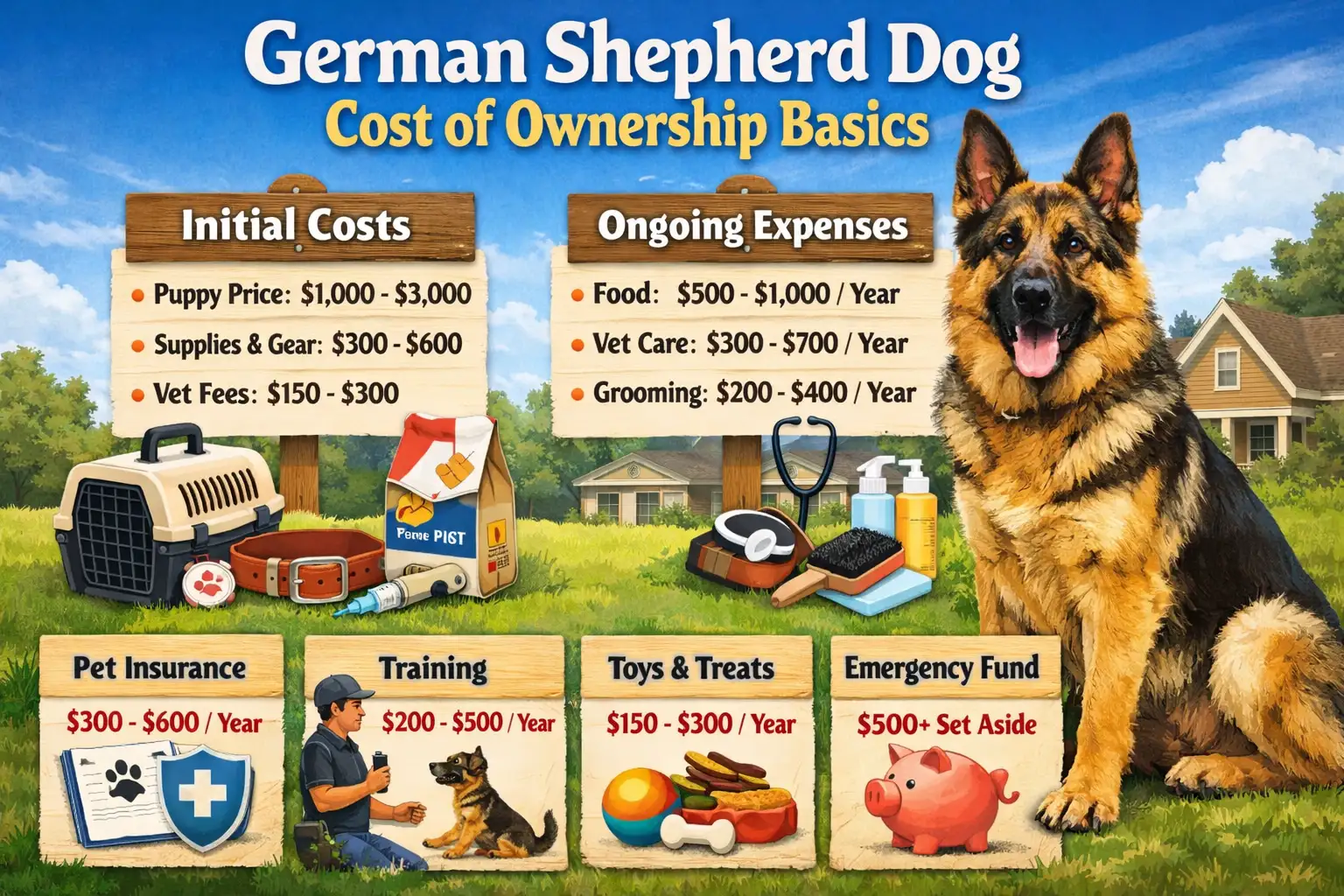
German Shepherd ownership costs vary based on location, breeder, food quality, veterinary needs, grooming, insurance, and training. Larger dogs usually cost more to feed and care for than smaller breeds.
- Puppy Price: Often ranges from $500 to $2,000 or more depending on breeder, lineage, and location.
- Veterinary Care: Routine exams, vaccines, preventive care, and health monitoring should be budgeted yearly.
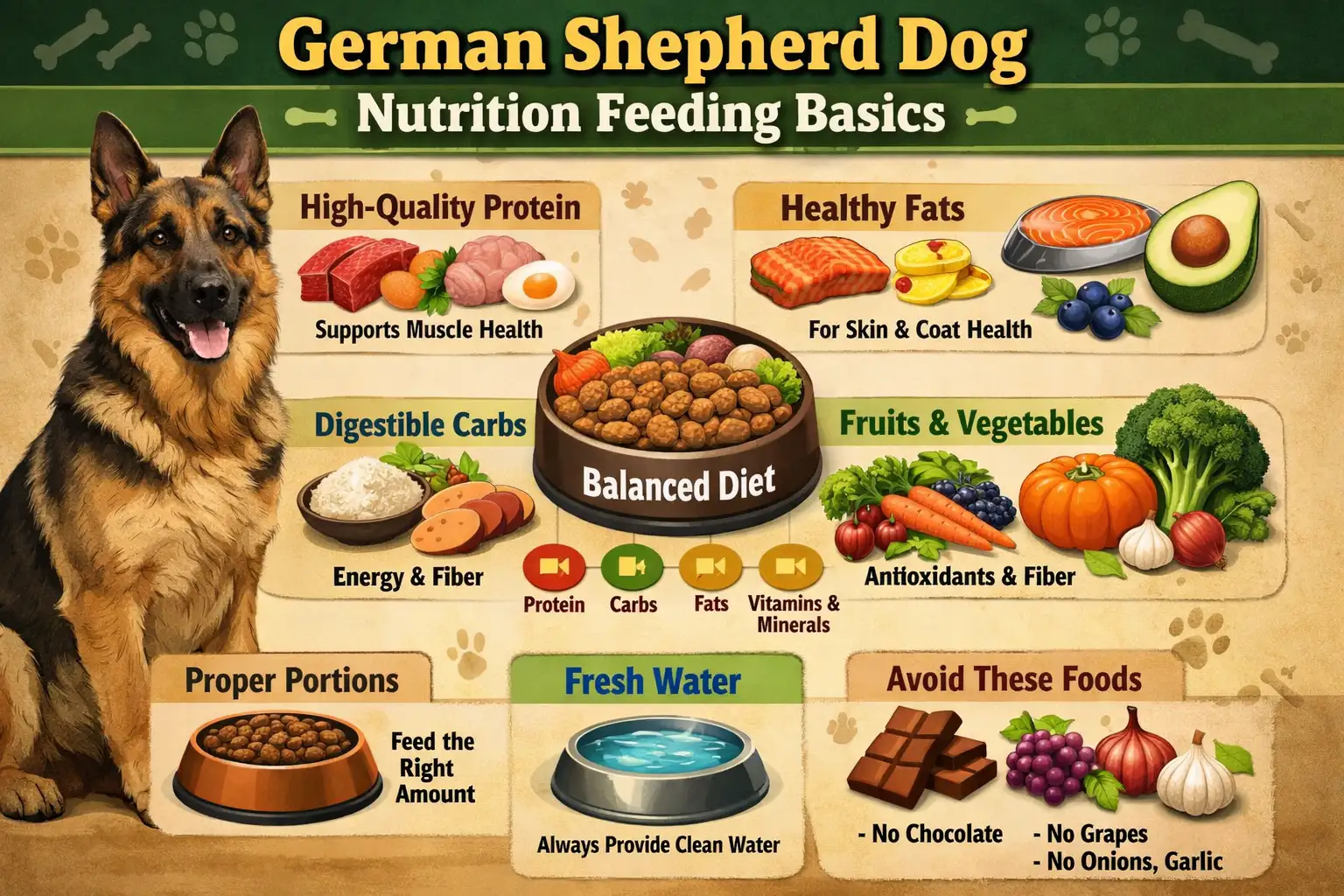
- Food: A large, active breed needs a consistent, high-quality diet.
- Training: Professional training may be useful, especially for first-time owners.
- Insurance: Pet insurance may help with unexpected health costs.
For feeding-specific guidance, visit the German Shepherd Nutrition and Feeding Guide. For ownership expenses, visit the German Shepherd Cost of Ownership Guide.
| Expense Type | Estimated Cost | Notes |
|---|---|---|
| Puppy Purchase | $500–$2,000+ | Varies by breeder and lineage |
| Veterinary Care | Varies yearly | Includes checkups, vaccines, prevention |
| Food | Moderate to high | Large active breed |
| Training | Optional but recommended | Helpful for behavior and obedience |
| Insurance | Varies by provider | May help with health costs |
German Shepherd Pros and Cons
Before choosing a German Shepherd, compare the breed’s strengths with the responsibilities they require.
| Pros | Cons |
|---|---|
| Loyal and protective | Needs daily exercise |
| Highly intelligent | Can become bored without structure |
| Strong working ability | Requires consistent training |
| Good for active owners | May be cautious with strangers |
| Trainable and versatile | Can be prone to joint issues |
Who This Breed Is Ideal For
German Shepherds are best for active owners, experienced dog handlers, families who can provide structure, and people who enjoy training, walking, outdoor activity, and daily engagement with their dog.
Who Should Avoid This Breed
German Shepherds may not be ideal for owners who want a low-energy dog, cannot commit to daily exercise, do not have time for training, or are uncomfortable managing a strong, protective breed.
For deeper breed-specific guidance, see the German Shepherd Age Chart.

Ata Ur Rehman is the founder of Pet Age in Human Years Calculator, an educational platform that provides age conversion charts and lifespan guides for dogs, cats, birds, and other companion animals. His work focuses on helping pet owners understand how animal ages translate into human years using commonly accepted age conversion formulas and published lifespan averages.
The website compiles breed and species lifespan data from kennel clubs, breed organizations, and general animal lifespan studies to present simple and easy-to-understand guides for pet owners worldwide.
This website was created to centralize animal age conversion charts into one easy reference platform for pet owners.
This article is for general education. For symptoms, medication, diet changes, or health concerns, use a qualified veterinarian who can assess your individual pet.