On this page
German Shepherd care requires more than basic feeding and daily walks. This breed is intelligent, active, loyal, and physically powerful, which means owners need a clear plan for nutrition, training, grooming, exercise, health monitoring, and age-related care.
This German Shepherd care guide explains how to support your dog from puppyhood to senior age, including feeding needs, exercise routines, grooming basics, training priorities, common health concerns, and how your dog’s age affects daily care decisions.
This page is designed for owners who want a practical German Shepherd care guide, not a generic breed overview. It explains what this breed needs daily, weekly, and as it gets older, so you can make better decisions about feeding, grooming, training, exercise, and health routines.
German Shepherd Care Checklist
| Care Area | What German Shepherds Need |
|---|---|
| Feeding | Balanced meals based on age, weight, activity level, and body condition |
| Exercise | Daily physical activity plus mental stimulation |
| Training | Consistent obedience, leash manners, recall, and socialization |
| Grooming | Regular brushing, nail trimming, ear checks, and dental care |
| Health | Weight control, joint monitoring, digestion checks, and routine vet care |
| Age-based care | Different routines for puppies, adults, and senior German Shepherds |
Use this guide to:
- Understand the main care needs of German Shepherds
- Plan feeding, grooming, training, and exercise routines
- Adjust care based on puppy, adult, or senior life stage
- Identify common mistakes that affect health and behavior
- Use age-related resources to better understand your dog’s needs
If you want to estimate your dog’s human age, use the German Shepherd Dog Age Calculator before adjusting age-based care routines.
German Shepherd Care Overview
German Shepherds are large, high-energy working dogs. They need structured care because their physical strength, intelligence, and protective instincts can become difficult to manage without proper routines.
A complete German Shepherd care plan should include feeding, training, exercise, grooming, mental stimulation, preventive health checks, and age-specific adjustments. Owners should not treat this breed like a low-maintenance companion dog.
German Shepherd Feeding and Nutrition
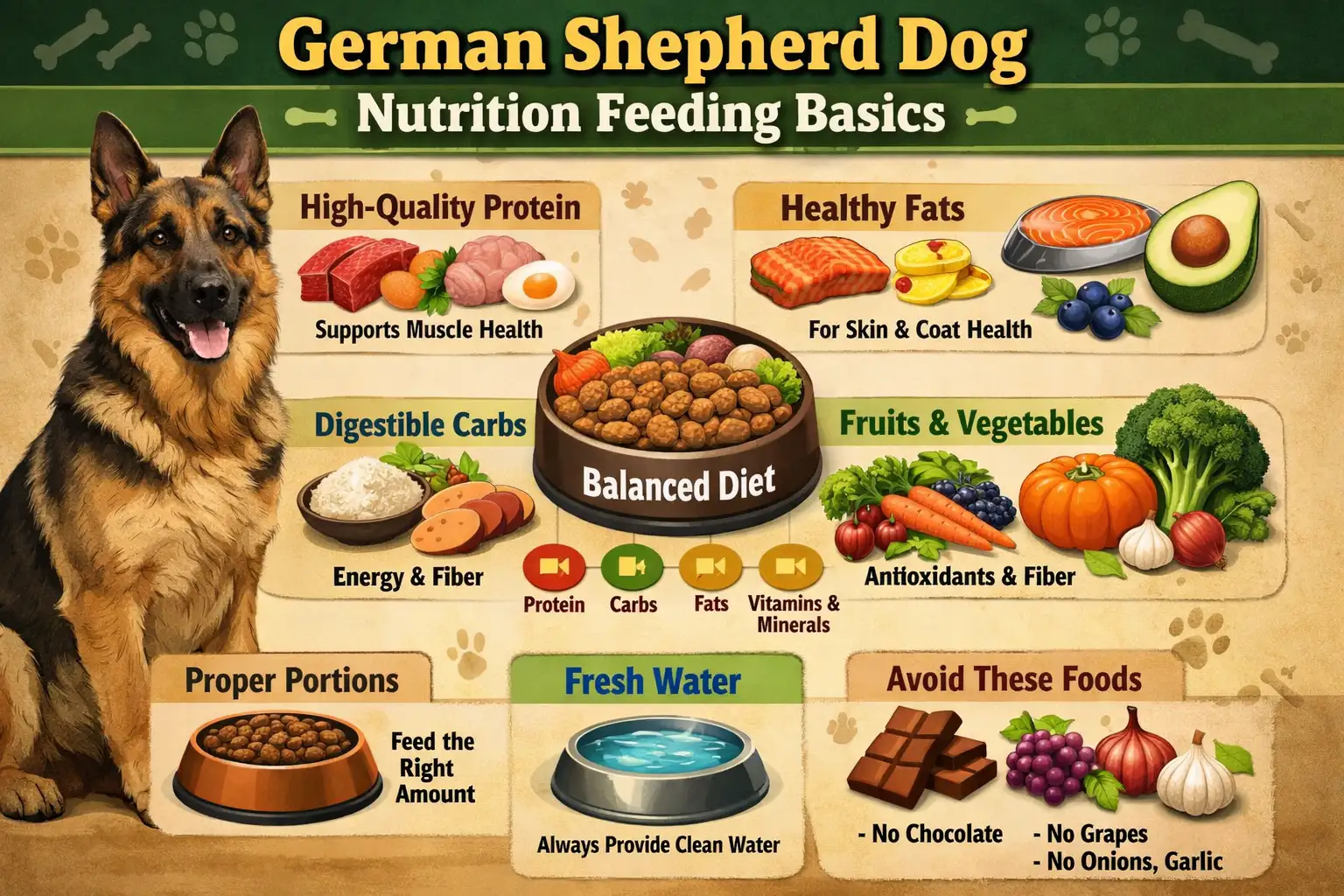
Nutrition is one of the most important parts of German Shepherd care. These dogs need a balanced diet that supports muscle maintenance, healthy joints, digestion, energy, and body condition.
Most German Shepherds do best with food that contains quality animal protein, healthy fats, controlled calories, and essential vitamins and minerals. Puppies, adults, and seniors have different feeding needs, so portion size and meal frequency should change as your dog grows.
- Puppies: usually need more frequent meals to support growth.
- Adults: usually need balanced meals based on weight, activity, and body condition.
- Seniors: may need fewer calories and more support for joints and digestion.
For deeper feeding guidance, use the German Shepherd Dog Nutrition & Feeding Guide.
German Shepherd Exercise Needs
German Shepherds need consistent daily exercise. Without enough activity, they may become restless, destructive, anxious, or difficult to control. Exercise should include both physical movement and mental stimulation.
- Daily walks
- Structured play
- Training drills
- Fetch or controlled running
- Puzzle toys and scent games
Exercise should match your dog’s age and condition. Puppies should not be overworked while their joints are developing, while senior German Shepherds may need shorter, lower-impact activity.
German Shepherd Training and Behavior
Training is essential for German Shepherds. This breed learns quickly, but it also needs structure, consistency, and clear boundaries. Without training, a German Shepherd’s intelligence and protective nature can lead to unwanted behaviors.
Start with basic obedience, leash manners, recall, socialization, and calm behavior around people and other animals. Training should be positive, consistent, and ongoing throughout the dog’s life.
For a complete training plan, see the German Shepherd Dog General Training Guide.
German Shepherd Grooming Basics
German Shepherds shed heavily and need regular grooming. Their double coat helps protect them, but it also requires brushing to control loose hair, reduce matting, and support healthy skin.
- Brush several times per week
- Check ears regularly
- Trim nails when needed
- Brush teeth consistently
- Bathe only when necessary
For more detailed grooming advice, use the German Shepherd Dog Grooming Basics guide.
German Shepherd Health and Common Care Concerns
German Shepherds can be prone to issues involving joints, digestion, weight, mobility, and skin. Good care does not prevent every health problem, but it can help reduce avoidable risks and make changes easier to notice early.
- Watch for weight gain or sudden weight loss
- Monitor changes in appetite, stool, and energy
- Support joint health with proper exercise and weight control
- Keep grooming consistent to catch skin or coat changes
- Adjust routines as your dog gets older
German Shepherd Age and Life Stage Care
German Shepherd care changes as your dog ages. A puppy needs growth support, socialization, and early training. An adult needs structure, exercise, balanced feeding, and routine health checks. A senior German Shepherd may need lower-impact activity, weight control, joint support, and closer monitoring.
To better understand age-based care, review the German Shepherd Dog Age Calculator to Human Years – Age Chart.
You can also use the German Shepherd Dog Age Calculator to estimate your dog’s age in human years.
Common German Shepherd Care Mistakes
Many German Shepherd care problems come from inconsistent routines. These dogs need clear structure, not random care decisions.
| Mistake | Better Approach |
|---|---|
| Not giving enough exercise | Use daily walks, training, and mental stimulation |
| Overfeeding | Measure food and adjust based on body condition |
| Skipping training | Practice obedience and socialization consistently |
| Ignoring grooming | Brush regularly and check ears, nails, teeth, and coat |
| Not adjusting care with age | Change routines for puppy, adult, and senior stages |
Cost of Caring for a German Shepherd
German Shepherd ownership can involve costs for food, grooming tools, training, routine vet care, preventive care, toys, and age-related health needs. Because this is a large and active breed, owners should plan for higher care costs than many smaller dogs.
Frequently Asked Questions About German Shepherd Care
How do you properly care for a German Shepherd?
Proper German Shepherd care includes a balanced diet, daily exercise, regular grooming, consistent training, routine veterinary care, and age-appropriate lifestyle adjustments. Because German Shepherds are intelligent and active dogs, they require both physical activity and mental stimulation to stay healthy and well-behaved.
Are German Shepherds difficult to take care of?
German Shepherds require more care than many dog breeds because of their energy levels, intelligence, grooming needs, and training requirements. However, owners who establish consistent routines often find them loyal, trainable, and rewarding companions.
How much exercise does a German Shepherd need each day?
Most healthy adult German Shepherds need at least 1–2 hours of daily exercise. This can include walks, training sessions, structured play, fetch, and mentally stimulating activities. Exercise requirements may vary depending on age, health, and activity level.
What is the best diet for a German Shepherd?
The best diet for a German Shepherd is one that provides high-quality protein, healthy fats, essential vitamins, minerals, and appropriate calorie levels. Puppies, adults, and senior dogs have different nutritional needs, so feeding plans should be adjusted throughout their lives.
How often should a German Shepherd be groomed?
German Shepherds should typically be brushed several times per week to help manage shedding and maintain coat health. During heavy shedding seasons, more frequent brushing may be necessary. Regular nail trimming, ear checks, and dental care should also be part of their grooming routine.
How long do German Shepherds usually live?
German Shepherds generally live between 9 and 13 years, although lifespan can vary depending on genetics, diet, exercise, healthcare, and overall lifestyle. Maintaining a healthy weight and providing preventive care may help support long-term health.
At what age is a German Shepherd considered a senior?
Most German Shepherds begin entering their senior years around 7 to 8 years of age. As dogs age, their exercise needs, calorie requirements, mobility, and overall care routines may change.
How can I calculate my German Shepherd’s age in human years?
You can estimate your dog’s age using a German Shepherd age calculator, which considers how dogs mature differently from humans. This can help owners better understand age-related care requirements and life stage changes.
Are German Shepherds good family dogs?
German Shepherds are often excellent family dogs when properly trained and socialized. They are known for being loyal, intelligent, protective, and highly devoted to their families.
What are the most common mistakes German Shepherd owners make?
Common mistakes include insufficient exercise, inconsistent training, overfeeding, neglecting mental stimulation, and failing to adjust care routines as the dog ages. Consistency is one of the most important factors in successful German Shepherd ownership.
Final German Shepherd Care Tips
The best German Shepherd care plan is consistent, age-aware, and balanced. Focus on daily structure, proper nutrition, regular exercise, training, grooming, and health monitoring. As your dog gets older, adjust routines to match their energy level, mobility, and overall condition.

Ata Ur Rehman is the founder of Pet Age in Human Years Calculator, an educational platform that provides age conversion charts and lifespan guides for dogs, cats, birds, and other companion animals. His work focuses on helping pet owners understand how animal ages translate into human years using commonly accepted age conversion formulas and published lifespan averages.
The website compiles breed and species lifespan data from kennel clubs, breed organizations, and general animal lifespan studies to present simple and easy-to-understand guides for pet owners worldwide.
This website was created to centralize animal age conversion charts into one easy reference platform for pet owners.
This article is for general education. For symptoms, medication, diet changes, or health concerns, use a qualified veterinarian who can assess your individual pet.