On this page
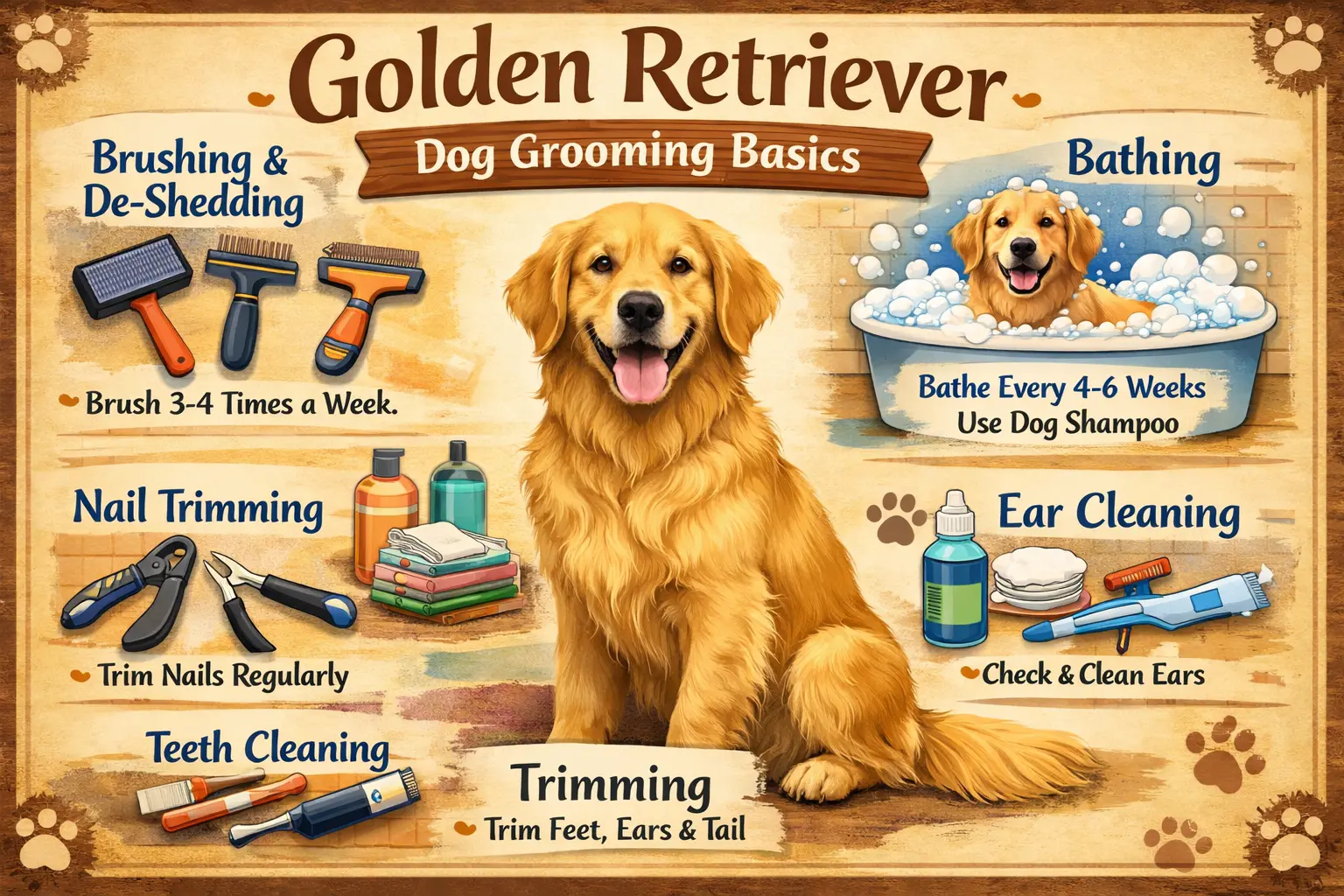
Golden Retriever grooming is essential for keeping your dog comfortable, clean, and healthy. Because Golden Retrievers have a thick double coat, they need regular brushing, shedding control, bathing, nail care, ear cleaning, and coat maintenance. A consistent grooming routine helps reduce loose hair, prevent mats, control odor, and protect your dog’s skin.
This guide explains how to groom a Golden Retriever at home, how often grooming is needed, which tools to use, and when professional grooming may be helpful.
Related: You can also check your dog’s age stage using our Golden Retriever Dog Age Calculator to understand whether your dog is a puppy, adult, or senior before adjusting their grooming routine.
Understanding the Golden Retriever Coat
Golden Retrievers have a water-resistant double coat. The outer coat is longer and helps protect them from dirt, moisture, and weather. The undercoat is softer and denser, which helps regulate body temperature but also causes heavy shedding during seasonal coat changes.
Because of this coat type, Golden Retrievers should not be treated like short-haired breeds. They need regular brushing to remove loose undercoat hair, prevent tangles, and keep the coat breathable.
How the coat affects grooming needs
Golden Retrievers are moderate to heavy shedders. Their undercoat sheds most during spring and fall, and loose hair can become trapped in the coat if it is not brushed out. This can lead to mats, skin irritation, odor, and discomfort.
Regular grooming also gives you a chance to check for skin redness, hot spots, ear problems, ticks, lumps, or signs of irritation.
Golden Retriever grooming schedule
| Grooming Task | Recommended Frequency | Why It Matters |
|---|---|---|
| Brushing | 3–4 times per week | Controls shedding, prevents mats, and keeps the coat healthy |
| Heavy shedding brushing | Daily during spring and fall | Removes loose undercoat hair before it builds up |
| Bathing | Every 6–8 weeks | Removes dirt and odor without drying the skin |
| Nail trimming | Every 2–4 weeks | Prevents overgrown nails and walking discomfort |
| Ear cleaning | Weekly check, clean as needed | Helps prevent wax buildup, odor, and infection risk |
| Teeth brushing | Several times per week | Supports dental health and reduces bad breath |
Best Tools for Grooming a Golden Retriever
The right grooming tools make Golden Retriever coat care easier and safer. Since this breed has a dense undercoat, a basic brush is usually not enough.
| Tool | Purpose | Best For |
|---|---|---|
| Slicker brush | Removes tangles and loose surface hair | Regular brushing and mat prevention |
| Undercoat rake | Removes loose undercoat hair | Shedding control and seasonal coat changes |
| Metal comb | Checks for hidden tangles | Behind ears, tail, legs, and feathering |
| Dog shampoo | Cleans the coat safely | Bathing without stripping natural oils |
| Nail clippers or grinder | Shortens nails safely | Regular paw and nail care |
| Dog-safe ear cleaner | Cleans visible dirt and wax | Ear maintenance and odor prevention |
How to Groom a Golden Retriever at Home
Start with brushing before bathing. Brushing first removes loose fur and tangles so the coat can be washed and dried more evenly.
- Step 1: Use a slicker brush to remove loose hair and small tangles.
- Step 2: Use an undercoat rake gently through the thick undercoat, especially during shedding season.
- Step 3: Comb behind the ears, under the legs, around the tail, and near the collar where mats often form.
- Step 4: Bathe with dog-safe shampoo when needed, usually every 6–8 weeks.
- Step 5: Dry the coat fully, especially the undercoat, to reduce odor and skin irritation.
- Step 6: Check ears, nails, teeth, paws, and skin before finishing the grooming session.
Brushing tips by coat condition
| Coat Condition | Best Method | Frequency |
|---|---|---|
| Normal coat | Slicker brush followed by a comb check | 3–4 times per week |
| Heavy shedding | Undercoat rake plus slicker brush | Daily during shedding season |
| Tangled coat | Work slowly with a slicker brush and comb | As needed, without pulling |
| Sensitive areas | Use gentle strokes around ears, belly, tail, and legs | Every grooming session |
Bathing, Drying, and Coat Cleaning
Golden Retrievers do not need weekly baths unless they are dirty, smelly, or dealing with a specific skin issue. Bathing too often can dry out the skin and remove natural oils from the coat.
- Bathing: Bathe every 6–8 weeks for normal maintenance.
- Shampoo: Use a mild dog-safe shampoo, not human shampoo.
- Drying: Towel dry first, then use a low-heat dryer if your dog tolerates it.
- Coat check: Make sure the undercoat dries fully to avoid trapped moisture and odor.
Nails, Ears, Teeth, and Skin Care
Golden Retriever grooming is not only about the coat. Nails, ears, teeth, paws, and skin should be checked regularly as part of the same routine.
Nail care
Trim your Golden Retriever’s nails every 2–4 weeks, depending on how quickly they grow. If you hear nails clicking on the floor, they are likely too long. Trim small amounts at a time and avoid cutting into the quick.
Ear cleaning
Golden Retrievers have floppy ears that can trap moisture and wax. Check the ears weekly and clean only the visible outer area with a dog-safe ear cleaner. Redness, odor, swelling, or frequent scratching may require veterinary attention.
Dental and skin care
Brush your dog’s teeth several times per week if possible. During grooming, also check the skin for redness, flakes, bald patches, hot spots, or irritation.
Golden Retriever skin and coat checklist
| Issue | What to Look For | Action |
|---|---|---|
| Dry skin | Flakes, itching, dull coat | Use gentle grooming products and monitor skin condition |
| Hot spots | Red, moist, irritated areas | Avoid brushing aggressively and seek veterinary advice |
| Ear irritation | Odor, redness, scratching | Clean gently and consult a vet if symptoms continue |
| Mats | Tight knots behind ears, legs, tail, or collar | Remove carefully or use a professional groomer for severe mats |
Should Golden Retrievers Get Haircuts or Be Shaved?
Golden Retrievers usually do not need full haircuts, and they should not be shaved for normal grooming. Their double coat helps protect them from heat, cold, sun exposure, and skin irritation. Shaving can interfere with natural coat protection and may cause uneven regrowth.
Light trimming can be helpful around the paws, ears, tail, and sanitary areas, but the main coat should usually be maintained through brushing, bathing, deshedding, and proper drying.
Grooming Puppies, Adults, and Senior Golden Retrievers
Golden Retriever grooming needs change with age. Puppies need gentle introductions, adults need consistent coat maintenance, and seniors may need slower, more careful grooming sessions.
| Life Stage | Grooming Focus | Recommended Routine |
|---|---|---|
| Puppy | Building comfort with brushing, handling, and bathing | Short gentle sessions 1–2 times per week |
| Adult | Shedding control, brushing, bathing, nails, and ears | Brush 3–4 times per week and groom fully as needed |
| Senior | Gentle brushing, skin checks, nail care, and comfort | Shorter sessions with extra care around joints and sensitive areas |
Use your dog’s age and life stage to adjust grooming frequency. For age-specific care context, visit the Golden Retriever Dog Age Calculator.
Seasonal Shedding and Grooming Care
Golden Retrievers shed year-round, but shedding becomes heavier during spring and fall. During these periods, daily brushing can help remove loose undercoat hair before it spreads around the home or turns into mats.
| Season | Grooming Focus | Frequency |
|---|---|---|
| Spring | Heavy undercoat shedding | Brush daily or almost daily |
| Summer | Coat cleanliness and skin checks | Brush 2–3 times per week |
| Fall | Seasonal coat change | Brush daily or almost daily |
| Winter | Mat prevention and paw care | Brush 2–3 times per week |
Home Grooming vs Professional Grooming
Most Golden Retriever grooming can be done at home with the right tools and routine. However, a professional groomer may be useful if your dog has severe mats, heavy coat buildup, anxiety during grooming, or needs careful trimming around the paws and sanitary areas.
- Home grooming is best for: brushing, basic bathing, ear checks, nail maintenance, and regular coat care.
- Professional grooming is best for: severe mats, difficult nail trims, detailed trimming, or dogs that are hard to handle safely at home.
Common Golden Retriever Grooming Mistakes
Avoid these common mistakes when grooming your Golden Retriever:
- Bathing too often: Over-bathing can dry out the skin and coat.
- Skipping undercoat brushing: Surface brushing alone may leave loose undercoat hair trapped.
- Shaving the coat: Shaving can affect natural coat protection and regrowth.
- Ignoring ears: Floppy ears need regular checks for wax, odor, or irritation.
- Pulling mats aggressively: Tight mats can hurt the skin and may need professional removal.
- Using human shampoo: Human products can irritate a dog’s skin.
For more detail, see our Golden Retriever nutrition and feeding guide.
Golden Retriever Grooming FAQs
How often should a Golden Retriever be groomed?
A Golden Retriever should be brushed 3–4 times per week and bathed about every 6–8 weeks. During heavy shedding seasons, daily brushing may be needed.
Do Golden Retrievers need to be professionally groomed?
Not always. Many owners can handle regular brushing, bathing, and basic care at home. Professional grooming is helpful for severe mats, trimming, anxious dogs, or difficult nail care.
Do Golden Retrievers need haircuts?
Golden Retrievers usually do not need full haircuts. Light trimming around the paws, ears, tail, and sanitary areas can help, but the main coat should not be cut short.
Should you shave a Golden Retriever?
No, Golden Retrievers should not be shaved for normal grooming. Their double coat helps protect their skin and regulate temperature.
How often should you bathe a Golden Retriever?
Most Golden Retrievers only need a bath every 6–8 weeks unless they get dirty, smell bad, or have a skin condition that requires a different routine.
How do you reduce Golden Retriever shedding?
Brush regularly with a slicker brush and undercoat rake, especially during spring and fall. Bathing and proper drying can also help loosen and remove dead coat.
Next step: After setting a grooming routine, check your dog’s age stage with the Golden Retriever Dog Age Calculator so you can adjust care for a puppy, adult, or senior Golden Retriever.

Ata Ur Rehman is the founder of Pet Age in Human Years Calculator, an educational platform that provides age conversion charts and lifespan guides for dogs, cats, birds, and other companion animals. His work focuses on helping pet owners understand how animal ages translate into human years using commonly accepted age conversion formulas and published lifespan averages.
The website compiles breed and species lifespan data from kennel clubs, breed organizations, and general animal lifespan studies to present simple and easy-to-understand guides for pet owners worldwide.
This website was created to centralize animal age conversion charts into one easy reference platform for pet owners.
This article is for general education. For symptoms, medication, diet changes, or health concerns, use a qualified veterinarian who can assess your individual pet.