On this page
Bernese Mountain Dogs are not simply large dogs that require bigger food bowls. They are a giant working breed with unique nutritional needs shaped by rapid growth, slow physical maturity, heavy adult body weight, joint vulnerability, and a relatively short average lifespan.
The food you choose directly affects your Bernese Mountain Dog’s growth, mobility, muscle development, weight management, immune health, and long-term quality of life.
Whether you are raising a puppy, maintaining a healthy adult, or caring for a senior dog, the primary goal remains the same: support controlled growth, lean muscle mass, healthy joints, and lifelong wellness.
Why Nutrition Matters So Much for Bernese Mountain Dogs
Bernese Mountain Dogs grow quickly during puppyhood but mature more slowly than many other breeds. Their skeletal system, joints, and connective tissues continue developing long after they reach an impressive size.
Because of this, improper nutrition can create lifelong health problems.
Excess calories, unbalanced minerals, or overfeeding during growth can increase the risk of:
- Developmental orthopedic disease
- Joint instability
- Hip and elbow problems
- Early arthritis
- Excess body weight
- Reduced mobility later in life
On the other hand, insufficient protein, healthy fats, vitamins, or minerals may contribute to:
- Poor muscle development
- Low energy levels
- Reduced immune function
- Poor coat quality
- Slower recovery from exercise
For Bernese Mountain Dogs, the goal is not rapid growth. The goal is steady, controlled development and long-term health.
Core Nutritional Requirements for Bernese Mountain Dogs
A balanced diet for a Bernese Mountain Dog should focus on nutrient quality rather than excessive calorie intake.
Essential Nutrients and Their Benefits
| Nutrient | Why It Matters | What to Look For |
|---|---|---|
| Protein | Supports muscle development, immune function, and joint stability | Named animal proteins as primary ingredients |
| Fat | Provides energy and supports skin and coat health | Moderate levels from quality animal or fish sources |
| Carbohydrates | Supply digestible energy | Whole grains, vegetables, and digestible starches |
| Fiber | Supports digestive health and stool quality | Moderate amounts from natural sources |
| Calcium & Phosphorus | Critical for bone growth and skeletal development | Properly balanced ratios, especially in puppies |
| Omega-3 Fatty Acids | Support joints, skin, heart, and inflammation control | Fish oil, salmon oil, or marine sources |
| Antioxidants | Support immune health and healthy aging | Fruits, vegetables, and functional ingredients |
Supplements: Are They Necessary?
Many owners assume supplements automatically improve health. In reality, unnecessary supplementation can sometimes create problems, particularly during growth.
Puppies
Most Bernese Mountain Dog puppies should not receive:
- Additional calcium
- Bone-building supplements
- Mineral blends
Large-breed puppy foods are already formulated with appropriate nutrient balances.
Adults
Healthy adults may benefit from supplements only when there is a specific reason, such as:
- Increased athletic activity
- Skin and coat concerns
- Veterinary recommendations
Seniors
Older Bernese Mountain Dogs may benefit from:
- Omega-3 fatty acids
- Joint-support ingredients
- Veterinary-directed supplements
Supplements should enhance a balanced diet, not compensate for poor nutrition.
How Much Should a Bernese Mountain Dog Eat?
One of the most common questions owners ask is:
“How much should I feed my Bernese Mountain Dog?”
The answer depends on:
- Age
- Weight
- Activity level
- Body condition
- Metabolism
- Reproductive status
The objective is simple: maintain a lean, muscular body condition throughout life.
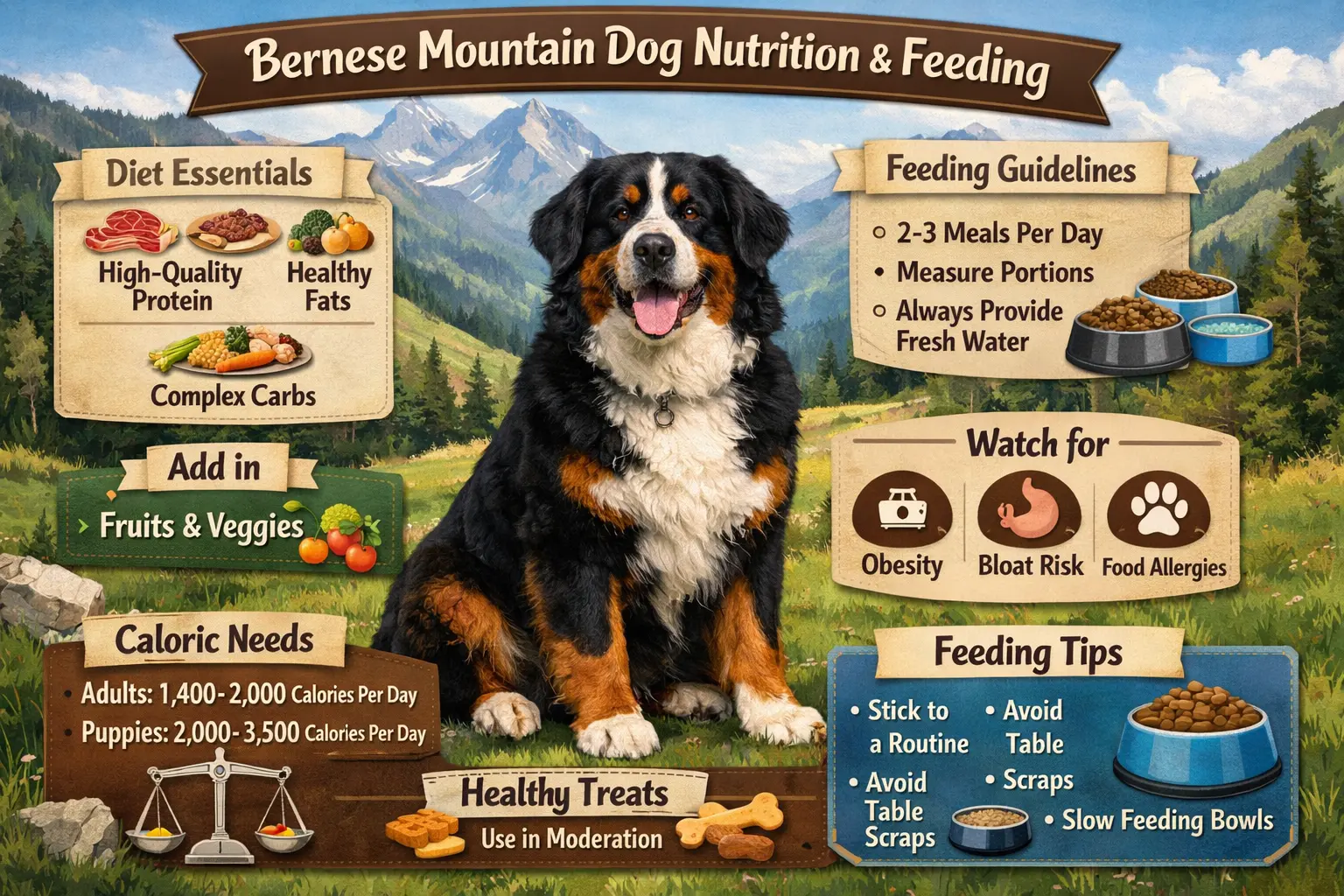
Bernese Mountain Dog Feeding Chart
Daily Calorie Requirements
| Adult Weight | Low Activity | Moderate Activity | High Activity |
|---|---|---|---|
| 70 lb (32 kg) | 1,600–1,800 kcal | 1,900–2,100 kcal | 2,200–2,400 kcal |
| 85 lb (39 kg) | 1,900–2,100 kcal | 2,200–2,400 kcal | 2,500–2,700 kcal |
| 100 lb (45 kg) | 2,200–2,400 kcal | 2,500–2,700 kcal | 2,800–3,000 kcal |
| 115 lb (52 kg) | 2,500–2,700 kcal | 2,800–3,000 kcal | 3,100–3,300 kcal |
Important Feeding Notes
- Treats count toward total daily calories.
- Neutered or spayed dogs often require 10–20% fewer calories.
- Senior dogs frequently need fewer calories despite maintaining a strong appetite.
- Monitor body condition regularly rather than relying solely on feeding guidelines.
Feeding Frequency by Life Stage
How often your Bernese Mountain Dog eats can be just as important as how much they eat.
| Life Stage | Meals Per Day | Benefits |
|---|---|---|
| Puppy (8 weeks–6 months) | 3 meals | Supports steady growth and digestion |
| Puppy (6–18 months) | 2–3 meals | Helps prevent overeating |
| Adult | 2 meals | Supports weight management |
| Senior | 2 smaller meals | Improves digestion and energy balance |
Large-breed dogs should generally avoid one large meal per day.
Why Puppy Nutrition Is Critical
Bernese Mountain Dog puppies should grow slowly and steadily.
Rapid growth may increase the risk of:
- Hip dysplasia
- Elbow dysplasia
- Joint instability
- Skeletal abnormalities
Healthy Bernese puppies should appear lean rather than overweight.
Puppy Feeding Guidelines
| Recommendation | Reason |
|---|---|
| Feed large-breed puppy food | Supports controlled growth |
| Avoid excess calcium | Protects developing bones |
| Prevent overfeeding | Reduces orthopedic stress |
| Monitor body condition | Maintains healthy development |
| Delay adult food until maturity | Supports proper growth |
Most Bernese Mountain Dogs remain on large-breed puppy food until approximately 18–24 months of age.
Using Body Condition Instead of Bowl Size
Feeding recommendations are only starting points.
A better approach is evaluating body condition.
Healthy Bernese Mountain Dogs should:
- Have easily felt ribs beneath a thin layer of fat
- Display a visible waist from above
- Show a slight abdominal tuck from the side
- Move comfortably and maintain muscle tone
If weight gain occurs:
- Reduce food intake by approximately 10%
- Limit treats
- Reassess after two to three weeks
Best Food for Bernese Mountain Dogs
There is no single perfect food for every Bernese Mountain Dog.
The best diet is one that is:
- Complete and balanced
- Digestible
- Age appropriate
- Consistent
- Sustainable for the owner
Comparing Popular Food Types
| Food Type | Advantages | Disadvantages | Best For |
|---|---|---|---|
| Dry Food (Kibble) | Convenient, affordable, balanced | Quality varies significantly | Most households |
| Wet Food | High palatability and moisture | More expensive | Picky eaters |
| Fresh Food | Highly digestible, minimally processed | Higher cost | Owners seeking fresh diets |
| Raw Food | Minimal processing | Nutritional and food safety risks | Experienced owners only |
| Freeze-Dried Food | Long shelf life, nutrient dense | Expensive | Travel or rotation feeding |
| Homemade Diets | Full ingredient control | Easy to create deficiencies | Veterinary-guided plans only |
For most families, a high-quality large-breed kibble or balanced fresh-food diet remains the most practical and reliable option.
How to Read a Dog Food Label
When evaluating dog food, focus on fundamentals.
Look For
- Named meat ingredients first
- Large-breed formulation
- Clearly identified fat sources
- Balanced nutrient profile
- Quality control standards
Be Cautious Of
- Vague ingredients
- Excessive marketing claims
- “Miracle” health promises
- Unsupported superfood claims
Good nutrition is based on formulation quality, not marketing language.
Safe and Unsafe Human Foods
Safe Foods in Moderation
| Safe Foods |
|---|
| Plain cooked chicken |
| Plain pumpkin |
| Green beans |
| Carrots |
| Plain rice |
| Oatmeal |
| Apples without seeds |
Foods That Are Toxic
| Unsafe Foods |
|---|
| Chocolate |
| Grapes |
| Raisins |
| Onions |
| Garlic |
| Xylitol |
| Alcohol |
| Cooked bones |
Human foods should remain occasional treats and never replace balanced dog food.
Treat Guidelines
Bernese Mountain Dogs typically love food, making weight management especially important.
Healthy Treat Rules
- Keep treats below 10% of daily calories.
- Use small portions.
- Avoid high-fat snacks.
- Count treats toward total daily intake.
Remember: lean dogs generally enjoy better mobility and longevity.
Common Feeding Problems and Solutions
Feeding Challenges and Fixes
| Problem | Common Cause | Potential Solution |
|---|---|---|
| Weight Gain | Excess calories or treats | Reduce portions and treats |
| Constant Hunger | Boredom or low satiety | Increase activity and dietary fiber |
| Loose Stool | Rapid food changes | Transition more gradually |
| Picky Eating | Excess treats and toppers | Establish consistent meal routines |
| Gas and Digestive Upset | Rich or poorly tolerated food | Simplify diet |
Feeding Senior Bernese Mountain Dogs
Senior Bernese Mountain Dogs require nutritional adjustments to support aging bodies.
Senior Nutrition Priorities
| Need | Benefit |
|---|---|
| Reduced Calories | Prevents obesity |
| Joint Support | Maintains mobility |
| Highly Digestible Ingredients | Supports gastrointestinal health |
| Consistent Weight Monitoring | Detects health changes early |
Most Bernese Mountain Dogs begin entering senior life stages around six to seven years of age.
Switching Dog Foods Safely
Changing food too quickly is one of the most common causes of digestive upset.
Recommended Transition Schedule
| Day | Old Food | New Food |
|---|---|---|
| 1–3 | 75% | 25% |
| 4–6 | 50% | 50% |
| 7–10 | 25% | 75% |
| Day 11+ | 0% | 100% |
Gradual transitions help prevent diarrhea, gas, and appetite disruptions.
When to Contact a Veterinarian
Some feeding-related problems require professional evaluation.
Seek Veterinary Advice If Your Dog Has:
- Rapid weight gain or weight loss
- Persistent diarrhea lasting more than two weeks
- Repeated vomiting
- Refusal to eat for 48 hours
- Signs of pain while eating
- Suspected food allergies
- Abnormal puppy growth patterns
Early intervention often prevents more serious health complications.
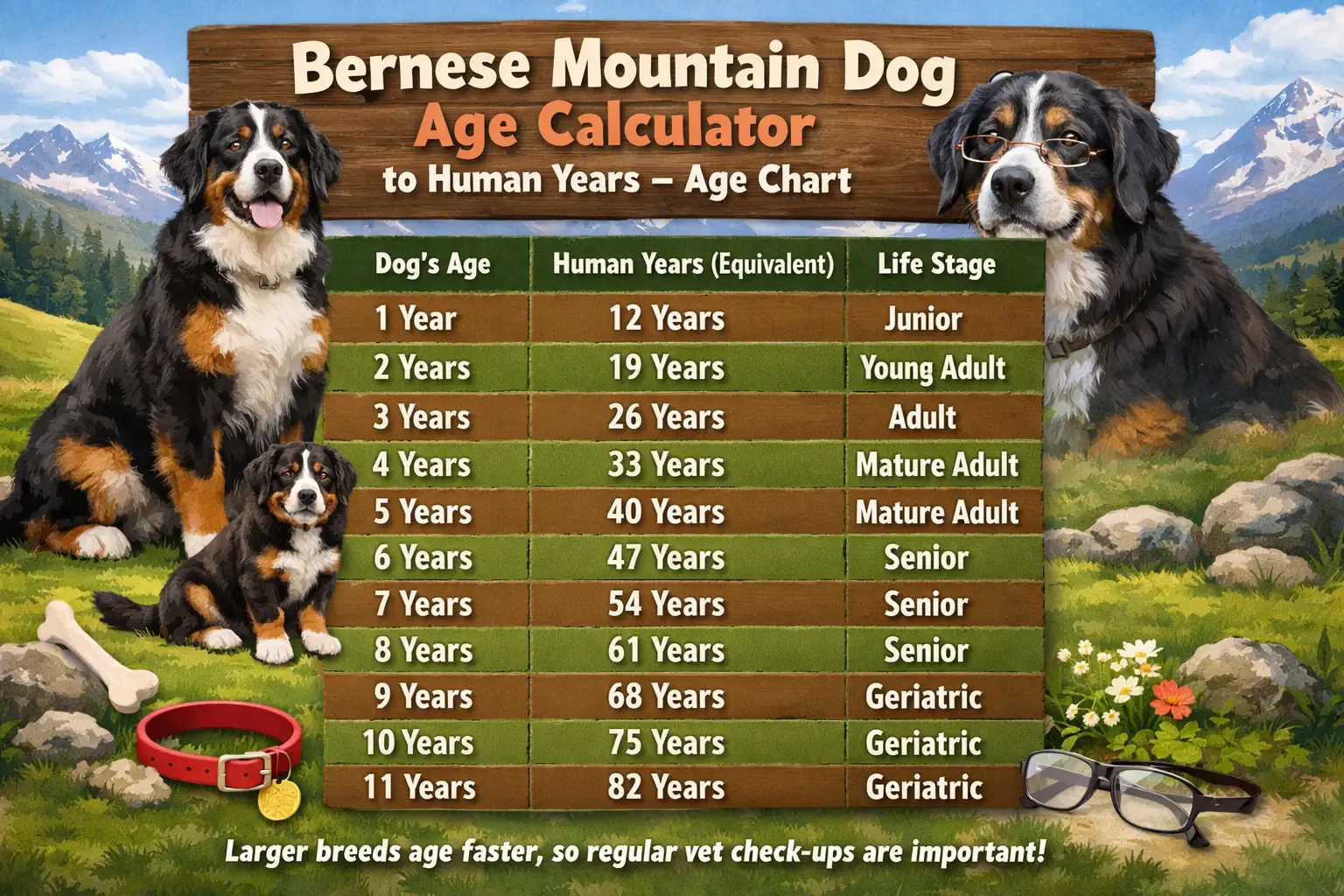
To understand your dog's current life stage, use the Bernese Mountain Dog Dog Age Calculator.
For life-stage context, see our Bernese Mountain Dog age chart.
Frequently Asked Questions
Should I Free-Feed My Bernese Mountain Dog?
No. Scheduled meals provide better portion control and help maintain healthy body weight.
Is Grain-Free Food Better?
Not necessarily. Grain-free diets should only be used when medically indicated or recommended by your veterinarian.
Does My Bernese Need Supplements?
Most healthy dogs eating complete and balanced food do not require additional supplements.
How Quickly Should I Change Foods?
Transition gradually over seven to ten days.
How Much Water Should My Dog Drink?
Fresh, clean water should be available at all times.
Final Thoughts
Proper nutrition is one of the most important investments you can make in your Bernese Mountain Dog’s long-term health. Controlled growth, lean body condition, balanced nutrition, and consistent feeding habits help support healthy joints, strong muscles, and improved quality of life.
You do not need expensive trends, complicated feeding formulas, or miracle supplements. Focus on balance, consistency, and monitoring your dog’s body condition over time.
A lean, active Bernese Mountain Dog is generally a healthier and more comfortable Bernese Mountain Dog.

Ata Ur Rehman is the founder of Pet Age in Human Years Calculator, an educational platform that provides age conversion charts and lifespan guides for dogs, cats, birds, and other companion animals. His work focuses on helping pet owners understand how animal ages translate into human years using commonly accepted age conversion formulas and published lifespan averages.
The website compiles breed and species lifespan data from kennel clubs, breed organizations, and general animal lifespan studies to present simple and easy-to-understand guides for pet owners worldwide.
This website was created to centralize animal age conversion charts into one easy reference platform for pet owners.
This article is for general education. For symptoms, medication, diet changes, or health concerns, use a qualified veterinarian who can assess your individual pet.