On this page
The Spanish Mastiff is best described as calm, confident, independent, and highly protective. Unlike many guardian breeds that react quickly to unfamiliar situations, the Spanish Mastiff prefers to observe and assess before taking action. This patience was essential for livestock guardians that needed to distinguish between normal activity and genuine threats.
With their families, Spanish Mastiffs are affectionate, loyal, and surprisingly gentle for their size. They often form strong bonds with household members and naturally position themselves where they can monitor both family and property. Although they may not constantly seek attention, they enjoy being close to their owners and participating in daily routines.
Around strangers, the breed tends to be reserved rather than openly friendly. Most Spanish Mastiffs will remain calm and observant while determining whether a visitor represents a threat. Early socialization is essential to ensure this natural caution does not develop into excessive territorial behavior.
Children are usually treated with patience and tolerance. However, their enormous size means accidental bumps or knocks can occur, particularly with toddlers and young children. Supervision is recommended during interactions.
Spanish Mastiff Behavior Overview
| Behavior Area | Typical Behavior | Owner Considerations |
|---|---|---|
| Family Members | Loyal and protective | Forms strong family bonds |
| Strangers | Reserved and cautious | Requires socialization |
| Children | Gentle and patient | Supervision recommended |
| Other Dogs | Generally tolerant | Early exposure improves compatibility |
| Small Pets | Variable | Introduce carefully |
| Guarding Instinct | Extremely strong | Excellent property protection |
| Barking | Low frequency | Usually barks only when necessary |
| Independence | Very high | Requires experienced handling |
Spanish Mastiff Trait Ratings
| Trait | Rating |
|---|---|
| Family Friendly | 4/5 |
| Child Friendly | 4/5 |
| Trainability | 3/5 |
| Intelligence | 4/5 |
| Shedding | 3/5 |
| Barking | 2/5 |
| Drooling | 4/5 |
| Exercise Needs | 2/5 |
| Guarding Ability | 5/5 |
| Apartment Suitability | 1/5 |
Training, Exercise, and Daily Care Needs
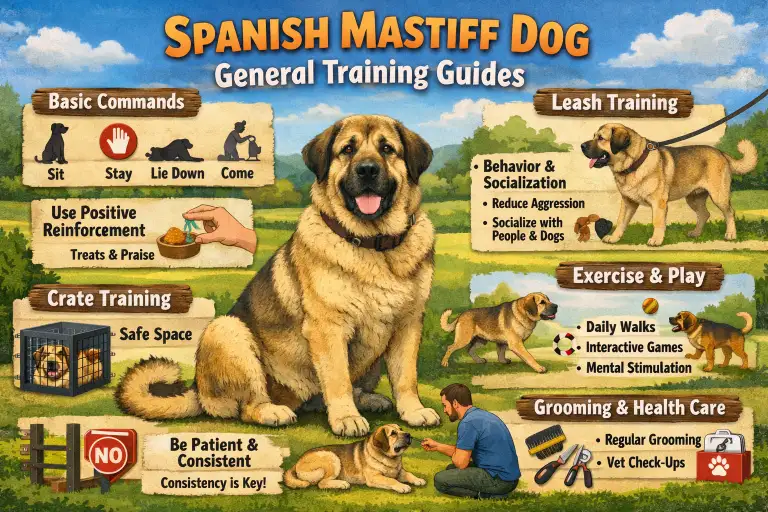
Training a Spanish Mastiff requires patience, consistency, and realistic expectations. This breed was designed to think independently rather than follow commands instantly. Owners who expect the obedience of breeds such as Border Collies or German Shepherds may become frustrated.
Positive reinforcement methods work best. Harsh corrections often damage trust and reduce cooperation. Early obedience training should focus on leash manners, recall, basic commands, and social exposure to different people, animals, and environments.
Exercise requirements are lower than many people expect for such a large dog. Spanish Mastiffs generally need moderate daily walks and access to secure outdoor space rather than intense physical activity.
Exercise Recommendations
| Age | Recommended Exercise |
|---|---|
| 2-6 Months | Short walks and supervised play |
| 6-12 Months | Moderate walks and basic training |
| 1-2 Years | Increased activity while protecting joints |
| Adult | 45-60 minutes daily |
| Senior | Gentle walks and light activity |
Daily Care Expectations
| Care Category | Requirement | Frequency |
|---|---|---|
| Walking | Moderate exercise | Daily |
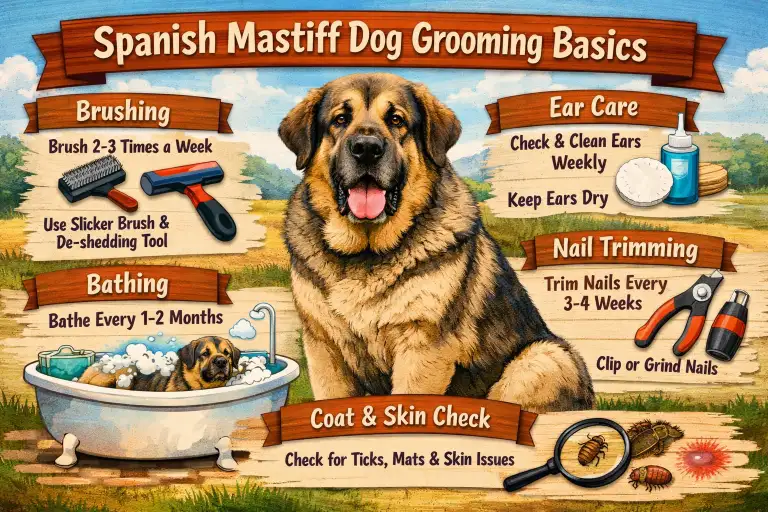
| Brushing | Weekly grooming | 1-2 times weekly |
| Nail Trimming | Routine maintenance | Monthly |
| Ear Cleaning | Prevent infections | Every 2-4 weeks |
| Dental Care | Prevent dental disease | Several times weekly |
| Mental Stimulation | Patrols or enrichment activities | Daily |
Health, Lifespan, and Common Medical Issues
Spanish Mastiffs are generally healthy for a giant breed, but their size creates several important health considerations.
Hip and elbow dysplasia are among the most common orthopedic conditions. Responsible breeders screen breeding animals to reduce these risks.
Gastric dilatation-volvulus, commonly called bloat, is one of the most serious emergencies affecting giant breeds. Owners should learn the symptoms and seek immediate veterinary attention if they occur.
Common Health Conditions
| Health Issue | Risk Level | Prevention Strategy |
|---|---|---|
| Hip Dysplasia | Medium | Weight management and screening |
| Elbow Dysplasia | Medium | Controlled growth and exercise |
| Bloat | High | Multiple smaller meals daily |
| Heart Disease | Medium | Routine veterinary examinations |
| Obesity | Medium | Portion control and exercise |
| Skin Problems | Low-Medium | Proper grooming and hygiene |
Spanish Mastiff Lifespan
| Category | Typical Range |
|---|---|
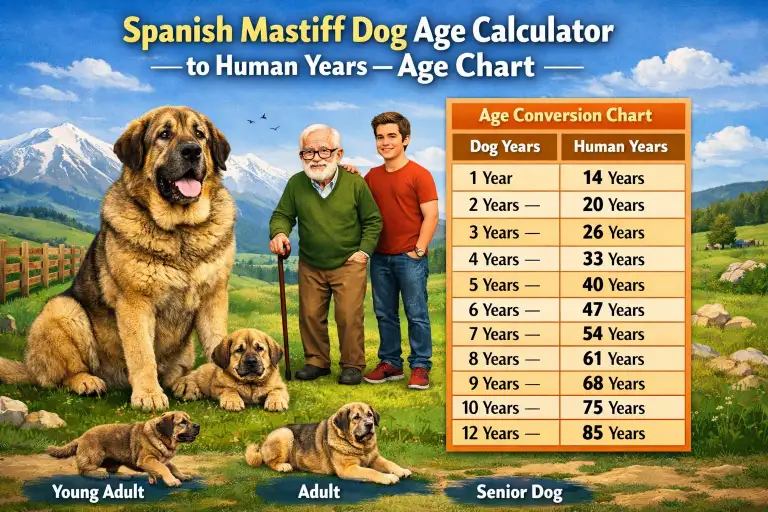
| Average Lifespan | 10-12 years |
| Senior Stage Begins | Around 7 years |
| Maximum Reported Lifespan | 13-14 years |
Spanish Mastiff Ownership Costs
Owning a giant breed involves significant financial commitment. Food consumption, veterinary expenses, medications, and emergency care costs are considerably higher than for smaller dogs.
Estimated Ownership Costs
| Expense | Estimated Cost |
|---|---|
| Puppy Purchase Price | $1,500-$3,500 |
| Monthly Food Costs | $80-$150 |
| Annual Veterinary Care | $500-$1,200 |
| Insurance | $50-$150 per month |
| Grooming | $20-$50 per month |
| Lifetime Ownership Cost | $20,000-$35,000+ |
Who Should Own a Spanish Mastiff?
The ideal owner understands guardian breeds and can provide adequate space, leadership, and socialization opportunities.
Owner Suitability Table
| Owner Type | Suitability |
|---|---|
| Experienced Owners | Excellent |
| Farm Owners | Excellent |
| Rural Properties | Excellent |
| Families with Children | Good |
| Multi-Pet Homes | Moderate |
| First-Time Owners | Poor |
| Apartment Residents | Very Poor |
| Highly Active Urban Owners | Poor |
Frequently Asked Questions
Q: How big does a Spanish Mastiff get?
A: Adult males usually weigh between 140 and 220 pounds and stand 28 to 35 inches tall, while females typically weigh 120 to 200 pounds and stand 26 to 32 inches tall.
Q: Are Spanish Mastiffs good family dogs?
A: Yes. They are loyal, patient, and protective with family members, although supervision is recommended with very small children because of their size.
Q: Do Spanish Mastiffs bark a lot?
A: No. They are generally quiet dogs and usually bark only when they perceive a genuine threat.
Q: Are Spanish Mastiffs aggressive?
A: Properly socialized Spanish Mastiffs are not aggressive without reason. They are protective and territorial but typically calm and controlled.
Q: Are Spanish Mastiffs easy to train?
A: They are intelligent but independent. Training requires patience, consistency, and positive reinforcement techniques.
Q: Can a Spanish Mastiff live in an apartment?
A: Apartment living is generally not recommended because of the breed’s size and need for space.
Q: How much exercise does a Spanish Mastiff need?
A: Most adults require approximately 45 to 60 minutes of moderate daily exercise.
Q: How long do Spanish Mastiffs live?
A: The average lifespan ranges from 10 to 12 years, which is relatively good for a giant breed.
Q: How much does a Spanish Mastiff puppy cost?
A: Puppies from reputable breeders typically cost between $1,500 and $3,500 depending on pedigree and health testing.
Q: Is the Spanish Mastiff suitable for first-time dog owners?
A: Generally no. Their size, independence, and guarding instincts make them better suited to experienced owners.
Final Thoughts
The Spanish Mastiff remains one of the world’s most impressive livestock guardian breeds. Their calm confidence, immense size, and unwavering loyalty make them exceptional protectors and devoted companions for the right households. However, these same qualities also make ownership a serious responsibility.
Prospective owners should carefully consider space requirements, training commitment, and financial costs before choosing this breed. For experienced owners with sufficient room and an appreciation for independent guardian dogs, the Spanish Mastiff can be a remarkably rewarding companion capable of providing both affection and security for many years.

Ata Ur Rehman is the founder of Pet Age in Human Years Calculator, an educational platform that provides age conversion charts and lifespan guides for dogs, cats, birds, and other companion animals. His work focuses on helping pet owners understand how animal ages translate into human years using commonly accepted age conversion formulas and published lifespan averages.
The website compiles breed and species lifespan data from kennel clubs, breed organizations, and general animal lifespan studies to present simple and easy-to-understand guides for pet owners worldwide.
This website was created to centralize animal age conversion charts into one easy reference platform for pet owners.
This article is for general education. For symptoms, medication, diet changes, or health concerns, use a qualified veterinarian who can assess your individual pet.