On this page
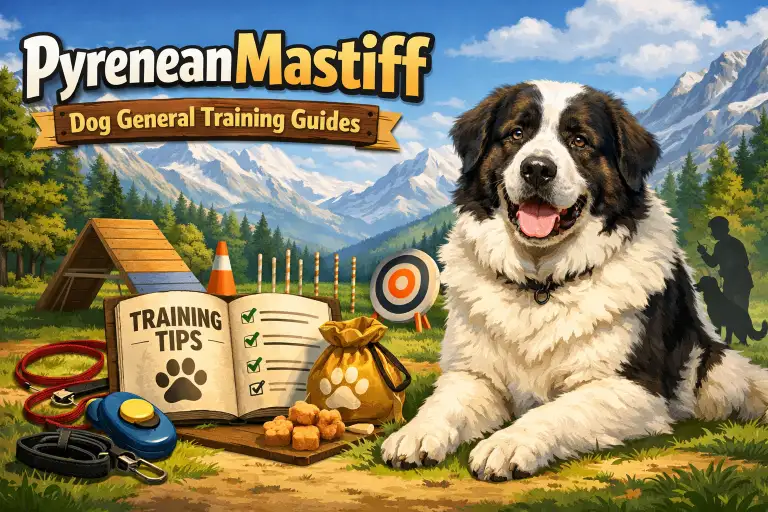
The Pyrenean Mastiff is one of the world’s most impressive livestock guardian breeds. Originally developed in the mountains of Spain to protect sheep from wolves and predators, this giant breed combines calm confidence with strong protective instincts and remarkable independence. These qualities make them exceptional guardians, but they also make training very different from training a typical family dog.
If you are looking for advice on Pyrenean Mastiff training, it is important to understand one fact first: this breed was designed to think independently rather than wait for instructions from humans. Many owners mistake this independence for stubbornness, but in reality it is the trait that made the breed successful for centuries as a livestock protector.
Training success depends on patience, consistency, and understanding how guardian breeds learn. Harsh corrections, dominance methods, and repetitive drilling often create resistance rather than obedience. Positive reinforcement, clear boundaries, and gradual exposure to new experiences produce far better results.
Unlike many breeds that reach maturity by 12 to 18 months, the Pyrenean Mastiff develops slowly and may not reach full mental maturity until two or even three years of age. Owners who understand this timeline are far more likely to build a confident, reliable, and well-mannered companion.
| Trait | Impact on Training |
|---|---|
| Giant Size | Early training is essential because an untrained adult can exceed 160 pounds. |
| Independent Thinking | Commands may be evaluated rather than immediately obeyed. |
| Guardian Instincts | Protective behaviors require careful socialization and management. |
| Slow Maturity | Training consistency must continue for several years. |
| Moderate Energy | Mental stimulation is often more important than intense exercise. |
| Strong Bond With Family | Positive reinforcement strengthens cooperation and trust. |
Understanding the Pyrenean Mastiff Temperament and Trainability
The Pyrenean Mastiff is not naturally eager to please in the same way as breeds such as the Labrador Retriever or German Shepherd. Instead, they prefer to assess situations independently and determine whether an action makes sense. This behavior often surprises first-time owners who expect immediate responses to commands.
The breed was developed to make decisions without human guidance while protecting livestock in remote mountain environments. As a result, modern Pyrenean Mastiffs often pause before responding to commands, especially if they believe there is a more important concern nearby.
This does not mean they cannot be trained.
In fact, Pyrenean Mastiffs are highly intelligent dogs that learn quickly when training methods respect their temperament and motivations.
The key principles of successful Pyrenean Mastiff obedience training include:
- Consistent household rules.
- Short and engaging training sessions.
- High-value food rewards.
- Calm and confident handling.
- Early and extensive socialization.
- Avoiding harsh punishment or intimidation.
Owners who try to force obedience often encounter resistance, while owners who build trust and cooperation usually achieve excellent long-term results.
Training Expectations by Age
Training expectations should change as your dog grows. A puppy cannot be expected to perform like an adult guardian dog, and adolescence often brings temporary setbacks that are completely normal.
| Age Stage | Typical Behavior | Recommended Training Focus |
|---|---|---|
| 8-16 Weeks | Curious, playful, highly impressionable | Socialization, crate training, name recognition |
| 4-6 Months | Increased confidence and exploration | Basic obedience and leash manners |
| 6-18 Months | Testing boundaries and independence | Recall, impulse control, consistency |
| 18-36 Months | Gradual emotional maturity develops | Advanced obedience and guardian management |
| 3+ Years | Stable adult temperament | Maintenance and reinforcement training |
Understanding these stages helps prevent unrealistic expectations and reduces frustration for both owners and dogs.
When Should You Start Training a Pyrenean Mastiff Puppy?
The best time to start training a Pyrenean Mastiff puppy is immediately after bringing them home, typically around eight weeks of age.
Early training should focus less on obedience and more on developing confidence and trust. Puppies should safely experience:
- Different people.
- Children of various ages.
- Friendly vaccinated dogs.
- New sounds and surfaces.
- Veterinary visits.
- Car rides.
- Grooming and handling exercises.
The socialization window closes rapidly after sixteen weeks of age. Puppies that miss these experiences are significantly more likely to develop fearfulness, excessive guarding behavior, or reactivity later in life.
For guardian breeds such as the Pyrenean Mastiff, early socialization is one of the most important factors influencing adult temperament and trainability.
How to Train a Pyrenean Mastiff Step by Step
Training a Pyrenean Mastiff works best when sessions are short, positive, and consistent. Because these dogs were bred to make independent decisions, they respond better to cooperation than strict control.
Start with the skills that directly affect safety and daily life.
| Training Skill | Recommended Start Age | Session Length | Frequency | Main Goal |
|---|---|---|---|---|
| Name Recognition | 8 Weeks | 2-3 Minutes | 3 Times Daily | Build attention |
| Recall Training | 8-10 Weeks | 5 Minutes | 2 Times Daily | Reliable response |
| Leash Manners | 10-12 Weeks | 5-10 Minutes | Daily | Prevent pulling |
| Sit and Stay | 10 Weeks | 5 Minutes | Daily | Impulse control |
| Boundary Training | 12 Weeks | 5 Minutes | Daily | Property respect |
| Calm Greetings | 12 Weeks | 3-5 Minutes | Daily | Reduce jumping |
| Visitor Management | 4 Months | 10 Minutes | Weekly | Controlled guarding |
Step 1: Build Engagement
A Pyrenean Mastiff that pays attention to its owner is easier to train in every situation.
Say your dog’s name once and reward eye contact immediately. Repeat this exercise throughout the day in different environments.
Step 2: Teach Recall Early
Recall is one of the most important commands for giant guardian breeds.
Begin indoors using high-value rewards and short distances. Gradually increase distractions and distance over time.
Never punish a dog that returns after being called, even if it took longer than expected.
Step 3: Introduce Loose Leash Walking
Because adult Pyrenean Mastiffs can exceed 150 pounds, leash manners should become a priority early.
If your dog pulls, stop walking immediately and continue only when the leash becomes loose.
Consistency is critical because occasional success at pulling reinforces the behavior.
Step 4: Establish Household Boundaries
Guardian breeds perform best when rules remain predictable.
Decide early:
- Which rooms are allowed.
- Whether furniture is permitted.
- How visitors are greeted.
- Where meals are eaten.
- Which behaviors receive rewards.
Mixed signals create confusion and encourage testing boundaries.
Step 5: Develop Calm Visitor Greetings
Protective instincts are normal in this breed.
Teach your dog that visitors are introduced by you and do not require intervention unless invited to react.
Reward calm observation and relaxed body language around guests.
Socialization Training for Pyrenean Mastiffs
Socialization is often the difference between a confident guardian and an anxious or reactive dog.
The goal is not to make your dog friendly with everyone. The goal is to teach your dog to remain calm and neutral in normal situations.
| Experience | Recommended Age | Training Goal |
|---|---|---|
| Meeting New Adults | 8-16 Weeks | Confidence around strangers |
| Meeting Children | 8-16 Weeks | Calm interactions |
| Veterinary Visits | 8-20 Weeks | Reduced stress |
| Car Travel | 8-16 Weeks | Travel confidence |
| Busy Environments | 10-20 Weeks | Environmental stability |
| Friendly Dogs | 8-20 Weeks | Social skills |
| Grooming Handling | 8-16 Weeks | Easier care routines |
Common Pyrenean Mastiff Training Problems and Solutions
Most training issues are related to the breed’s natural guardian instincts rather than disobedience.
| Problem | Most Common Cause | Recommended Solution |
|---|---|---|
| Ignores Commands | Distractions or low motivation | Use higher-value rewards and reduce distractions |
| Pulls on Leash | Size and excitement | Stop-and-go training method |
| Excessive Barking | Territorial instincts | Identify triggers and reward quiet behavior |
| Jumping on Visitors | Excitement | Reward sitting and calm greetings |
| Overprotectiveness | Insufficient socialization | Controlled exposure and structured introductions |
| Resource Guarding | Insecurity | Professional guidance and management |
| Selective Listening | Independent thinking | Increase engagement and consistency |
How to Stop a Pyrenean Mastiff From Barking Excessively
Barking is normal for livestock guardian breeds.
The objective should not be to eliminate barking but to teach appropriate responses.
Common barking triggers include:
- Strangers approaching the property.
- Wildlife activity.
- Unfamiliar noises.
- Boredom.
- Lack of mental stimulation.
Reward periods of calm behavior and teach a reliable “quiet” cue using positive reinforcement.
Avoid shouting, as many dogs interpret this as joining the alert.
Can You Train a Pyrenean Mastiff Off Leash?
Reliable off-leash recall is difficult for many guardian breeds.
Even well-trained individuals may choose to investigate potential threats or patrol an area independently.
For this reason, most owners should avoid off-leash exercise outside secure fenced areas.
When to Seek Professional Training Help
Professional support should be considered if your dog shows:
- Aggression toward people.
- Fear-based reactions.
- Escalating territorial behavior.
- Resource guarding.
- Unmanageable leash pulling.
- Severe anxiety.
Choose trainers experienced with livestock guardian breeds rather than trainers who rely heavily on dominance methods.
| Behavior Issue | Urgency Level | Recommended Professional |
|---|---|---|
| Human Aggression | High | Veterinary Behaviorist |
| Fear Aggression | High | Veterinary Behaviorist |
| Severe Guarding | Medium-High | Guardian Breed Trainer |
| Recall Problems | Medium | Obedience Trainer |
| Pulling on Leash | Medium | Obedience Trainer |
| Puppy Socialization | Low | Puppy Trainer |
Frequently Asked Questions
Are Pyrenean Mastiffs easy to train?
Pyrenean Mastiffs are intelligent but independent dogs. They are generally considered moderately difficult to train compared with highly handler-focused breeds.
At what age should Pyrenean Mastiff training begin?
Training should begin as soon as the puppy arrives home, usually around eight weeks of age.
Do Pyrenean Mastiffs respond well to positive reinforcement?
Yes. Positive reinforcement methods consistently outperform punishment-based training with this breed.
How long does it take to train a Pyrenean Mastiff?
Basic obedience often develops within several months, but full emotional maturity and reliable behavior may take two to three years.
Are Pyrenean Mastiffs aggressive?
Properly socialized Pyrenean Mastiffs are generally calm, stable, and gentle dogs. Their natural instinct is protection rather than aggression.
Can Pyrenean Mastiffs live with other pets?
Yes. Early introductions and socialization usually allow them to live successfully with other dogs and household animals.
Why does my Pyrenean Mastiff ignore commands?
Selective listening is common in guardian breeds because they naturally evaluate situations independently before responding.
Do Pyrenean Mastiffs bark a lot?
They can be vocal, especially during the night or when monitoring their territory.
Can first-time owners train a Pyrenean Mastiff successfully?
Yes, although first-time owners often benefit from professional guidance during puppyhood and adolescence.
Are Pyrenean Mastiffs suitable for apartment living?
Their size and guardian instincts generally make larger homes with outdoor space a better fit.
Final Thoughts
Training a Pyrenean Mastiff requires patience, consistency, and realistic expectations.
This is not a breed that aims to obey every command instantly. Instead, it is a thoughtful guardian that has spent centuries making independent decisions while protecting livestock and families.
Owners who respect that history and adapt their training methods accordingly usually discover a loyal, calm, and remarkably dependable companion.
Focus on early socialization, positive reinforcement, clear boundaries, and long-term consistency.
The result is not simply an obedient dog but a confident guardian capable of becoming an exceptional family protector and lifelong partner.

Ata Ur Rehman is the founder of Pet Age in Human Years Calculator, an educational platform that provides age conversion charts and lifespan guides for dogs, cats, birds, and other companion animals. His work focuses on helping pet owners understand how animal ages translate into human years using commonly accepted age conversion formulas and published lifespan averages.
The website compiles breed and species lifespan data from kennel clubs, breed organizations, and general animal lifespan studies to present simple and easy-to-understand guides for pet owners worldwide.
This website was created to centralize animal age conversion charts into one easy reference platform for pet owners.
This article is for general education. For symptoms, medication, diet changes, or health concerns, use a qualified veterinarian who can assess your individual pet.