On this page
If you’ve ever wondered how old your Bloodhound is in human years, you’re not alone. Bloodhounds are a large dog breed with a unique aging pattern that differs significantly from both humans and smaller dogs. Because dogs mature rapidly during their early years and age at different rates throughout life, simple formulas often fail to provide an accurate comparison.
A Bloodhound age chart helps estimate your dog’s human age equivalent using age-conversion data based on large-breed development and lifespan patterns. Rather than assuming dogs age at a constant rate, the chart reflects how Bloodhounds mature quickly in their first years, spend several years in adulthood, and typically enter their senior stage earlier than smaller breeds.
Understanding your Bloodhound’s age in human years can help you:
• Better understand age-related behavior changes
• Adjust exercise and activity levels appropriately
• Plan nutrition based on life stage
• Anticipate senior health and mobility needs
• Track your dog’s progression through key life stages
Whether your Bloodhound is still a growing puppy, an active adult, or a senior companion, comparing dog years to human years provides useful context for their care and overall wellbeing.
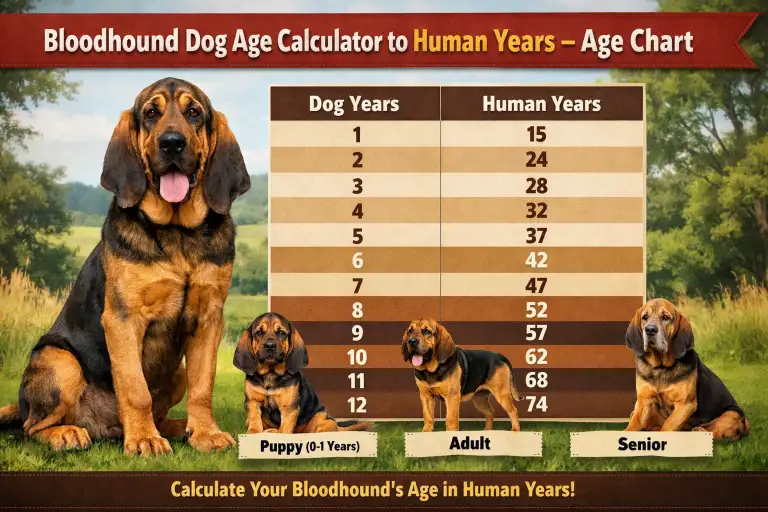
Bloodhound Age Chart: Dog Years to Human Years
The Bloodhound age chart below provides a quick reference for converting Bloodhound years into human years. While individual dogs may age differently depending on genetics, weight, activity level, and overall health, this chart reflects the typical aging pattern observed in large dog breeds.
Unlike the outdated “1 dog year equals 7 human years” rule, Bloodhounds mature much faster during their first two years of life. After reaching adulthood, aging becomes more gradual before accelerating again during the senior years.
Bloodhound Age to Human Years Chart
| Bloodhound Age | Human Age Equivalent | Life Stage |
|---|---|---|
| 1 year | 15 human years | Puppy |
| 2 years | 24 human years | Young Adult |
| 3 years | 28 human years | Adult |
| 4 years | 32 human years | Adult |
| 5 years | 36 human years | Adult |
| 6 years | 42 human years | Mature Adult |
| 7 years | 47 human years | Mature Adult |
| 8 years | 51 human years | Senior |
| 9 years | 56 human years | Senior |
| 10 years | 61 human years | Senior |
| 11 years | 65 human years | Geriatric |
| 12 years | 69 human years | Geriatric |
The chart illustrates why the traditional seven-year rule is inaccurate. For example, a 2-year-old Bloodhound is developmentally closer to a 24-year-old human rather than a 14-year-old.
Use this Bloodhound age chart as a practical reference rather than an exact prediction. Every dog ages differently, but the chart provides a reliable guide for understanding how your Bloodhound’s age compares to human years and where they fall within common life stages.
How Bloodhounds Age Compared to Humans (Why the 7-Year Rule Is Wrong)
Many people still believe that one dog year equals seven human years. While this rule is easy to remember, it does not accurately reflect how Bloodhounds age.
Like most dogs, Bloodhounds experience very rapid development during their first two years of life. A one-year-old Bloodhound has already reached a level of physical and behavioral maturity comparable to a human teenager. By age two, many Bloodhounds are developmentally similar to young adults.
After this early growth period, aging becomes more gradual. Later in life, however, the aging process begins to accelerate again as Bloodhounds enter their senior years.
Large breeds such as Bloodhounds age differently from smaller dogs. Their larger body size, heavier bone structure, and increased joint stress often contribute to a shorter average lifespan and an earlier transition into senior status.
Modern canine aging research shows that dog aging follows a non-linear pattern rather than a simple year-for-year calculation. This is why age charts provide a more useful estimate than the traditional seven-year rule.
Dog Age Myths vs Reality
| Common Belief | Reality |
|---|---|
| One dog year equals seven human years | Dogs age much faster during their early years |
| All dogs age the same way | Breed size significantly affects aging speed |
| Dogs age evenly every year | Aging rates change throughout life |
| Large and small breeds age similarly | Large breeds often reach senior age earlier |
Understanding how Bloodhounds age can help owners make better decisions about nutrition, exercise, health monitoring, and senior care throughout their dog’s life.
Bloodhound Life Stages by Age
Bloodhounds pass through several distinct life stages, each with unique physical, behavioral, and health characteristics. Understanding these stages helps owners provide appropriate care and better anticipate age-related changes.
Bloodhound Life Stages Chart
| Life Stage | Age Range | Common Characteristics |
|---|---|---|
| Puppy | 0–1 year | Rapid growth, social development, high curiosity |
| Young Adult | 1–3 years | Increased strength, energy, and confidence |
| Adult | 4–7 years | Stable temperament and peak physical condition |
| Senior | 8–10 years | Reduced stamina, slower movement, increased rest |
| Geriatric | 11+ years | Greater need for mobility support and health monitoring |
Most Bloodhounds are considered seniors at approximately eight years of age. While many remain active and alert, subtle signs of aging often begin to appear around this stage.
Common signs of aging in Bloodhounds include:
- Slower movement after rest
- Reduced endurance during long walks
- Increased sleeping time
- Changes in weight or appetite
- Mild stiffness in joints and hips
- Longer recovery after physical activity
Recognizing these changes early allows owners to adjust care routines and maintain quality of life as their Bloodhound ages.
Bloodhound Lifespan and Aging Expectations
The average Bloodhound lifespan is typically between 10 and 12 years, although some individuals may live longer with proper care, genetics, and overall health management.
Several factors influence how a Bloodhound ages, including:
- Genetics and breeding history
- Body weight and physical condition
- Nutrition quality
- Exercise habits
- Preventive veterinary care
- Joint and mobility health
Because Bloodhounds are a large breed, maintaining a healthy weight throughout adulthood is particularly important for supporting long-term mobility and overall wellness.
While lifespan varies between individual dogs, understanding age milestones through a Bloodhound age chart helps owners better prepare for each stage of life.
How to Help Your Bloodhound Live a Longer, Healthier Life
Providing age-appropriate care can help Bloodhounds remain healthy, active, and comfortable throughout their lives.
Age-Based Care Guide
| Bloodhound Age | Recommended Care Focus |
|---|---|
| Puppy | Controlled growth, proper nutrition, joint support |
| Young Adult | Exercise, training, and weight management |
| Adult | Balanced diet, regular activity, preventive care |
| Senior | Mobility support, joint care, routine screenings |
| Geriatric | Comfort, monitoring, and individualized health support |
Additional ways to support healthy aging include:
- Feeding a high-quality diet designed for large breeds
- Maintaining a healthy body weight
- Providing consistent daily exercise
- Scheduling routine veterinary examinations
- Monitoring mobility and joint health
- Adapting activity levels as your Bloodhound ages
Small adjustments throughout your dog’s life can significantly improve comfort, mobility, and overall quality of life during the senior years.
To understand your dog's current life stage, use the Bloodhound Dog Age Calculator.
Final Thoughts
A Bloodhound age chart provides a practical way to compare Bloodhound years to human years and better understand your dog’s current life stage.
While no age conversion is perfectly precise, age charts offer valuable insight into physical maturity, aging patterns, and long-term care needs. Whether your Bloodhound is a playful puppy, an active adult, or a senior companion, understanding their human-age equivalent can help you make more informed decisions about their health and wellbeing throughout every stage of life.

Ata Ur Rehman is the founder of Pet Age in Human Years Calculator, an educational platform that provides age conversion charts and lifespan guides for dogs, cats, birds, and other companion animals. His work focuses on helping pet owners understand how animal ages translate into human years using commonly accepted age conversion formulas and published lifespan averages.
The website compiles breed and species lifespan data from kennel clubs, breed organizations, and general animal lifespan studies to present simple and easy-to-understand guides for pet owners worldwide.
This website was created to centralize animal age conversion charts into one easy reference platform for pet owners.
This article is for general education. For symptoms, medication, diet changes, or health concerns, use a qualified veterinarian who can assess your individual pet.