How to Train a Shiba Inu: Step-by-Step Guide for Puppies and Adults
Shiba Inu training starts with understanding the breed’s independent personality. A Shiba is small, intelligent, alert, and self-directed. They can learn quickly, but they usually cooperate best when training feels clear, rewarding, and worth their attention.
Recommended Dog Care Products
Based on your dog’s age, these products may help with comfort, health, grooming, and daily care.

Purina Pro Plan Veterinary Supplements
Daily probiotics for dogs to support digestive and gut health.
View on Amazon ↗
Earth Rated Poop Bags for Dogs
Leak-proof, extra thick waste bag refill rolls with lavender scent.
View on Amazon ↗
Greenies Pill Pockets for Dogs
Large dog treats for capsule medication, peanut butter flavor.
View on Amazon ↗
HONEY CARE All-Absorb Dog Wrap
Small male dog wraps, 50 count, useful for daily care support.
View on Amazon ↗
Seresto Flea & Tick Collar
Flea and tick treatment and prevention for dogs over 18 lbs.
View on Amazon ↗
Milk-Bone MaroSnacks
Small dog treats with real bone marrow in a 40 oz canister.
View on Amazon ↗
Vital Essentials Dog Treats
Freeze dried beef liver dog treats, grain free and single ingredient.
View on Amazon ↗
Stain & Odor Eliminator
Enzyme cleaner for pet stains, carpet messes, and strong odors.
View on Amazon ↗
Pur Luv Chicken Jerky Treats
Dog treats made with real chicken breast, high protein and chew-friendly.
View on Amazon ↗
Milk-Bone Flavor Snacks
Mini crunchy dog biscuits in a 36 oz canister for small rewards.
View on Amazon ↗As an Amazon Associate, we may earn from qualifying purchases.
This is why many owners describe Shibas as stubborn. In reality, most Shiba Inus are selective problem-solvers. They are not usually trying to be difficult; they are deciding whether the cue, reward, environment, and timing make sense to them.
Shiba Inus were originally bred for independent hunting, and that history still affects how they behave at home. They notice movement, sounds, people, dogs, smells, and changes in their surroundings. A small Shiba Inu may fit easily into an apartment, but mentally, this breed still needs structure, boundaries, and consistent training.
A good Shiba Inu training guide should not rely on force, dominance, or endless repetition. Training that uses pressure or physical correction can damage trust and make a Shiba less willing to engage. The better approach is to use short sessions, high-value rewards, clear cues, and predictable routines.
Without clear training boundaries, Shiba Inu owners often run into problems such as:
- Selective listening indoors and outdoors
- Leash refusal, freezing, or sudden pulling
- Poor recall when distractions are present
- Resource guarding around food, toys, or resting spaces
- Overexcitement around other dogs or strangers
- Ignoring commands when rewards are not motivating enough
Successful Shiba Inu training focuses on motivation, clarity, and short wins. When training respects the breed’s independence while still setting firm expectations, Shibas can become focused, responsive, and well-mannered companions.
How to Train a Shiba Inu Successfully
To understand how to train a Shiba Inu, owners need to understand how this breed learns. Shibas are smart, but they are not always eager to repeat the same task again and again. They learn best when the training session is short, the reward is valuable, and the cue is easy to understand.
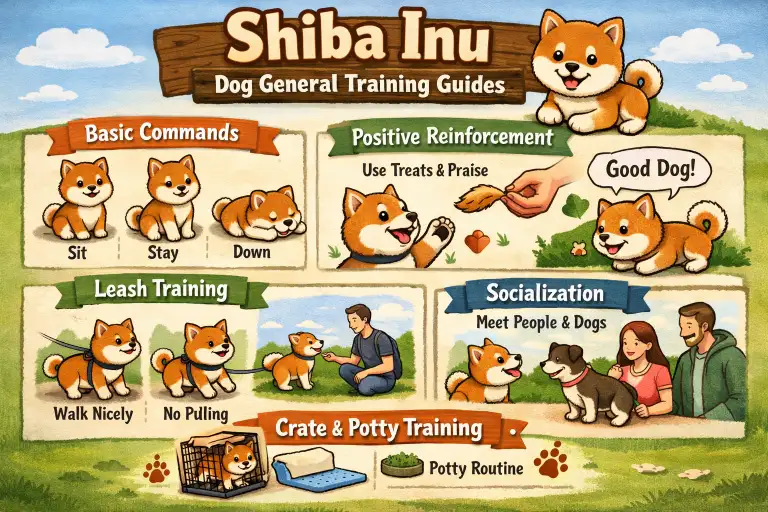
Positive reinforcement works best for most Shiba Inus. This means rewarding the behavior you want with food, praise, play, or access to something the dog enjoys. The reward must happen immediately after the correct behavior so the Shiba can connect the action with the result.
Consistency matters, but repetition alone is not enough. A Shiba may stop responding if the session becomes boring or predictable. Instead of long training sessions, use short practice blocks throughout the day.
| Training Principle | How It Works for Shiba Inu | Owner Action |
|---|---|---|
| Positive reinforcement | Rewards help the dog understand which behavior should happen again | Use treats, toys, praise, or access to something the dog wants |
| Clear timing | Shibas learn faster when the reward follows the behavior immediately | Reward within seconds of the correct action |
| Short sessions | Long sessions can cause boredom or disengagement | Train for 5–10 minutes at a time |
| Motivation | Shibas respond better when the reward has real value | Use higher-value rewards for harder tasks |
| Behavior shaping | Complex behaviors are easier when broken into smaller steps | Reward progress instead of waiting for perfection |
Shibas are not usually stubborn out of spite. They are thinking dogs. If a cue fails, the issue is often unclear communication, weak motivation, too much distraction, or asking for too much too soon.
Recommended Dog Care Products
Based on your dog’s age, these products may help with comfort, health, grooming, and daily care.
Purina Pro Plan Veterinary Supplements
Daily probiotics for dogs to support digestive and gut health.
View on Amazon ↗
Earth Rated Poop Bags for Dogs
Leak-proof, extra thick waste bag refill rolls with lavender scent.
View on Amazon ↗
Greenies Pill Pockets for Dogs
Large dog treats for capsule medication, peanut butter flavor.
View on Amazon ↗
HONEY CARE All-Absorb Dog Wrap
Small male dog wraps, 50 count, useful for daily care support.
View on Amazon ↗
Seresto Flea & Tick Collar
Flea and tick treatment and prevention for dogs over 18 lbs.
View on Amazon ↗
Milk-Bone MaroSnacks
Small dog treats with real bone marrow in a 40 oz canister.
View on Amazon ↗
Vital Essentials Dog Treats
Freeze dried beef liver dog treats, grain free and single ingredient.
View on Amazon ↗
Stain & Odor Eliminator
Enzyme cleaner for pet stains, carpet messes, and strong odors.
View on Amazon ↗
Pur Luv Chicken Jerky Treats
Dog treats made with real chicken breast, high protein and chew-friendly.
View on Amazon ↗
Milk-Bone Flavor Snacks
Mini crunchy dog biscuits in a 36 oz canister for small rewards.
View on Amazon ↗As an Amazon Associate, we may earn from qualifying purchases.
Step-by-Step Shiba Inu Training Method for Puppies and Adults
A strong Shiba Inu training plan should start with basic communication before moving into obedience, leash walking, recall, and impulse control. Puppies may learn faster because they have fewer habits to undo, while adult Shibas may need more patience and better rewards.
Keep training sessions short and focused. Practice for 5–10 minutes, 2–4 times per day. Stop before your Shiba becomes bored, frustrated, or distracted.
| Step | What to Teach | How to Train It | Puppy Tip | Adult Shiba Tip |
|---|---|---|---|---|
| 1 | Name recognition | Say the dog’s name and reward eye contact | Use cheerful praise and small treats | Use higher-value rewards if the dog ignores you |
| 2 | Sit | Guide the dog with a treat and reward when the rear touches the floor | Practice only a few repetitions at a time | Reward calm sitting before meals, doors, and walks |
| 3 | Come / recall | Call the dog from a short distance and reward immediately | Start indoors with low distractions | Use a long line outdoors before trusting recall |
| 4 | Loose leash walking | Reward walking near you and stop when pulling begins | Use short, positive walks | Practice in quiet areas before busy streets |
| 5 | Leave it / drop it | Reward the dog for moving away from or releasing an item | Start with low-value items | Use trades instead of force to avoid guarding |
| 6 | Settle | Reward calm behavior on a mat, bed, or chosen spot | Keep sessions brief and easy | Use after walks or meals when the dog is calmer |
Simple daily training flow:
| Time | Training Focus | Duration |
|---|---|---|
| Morning | Name recognition, sit, calm doorway manners | 5–7 minutes |
| Midday | Recall, leave it, impulse control | 5 minutes |
| Evening | Loose leash walking, settle, simple tricks | 5–10 minutes |
The goal is not to exhaust your Shiba with training. The goal is to build predictable communication so your dog understands what earns rewards and what behavior does not work.
Shiba Inu Puppy Training vs Adult Shiba Inu Training
Shiba Inu puppy training should focus on socialization, bite control, house routines, crate comfort, name recognition, and short recall games. Puppies need frequent rewards and gentle structure because they are still learning how the household works.
Adult Shiba Inu training often focuses more on changing habits. An adult Shiba may already have learned to ignore commands, pull on leash, guard items, or avoid handling. This does not mean the dog cannot improve. It means the training plan must move slowly and reward better choices consistently.
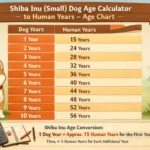
Age also affects training expectations. A young Shiba usually has more energy and may need more frequent practice. A senior Shiba may need shorter sessions, lower-impact activities, and more patience. To understand your dog’s life stage more clearly, use the Shiba Inu Small Dog Age Calculator to compare your Shiba’s age in human years.
| Life Stage | Main Training Focus | Best Approach |
|---|---|---|
| Puppy | Socialization, house rules, name response, bite control | Short sessions, frequent rewards, gentle exposure |
| Young adult | Leash manners, recall, obedience, impulse control | Structured routines and higher-value rewards |
| Adult | Habit correction, reliability, behavior management | Clear rules, consistency, gradual difficulty increases |
| Senior | Comfort, calm routines, light mental stimulation | Shorter sessions and age-appropriate expectations |
Common Shiba Inu Training Problems and How to Fix Them
Shiba Inu behavior problems often happen when the dog is confused, under-motivated, overstimulated, or pushed too quickly. Many issues look like stubbornness on the surface, but the real cause is usually training structure, environment, or reward value.
Here are the most common Shiba Inu training problems and practical ways to fix them:
| Problem | Likely Cause | How to Fix It |
|---|---|---|
| Won’t come when called | Too much distraction or weak reward | Practice indoors first, use high-value treats, and use a long line outdoors |
| Ignores commands | Cue is unclear or repeated too often | Use one clear word, reward immediately, and avoid repeating the cue |
| Leash pulling | Excitement, exploration, or poor leash history | Stop when pulling starts and reward loose leash walking |
| Freezing on walks | Fear, overstimulation, or refusal | Pause calmly, reduce pressure, and reward small forward movement |
| Resource guarding | Fear of losing food, toys, or space | Use trade games and teach drop it without grabbing items |
| Overreacting to dogs | Frustration, fear, or poor social exposure | Create distance and reward calm attention before moving closer |
| Running away outdoors | Prey drive and weak recall | Avoid off-leash freedom until recall is reliable in multiple settings |
Do not punish a Shiba for failing a cue in a difficult environment. Instead, lower the difficulty, increase the reward value, and rebuild the behavior in smaller steps.
Recommended Dog Care Products
Based on your dog’s age, these products may help with comfort, health, grooming, and daily care.
Purina Pro Plan Veterinary Supplements
Daily probiotics for dogs to support digestive and gut health.
View on Amazon ↗
Earth Rated Poop Bags for Dogs
Leak-proof, extra thick waste bag refill rolls with lavender scent.
View on Amazon ↗
Greenies Pill Pockets for Dogs
Large dog treats for capsule medication, peanut butter flavor.
View on Amazon ↗
HONEY CARE All-Absorb Dog Wrap
Small male dog wraps, 50 count, useful for daily care support.
View on Amazon ↗
Seresto Flea & Tick Collar
Flea and tick treatment and prevention for dogs over 18 lbs.
View on Amazon ↗
Milk-Bone MaroSnacks
Small dog treats with real bone marrow in a 40 oz canister.
View on Amazon ↗
Vital Essentials Dog Treats
Freeze dried beef liver dog treats, grain free and single ingredient.
View on Amazon ↗
Stain & Odor Eliminator
Enzyme cleaner for pet stains, carpet messes, and strong odors.
View on Amazon ↗
Pur Luv Chicken Jerky Treats
Dog treats made with real chicken breast, high protein and chew-friendly.
View on Amazon ↗
Milk-Bone Flavor Snacks
Mini crunchy dog biscuits in a 36 oz canister for small rewards.
View on Amazon ↗As an Amazon Associate, we may earn from qualifying purchases.
Shiba Inu Obedience Training Tips
Shiba Inu obedience training should focus on useful everyday behaviors instead of tricks alone. The most important obedience cues are name response, sit, stay, come, leave it, drop it, wait, and settle.
For best results, connect obedience to daily routines. Ask for a sit before meals, a wait before opening doors, a calm pause before leash walks, and a settle behavior during quiet time. This teaches your Shiba that obedience is part of normal life, not just a training game.
- Use short cue words and avoid changing commands.
- Reward quickly so the dog knows which behavior worked.
- Train in easy environments before adding distractions.
- Use better rewards for harder behaviors like recall and leash focus.
- End sessions while your Shiba is still engaged.
When to Seek Professional Help for Shiba Inu Training
Some Shiba Inu training problems need professional support. This is especially true when behavior affects safety, daily handling, or the dog’s ability to relax.
Consider professional help if your Shiba shows:
| Situation | Why It Matters | What to Do |
|---|---|---|
| Aggression toward people or dogs | Can lead to bites, fights, or unsafe handling | Work with a qualified trainer or veterinary behavior professional |
| Severe fear or shutdowns | The dog may stop learning or avoid normal activities | Use a slow behavior plan focused on confidence and safety |
| Repeated recall failure | Outdoor safety becomes a serious risk | Build recall with controlled setups and long-line practice |
| Resource guarding | Guarding can escalate if handled incorrectly | Avoid punishment and use a structured trade-based plan |
| Owner overwhelm | Stress can make training inconsistent | Get a clear plan from a professional who understands independent breeds |
Avoid trainers who rely on fear, intimidation, leash corrections, or punishment-heavy methods. Shibas usually respond better when training protects trust and gives the dog a clear reason to cooperate.
Training and Age: Why Your Shiba Inu’s Life Stage Matters
A Shiba Inu’s age affects energy level, attention span, exercise needs, and training expectations. A puppy needs socialization and routine-building. An adult Shiba needs consistency and reliability. A senior Shiba may need gentler training, shorter sessions, and more comfort-focused habits.
Because dog age does not match human age in a simple one-year-to-seven-years pattern, it helps to understand your Shiba’s real life stage. Use the Shiba Inu Small Dog Age Calculator to estimate your dog’s age in human years and adjust training expectations by life stage.
This is especially useful when deciding how long training sessions should be, how much activity your Shiba can handle, and whether behavior changes may be related to maturity or aging.
Shiba Inu Training FAQs
Are Shiba Inus hard to train?
Shiba Inus can be challenging to train because they are independent and selective. They are not unintelligent. They usually learn quickly when rewards are valuable, cues are clear, and sessions are short.
What is the best way to train a Shiba Inu?
The best way to train a Shiba Inu is to use positive reinforcement, short sessions, high-value rewards, and consistent rules. Avoid force-based methods because they can reduce trust and make the dog less cooperative.
Recommended Dog Care Products
Based on your dog’s age, these products may help with comfort, health, grooming, and daily care.
Purina Pro Plan Veterinary Supplements
Daily probiotics for dogs to support digestive and gut health.
View on Amazon ↗
Earth Rated Poop Bags for Dogs
Leak-proof, extra thick waste bag refill rolls with lavender scent.
View on Amazon ↗
Greenies Pill Pockets for Dogs
Large dog treats for capsule medication, peanut butter flavor.
View on Amazon ↗
HONEY CARE All-Absorb Dog Wrap
Small male dog wraps, 50 count, useful for daily care support.
View on Amazon ↗
Seresto Flea & Tick Collar
Flea and tick treatment and prevention for dogs over 18 lbs.
View on Amazon ↗
Milk-Bone MaroSnacks
Small dog treats with real bone marrow in a 40 oz canister.
View on Amazon ↗
Vital Essentials Dog Treats
Freeze dried beef liver dog treats, grain free and single ingredient.
View on Amazon ↗
Stain & Odor Eliminator
Enzyme cleaner for pet stains, carpet messes, and strong odors.
View on Amazon ↗
Pur Luv Chicken Jerky Treats
Dog treats made with real chicken breast, high protein and chew-friendly.
View on Amazon ↗
Milk-Bone Flavor Snacks
Mini crunchy dog biscuits in a 36 oz canister for small rewards.
View on Amazon ↗As an Amazon Associate, we may earn from qualifying purchases.
Can Shiba Inus be trained off leash?
Some Shibas can improve recall, but this breed often has strong prey drive and independent decision-making. Off-leash freedom should only happen in secure areas unless recall is reliable around distractions.
How long should Shiba Inu training sessions be?
Most Shiba Inu training sessions should last 5–10 minutes. Several short sessions per day usually work better than one long session.
How do you stop a Shiba Inu from ignoring commands?
Use clearer cues, better rewards, fewer repetitions, and easier training environments. If your Shiba ignores a command, lower the difficulty and reward small successes before adding distractions again.

Ata Ur Rehman is the founder of Pet Age in Human Years Calculator, an educational platform that provides age conversion charts and lifespan guides for dogs, cats, birds, and other companion animals. His work focuses on helping pet owners understand how animal ages translate into human years using commonly accepted age conversion formulas and published lifespan averages.
The website compiles breed and species lifespan data from kennel clubs, breed organizations, and general animal lifespan studies to present simple and easy-to-understand guides for pet owners worldwide.
This website was created to centralize animal age conversion charts into one easy reference platform for pet owners.