On this page
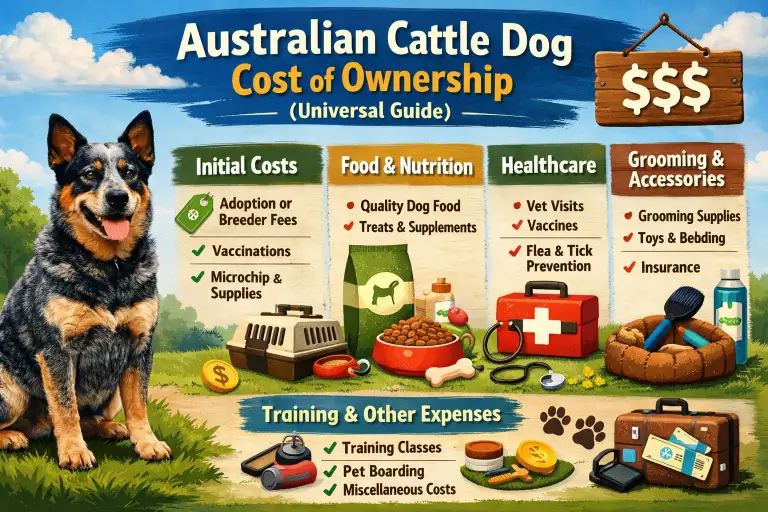
If you are asking how much an Australian Cattle Dog costs, the real answer is bigger than the purchase price. Most owners should plan for the dog’s upfront cost, first-year expenses, monthly care, annual vet care, insurance, training, and long-term emergency savings.
On average, an Australian Cattle Dog can cost $100 to $2,500 to buy or adopt, around $120 to $250 per month, about $1,500 to $3,000 per year, and roughly $18,000 to $40,000+ over its lifetime. Active working-line dogs, urban owners, and dogs with injuries or chronic health issues can cost more.
Quick cost overview
| Cost category | Typical range |
|---|---|
| Adoption or purchase price | $100 – $2,500 |
| First-year cost | $950 – $5,000+ |
| Average monthly cost | $120 – $250 |
| Average annual cost | $1,500 – $3,000 |
| Estimated lifetime cost | $18,000 – $40,000+ |
How Much Does an Australian Cattle Dog Cost to Buy?
The upfront cost of an Australian Cattle Dog usually depends on whether you adopt from a rescue or buy from a breeder. Adoption is usually cheaper, while breeder prices are higher because they may include pedigree, health testing, early care, and registration.
| Source | Typical cost |
|---|---|
| Rescue or shelter adoption | $100 – $500 |
| Rehoming fee | $100 – $600 |
| Pet-quality breeder puppy | $800 – $1,800 |
| Working-line or show-line puppy | $1,500 – $2,500+ |
A cheaper dog is not always cheaper long term. A low upfront price can still lead to higher vet, training, or behavior costs if the dog has poor early care, weak socialization, or untreated health problems.
Why Australian Cattle Dogs Cost More Than Many Owners Expect
Australian Cattle Dogs are often viewed as tough, low-maintenance farm dogs, but their energy and intelligence can increase ownership costs. They need structure, exercise, training, enrichment, and preventive health care to stay manageable and healthy.
- They may eat more than calmer medium breeds because of high activity levels.
- They often need early training and ongoing mental stimulation.
- Their athletic build can increase the risk of sprains, cuts, and orthopedic injuries.
- Boredom can lead to chewing, digging, barking, and property damage.
- Preventive care, dental care, parasite prevention, and joint support matter long term.
Owners who budget only for food and annual vaccines usually underestimate the real cost of owning an Australian Cattle Dog.
Australian Cattle Dog First-Year Cost
The first year is usually the most expensive year of Australian Cattle Dog ownership. This is when you pay for adoption or purchase, early vet care, supplies, training, spay or neuter surgery, and setup costs.
| First-year expense | Typical cost range |
|---|---|
| Adoption fee or breeder price | $100 – $2,500 |
| First-year vet care | $300 – $800 |
| Spay or neuter surgery | $200 – $600 |
| Crate, bed, bowls, leash, toys | $200 – $500 |
| Training classes or behavior help | $150 – $600 |
| Total estimated first-year cost | $950 – $5,000+ |
Puppies usually cost more in the first year because they need more vet visits, vaccines, supplies, and training. Adult rescue dogs may cost less upfront if they are already vaccinated, microchipped, and spayed or neutered.
Australian Cattle Dog Monthly Cost
After the first year, most owners spend around $120 to $250 per month on normal care. The monthly cost can rise if your dog needs insurance, daycare, paid exercise, prescription food, or extra training.
| Monthly expense | Typical cost range |
|---|---|
| Food and treats | $40 – $80 |
| Flea, tick, and heartworm prevention | $20 – $50 |
| Pet insurance | $30 – $70 |
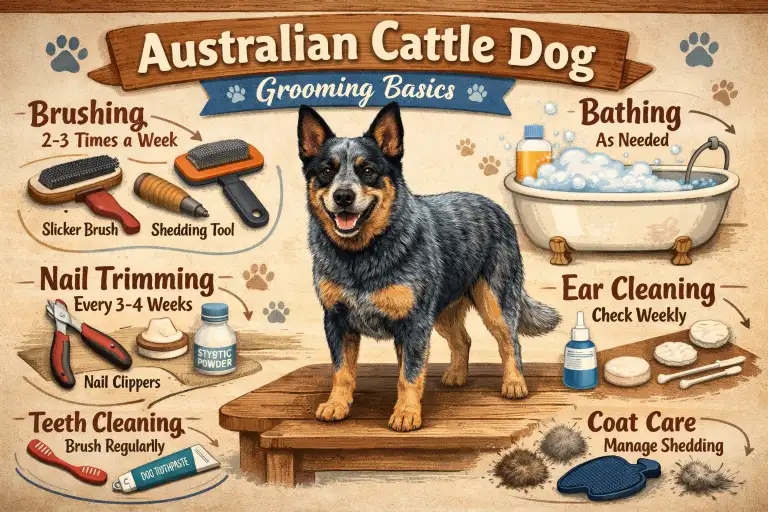
| Grooming supplies | $10 – $25 |
| Training, toys, and enrichment | $15 – $40 |
| Total monthly cost | $120 – $250 |
Australian Cattle Dogs are active and intense, so toys, chews, training tools, and exercise-related expenses may be higher than with calmer medium-sized breeds.
Australian Cattle Dog Annual Cost
The average annual cost of owning an Australian Cattle Dog is usually around $1,500 to $3,000. This includes routine care but does not include major emergency bills or specialist treatment.
| Annual expense | Typical cost range |
|---|---|
| Routine vet visit and vaccines | $200 – $500 |
| Dental care savings or cleanings | $150 – $400 |
| Licensing and registration | $10 – $30 |
| Replacement supplies | $100 – $300 |
| Food, prevention, insurance, and care | $1,200 – $2,500+ |
| Total annual cost | $1,500 – $3,000 |
Emergency vet care can quickly add hundreds or thousands of dollars, so annual budgeting should include a separate emergency fund.
Australian Cattle Dog Insurance Cost
Pet insurance is optional, but many Australian Cattle Dog owners consider it because the breed is active and injury-prone. A typical policy may cost around $30 to $70 per month, depending on location, age, deductible, coverage level, and pre-existing conditions.
| Insurance situation | Cost impact |
|---|---|
| No insurance | Lower monthly cost, higher emergency risk |
| Accident-only coverage | Lower premium, limited protection |
| Accident and illness coverage | Higher premium, broader protection |
| Older dog or health issues | Higher premium or exclusions |
Insurance does not make ownership cheaper every month, but it can reduce financial shock if your dog has an injury, surgery, or major illness.
Hidden Costs of Owning an Australian Cattle Dog
Many owners budget for food and vet visits but miss the hidden costs that come with a high-drive breed. These expenses do not happen every month, but they can change the real lifetime cost.
| Hidden cost | Why it matters |
|---|---|
| Professional training | Helps prevent chasing, barking, chewing, and control issues |
| Fence repair or upgrades | Important for active dogs that escape or patrol yards |
| Boarding or pet sitting | High-energy dogs may need experienced care |
| Emergency vet visits | Sprains, cuts, and accidents can be expensive |
| Dental cleanings | Often becomes more important with age |
| Replacement toys and gear | Active dogs wear out toys, beds, leashes, and collars faster |
These hidden expenses are why a realistic Australian Cattle Dog budget should include more than food and basic checkups.
What Makes Australian Cattle Dogs More or Less Expensive?
Two Australian Cattle Dogs can have very different ownership costs. Lifestyle, training, health, exercise routine, and housing setup all affect how much you spend.
| Cost factor | Lower-cost situation | Higher-cost situation |
|---|---|---|
| Activity level | Daily walks and structured play | Sports, long hikes, intense running |
| Living space | Secure yard | Apartment or weak fencing |
| Health history | Healthy, no injuries | Joint issues or frequent injuries |
| Training level | Well-trained | Ongoing behavior problems |
| Vet care needs | Routine visits only | Emergency or specialist care |
Australian Cattle Dogs are not usually expensive because of grooming or size. They become expensive when their energy, training needs, and injury risk are underestimated.
Australian Cattle Dog Lifetime Cost
Australian Cattle Dogs often live around 12 to 15 years, so small monthly expenses become a major lifetime commitment. Most owners should expect a lifetime cost of around $18,000 to $40,000+.
| Time period | Typical cost range |
|---|---|
| First year | $950 – $5,000+ |
| Each adult year | $1,500 – $3,000 |
| Estimated lifetime total | $18,000 – $40,000+ |
Dogs with injuries, allergies, dental disease, or chronic health issues may cost more over their lifetime. Owners who train early, maintain preventive care, and budget for emergencies usually manage costs more successfully.
Budget Tips for Australian Cattle Dog Owners
| Tip | Why it helps |
|---|---|
| Save monthly for vet care | Reduces stress from surprise bills |
| Train early | Prevents behavior-related costs |
| Use durable toys and gear | Reduces frequent replacements |
| Keep exercise structured | Lowers injury and behavior risk |
| Plan for dental care | Helps avoid expensive problems later |
| Compare insurance early | Usually easier before age or health issues raise costs |
Trying to save money by skipping training, preventive care, or good daily management often leads to higher costs later.
Helpful Australian Cattle Dog Resources
To estimate age, care needs, and related ownership planning, use the Australian Cattle Dog resources in this cluster:
- Australian Cattle Dog Full Guide
- Australian Cattle Dog Age Calculator
- Australian Cattle Dog Training Guide
- Australian Cattle Dog Grooming Basics
- Australian Cattle Dog Nutrition and Feeding Guide
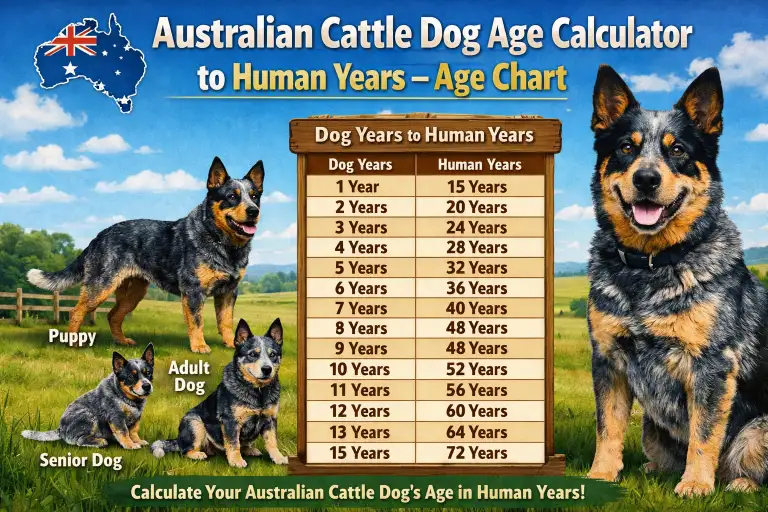
To understand your dog’s current life stage, use the Australian Cattle Dog Age Calculator.
For more detail, see our Australian Cattle Dog age chart.
Australian Cattle Dog Cost FAQs
How much does an Australian Cattle Dog cost?
An Australian Cattle Dog usually costs around $100 to $500 to adopt and around $800 to $2,500+ from a breeder. The total first-year cost is often much higher once vet care, supplies, training, and setup expenses are included.
How much does an Australian Cattle Dog cost per month?
Most owners spend around $120 to $250 per month on food, prevention, insurance, grooming supplies, toys, training, and basic care. Costs may be higher for very active dogs or dogs with medical needs.
Are Australian Cattle Dogs expensive to own?
Australian Cattle Dogs are moderately expensive to own. They are not costly because of grooming, but their activity level, training needs, injury risk, and long lifespan can make ownership more expensive than many people expect.
What is the lifetime cost of an Australian Cattle Dog?
The estimated lifetime cost of an Australian Cattle Dog is usually around $18,000 to $40,000+. The final amount depends on lifespan, health, insurance, training, food quality, emergency care, and lifestyle.
Is pet insurance worth it for an Australian Cattle Dog?
Pet insurance may be worth considering for Australian Cattle Dogs because they are active and can be prone to injuries. It increases monthly costs but may help reduce the impact of large emergency vet bills.
Final Cost Reality Check
An Australian Cattle Dog is not the cheapest breed to own, but the cost is manageable with planning. If you budget for training, food, preventive care, insurance or emergency savings, and long-term health needs, this breed can be a rewarding long-term companion without constant financial surprises.

Ata Ur Rehman is the founder of Pet Age in Human Years Calculator, an educational platform that provides age conversion charts and lifespan guides for dogs, cats, birds, and other companion animals. His work focuses on helping pet owners understand how animal ages translate into human years using commonly accepted age conversion formulas and published lifespan averages.
The website compiles breed and species lifespan data from kennel clubs, breed organizations, and general animal lifespan studies to present simple and easy-to-understand guides for pet owners worldwide.
This website was created to centralize animal age conversion charts into one easy reference platform for pet owners.
This article is for general education. For symptoms, medication, diet changes, or health concerns, use a qualified veterinarian who can assess your individual pet.