On this page
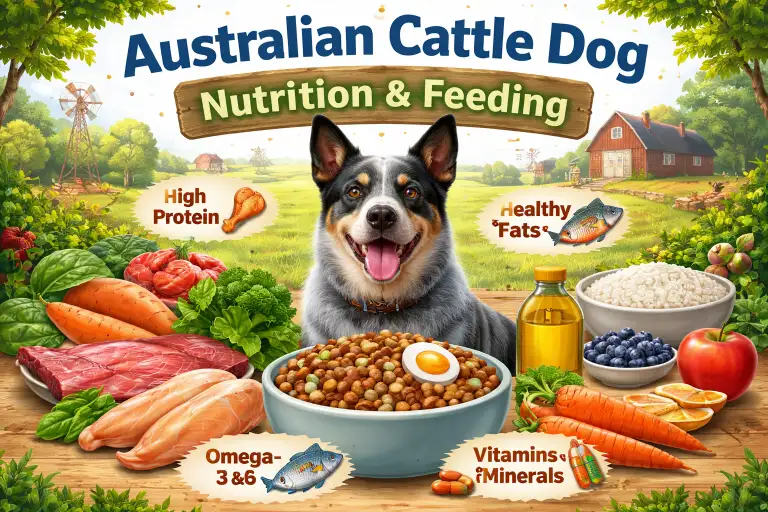
Australian Cattle Dogs need a feeding plan that matches their energy, muscle, and working-breed background. Also known as Blue Heelers, these dogs were bred for long days of movement, problem-solving, and cattle work, so their nutrition needs are different from many lower-energy companion breeds.
This Australian Cattle Dog nutrition and feeding guide explains how much to feed an Australian Cattle Dog, what nutrients matter most, how calories change by age and activity level, and how to choose food that supports healthy weight, stamina, digestion, and long-term joint health.
Most Australian Cattle Dogs do best on a balanced, protein-rich diet with controlled calories. Active working dogs may need more food, while less active pets, neutered dogs, and seniors often need tighter portion control. Because this breed can look lean even when slightly overfed, measuring meals and monitoring body condition are essential.
Use this guide as a practical starting point for Australian Cattle Dog feeding, including calorie ranges, meal frequency, food types, feeding problems, and diet adjustments for puppies, adults, seniors, and high-activity heelers.
Core Nutritional Needs of an Australian Cattle Dog
Australian Cattle Dogs need food that supports lean muscle, steady energy, healthy digestion, and long-term joint strength. Because this breed is naturally athletic and alert, poor nutrition can quickly show up as weight gain, low stamina, loose stool, dull coat, or reduced performance.
A good Australian Cattle Dog diet should include quality animal-based protein, moderate fat, digestible carbohydrates, fiber, vitamins, minerals, and joint-supporting nutrients. The goal is not simply to feed more food because the breed is active. The goal is to feed the right balance for the dog’s age, size, workload, and body condition.
Protein is especially important for Australian Cattle Dogs because it helps maintain dense muscle and supports recovery after exercise. Fat provides concentrated energy, but too much can lead to weight gain if the dog is not highly active. Carbohydrates can provide usable energy and fiber, but they should not replace high-quality protein sources.
Core Nutrient Needs for Australian Cattle Dogs
| Nutrient | Recommended Range | Why It Matters |
|---|---|---|
| Protein | 22–30% dry matter | Supports muscle strength, endurance, and recovery |
| Fat | 12–18% dry matter | Provides energy without unnecessary weight gain |
| Carbohydrates | Moderate, digestible sources | Supports steady energy and digestion |
| Fiber | 3–6% | Helps stool quality and gut health |
| Omega-3 fatty acids | Included in diet | Supports joints, skin, coat, and brain health |
| Calcium and phosphorus | Balanced ratio | Supports bones, teeth, and growth in puppies |
| Vitamins and minerals | Complete and balanced levels | Supports immunity, metabolism, and overall health |
When choosing food, look for a complete and balanced formula with named animal proteins near the top of the ingredient list. Avoid choosing food based only on marketing terms. Australian Cattle Dogs need consistency, digestibility, and proper portions more than trendy ingredients.
How Much to Feed an Australian Cattle Dog
Most adult Australian Cattle Dogs need about 700 to 2,000 calories per day, depending on weight, age, activity level, metabolism, and body condition. A calm house pet may need the lower end of the range, while a working Blue Heeler, agility dog, or highly active outdoor dog may need much more.
Feeding too little can cause low energy, poor recovery, and muscle loss. Feeding too much can lead to weight gain, joint strain, and long-term health problems. Because Australian Cattle Dogs often remain active even when gaining weight, owners should measure food instead of guessing.
Australian Cattle Dog Feeding Chart by Weight and Activity Level
| Dog Weight | Low Activity | Moderate Activity | High Activity / Working |
|---|---|---|---|
| 30 lb | 700–850 kcal/day | 850–1,000 kcal/day | 1,100–1,300 kcal/day |
| 35 lb | 800–950 kcal/day | 950–1,100 kcal/day | 1,200–1,400 kcal/day |
| 40 lb | 900–1,050 kcal/day | 1,050–1,250 kcal/day | 1,300–1,600 kcal/day |
| 45 lb | 1,000–1,150 kcal/day | 1,150–1,350 kcal/day | 1,500–1,800 kcal/day |
| 50 lb | 1,100–1,250 kcal/day | 1,250–1,500 kcal/day | 1,700–2,000 kcal/day |
These calorie ranges are starting points, not fixed rules. If your Australian Cattle Dog is gaining weight, reduce portions slightly. If ribs are too visible, energy is low, or the dog is losing muscle, increase calories gradually and monitor body condition.
Australian Cattle Dog Feeding Schedule by Life Stage
Feeding frequency matters because Australian Cattle Dogs are energetic, food-motivated, and mentally intense. A consistent schedule helps control hunger, digestion, training behavior, and daily energy.
Feeding Frequency by Age
| Life Stage | Meals Per Day | Feeding Notes |
|---|---|---|
| Puppy up to 6 months | 3–4 meals | Supports growth, digestion, and stable energy |
| Young dog 6–18 months | 2–3 meals | Adjust portions as growth slows |
| Adult | 2 meals | Best for hunger control, digestion, and weight management |
| Senior | 2 smaller meals | Helps manage weight, digestion, and appetite changes |
Puppies need more frequent meals because they are growing quickly. Adult Australian Cattle Dogs usually do best with two meals per day. Seniors may need fewer calories, softer food, or smaller meals if digestion, dental health, or mobility changes.
Puppy, Adult, and Senior Australian Cattle Dog Diet Needs
An Australian Cattle Dog puppy needs a complete puppy formula that supports controlled growth, bone development, and muscle formation. Avoid overfeeding puppies, because fast growth and excess weight can stress developing joints.
Adult Australian Cattle Dogs need a diet that maintains lean muscle without adding unnecessary fat. For most adults, the best feeding plan is measured meals twice daily, limited treats, and regular body condition checks.
Senior Australian Cattle Dogs often need fewer calories because activity levels may drop with age. However, they still need quality protein to protect muscle. Senior diets may also benefit from joint-supporting nutrients, omega-3 fatty acids, and easily digestible ingredients.
Working vs Pet Australian Cattle Dog Feeding
A working Australian Cattle Dog or sport dog usually needs more calories than a pet heeler that spends most of the day indoors. Herding, agility, running, hiking, farm work, and long outdoor activity can significantly increase calorie needs.
Pet Australian Cattle Dogs still need daily exercise, but they often require tighter calorie control. Many weight problems happen when a formerly active dog keeps eating the same amount after activity decreases, neutering, injury, or aging.
For high-activity dogs, increase food gradually and track energy, stool quality, body weight, and recovery. For lower-activity dogs, keep treats small and avoid free-feeding.
Best Food Options for Australian Cattle Dogs
The best food for an Australian Cattle Dog is complete, balanced, digestible, and matched to the dog’s activity level. There is no single perfect food for every Blue Heeler. The right choice depends on age, weight, exercise, health, budget, and how well the dog tolerates the diet.
Dog Food Types Compared for Australian Cattle Dogs
| Food Type | Pros | Cons | Best For |
|---|---|---|---|
| Dry kibble | Convenient, affordable, easy to measure | Quality varies, lower moisture | Most adult Australian Cattle Dogs |
| Wet food | Higher moisture, soft texture, appealing taste | More expensive, calorie density varies | Seniors, picky eaters, dogs needing softer food |
| Fresh food | High moisture, often highly palatable | Costly, short shelf life | Dogs with picky appetite or digestion concerns |
| Freeze-dried food | Lightweight, easy for travel or training | Expensive, often needs rehydration | Training, travel, or meal toppers |
| Raw food | High appeal for some dogs | Hard to balance and carries safety risks | Only for experienced owners with professional guidance |
| Homemade food | Ingredient control | Easy to make nutritionally incomplete | Only with a properly formulated recipe |
For most owners, a high-quality kibble, wet food, or fresh food formula is the safest and easiest option. Homemade and raw diets require much more care because missing nutrients can create long-term health problems.
Safe and Unsafe Foods for Australian Cattle Dogs
Australian Cattle Dogs can eat some plain human foods in small amounts, but table scraps should not become a major part of the diet. Extra snacks quickly add calories and can upset digestion.
Safe vs Unsafe Human Foods for Australian Cattle Dogs
| Safe Foods in Small Amounts | Unsafe or Toxic Foods |
|---|---|
| Plain cooked chicken | Chocolate |
| Carrots | Grapes and raisins |
| Blueberries | Onions and garlic |
| Plain rice | Xylitol |
| Plain pumpkin | Alcohol |
| Apple slices without seeds | Cooked bones |
Treats should make up no more than a small portion of daily intake. For training, use tiny treats, pieces of kibble, or low-calorie rewards so the dog does not gain weight from frequent sessions.
Common Australian Cattle Dog Feeding Problems
Australian Cattle Dogs are tough, but they can still develop feeding problems. Many issues come from overfeeding, sudden food changes, too many treats, poor routine, or a mismatch between calories and activity level.
Common Feeding Problems and Solutions
| Problem | Common Cause | What Helps |
|---|---|---|
| Always hungry | Not enough protein, too many treats, or boredom | Use measured meals, improve diet quality, add enrichment |
| Weight gain | Overfeeding, low activity, or excess snacks | Reduce portions, track treats, increase safe exercise |
| Picky eating | Too many food changes or table scraps | Use set meal times and avoid constant switching |
| Loose stool | Food changed too quickly | Transition slowly over 7–10 days |
| Eating too fast | Excitement, habit, or food competition | Use a slow feeder or puzzle bowl |
| Low energy | Too few calories or poor diet fit | Review calories, protein, activity, and health status |
Switch food gradually by mixing the new food with the old food over one to two weeks. Sudden changes are one of the most common reasons for diarrhea, gas, and refusal to eat.
If your Australian Cattle Dog has ongoing vomiting, diarrhea, itching, weight loss, refusal to eat, or sudden appetite changes, speak with a veterinarian before making major diet changes.
To understand your dog’s current life stage, use the Australian Cattle Dog Age Calculator.
For more detail, see our Australian Cattle Dog age chart.
Australian Cattle Dog Feeding FAQs
How much should I feed an Australian Cattle Dog?
Most adult Australian Cattle Dogs need about 700 to 2,000 calories per day, depending on weight and activity level. A low-activity pet needs less food, while a working or sport dog may need much more.
How many times a day should an Australian Cattle Dog eat?
Most adult Australian Cattle Dogs do best with two meals per day. Puppies usually need three to four meals per day, while seniors may do better with two smaller meals.
What is the best food for an Australian Cattle Dog?
The best food is a complete and balanced dog food with quality protein, moderate fat, digestible carbohydrates, and calories matched to the dog’s activity level.
Are Blue Heelers and Australian Cattle Dogs fed the same way?
Yes. Blue Heeler is a common name for an Australian Cattle Dog, so the same feeding principles apply. Individual portions should still be adjusted by age, weight, activity, and body condition.
Can Australian Cattle Dogs eat raw food?
Some Australian Cattle Dogs can eat raw diets, but raw feeding is harder to balance and carries safety risks. Most owners are better served by complete commercial food unless they are working with a qualified professional.

Ata Ur Rehman is the founder of Pet Age in Human Years Calculator, an educational platform that provides age conversion charts and lifespan guides for dogs, cats, birds, and other companion animals. His work focuses on helping pet owners understand how animal ages translate into human years using commonly accepted age conversion formulas and published lifespan averages.
The website compiles breed and species lifespan data from kennel clubs, breed organizations, and general animal lifespan studies to present simple and easy-to-understand guides for pet owners worldwide.
This website was created to centralize animal age conversion charts into one easy reference platform for pet owners.
This article is for general education. For symptoms, medication, diet changes, or health concerns, use a qualified veterinarian who can assess your individual pet.