On this page
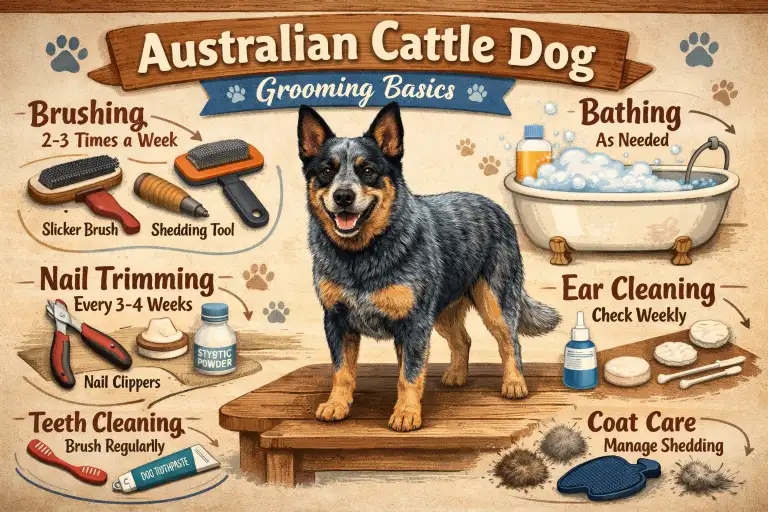
Australian Cattle Dog grooming is easier than grooming many long-haired breeds, but it should not be ignored. Blue Heelers and Red Heelers have a short double coat that sheds, protects the skin, and helps regulate body temperature. They do not need haircuts, but they do need regular brushing, occasional bathing, nail care, ear checks, dental care, and skin monitoring.
This guide explains how to groom an Australian Cattle Dog at home, how often to brush and bathe them, what tools work best, how to manage shedding, and which grooming mistakes to avoid.
Simple Step-by-Step Australian Cattle Dog Grooming Routine
A basic Australian Cattle Dog grooming routine should be short, consistent, and focused on removing loose coat without irritating the skin. Most owners can complete a normal grooming session in 10–15 minutes.
- Start with a coat check: Look for loose hair, dirt, dandruff, bumps, redness, or irritated skin.
- Brush with a rubber curry brush: Use gentle strokes in the direction of hair growth to loosen surface hair.
- Use a slicker brush during shedding season: Focus on the neck, shoulders, back, sides, and hindquarters where undercoat collects.
- Check nails, ears, and teeth: Look for clicking nails, ear odor, wax buildup, bad breath, or gum redness.
- Bathe only when needed: Use dog-safe shampoo and rinse thoroughly to avoid skin irritation.
- Dry the coat fully: Towel dry first, then use low heat if needed, especially during cold weather or heavy shedding.
This routine keeps grooming simple while targeting the main problems Australian Cattle Dog owners deal with: shedding, loose undercoat, odor, skin irritation, and nail overgrowth.
Australian Cattle Dog Grooming Schedule
| Grooming Task | Normal Schedule | During Heavy Shedding |
|---|---|---|
| Brushing | Once per week | 3–4 times per week |
| Bathing | Every 6–10 weeks or when dirty | Only when needed |
| Nail trimming | Every 3–4 weeks | Same schedule |
| Ear check | Every 2–4 weeks | Same schedule |
| Teeth brushing | 2–3 times per week | Same schedule |
| Skin check | Weekly | Every brushing session |
Proper Australian Cattle Dog coat care helps with:
- Managing seasonal shedding
- Keeping the short double coat healthy
- Preventing odor, dandruff, and irritation
- Checking for skin issues early
- Making grooming easier and less stressful
Australian Cattle Dogs are active working dogs that often spend time outdoors. Dirt, dust, loose undercoat, and weather changes can all affect their coat. A simple grooming routine keeps them clean, comfortable, and healthy without overdoing it.
Australian Cattle Dog Grooming at a Glance
| Grooming Area | Recommended Care |
|---|---|
| Coat type | Short double coat with dense undercoat |
| Shedding level | Moderate year-round, heavy in seasonal shedding periods |
| Brushing frequency | Once weekly; 3–4 times weekly during heavy shedding |
| Bathing frequency | Every 6–10 weeks or when dirty |
| Haircuts | Not needed |
| Shaving | Not recommended |
| Main grooming goal | Shedding control, skin health, and coat maintenance |
Australian Cattle Dog Coat Type and Shedding Explained
Australian Cattle Dogs have a short double coat. This means they have a firm outer coat and a softer undercoat underneath. The outer coat helps protect against dirt, sun, and moisture, while the undercoat helps with insulation and temperature control.
Because of this coat structure, Australian Cattle Dogs do not need trimming or haircuts. Their coat is designed to protect them naturally. However, the undercoat sheds throughout the year and becomes much heavier during seasonal coat changes.
Do Australian Cattle Dogs shed? Yes. They usually shed moderately most of the year and heavily during spring and fall. During these seasonal shedding periods, loose undercoat can come out quickly, even though the dog’s hair is short.
Many owners assume short-haired dogs do not shed much. That is not true for Australian Cattle Dogs. Their short coat can still leave hair on floors, furniture, clothing, and car seats, especially when the undercoat is blowing.
Shaving an Australian Cattle Dog is not a good solution for shedding. Shaving can interfere with the coat’s natural protection and may cause uneven regrowth. Brushing and deshedding are better ways to manage loose hair.
Australian Cattle Dog Shedding by Season
| Season | Shedding Level | What Happens | Best Grooming Response |
|---|---|---|---|
| Winter | Low to moderate | Undercoat stays thicker for warmth | Brush once per week |
| Spring | Heavy | Old undercoat sheds out | Brush 3–4 times per week |
| Summer | Moderate | Coat becomes lighter | Brush 1–2 times per week |
| Fall | Heavy | Coat changes again for cooler weather | Brush 3–4 times per week |
How to Groom an Australian Cattle Dog at Home
Learning how to groom an Australian Cattle Dog at home is mostly about consistency. This breed does not need complicated grooming, but it does benefit from a regular brushing and care schedule.
Start with brushing. Use short, gentle strokes and work through the coat in the direction the hair grows. Focus on areas where loose undercoat collects, including the neck, shoulders, back, sides, and hindquarters.
During normal shedding periods, brushing once a week is usually enough. During spring and fall, increase brushing to three or four times per week to remove loose undercoat before it spreads around the house.
Bathing should be occasional, not constant. Too many baths can strip natural oils and dry the skin. Most Australian Cattle Dogs only need a bath every 6–10 weeks, or sooner if they are muddy, smelly, or exposed to something irritating.
Always dry the coat well after bathing. A damp undercoat can create odor or skin discomfort. Towel drying is often enough, but a low-heat dryer can help during cold weather or heavy shedding periods.
Best Grooming Tools for Australian Cattle Dogs
| Tool | Best For | When to Use | Important Note |
|---|---|---|---|
| Rubber curry brush | Loose surface hair | Weekly brushing | Gentle and useful for short coats |
| Slicker brush | Removing loose undercoat | Shedding season | Use light pressure |
| Undercoat rake | Heavy seasonal shedding | Spring and fall | Do not overuse |
| Dog-safe shampoo | Bathing and odor control | Every 6–10 weeks | Avoid human shampoo |
| Towel or low-heat dryer | Drying the coat | After baths | Avoid hot air |
Australian Cattle Dog Bathing Schedule
| Situation | Bathing Recommendation |
|---|---|
| Normal indoor/outdoor activity | Every 6–10 weeks |
| Muddy or dirty coat | Bathe as needed |
| Strong odor | Bathe and check skin |
| Heavy shedding season | Brush more often; bathe only if needed |
| Dry or itchy skin | Avoid frequent bathing and check for irritation |
Nail, Ear, Teeth, and Skin Care for Australian Cattle Dogs
Australian Cattle Dog grooming is not only about brushing the coat. Nails, ears, teeth, and skin also need regular checks. These smaller care tasks help prevent discomfort and make grooming more complete.
Nail care: Trim the nails every 3–4 weeks, or whenever you hear clicking on hard floors. Long nails can affect movement and comfort, especially in active dogs.
Ear care: Australian Cattle Dogs usually have upright ears, which makes ear care easier. Still, check for redness, wax buildup, bad smell, or frequent head shaking.
Teeth care: Brush the teeth several times per week when possible. Dental care helps reduce bad breath, plaque, gum problems, and tooth issues.
Skin care: Check the skin during brushing. Watch for redness, flakes, bumps, sores, hair thinning, or constant licking. Grooming is one of the easiest times to catch early skin problems.
Australian Cattle Dog Extra Care Schedule
| Care Area | How Often | What to Check |
|---|---|---|
| Nails | Every 3–4 weeks | Length, cracking, clicking sounds |
| Ears | Every 2–4 weeks | Redness, odor, wax, irritation |
| Teeth | 2–3 times per week | Bad breath, tartar, gum redness |
| Skin | Weekly during brushing | Flakes, bumps, sores, itching, hair loss |
Common Australian Cattle Dog Grooming Mistakes
Most grooming problems happen when owners either do too little or do the wrong things. Australian Cattle Dogs are hardy dogs, but their coat and skin can still be damaged by poor grooming habits.
The biggest mistake is shaving the coat. Shaving does not stop shedding and can reduce the coat’s natural protection. A better approach is regular brushing and controlled deshedding during seasonal coat changes.
Another common mistake is bathing too often. Frequent bathing can dry the skin and make itching or dandruff worse. If your dog smells bad soon after a bath, the issue may be skin-related rather than dirt-related.
Using harsh brushes or too much pressure can also irritate the skin. Grooming should remove loose hair without scraping or pulling. If your dog avoids grooming, the tool or technique may be too rough.
Common Mistakes and Better Fixes
| Mistake | Why It Hurts Performance | Better Fix |
|---|---|---|
| Shaving the coat | Can affect coat protection and regrowth | Brush and deshed instead |
| Bathing too often | Can dry the skin | Bathe only when needed |
| Skipping brushing | Loose undercoat builds up | Brush weekly |
| Using human shampoo | Can irritate dog skin | Use dog-safe shampoo |
| Ignoring nails | Can affect comfort and movement | Trim every 3–4 weeks |
When to See a Professional Groomer or Vet
Most Australian Cattle Dogs can be groomed at home, but professional help can be useful during heavy shedding periods, nail trimming problems, or skin concerns.
See a professional groomer if your dog has heavy undercoat buildup, strongly resists brushing, or needs help with nails. See a veterinarian if you notice ongoing redness, sores, hair loss, strong odor, repeated itching, or painful skin.
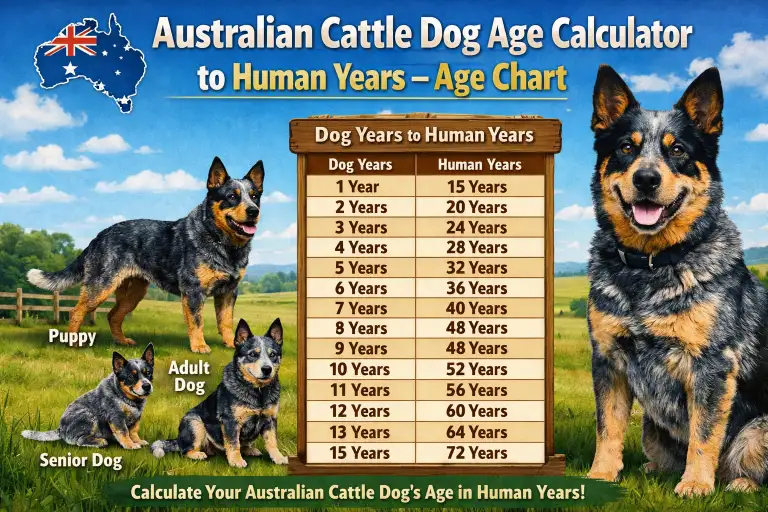
To understand your dog’s current life stage, use the Australian Cattle Dog Age Calculator.
For more detail, see our Australian Cattle Dog nutrition and feeding guide.
Australian Cattle Dog Grooming FAQs
Do Australian Cattle Dogs need haircuts?
No. Australian Cattle Dogs do not need haircuts. Their short double coat should be brushed and maintained, not trimmed like a long-haired coat.
Do Australian Cattle Dogs shed a lot?
Yes. Australian Cattle Dogs shed moderately throughout the year and more heavily during spring and fall when the undercoat changes.
How often should you groom an Australian Cattle Dog?
Brush once per week during normal periods and three to four times per week during heavy shedding seasons. Bathe every 6–10 weeks or when dirty.
What is the best brush for an Australian Cattle Dog?
A rubber curry brush works well for regular brushing. A slicker brush or undercoat rake can help during heavy seasonal shedding, but they should be used gently.
Can you shave an Australian Cattle Dog?
Shaving is not recommended. It does not stop shedding and may interfere with the coat’s natural protection. Brushing and deshedding are safer options.
How often should you bathe an Australian Cattle Dog?
Most Australian Cattle Dogs only need a bath every 6–10 weeks, unless they become dirty, muddy, or smelly sooner.

Ata Ur Rehman is the founder of Pet Age in Human Years Calculator, an educational platform that provides age conversion charts and lifespan guides for dogs, cats, birds, and other companion animals. His work focuses on helping pet owners understand how animal ages translate into human years using commonly accepted age conversion formulas and published lifespan averages.
The website compiles breed and species lifespan data from kennel clubs, breed organizations, and general animal lifespan studies to present simple and easy-to-understand guides for pet owners worldwide.
This website was created to centralize animal age conversion charts into one easy reference platform for pet owners.
This article is for general education. For symptoms, medication, diet changes, or health concerns, use a qualified veterinarian who can assess your individual pet.