On this page
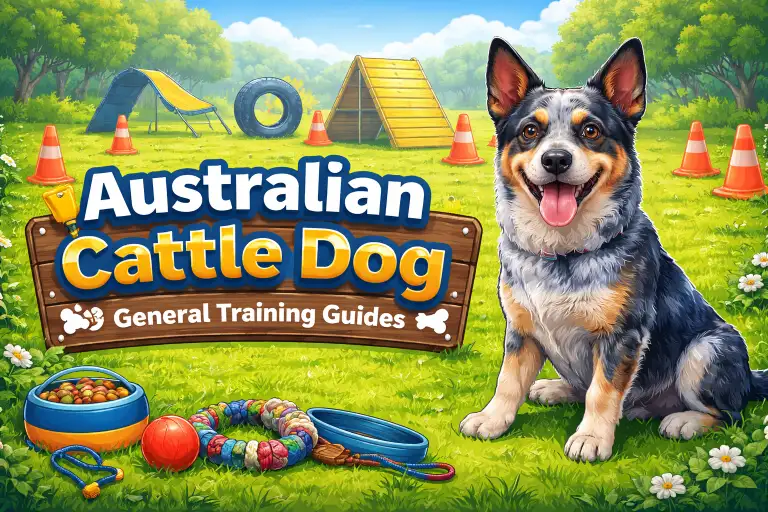
Australian Cattle Dog training works best when it is structured, consistent, and built around the breed’s working-dog instincts. Also known as the Blue Heeler, this breed is intelligent, intense, and quick to learn—but it can also become stubborn, mouthy, reactive, or destructive when training is unclear.
This guide explains how to train an Australian Cattle Dog using practical, reward-based methods for puppies, adolescents, and adults. You’ll learn how to handle nipping, leash pulling, recall, obedience, mental stimulation, and common behavior problems without turning the training process into a fight.
This guide is designed for:
- First-time Australian Cattle Dog owners who feel overwhelmed
- Blue Heeler puppy owners dealing with biting, nipping, and nonstop energy
- Owners of adolescent or adult dogs showing stubbornness or selective listening
- Anyone who wants better obedience, recall, leash control, and calmer behavior
Training an Australian Cattle Dog is not only about commands. It is about teaching focus, impulse control, calm decision-making, and predictable rules. When this breed understands what earns rewards and what behavior is expected, progress can happen quickly.
For a complete overview of the breed, see the Australian Cattle Dog full guide.
Understanding Australian Cattle Dog Behavior and Learning Style
Australian Cattle Dogs were bred to control movement, work independently, and make fast decisions. That background shapes almost every training challenge owners face. Many behaviors that seem “bad” are actually natural breed instincts showing up in the wrong environment.
One of the biggest examples is herding behavior. Australian Cattle Dogs may nip at heels, chase children, react to bikes, or try to control other pets. This does not always mean aggression. In many cases, it means the dog is using its natural herding drive without enough training direction.
This breed also has very high mental energy. Long walks help, but exercise alone is not enough. Without structured mental work, a Blue Heeler may bark, chew, ignore commands, pace, or create its own “job” around the house.
Australian Cattle Dogs learn best when:
- Rules are clear and consistent
- Rewards are timed immediately after the correct behavior
- Training sessions are short, focused, and repeated daily
- The dog is taught what to do instead of only being corrected
- Distractions are added slowly after the dog succeeds in easier settings
| Common Behavior | What It Usually Means | Training Focus |
|---|---|---|
| Nipping or chasing | Herding instinct | Impulse control and redirection |
| Ignoring commands | Overstimulation or confusion | Lower difficulty and faster rewards |
| Barking or pacing | Boredom or under-stimulation | Mental games and structured training |
| Pulling on leash | Excitement and poor impulse control | Loose-leash practice and reward timing |
| Stubborn behavior | Low motivation or unclear expectations | Better consistency and clearer outcomes |
Step-by-Step Australian Cattle Dog Training Approach
The best way to train an Australian Cattle Dog is to start simple, reward quickly, and build difficulty gradually. Long, repetitive sessions usually backfire. Short daily sessions work better because this breed learns fast but can become frustrated when training feels unclear.
Use this basic training structure:
- Train 2 to 3 times per day
- Keep each session around 5 to 10 minutes
- Start in a quiet space before adding distractions
- Reward the exact behavior you want repeated
- End before the dog becomes frustrated or overstimulated
Training should focus on thinking, not just movement. A tired Australian Cattle Dog is not automatically a trained dog. The goal is to teach the dog how to listen, settle, wait, return, walk calmly, and make better choices around distractions.
Australian Cattle Dog Training Priorities by Age
Australian Cattle Dog training should change as the dog matures. A puppy needs bite control and routine first, while an adolescent or adult Blue Heeler needs stronger impulse control, recall, leash manners, and calm behavior around distractions.
| Age | Main Goal | Training Priority |
|---|---|---|
| 8–16 weeks | Foundation | Name response, bite control, crate routine, gentle handling |
| 4–6 months | Focus | Leash basics, sit, down, wait, calm greetings |
| 6–18 months | Impulse control | Recall, loose-leash walking, leave it, settle training |
| Adult | Reliability | Obedience with distractions, mental work, behavior maintenance |
| Age Stage | Main Training Focus | Common Owner Mistake |
|---|---|---|
| Puppy | Name response, bite control, crate routine, focus | Too much freedom too soon |
| Adolescent | Impulse control, recall, leash manners, calm behavior | Inconsistent rules |
| Adult | Reliable obedience, problem-solving, mental work | Only relying on exercise |
Australian Cattle Dog Puppy Training
Australian Cattle Dog puppy training should begin with structure, bite control, and calm focus. Puppies from this breed often nip, grab, chase, and test boundaries early because their herding instincts appear young.
Start with these puppy training priorities:
- Name response and eye contact
- Gentle handling and bite inhibition
- Crate training and predictable rest periods
- Short leash practice indoors or in quiet areas
- Rewarding calm behavior before food, play, and door access
Do not wait for bad habits to become strong. If a puppy nips, redirect to a toy, pause movement, and reward calmer behavior. If the puppy gets overstimulated, give a structured break instead of continuing play until biting gets worse.
Australian Cattle Dog Obedience Training
Obedience training for Australian Cattle Dogs should focus on commands that improve real-life control. This breed does not need endless tricks before it learns basic manners. It needs reliable responses in normal situations.
Core obedience skills include:
- Sit and down for impulse control
- Stay and wait before doors, meals, and play
- Leave it for safety around food, toys, and distractions
- Come for recall and off-leash safety
- Place or settle for calm indoor behavior
Say each command once. If the dog does not respond, make the task easier instead of repeating the word. Repeating commands teaches the dog that the first cue does not matter.
How to Stop Australian Cattle Dog Nipping and Biting
Nipping is one of the most common Australian Cattle Dog training problems. It often happens because the dog is trying to herd movement, control excitement, or release frustration. The fix is not yelling or punishment. The fix is redirection, impulse control, and better management.
To reduce nipping:
- Stop fast movement when the dog starts chasing or biting
- Redirect the mouth to a toy or approved chew
- Reward calm walking beside people
- Teach “leave it” and “place” as control commands
- Avoid rough play that encourages grabbing hands or clothing
If biting becomes intense, repeated, or unsafe, the dog may need a more structured plan. For serious biting, fear reactions, or growling with intent, professional help is the safer choice.
Leash Training an Australian Cattle Dog
Leash training is important because Australian Cattle Dogs often want to move quickly and control space. Pulling usually comes from excitement, habit, or lack of impulse control.
To improve leash walking:
- Start in a low-distraction area
- Reward the dog when the leash is loose
- Stop moving when the dog pulls hard
- Change direction before the dog fixates on distractions
- Practice short walks with frequent focus rewards
Do not measure leash progress by distance. Measure it by control. A short calm walk is more valuable than a long walk where the dog pulls the entire time.
Recall Training for Australian Cattle Dogs
Recall training teaches your Australian Cattle Dog to come back when called. This is especially important for a fast, alert breed that may chase movement or become highly focused on the environment.
Build recall in stages:
- Start indoors with no distractions
- Use a happy voice and high-value reward
- Reward every successful return early in training
- Practice on a long line before off-leash freedom
- Never punish the dog after it comes back
Recall should always feel rewarding. If coming back ends every fun activity, the dog may learn to avoid returning.
Mental Stimulation for Australian Cattle Dog Training
Mental stimulation is not optional for this breed. Australian Cattle Dogs need thinking tasks to stay balanced. Without them, they often become restless, pushy, noisy, or destructive.
Good mental stimulation options include:
- Food puzzles and slow feeders
- Scent games around the house
- Short obedience drills
- Place training and calm-stay practice
- Hide-and-seek recall games
- Structured toy rotation
For this breed, mental work often creates better behavior than extra running alone. A dog that learns how to think calmly is easier to live with than a dog that is only physically tired.
Common Australian Cattle Dog Training Problems and Fixes
Most Australian Cattle Dog behavior problems come from unclear rules, too much freedom, not enough mental work, or training that moves too fast. The solution is usually to lower the difficulty, reward faster, and rebuild the behavior step by step.
| Problem | Likely Cause | Best Fix |
|---|---|---|
| Nipping or heel biting | Herding instinct | Redirect, reward calm movement, teach impulse control |
| Ignoring commands | Too distracted or confused | Train in easier settings and reward faster |
| Excess barking | Boredom or frustration | Add mental work and teach settle |
| Pulling on leash | Excitement and habit | Reward loose leash and stop pulling success |
| Poor recall | Distractions are more rewarding | Use high-value rewards and long-line practice |
| Reactivity | Fear, frustration, or overstimulation | Create distance and reward calm focus |
If a problem gets worse, the training step is probably too difficult or the dog is overwhelmed. Go back to an easier version of the behavior and rebuild success.
When to Get Professional Help With Australian Cattle Dog Training
Many Australian Cattle Dogs can be trained at home with clear rules and consistent practice. However, some situations need professional support. Getting help early can prevent small issues from becoming serious behavior problems.
Get professional help if:
- Behavior is getting worse instead of better
- The dog shows fear, panic, or strong stress
- There is snapping, hard biting, or growling with intent
- The dog cannot calm down even with training
- Training feels unsafe for people or other pets
Look for a trainer who uses reward-based methods, understands herding breeds, explains steps clearly, and focuses on safety. Avoid trainers who promise instant fixes or rely on harsh punishment.
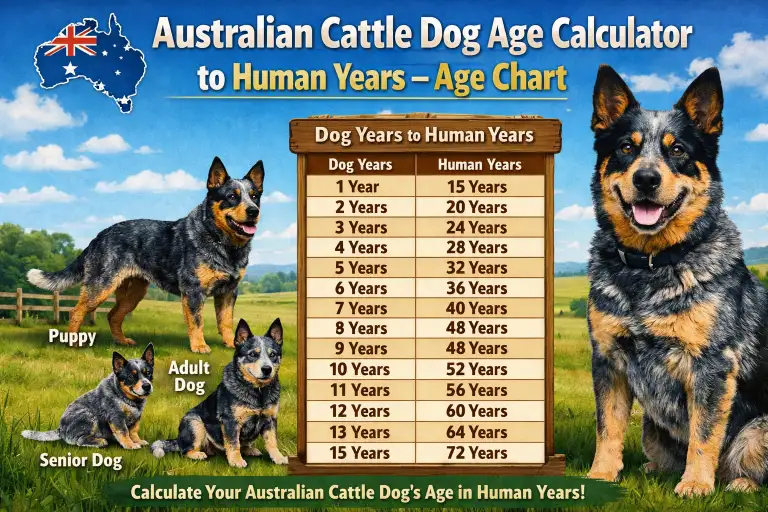
To understand your dog’s current life stage, use the Australian Cattle Dog Age Calculator.
Australian Cattle Dog Training FAQs
Are Australian Cattle Dogs easy to train?
Australian Cattle Dogs are smart and learn quickly, but they are not always easy for beginners. They need structure, consistency, mental stimulation, and clear rules.
How do you train a Blue Heeler puppy not to bite?
Redirect biting to toys, stop exciting movement, reward calm behavior, and give the puppy enough rest. Do not encourage rough hand play, because it can make biting worse.
Why does my Australian Cattle Dog ignore commands?
Ignoring commands usually means the dog is overstimulated, distracted, confused, or not motivated enough. Make the task easier and reward the correct response faster.
How much training does an Australian Cattle Dog need?
Most Australian Cattle Dogs do best with short daily sessions, usually 2 to 3 times per day. They also need mental games, calm practice, and consistent rules throughout the day.
What is the best training method for Australian Cattle Dogs?
The best method is reward-based training with clear boundaries. This breed responds well to structure, timing, consistency, and training that gives the dog a job to do.

Ata Ur Rehman is the founder of Pet Age in Human Years Calculator, an educational platform that provides age conversion charts and lifespan guides for dogs, cats, birds, and other companion animals. His work focuses on helping pet owners understand how animal ages translate into human years using commonly accepted age conversion formulas and published lifespan averages.
The website compiles breed and species lifespan data from kennel clubs, breed organizations, and general animal lifespan studies to present simple and easy-to-understand guides for pet owners worldwide.
This website was created to centralize animal age conversion charts into one easy reference platform for pet owners.
This article is for general education. For symptoms, medication, diet changes, or health concerns, use a qualified veterinarian who can assess your individual pet.