On this page
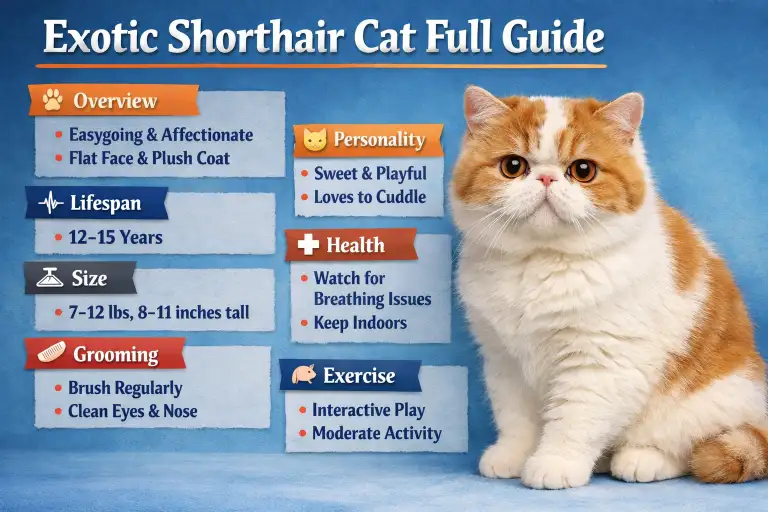
Exotic Shorthairs are often called the “lazy Persian” because they share the same sweet and calm personality but have a short, plush coat that is easier to manage. They are friendly, gentle, and love being around people. These cats enjoy a relaxed lifestyle and are usually not very active, which makes them perfect for indoor living.
One of the most notable features of Exotic Shorthairs is their flat face, also known as brachycephalic. This feature gives them their cute, rounded look but can make them prone to breathing problems, tear staining, and dental issues. Understanding these special needs is important before bringing one into your home.
Exotic Shorthairs live on average 12 to 15 years. Their calm nature means they can adapt well to families with children, seniors, or single adults. However, their personality comes with responsibilities: regular grooming, health checks, and mental stimulation are essential to keep them happy and healthy.
Another key aspect of care is understanding their daily routine needs. Unlike high-energy breeds, Exotic Shorthairs enjoy short play sessions, gentle handling, and a predictable environment. Providing cozy resting spots, safe toys, and attention can prevent boredom and stress.
Daily & Routine Care Essentials
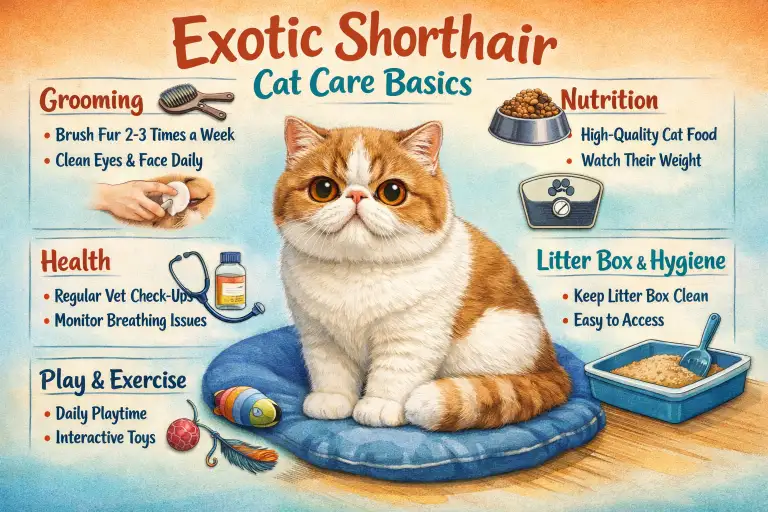
Daily care is very important for Exotic Shorthairs to stay healthy. Brushing their soft coat every day or at least several times a week helps prevent tangles and reduces shedding. A soft-bristled brush works best for their plush fur.
Their flat faces often lead to tear staining, so gently wiping around their eyes every day with a damp cloth or pet-safe wipe is essential. Check their nose for any signs of crusting or blockage, as this can affect breathing.
Feeding, litter box cleaning, and playtime are also daily tasks. Provide fresh water and a balanced diet, clean the litter box at least once a day, and give your cat short interactive play sessions. Even a calm cat needs mental and physical stimulation to prevent stress or obesity.
Tracking daily behavior is useful. Watch for changes in appetite, energy, or litter box habits. These small signs can alert you to health issues before they become serious.
Feeding, Nutrition & Weight Management
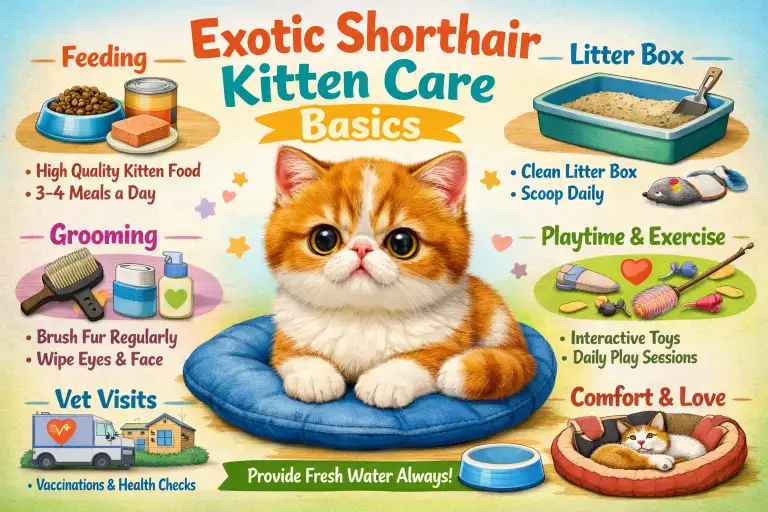
Exotic Shorthairs are prone to weight gain because of their low activity level. Feeding the right portion sizes based on age and activity is very important. Kittens need more frequent meals, adults need a stable routine, and seniors may need smaller, easily digestible meals.
High-quality protein sources, moderate fat, and low carbs are best for this breed. Avoid free-feeding large amounts, as overeating can lead to obesity and joint problems. Treats should be given sparingly.
Here is a table showing a simple feeding guide by life stage:
| Life Stage | Meals per Day | Portion Size | Notes |
|---|---|---|---|
| Kitten (0–6 months) | 3–4 | Small meals | High protein, growth-focused |
| Junior (6–12 months) | 2–3 | Medium meals | Moderate fat, controlled portions |
| Adult (1–7 years) | 2 | Standard | Maintain healthy weight |
| Senior (7+ years) | 1–2 | Small meals | Digestible food, monitor weight |
Also, keep an eye on water intake. Flat-faced cats sometimes have trouble drinking, so shallow bowls or water fountains can help encourage hydration.
Common Health Issues & Preventative Care
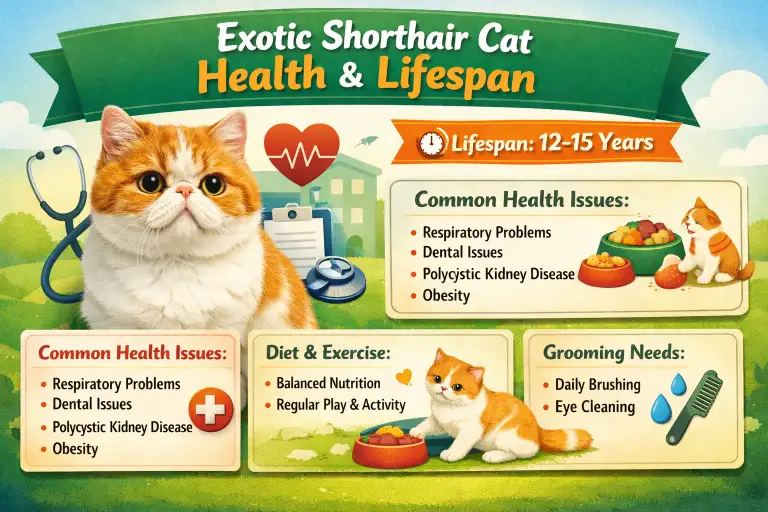
Exotic Shorthairs have some breed-specific health concerns because of their flat faces and body structure. Respiratory issues are common, especially if they get overweight. Watch for snoring, wheezing, or difficulty breathing.
Eye problems like tear staining, infections, and blocked tear ducts are common. Daily cleaning and monitoring for redness or swelling can prevent bigger problems. Dental care is also essential because their jaw structure can lead to overcrowded teeth and gum disease.
Here is a table summarizing common health issues and warning signs:
| Health Issue | Common Signs | Action Needed |
|---|---|---|
| Breathing problems | Wheezing, snoring, open-mouth breathing | See vet immediately |
| Tear staining & eye infections | Redness, discharge | Clean daily, vet if persistent |
| Dental issues | Bad breath, difficulty eating | Brush teeth, vet checkups |
| Obesity | Weight gain, lethargy | Adjust diet, increase play |
| PKD (Polycystic Kidney Disease) | Increased thirst, urination | Genetic testing, vet monitoring |
Regular vet checkups, vaccination, and parasite prevention help keep your Exotic Shorthair healthy. Preventive care is always easier and cheaper than treating serious conditions later.
Behavior, Environment & Happy Home Tips
Exotic Shorthairs are calm, affectionate, and enjoy routine. They may follow you around the house, enjoy lap time, and show gentle play behavior. Understanding their personality helps prevent stress and behavioral issues.
Provide enrichment to prevent boredom. Scratching posts, puzzle toys, and short interactive play sessions keep them active. They enjoy soft beds, warm spots, and quiet corners for rest.
Indoor-only living is best because their calm nature and flat faces make them less suited for outdoor hazards. If you have multiple cats, make sure each has its own space, litter box, and toys to avoid territorial disputes.
Here is a table summarizing key daily and environmental care tips:
| Area | Recommended Care |
|---|---|
| Play & Exercise | 10–15 min sessions, gentle toys |
| Resting Spots | Soft beds, quiet areas |
| Social Interaction | Daily attention, lap time |
| Multi-Cat Homes | Separate litter boxes, safe zones |
| Enrichment | Puzzle feeders, scratching posts |
A calm routine, mental stimulation, and proper handling will help your Exotic Shorthair thrive. This completes the main care guide.
For more detailed resources on Exotic Shorthair health, visit The International Cat Association.

Ata Ur Rehman is the founder of Pet Age in Human Years Calculator, an educational platform that provides age conversion charts and lifespan guides for dogs, cats, birds, and other companion animals. His work focuses on helping pet owners understand how animal ages translate into human years using commonly accepted age conversion formulas and published lifespan averages.
The website compiles breed and species lifespan data from kennel clubs, breed organizations, and general animal lifespan studies to present simple and easy-to-understand guides for pet owners worldwide.
This website was created to centralize animal age conversion charts into one easy reference platform for pet owners.
This article is for general education. For symptoms, medication, diet changes, or health concerns, use a qualified veterinarian who can assess your individual pet.